Schools become Moscow’s newest influence network
Russia is spending hundreds of millions of dollars on schools, universities and training programs across Central Asia, turning education into a key instrument of its regional policy. The projects arrive as Kazakhstan, Kyrgyzstan, Tajikistan, Turkmenistan and Uzbekistan strengthen their national identities and as China, Türkiye, the United States and European countries increase their own cultural and economic activity.
- Schools become Moscow’s newest influence network
- Why education matters to Russia
- Kyrgyzstan is a central testing ground
- Different countries, different Russian language policies
- National identity is reshaping the classroom
- How China and Türkiye change the competition
- Language disputes carry political weight
- The balance between opportunity and autonomy
- The Bottom Line
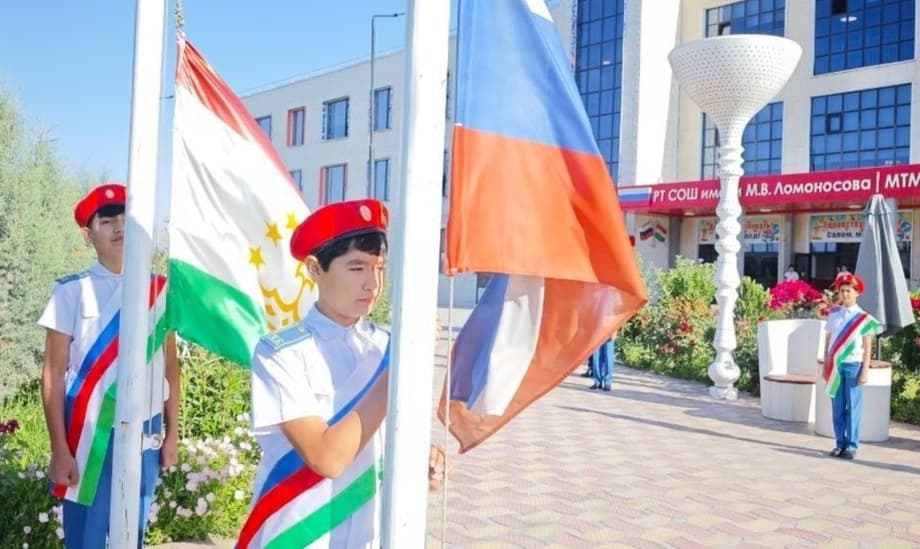
The strategy is most visible in Tajikistan, where five Russian funded schools opened in 2022 under a state project worth about $150 million. One of them, in the southern city of Bokhtar, is named after Mikhail Lomonosov, the 18th century Russian scientist. The three story building has modern classrooms, round the clock security and Russian and Tajik flags across its grounds.
More than 1,000 pupils attend the Bokhtar school, while the five institutions together serve around 6,000 students. Lessons are taught mainly in Russian and follow Russian educational standards. School ceremonies, symbols and parts of the curriculum also reflect Russian culture.
For many families, the attraction is practical. Russian education can provide access to universities in Russia, technical training and employment opportunities. Tajikistan is heavily dependent on citizens working abroad, particularly in Russia, and money sent home by migrants has long formed a large share of the country’s income.
A local construction worker identified by his first name, Mukhtor, told journalists that he hoped to enroll both his daughter and son at the Bokhtar school because it could open routes to higher education and better employment. His position reflects a wider reality. Families may view the schools through the lens of social mobility, while Moscow views them as a way to shape the generation that will lead Central Asian institutions in the years ahead.
Why education matters to Russia
Education is a relatively inexpensive way for a state to build lasting relationships abroad. A road or energy project creates physical connections, while a school can shape language skills, professional networks and ideas about history and culture. Students trained in a foreign system may later enter government, business, universities or the media with an established familiarity with that country’s institutions.
Russian officials present the language as a bridge created by shared history. Russian remains widely used in business, science, diplomacy and technical fields, and millions of Central Asian citizens have studied or worked in Russia. The language therefore has value beyond the ethnic Russian minority. It is often used between people from different Central Asian states, where national languages are not always mutually understood.
Research cited by regional analysts estimates that more than 200,000 Central Asians study in Russia. Moscow also supports cultural centers, professional courses and programs for young analysts and future policymakers. The School for Central Asia initiative, organized by the Aleksandr Gorchakov Public Diplomacy Fund, brings young specialists from Russia and Central Asian countries together for lectures and discussions on regional affairs.
These programs create what policy specialists call soft power. The term refers to the ability to shape preferences through culture, education and reputation rather than military pressure or direct economic control. Russia’s education policy draws strength from the Soviet legacy, when Russian was the main language of administration, higher education and social advancement across the region.
The policy also responds to a changing environment. China is expanding through the Belt and Road Initiative, infrastructure projects and Chinese language programs. Türkiye has developed cultural and academic links with Turkic speaking states. English is increasingly associated with global education, technology and international employment. Moscow’s school building projects are therefore part of a wider contest over how Central Asia’s younger generations connect with the outside world.
Kyrgyzstan is a central testing ground
Kyrgyzstan has become one of Russia’s most important education partners in the region. Moscow is supporting the construction of nine modern Kyrgyz Russian schools across the country, including institutions planned for Bishkek, Osh, Batken and Karakol. The first three were scheduled to begin operating in 2025.
The schools are designed to use curricula from both countries, with Russian as the main language of instruction. Graduates are expected to receive certificates recognized by Kyrgyzstan and Russia. That arrangement could make it easier for students to continue their studies in Russia or enter professional networks that span both countries.
Russia is also contributing to a planned campus expansion for the Kyrgyz Russian Slavic University in Bishkek. The project has been valued at about $200 million. The university already occupies an important place in Kyrgyz higher education, particularly in fields where Russian remains the main language of teaching.
Kyrgyzstan is more open to Russian education than several of its neighbors. Russian has official language status, and it remains common in urban workplaces, universities, media and public administration. The country also has strong economic ties with Russia. Large numbers of Kyrgyz citizens work there, and remittances are vital to household incomes and the national economy.
The school program reaches beyond the Russian minority. Ethnic Russians make up a small share of Kyrgyzstan’s population, yet many ethnic Kyrgyz families choose Russian instruction because they associate it with university access, migration and professional opportunity. This broader appeal gives Moscow a larger audience than a policy focused only on minority rights would provide.
Different countries, different Russian language policies
Russia’s education strategy is adapted to the political and social conditions of each Central Asian state. The language remains strong in some countries, while in others it has been pushed out of much of public life.
Kazakhstan
Kazakhstan has the largest Russian speaking population in Central Asia and shares a long border with Russia. Russian and Kazakh both have official roles, although the government has promoted Kazakh in state institutions. During a visit to Astana on May 28, President Vladimir Putin said about 60,000 Kazakh students were studying at Russian universities and pointed to eight Russian university branches operating in Kazakhstan.
Astana has also pursued a gradual shift from the Cyrillic alphabet toward Latin script for Kazakh. Supporters see the reform as part of national development, while Russian politicians have sometimes portrayed such changes as hostile to Russian culture. The government must balance language reform with social stability, especially in northern areas where Russian remains widely spoken.
Uzbekistan
Uzbekistan has made Uzbek the central language of public life and has reduced the role of Russian in state administration and schools. Russian education has nevertheless remained popular in higher education, medicine, engineering and other technical areas. Russian universities operate in the country, while bilateral agreements support student exchanges and vocational training.
Migration helps preserve demand. Large numbers of Uzbek citizens travel to Russia for work, making Russian useful for employment, legal processes and daily life. Families may support Uzbek national language policies while still seeking Russian instruction for economic reasons.
Tajikistan and Turkmenistan
Tajikistan occupies a middle position. Tajik is the state language, while Russian is recognized as a language of international communication. Russian is used heavily in media and remains important at university level, even though relatively few primary and secondary pupils study in Russian. The five new schools give Moscow an unusually visible role in a country where education infrastructure is often underfunded.
Turkmenistan has taken the strongest steps away from Russian. It adopted the Latin alphabet after independence and tightly regulates foreign educational initiatives. Russian language instruction survives mainly through state approved arrangements and opportunities for Turkmen students to attend universities in Russia.
National identity is reshaping the classroom
Every Central Asian government has sought to strengthen its national language since the Soviet Union collapsed in 1991. This process is tied to state building, historical memory and the desire to reduce dependence on Moscow. National languages are used to present each country as the successor to older local civilizations rather than as a former Soviet republic.
That shift has reduced Russian language education in many areas. In Turkmenistan, Russian is largely absent from primary and secondary schooling. Uzbekistan has expanded Uzbek in public administration and broadcasting. Kazakhstan, Kyrgyzstan and Tajikistan have pursued more gradual policies because Russian remains useful in commerce, universities and migration.
The transition is complicated by unequal resources. In some fields, textbooks and specialized terminology are more developed in Russian than in local languages. Russian continues to dominate parts of science, technology, medicine, law and cultural administration. English can provide international access, while Chinese is gaining value through trade and investment, yet neither language is as widely available as Russian.
This creates a three level language system in parts of the region. National languages carry identity and official status. Russian remains a practical language for administration, education and communication across borders. English provides access to international institutions, global business and Western universities. The balance is changing, though it is changing at different speeds in different countries.
Language policy can also create social costs if governments move too quickly. Older citizens educated in Russian may struggle with a sudden administrative shift. Rural communities may lack teachers and materials in the national language. Workers who depend on Russian for employment in Russia can see language restrictions as a threat to their income rather than as a cultural reform.
How China and Türkiye change the competition
Russia’s school projects are unfolding within a wider competition over Central Asia’s future connections. China’s approach is centered on infrastructure, trade, energy and the idea of shared development. The China Kyrgyzstan Uzbekistan railway is presented by Beijing as a route to regional prosperity and wider Eurasian trade. Chinese universities, scholarships and Confucius Institutes also expand familiarity with China.
Türkiye draws on cultural and linguistic ties with the Turkic peoples of Kazakhstan, Kyrgyzstan, Turkmenistan and Uzbekistan. Turkish universities and educational programs have built influence among students who see Türkiye as a modern partner with cultural links to their own countries.
Western governments and organizations support universities, media programs, civil society projects and English language education. For many urban young people, English is associated with global employment, technology and study abroad. Russian remains deeply rooted, yet it no longer holds an uncontested position among students making choices about their future.
Russia’s advantage is that it can combine current opportunity with inherited connections. Central Asian migrants already travel to Russia, regional officials maintain long standing contacts with Moscow, and many families use Russian at home or work. China’s advantage is its large investment capacity and focus on future infrastructure. Central Asian governments can use this competition to seek scholarships, trade and investment from several partners, while avoiding dependence on any single power.
Language disputes carry political weight
Debates about Russian are often treated in Moscow as more than domestic language policy. In Kyrgyzstan, proposals to rename districts in Bishkek that carry Soviet era names prompted accusations from Russian lawmakers and commentators that the country was erasing shared history and discriminating against Russian speakers.
Similar reactions have followed discussions about increasing the use of Kyrgyz in public administration. In Kazakhstan, the transition toward a Latin script has also attracted criticism from Russian politicians. These responses can make routine nation building measures more sensitive, particularly for governments that rely on Russian trade, security arrangements and migrant employment.
For Central Asian leaders, the challenge is to expand the national languages without turning Russian speaking citizens into a political target. A gradual approach can protect access to education and employment while increasing the role of Kazakh, Kyrgyz, Tajik, Turkmen and Uzbek in government, universities and media.
The debate also reveals the limits of viewing Russian speakers as a single political group. Many families choose Russian education for practical reasons and do not see themselves as part of a Russian political project. A parent seeking a place at a new school may be thinking about university fees, migration or professional training rather than geopolitics.
At the same time, language shapes the information people receive and the institutions they trust. Russian gives Moscow access to a large media and cultural space, including television, online platforms and education. That access can support Russian narratives about history and regional security, even when Central Asian governments pursue independent foreign policies.
The balance between opportunity and autonomy
Russia’s investment in Central Asian schools meets a genuine public need. Many families want modern buildings, better teachers, strong science programs and a reliable route to higher education. Russian institutions can provide those opportunities, especially where national education systems lack money or specialized materials.
The same projects also serve a strategic purpose. By teaching in Russian and following Russian standards, Moscow helps preserve a common professional space linking Central Asia to Russia. The graduates may become engineers, doctors, civil servants or analysts whose training and contacts keep that relationship active.
Central Asian governments are unlikely to abandon Russian quickly. Migration, trade, university access and technical education keep demand high. They are also unlikely to accept a permanent Russian monopoly over education and public communication. The rise of national languages reflects a central goal of independence, while English, Chinese and Turkish provide alternatives to Moscow’s cultural reach.
The emerging model is likely to be competitive multilingualism. Russian will remain useful, especially in Kazakhstan, Kyrgyzstan and Tajikistan, while national languages gain greater authority in public institutions. English and Chinese will expand where they lead to investment, technology and international study. The result will vary from one country to another, shaped by demographics, economic ties and the confidence of national education systems.
The Bottom Line
- Russia has opened five Russian language schools in Tajikistan under a project worth about $150 million.
- Around 6,000 pupils attend the five Tajik schools, which follow Russian educational standards.
- Moscow is supporting nine new Russian language schools in Kyrgyzstan and a major university campus in Bishkek.
- About 60,000 Kazakh students study at Russian universities, according to Vladimir Putin.
- Russian remains valuable for migration, technical education, business and communication across Central Asia.
- National languages are gaining ground as governments strengthen independence and local identity.
- China, Türkiye, the United States and other outside powers are expanding their own education and cultural programs.
- Russia’s school network offers families practical opportunities while also preserving Moscow’s long term cultural influence.