Record Plunges Expose Energy Vulnerability
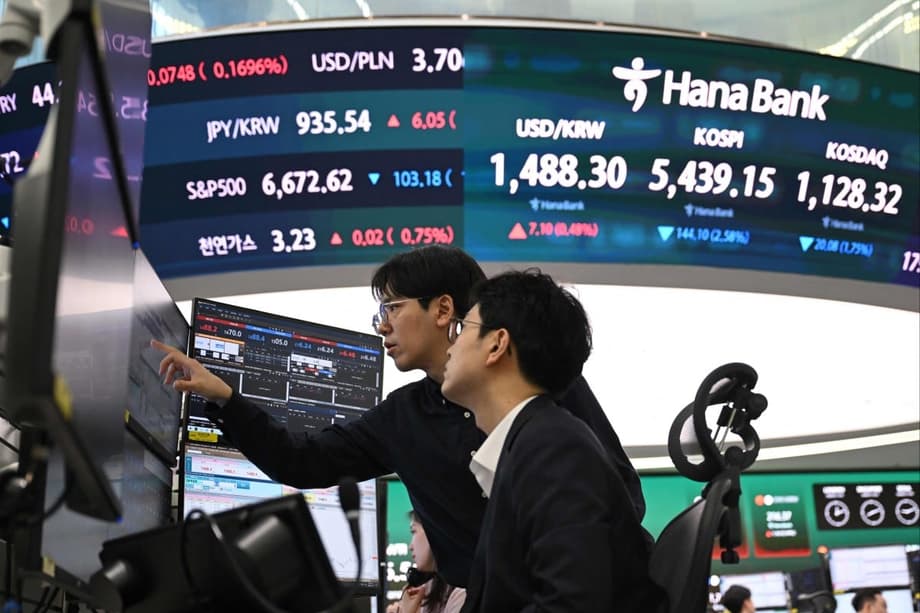
South Korea’s stock market suffered its worst single-day decline in history as the Kospi index plummeted more than 12% in early March, wiping out billions in market capitalization within hours and triggering circuit breakers across futures markets. The collapse in Seoul marked the sharpest drop among major global bourses since the United States and Israel launched military strikes against Iran on February 28, setting off a chain reaction that has exposed the profound structural weakness of energy-importing economies. Tokyo’s Nikkei 225 has slid nearly 9% over the same period, while benchmarks in Europe have registered milder declines of approximately 7%. The divergence in market performance reflects a stark economic reality: nations heavily dependent on Middle Eastern oil are facing a crisis that manufacturing powerhouses with energy independence have largely avoided.
- Record Plunges Expose Energy Vulnerability
- Structural Dependence Becomes Critical Liability
- Emergency Interventions and Price Controls
- The China Exception and Western Resilience
- Currency Crises and Stagflation Threats
- Geopolitical Flashpoints and Strategic Responses
- Market Psychology and Long-term Outlook
- The Bottom Line
The sell-offs extend beyond simple percentage declines. South Korea’s tech-heavy Kosdaq index fell 14%, forcing trading halts, while shares in semiconductor giants Samsung Electronics and SK Hynix dropped roughly 20% from their pre-war valuations. These companies, which had recently eclipsed the combined market value of China’s major tech firms thanks to artificial intelligence demand, now face mounting concerns that energy costs will erode profit margins across export-oriented industries. In Tokyo, the Nikkei suffered a 5.2% single-day drop, with the broader Topix index following suit as investors priced in sustained higher energy costs.
Structural Dependence Becomes Critical Liability
The intensity of the market reaction stems from Asia’s fundamental dependence on fossil fuel imports. According to Morgan Stanley, oil and gas trade deficits account for 2.1% of gross domestic product across the Asian region, significantly higher than the 1.5% recorded in Europe. South Korea stands as the most exposed major economy, with an energy trade deficit equivalent to 4.3% of its GDP, while Japan faces a 2.7% deficit. By comparison, China maintains a more manageable 1.8% energy deficit relative to its massive economic base.
These statistics translate into immediate economic vulnerability. South Korea imports virtually all its crude oil, with approximately 70% originating from Middle Eastern suppliers. Japan’s dependence is even more acute, sourcing roughly 90% of its oil needs from Gulf producers. When Iran effectively blockaded the Strait of Hormuz in early March, choking off a conduit that handles roughly 20 million barrels per day and 25% of all seaborne petroleum trade, these economies faced an existential threat to their industrial models. The Strait serves as the primary shipping lane for energy-hungry Asian economies, with South Korea, Japan, China and India accounting for roughly 75% of oil flows through the chokepoint.
Ray Sharma-Ong, deputy global head of multi-asset bespoke solutions at Aberdeen Investments, explained the market dynamics driving the regional underperformance.
Equity markets in Japan, Korea and Taiwan have sold off sharply as investors reacted to higher oil prices and geopolitical uncertainty. These economies are net energy importers, which partly explains the negative market reaction. The sell-off also reflects a risk-off rotation out of cyclical sectors into defensive assets.
Emergency Interventions and Price Controls
Governments across Northeast Asia have scrambled to implement emergency measures as fuel prices spike and inflation pressures mount. South Korea took the unprecedented step of imposing fuel price caps for the first time in nearly three decades, with President Lee Jae Myung announcing that wholesale petrol prices would be capped at 1,724 won per liter and diesel at 1,713 won per liter during the initial two-week stabilization period. The move came after average gasoline prices in Seoul crossed 1,900 won per liter, a level unseen in four years, prompting panic buying at pumps across the nation as motorists rushed to top up before further increases.
The price cap represents merely one component of a broader 100 trillion won market stabilization program launched on March 6. President Lee has emphasized that while authorities must prevent market dysfunction, they must avoid distorting equity prices through artificial intervention. His administration has also begun exploring alternative supply routes that bypass the Strait of Hormuz, including potential increased imports from Brazil and Norway, though such diversification requires months or years to implement effectively. Additionally, South Korea announced it would release 22.46 million barrels of oil, equivalent to nine days of domestic demand, as part of a coordinated International Energy Agency effort to release 400 million barrels globally.
Japan has pursued a different strategy, tapping its substantial strategic petroleum reserves. The government authorized releasing 80 million barrels of oil, equivalent to 15 days of domestic consumption, from emergency stockpiles that currently cover 254 days of demand. Prime Minister Sanae Takaichi has resisted calls to overhaul the fiscal 2026 budget currently under parliamentary review, instead relying on existing subsidy mechanisms to buffer oil refiners from price volatility. Unlike South Korea’s direct price controls, Japan’s approach maintains market mechanisms while using fiscal tools to moderate retail costs. Vietnam has similarly eliminated fuel import taxes entirely to ensure energy security, while other regional economies explore emergency measures.
The China Exception and Western Resilience
While Northeast Asian markets convulsed, China has emerged as an unlikely island of stability. The CSI 300 Index has declined less than 1% since hostilities began, making it the best-performing major equity benchmark globally during the crisis. This resilience stems from Beijing’s long-term energy strategy, which includes massive domestic renewable energy installations, significant oil stockpiles, and greater domestic production than its neighbors. Although China remains the world’s largest oil importer, its diversified supply relationships and coal substitution capabilities provide buffers unavailable to its neighbors. As one strategic analysis noted, an oil crisis might bring real pain to China, but it could empower Beijing relative to its regional rivals.
The United States has similarly weathered the storm with relatively modest equity declines of around 3.6%, despite being a primary belligerent in the conflict. America’s status as a net energy exporter means that higher oil prices create domestic winners in the energy sector that partially offset losses elsewhere. The S&P 500’s limited decline contrasts sharply with the double-digit percentage drops seen in Seoul, illustrating how the oil shock has effectively split the world into energy haves and have-nots. European markets have suffered moderate declines of roughly 7%, cushioned by their lower energy intensity compared to Asian manufacturing hubs, though Germany’s industrial economy remains exposed with a 1.5% energy deficit relative to GDP.
According to market analysis tracking the crisis, energy exporters have actually benefited from higher prices. Norway’s stock market has gained 1.1% since February 28, while Saudi Arabia’s benchmark rose 2.5%. Iraq, Qatar and the United Arab Emirates stand to collect windfall revenues equivalent to substantial portions of their GDP, though production disruptions complicate the calculus for Gulf states.
Currency Crises and Stagflation Threats
Beyond equity markets, the oil shock has triggered severe currency volatility that compounds economic distress. The South Korean won briefly breached the psychologically critical level of 1,500 per US dollar in mid-March, its weakest valuation since 2009, as foreign investors fled Korean assets for dollar-denominated safe havens. The currency’s depreciation compounds the inflationary impact of dollar-denominated oil contracts, creating a feedback loop where expensive energy drives currency weakness, which in turn makes future energy imports even more costly.
Economists increasingly warn that import-dependent nations face stagflation, a toxic economic condition combining stagnant growth with accelerating inflation. With crude trading above $100 per barrel, economists estimate the shock could add 0.7 percentage points to global inflation while shaving 0.4 percentage points off growth. The Korea Development Institute has projected that sustained high oil prices could reduce South Korea’s 2026 GDP growth by up to 0.45 percentage points. For an economy targeting approximately 2% growth with inflation in the 2% range, such shocks threaten to derail monetary policy objectives entirely.
Kiuchi Takahide, an executive economist at Nomura Research Institute, warned of recession risks for Japan.
If prices keep rising, the level of personal consumption cannot be sustained, and the Japanese economy could go into recession.
The Bank of Japan faces a particularly difficult dilemma. Having only recently exited negative interest rate policies, the central bank must now navigate between raising rates to combat imported inflation, which could choke off the fragile economic recovery, or maintaining accommodative policy and risking currency depreciation and price spirals.
Geopolitical Flashpoints and Strategic Responses
The immediate trigger for market panic occurred when Iran’s new Supreme Leader Mojtaba Khamenei ordered the Strait of Hormuz to remain closed indefinitely, transforming a regional military conflict into a global economic crisis. The blockade has forced shipping companies to seek alternative routes around the Cape of Good Hope, adding weeks to delivery times and millions in additional costs. Insurance premiums for maritime transit have risen by an estimated $5 to $15 per barrel, effectively adding a war premium to every cargo regardless of origin.
The conflict escalated further when US forces launched airstrikes against Kharg Island, Iran’s largest oil export hub, prompting Iranian retaliation against the Fujairah port in the United Arab Emirates, a facility designed specifically to bypass Hormuz. President Donald Trump has proposed forming a naval coalition including South Korea, Japan and China to escort tankers through the contested strait, though diplomatic complications may impede such cooperation. Reports of indirect CIA contact with Iranian intelligence operatives offering to discuss conflict resolution terms provided brief market relief, though Iran’s ambassador to the United Nations publicly ruled out negotiations for the time being.
Market Psychology and Long-term Outlook
Despite the dramatic declines, some market strategists view the sell-offs as technical corrections rather than fundamental economic breakdowns. Goldman Sachs analysts have contextualized the Kospi’s decline within the index’s extraordinary 176% rally since April 2025, characterizing the pullback as a necessary consolidation phase that will likely resolve in recovery to new highs once geopolitical tensions moderate.
Eli Lee, chief investment strategist at OCBC-owned Bank of Singapore, characterized the market reaction as typical of short-term geopolitical shocks.
We expected a knee-jerk risk-off market reaction. But barring an oil shock, history shows that geopolitical events typically do not negatively impact equity prices on a prolonged basis.
However, the distinction between a temporary shock and a sustained crisis may prove academic for economies facing immediate fiscal pressures. South Korea has already announced plans for a supplementary budget of 10 to 20 trillion won to support household welfare and economic recovery. Associate Professor Kim In-wook of Sungkyunkwan University in Seoul cautioned that market psychology poses risks beyond physical supply shortages.
At some point, releasing strategic oil reserves may be interpreted by the market as a signal that the supply crisis can no longer be managed through normal channels. It is not the physical drawdown itself that would destabilise the market, but rather the market’s collective judgment that the Strait of Hormuz is unlikely to reopen any time soon.
The Bottom Line
- South Korea’s Kospi index has fallen 12% since February 28, marking the worst single-day decline in the nation’s history, while Japan’s Nikkei 225 has dropped approximately 9%
- Iran’s blockade of the Strait of Hormuz has disrupted 20% of global seaborne oil trade, disproportionately impacting Asian economies that import 70% to 90% of their crude from the Middle East
- South Korea imposed its first fuel price cap in nearly 30 years and announced a 100 trillion won market stabilization program, while Japan authorized releasing 80 million barrels from strategic reserves
- The South Korean won fell to 1,500 per US dollar, its weakest level since 2009, as stagflation fears mount across import-dependent economies
- China’s CSI 300 Index has declined less than 1%, making it the best-performing major market, while energy exporters including Saudi Arabia and Norway have posted equity gains amid higher oil prices
- Economists estimate the oil shock could add 0.7 percentage points to global inflation while reducing growth by 0.4 percentage points, complicating central bank efforts to maintain monetary easing