Nine New Arrivals Bring a Bigger Conservation Test
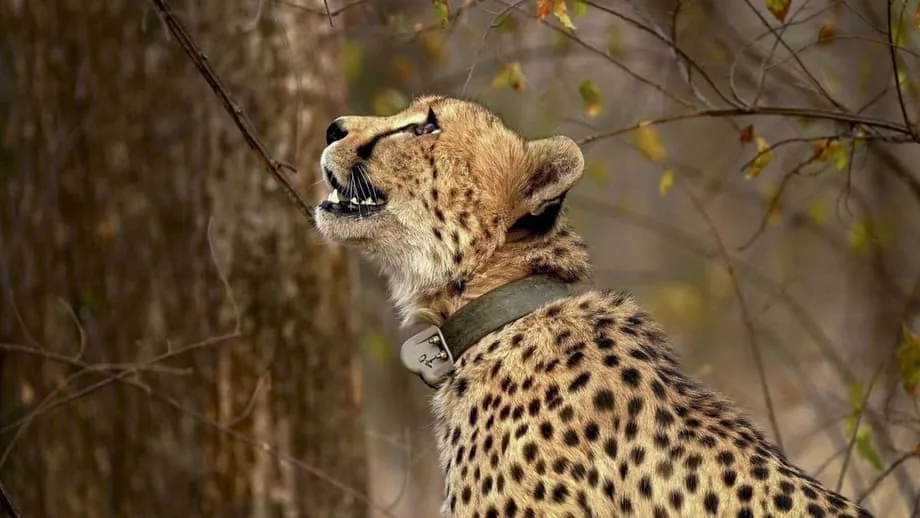
Nine wild cheetahs arrived from Botswana last week after a journey lasting 10 hours, travelling aboard an Indian Air Force aircraft to Gwalior before helicopters carried them to quarantine enclosures at Kuno National Park in Madhya Pradesh. Their arrival has renewed a dispute over whether India has enough suitable habitat to turn an expanding population into a lasting presence in the wild.
Contents
- Nine New Arrivals Bring a Bigger Conservation Test
- Why Scientists Want Imports Stopped
- Does Suitable Habitat Come Before the Predator?
- Deaths Have Exposed Difficult Management Choices
- The Government Cites Improving Survival
- Are Release Enclosures Temporary or Becoming Permanent?
- Kuno's Earlier Relocations Still Shape the Debate
- Officials Promise Jobs and Support for Communities
- Political Symbolism and Disputed Expansion Sites
- International Advisers Raise Concerns About Imports
- The Dates Behind the Current Dispute
- Key Points
As of March 10, 2026, Project Cheetah reported a population of 53 animals: 20 adults imported from Namibia, South Africa and Botswana, and 33 cubs born in India. Two females, Jwala and Gamini, recently produced litters of five and four cubs respectively. The project has also been described as having imported 20 adults since its launch, alongside a cumulative death toll of nine imported adults, leaving the accounting of arrivals and surviving adults unclear.
The population has passed the halfway mark toward the government target of 60 to 70 cheetahs across 17,000 square kilometers by 2032. That target is for a population able to sustain itself across several connected groups, known as a metapopulation. Its success depends on animals surviving, breeding and maintaining genetic diversity across the wider landscape.
Prime Minister Narendra Modi launched the initiative in September 2022, releasing eight cheetahs from Namibia on his birthday. He presented their return as restoring a broken link in India's ecological heritage. Government announcements describe the project as a historic contribution to global conservation, with cheetahs helping protect grasslands and endangered species such as the great Indian bustard while bringing tourism income to nearby communities.
Wildlife scientists questioning the project say the births and imports are increasing pressure on a landscape with limited room. Their central concern is whether India is restoring a wild population or maintaining an expensive experiment in prolonged captivity.
Why Scientists Want Imports Stopped
Ravi Chellam, a wildlife biologist and chief executive of the Metastring Foundation, argues that celebrating cubs born in captivity misses the original purpose of Project Cheetah. The Cheetah Action Plan, he says, did not envisage a captive breeding program.
Kuno covers 748.76 square kilometers and has an estimated carrying capacity of approximately 10 adult cheetahs. Carrying capacity means the number of animals a habitat can support with its available food, space and other resources. More births do not automatically increase that limit.
Chellam warns that each litter adds to a growing population that managers must eventually accommodate outside breeding enclosures. He regards the pressure as a demographic time bomb that habitat expansion alone cannot resolve.
Cheetahs in African habitats commonly occur at densities below one animal per 100 square kilometers. Their home ranges can cover thousands of square kilometers. Unlike lions and tigers, cheetahs occupy a weaker position among large predators and often need to move widely to avoid competition.
Kuno was originally selected for Asiatic lions, decades before the cheetah project. Critics describe its increasingly dense woodland as a poor match for animals that prefer open grasslands and scrub forests. They say the resulting choice is between keeping cheetahs in artificial enclosures and allowing them to move into landscapes dominated by people, where survival becomes harder.
Does Suitable Habitat Come Before the Predator?
Nitin Rai, a fellow at the Ashoka Trust for Research in Ecology and the Environment, argues that the project is destined to fail because adequate habitat for an expanding population does not exist. He says large scale habitat restoration must precede predator reintroduction, rather than relying on the predator's arrival to bring restoration about.
Rai also describes the initiative as a green grab: the use of a conservation project to gain control over land. In his assessment, the cheetah becomes a proxy through which authorities can move communities living in forests out of protected areas. His criticism connects the habitat debate with the human costs of conservation.
Wildlife scientist Arjun Gopalaswamy and colleagues argue that a viable population living freely would require 10,000 to 20,000 square kilometers of contiguous habitat with abundant prey and little conflict with people. They say India currently lacks suitable space on that scale. Documented cheetah home ranges in some African ecosystems extend to 5,441 square kilometers.
The government target of 17,000 square kilometers falls within the scale critics identify, but the dispute concerns the condition and connections of that land. A collection of separate sites requires different management from one continuous landscape.
Fenced enclosures and managed groups spread across disconnected reserves may keep animals alive and breeding. Critics describe that approach as ex situ conservation, meaning conservation outside a fully functioning wild setting, rather than the restoration of a population living freely that the project originally envisioned.
Deaths Have Exposed Difficult Management Choices
Nine imported adult cheetahs and 12 cubs born in India have died at Kuno since the project began, a cumulative toll of 21. Reported causes include acute heart failure, violent mating encounters, drowning, poisoning and severe dermatitis associated with radio collars in humid monsoon conditions. Dermatitis is inflammation of the skin.
Daksha, a female cheetah, was mauled to death by a male while managers attempted to encourage mating inside a large enclosure, an incident documented in court records. Pavan drowned in circumstances that remained unclear, with some officials suspecting poisoning.
A cub died in December after a vehicle struck it on the Agra-Mumbai National Highway near Gwalior. It had travelled far beyond the park boundary. Sasha, a female from Namibia who arrived with the first group and was described as five years old, died from a kidney infection last month.
South African veterinarian Adrian Tordiffe, who served on the government advisory committee, has expressed frustration about communication failures between international specialists and Indian authorities. He believes those failures may have prevented timely veterinary intervention in several cases.
The deaths expose the difficulty of managing animals born in the wild through a mixture of confinement and release. Enclosures allow closer monitoring and treatment, while animals moving freely face roads, other predators and hazards beyond reserve boundaries.
The Government Cites Improving Survival
Government officials cite International Union for Conservation of Nature guidelines suggesting that survival of 50 percent during the first year can fall within expected outcomes for translocation projects. They report adult survival of 70 percent in the first year and 85.71 percent in the second.
Those figures represent an increase of 15.71 percentage points between the two years. Officials present the improvement as evidence that management is learning from early problems.
Critics focus on where deaths occurred. Many animals died inside controlled enclosures, where access to veterinary care should have reduced risks, they argue. Cub mortality can be high in wild African populations too, but critics question the ethics of exposing animals to substantial risks when their eventual life outside enclosures remains uncertain.
National Tiger Conservation Authority scientists and other government officials have defended the project in a paper published in Frontiers in Conservation Science. They argue that critics make overly simple comparisons between African and Indian ecosystems and give too little weight to the ability of cheetahs to adapt their behavior.
Preliminary observations of animals moving freely show them hunting chital, sambar, four-horned antelope and nilgai, according to that defense. The animals have used habitats ranging from savanna grasslands to mixed deciduous forests. Officials also say radio collar data show cheetahs separating themselves from leopards by using different places or being active at different times, despite Kuno's high leopard density.
Are Release Enclosures Temporary or Becoming Permanent?
Government officials describe soft release bomas as naturalistic spaces rather than captivity. A boma is an enclosure used to help an animal settle into a new location before release. Officials say this internationally recognized method for reintroducing carnivores improves the chances of success by 2.5 times compared with releasing animals immediately.
Cheetahs that had been moving freely were temporarily brought back into enclosures after deaths in 2023. Officials describe that decision as adaptive management, meaning changes made in response to problems as they arise. They identify tick infestations and complications involving winter coats among the unexpected difficulties.
The government defense also cited 21 cubs born over 2.5 years, with 11 moving freely alongside their mothers. Officials presented those births and releases as evidence of adjustment to Indian conditions. The latest population figure includes 33 cubs born in India.
Chellam and other critics judge success by whether animals can live and reproduce outside enclosures over time. Government defenders place greater weight on survival improvements, breeding, hunting and changes in management during the establishment phase.
The disagreement therefore reaches beyond the number of animals alive on a particular date. It concerns how long intensive human management should continue and whether the planned network of reserves can support a population that sustains itself.
Kuno's Earlier Relocations Still Shape the Debate
Approximately 5,000 people from 24 villages were relocated from Kuno between 1999 and 2001 to prepare for Asiatic lions. The lions never arrived because of political opposition from Gujarat. The landscape emptied for that project later provided infrastructure for cheetahs.
Many displaced families continue to report inadequate rehabilitation, compensation promises left unfulfilled and the loss of livelihoods linked to forests. Residents also describe water shortages, unemployment and gaps in basic services decades after relocation.
Academic research in conservation journals has questioned the methods used during Kuno's initial selection and preparation. It argues that displacement received greater priority than genuine engagement with communities. Some assessments of community welfare reportedly relied on superficial visual observations rather than substantive conversations with residents.
Research using an environmental justice framework identifies three kinds of unfairness. Distributive injustice concerns who bears the costs and who receives the benefits: marginalized communities lose land and livelihoods while access to tourism income remains uncertain. Procedural injustice concerns whether people have a meaningful voice in decisions. Recognition injustice concerns whether authorities respect local knowledge, cultural attachments to land and traditional ecological understanding.
Concerns about consent remain part of the dispute. The Wildlife Protection Act and Forest Rights Act require voluntary resettlement with prior informed consent, while accounts from the ground suggest that procedural shortcuts and economic desperation have effectively forced some families to leave.
Officials Promise Jobs and Support for Communities
Government communications say no unjustified displacement has occurred under Project Cheetah itself. Officials point out that most relocations happened decades earlier for the lion project.
They describe resettlement as voluntary, conducted through Gram Sabha village assemblies, with support packages including agricultural land, housing assistance and five years of continuing help. The official position is that conservation and development can work together.
Project Cheetah has employed hundreds of local young people as forest watchers and cheetah trackers. Authorities are also developing tourism infrastructure intended to benefit surrounding communities, while presenting cheetahs as flagship animals for restoring degraded grasslands across several states.
The disagreement concerns both the history of relocation and the distribution of present benefits. Officials stress the distinction between the earlier lion project and the current cheetah initiative. Critics argue that the unresolved costs borne by displaced families remain part of the same landscape's conservation history.
For those families, promised employment and tourism income sit alongside continuing concerns about compensation, water, services and access to livelihoods. Official celebrations of ecological restoration give much less attention to those social costs, according to critics.
Political Symbolism and Disputed Expansion Sites
Modi's personal role has made Project Cheetah a signature national achievement. Beyond releasing the first animals on his birthday, he has likened the project's speed to his approach to governance. Government press releases have described scientific objections as ideologically motivated or sensationalist.
The launch was also presented as a deliberate contrast with former Prime Minister Jawaharlal Nehru's tradition of releasing peace doves. Critics see that contrast as part of a more assertive form of conservation nationalism, in which wildlife projects carry a strong political message.
Gujarat's refusal to send Asiatic lions to Kuno continued despite Supreme Court orders dating to 2013. Critics argue that the subsequent turn to African cheetahs reflected political convenience, because Kuno had been scientifically prepared and legally designated for lions.
Mukundra Hills Tiger Reserve in Rajasthan had been identified as a potential additional cheetah site years earlier. Central approval for transfers remained stalled while Congress governed the state. Bureaucratic obstacles appeared to ease after the Bharatiya Janata Party took power, adding to concerns about political influence over site selection.
Gandhi Sagar Wildlife Sanctuary in Madhya Pradesh has been prepared as the next release location, and officials say the necessary infrastructure is complete. Proposals for a third site at Nauradehi Wildlife Sanctuary have drawn criticism because it contains more than 20 resident adult tigers as well as numerous animals passing through.
Gopalaswamy, who coauthored a paper in 2022 challenging the project's scientific foundations, argues that proposed sites repeatedly overestimate carrying capacity and underestimate conflict with other predators. At Nauradehi, critics warn that dense woodland and numerous tigers could expose cheetahs to competition, attacks and high cub mortality.
International Advisers Raise Concerns About Imports
Botswana, the source of the latest nine cheetahs, has itself experienced declining wild cheetah populations. Critics question the ethics of removing animals from populations already under pressure for a project whose long term outcomes remain uncertain.
IUCN reintroduction guidelines call for releases within historical ranges using appropriate subspecies. The African cheetahs brought to India belong to a different subspecies from the Asiatic population that disappeared from the country. Genetic differences may be manageable, but adaptation to Indian ecological conditions and behavior remains uncertain after an absence of 70 years.
South African and Namibian veterinarians wrote to the Supreme Court complaining that their advisory roles had been reduced to a largely decorative function and that critical health information had been withheld during emergencies. International specialists who initially advised the project have expressed concern that political pressure has pushed scientific input aside.
Turnover among foreign consultants, including the departure of Cheetah Conservation Fund founder Laurie Marker from active involvement, has added to concern about management. India is negotiating further imports from Kenya to increase genetic diversity, meaning a broader mix of inherited traits within the population.
Additional imports may help diversify the animals being managed, but they also increase the need for suitable space, veterinary coordination and reliable decisions about release. The dispute over continued arrivals brings those requirements together with the welfare of animals in both the receiving and supplying countries.
The Dates Behind the Current Dispute
Project Cheetah's present position reflects decisions made over several decades. Kuno's preparation for lions, the court dispute over their transfer and the later cheetah releases form a single sequence in the management of the reserve.
- 1999 to 2001: Approximately 5,000 people from 24 villages were relocated from Kuno for a planned Asiatic lion reintroduction.
- 2013: Supreme Court orders called for the transfer of Asiatic lions to Kuno, but Gujarat continued to oppose their release.
- 2022: Gopalaswamy and colleagues published a paper warning about the cheetah project's scientific foundations.
- September 2022: Modi launched Project Cheetah by releasing eight animals from Namibia on his birthday.
- 2023: Animals moving freely were temporarily returned to enclosures following deaths and health concerns.
- December 2025: A cub died after being struck by a vehicle on the Agra-Mumbai National Highway near Gwalior.
- February 2026: Sasha was reported to have died from a kidney infection.
- Early March 2026: Nine cheetahs arrived from Botswana, while recent litters from Jwala and Gamini helped bring the reported population to 53.
- 2032: The government aims to establish a population of 60 to 70 animals across 17,000 square kilometers.
No dates have been given for releases at Gandhi Sagar, a decision on Nauradehi or completion of negotiations with Kenya. The next phase will require decisions about where the growing population can live, how animals move between sites and how surrounding communities share the benefits and costs.
Key Points
- Nine cheetahs from Botswana have brought the reported population to 53, including 20 adults and 33 cubs born in India.
- The cumulative reported death toll is 21 animals: nine imported adults and 12 cubs.
- Kuno covers 748.76 square kilometers and has an estimated carrying capacity of approximately 10 adult cheetahs.
- Critics want imports halted and argue that habitat restoration should precede further population growth.
- Officials cite adult survival rising from 70 percent in the first year to 85.71 percent in the second, along with breeding and successful hunting.
- Earlier relocations affected approximately 5,000 people from 24 villages, with continuing disputes over rehabilitation and community benefits.
- Gandhi Sagar is prepared for releases, while the proposed Nauradehi site faces objections over its tiger population and habitat.
- The government target is 60 to 70 cheetahs across 17,000 square kilometers by 2032.