A New Era of Digital Border Control
Japan is preparing to transform how millions of international visitors enter the country. The government has officially approved legislation to launch the Japan Electronic System for Travel Authorization (JESTA) by fiscal year 2028, ending the era of spontaneous visa-free arrivals for tourists from 71 countries and territories.
- A New Era of Digital Border Control
- Understanding the JESTA Application Process
- 71 Countries Face New Entry Requirements
- Security Concerns Drive Policy Change
- Financial Impact Extends Beyond Tourists
- Closing Loopholes for Transit Passengers
- Aligning with Global Standards
- Preparing for Implementation
- The Essentials
The Cabinet approved the bill to revise the Immigration Control and Refugee Recognition Law in March 2026, with implementation targeted for April 2028 through March 2029. This digital pre-screening system will require travelers who currently enjoy visa exemptions to obtain online authorization before boarding flights to Japan.
Justice Minister Keisuke Suzuki confirmed the official adoption of the JESTA acronym during a press conference, stating the system would help Japan strengthen immigration oversight while expediting entry procedures for legitimate visitors. The move represents one of the most significant changes to Japanese immigration policy in decades.
“We have decided on an official abbreviation for the electronic travel authorization system,” Suzuki stated. “Referring to examples from other countries, we had previously called it the Japanese ESTA, but we have now adopted the English abbreviation JESTA.”
Understanding the JESTA Application Process
The mechanics of JESTA will feel familiar to travelers who have visited the United States or Canada. Applicants from visa-exempt countries will complete an online form submitting personal details, passport information, travel history, and accommodation plans. Japanese authorities will then cross-reference this data against criminal records, deportation histories, and other immigration databases.
Once approved, travelers receive electronic authorization valid for two to three years, according to current projections. This contrasts with Canada’s eTA system, which remains valid for five years. The application will require payment of a processing fee estimated between 2,000 and 3,000 yen, approximately $20 or CAD 18-27, though final pricing awaits official confirmation.
Airlines will assume critical enforcement responsibilities under the new regime. Carriers must verify that passengers possess valid JESTA authorization before allowing them to board. Those without approval will be denied boarding, shifting the burden of entry compliance from Japanese immigration officers at airports to airline check-in staff worldwide.
71 Countries Face New Entry Requirements
The new system will fundamentally alter travel planning for visitors from major tourism markets. Citizens from the United States, Canada, the United Kingdom, Australia, New Zealand, and all European Union member states will need to secure JESTA clearance before departure.
The complete list of affected nations includes Andorra, Argentina, Austria, Bahamas, Barbados, Belgium, Brazil, Brunei, Bulgaria, Chile, Costa Rica, Croatia, Cyprus, Czech Republic, Denmark, Dominican Republic, El Salvador, Estonia, Finland, France, Germany, Greece, Guatemala, Honduras, Hong Kong, Hungary, Iceland, Indonesia, Ireland, Israel, Italy, Latvia, Lesotho, Liechtenstein, Lithuania, Luxembourg, Macau, Malaysia, Malta, Mauritius, Mexico, Monaco, Netherlands, North Macedonia, Norway, Panama, Poland, Portugal, Qatar, Romania, Saint Marin, Serbia, Singapore, Slovakia, Slovenia, South Korea, Spain, Suriname, Sweden, Switzerland, Taiwan, Thailand, Tunisia, Turkey, United Arab Emirates, and Uruguay.
Short-term visitors from these regions currently enter Japan without obtaining visas in advance. Once JESTA takes effect, this convenience will require digital pre-registration, adding a mandatory step to travel itineraries.
Security Concerns Drive Policy Change
Prime Minister Sanae Takaichi has positioned JESTA within her broader national security agenda, explicitly stating the system aims to prevent the entry of undesirable foreign nationals while facilitating smoother entry for compliant visitors. In her policy speech to the National Diet, she emphasized addressing illegal acts and rule violations by certain foreign nationals that have created public concern.
We are aware that issues such as illegal stays have been reported in immigration and residency management, and that anxiety among the Japanese public is increasing. In response to this, we will strengthen immigration control systems.
The government has accelerated the timeline for implementation, moving the launch forward from an initial 2030 target to fiscal 2028. This urgency reflects mounting pressure to manage record-breaking tourism numbers, with Japan welcoming 36.9 million foreign visitors in 2024, surpassing the previous peak of 31.9 million set in 2019.
Beyond tourism management, officials seek to address persistent challenges including illegal employment, visa overstays, and lengthy refugee status determination procedures. The system will enable authorities to identify potential security risks before travelers reach Japanese soil.
Financial Impact Extends Beyond Tourists
While visitors face new application fees, the legislative changes impose even steeper costs on foreign residents. The government plans to raise the upper limit for immigration fees for the first time in 44 years, dramatically increasing costs for those seeking to extend their stay or establish permanent residency.
The maximum fee for changing or renewing a visa will jump from the current 10,000 yen to 100,000 yen. Permanent residency applications will see an even more striking increase, with the cap rising from 10,000 yen to 300,000 yen. Actual fees will scale according to length of stay, with shorter stays costing around 10,000 yen while five-year visas could cost approximately 70,000 yen.
The revenue generated, projected at approximately 225 billion yen ($1.45 billion) annually by fiscal 2026, will fund programs for foreign residents including Japanese-language education and orientation services. About 60% of projected revenue is earmarked for foreign resident services, while 40% will support other policy initiatives such as free high school tuition.
For the roughly 4.13 million foreign residents currently living in Japan, these increases represent a significant financial burden, particularly for those seeking permanent residency, where fees could effectively increase twentyfold from current levels.
Closing Loopholes for Transit Passengers
In an expansion of the original scope, Japanese authorities will subject certain transit passengers and cruise ship travelers to JESTA screening. The measure targets individuals from countries where visa-free short-term stays require visas, as well as visa-exempt nations with high rates of entry denials such as Thailand and Turkey.
Officials identified transit stops as potential loopholes allowing individuals to enter Japan without proper authorization. However, the government is considering exemptions for certain routes, particularly passengers transiting to the United States, which already maintains its own pre-screening requirements.
Cruise ship passengers utilizing simplified landing procedures will also face the new requirements, with operators required to report passenger details and deny boarding to those lacking authorization.
Aligning with Global Standards
JESTA places Japan firmly within an international trend toward digital border management. The system mirrors the United States Electronic System for Travel Authorization (ESTA), established in 2009, as well as Canada’s eTA, the United Kingdom’s ETA, and Australia’s digital screening programs.
Europe will soon join this digital frontier with the implementation of ETIAS (European Travel Information and Authorization System) in 2026. These systems share common objectives: enhancing security through pre-departure screening, reducing immigration queue times, and generating revenue to fund border infrastructure.
The Japanese model specifically draws inspiration from the U.S. ESTA framework, requiring similar personal disclosures and carrying comparable penalties for non-compliance. Airlines failing to verify passenger authorization face potential sanctions, creating strong incentives for rigorous enforcement.
Preparing for Implementation
With implementation scheduled for fiscal 2028, travelers and corporate mobility teams have approximately two years to prepare for the new requirements. Human resources departments at companies with Japanese operations should begin updating travel policies and assignment manuals to reflect the additional lead time required for JESTA applications.
Travel management companies note that if Canadian outbound traffic returns to pre-pandemic levels of 340,000 annual trips, JESTA fees alone could add CAD 9 million to corporate travel budgets. Companies are advised to bundle JESTA applications with routine passport expiry reviews to prevent last-minute complications.
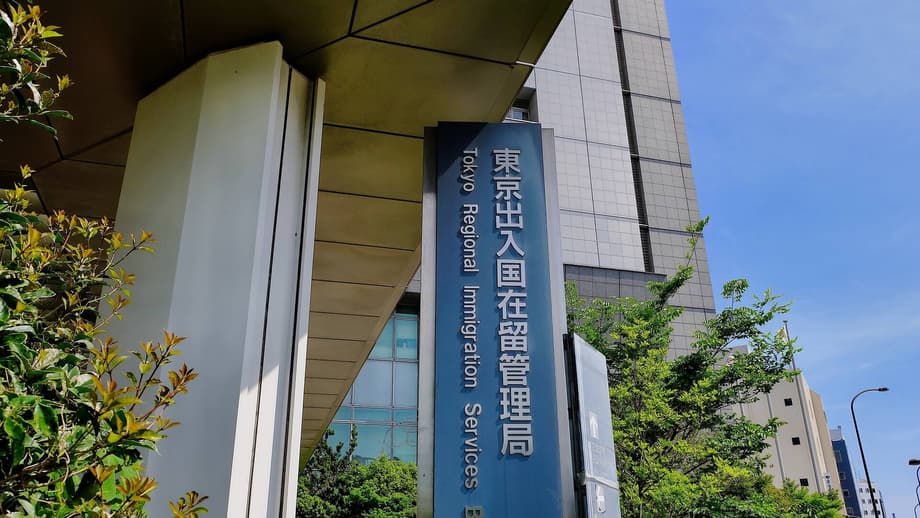
The Immigration Services Agency will release detailed program criteria and application procedures closer to the launch date, with final fee structures expected before the end of fiscal 2026.
The Essentials
- JESTA (Japan Electronic System for Travel Authorization) will launch in fiscal 2028, requiring online pre-approval for visitors from 71 visa-exempt countries
- Travelers must pay an estimated fee of 2,000-3,000 yen (approximately $20) for authorization valid for two to three years
- Airlines will deny boarding to passengers without valid JESTA clearance, shifting enforcement to departure points
- Foreign residents face significant fee increases, with permanent residency application costs potentially rising from 10,000 yen to 300,000 yen
- The system aims to prevent illegal overstays and enhance security while streamlining entry for legitimate visitors
- Transit passengers and cruise ship travelers from specific countries will also require JESTA authorization