When the Mirrors Went Frosted: A Dance Community Displaced
On the first day of January 2026, dancers arriving at Bayfront MRT station encountered a stark transformation. The mirrors that had lined the underground linkway connecting the station to Gardens by the Bay and Marina Bay Sands now bore thick white frosting across their centers, rendering them useless for checking choreography or form. For years, this air-conditioned corridor had served as an unofficial rehearsal studio for hundreds of dancers, drawn by its polished surfaces, shelter from tropical heat, and accessibility. The frosting marked the end of an era for a community that had transformed mundane infrastructure into a vibrant cultural hub.
- When the Mirrors Went Frosted: A Dance Community Displaced
- The Official Response: Safety and Pedestrian Flow
- A History of Pragmatic Planning
- The Economics of Dance in an Expensive City
- New Spaces Emerge: SMRT’s Alternative Solution
- Beyond Dance: Conflicting Visions of Public Life
- Toward Shared Civic Responsibility
- Key Points
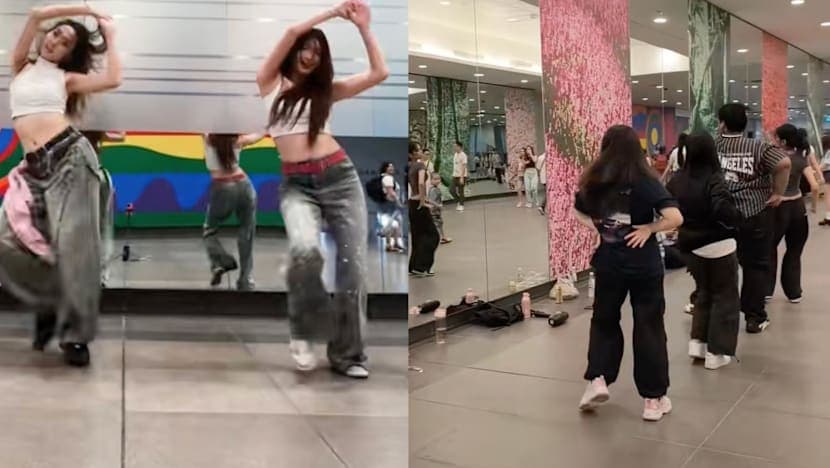
The reaction was immediate and visceral. TikTok user @pearly.nana captured the changed landscape in a video posted on January 11, showing two women attempting to dance before the compromised mirrors. Her caption, “And you ask why the arts culture in Singapore is not growing,” resonated with thousands. The clip accumulated over 86,000 views within days, sparking intense debate about who public spaces truly serve. Dancers expressed frustration at losing one of the few free practice venues available in a city where studio rentals often exceed $100 per hour. Yet the move did not occur in isolation. It represented the latest flashpoint in an ongoing tension between spontaneous creative expression and the efficient movement of people through one of the world’s most densely populated urban centers.
The Official Response: Safety and Pedestrian Flow
Marina Bay Sands, which manages the linkway, explained the decision through a spokesperson who addressed media queries on January 15. According to the official statement, dance groups had been increasingly using the underground walkway for rehearsals and practice sessions, blocking pedestrian flow in a busy area. The mirrors were frosted specifically to enable seamless pedestrian movement. The management stressed that the linkway exists primarily to provide convenient access to Gardens by the Bay, and the shared public space must remain safe, accessible, and free from obstructions.
This rationale found support among commuters who had navigated the corridor during peak hours. Several dancers themselves acknowledged the validity of safety concerns. One practitioner noted that some groups had been occupying the entire walkway, leaving minimal space for pedestrians. Another dancer commented on social media that the linkway, while spacious compared to other MRT passages, remains fundamentally unsuitable for dance activities because of its narrow dimensions. Videos shared online had shown groups arranging chairs and props in the corridor’s center, forcing tourists and office workers to weave through rehearsals or make detours. These images illustrated the concrete management challenges that prompted the frosting intervention.
A History of Pragmatic Planning
To understand the intensity of feelings surrounding the frosted mirrors, one must consider Singapore’s distinctive approach to urban development. The country’s planning has historically prioritized efficient land optimization, order, and economic utility. This strategy of high density development and designated land zoning created a compact, functional metropolis. However, it also cultivated a prevailing perception of space as primarily utilitarian, existing mainly to facilitate living, working, and efficient movement rather than spontaneous cultural expression.
Bayfront MRT station itself exemplifies this engineered functionality. Opened in January 2012 as an interchange between the Circle Line and Downtown Line, the station sits beneath Bayfront Avenue, serving major tourist attractions including Marina Bay Sands and the ArtScience Museum. The linkway was designed as a pedestrian artery, moving thousands daily between transportation nodes and entertainment venues. When dancers appropriated this corridor for artistic practice, they challenged the space’s intended purpose, creating friction between the practical demands of urban logistics and the human need for creative outlets.
The Economics of Dance in an Expensive City
Critics of the linkway dancers often suggest they should simply rent proper studios. This perspective overlooks the harsh financial realities facing young artists and students in Singapore. Studio rentals at community spaces like *SCAPE in Orchard Road range from $100 to over $300 per session, prices that remain prohibitive for many practitioners. When *SCAPE closed for renovations and subsequently reopened with limited capacity, the squeeze on affordable practice space intensified. Dancers describe arriving at *SCAPE only to find all rooms fully booked, forcing them to seek alternatives.
Rian, a 24-year-old social media producer who danced at Bayfront almost daily after work, explained that the MBS linkway provided a safe, comfortable environment when formal studios were unavailable or unaffordable. Nat, a 23-year-old student, echoed this sentiment, noting that while dancers tried to be mindful of space limitations, the linkway represented their only viable option for free practice. The loss of this space disproportionately affects emerging artists who lack institutional support or family resources to fund expensive rehearsal rentals. Without accessible practice venues, these individuals face exclusion from artistic development based solely on economic constraints.
New Spaces Emerge: SMRT’s Alternative Solution
While Marina Bay Sands chose to restrict usage through the mirror frosting, another transportation operator pursued a different path. On January 15, SMRT Corporation unveiled MirrorMoves at Marina South Pier MRT station, located just two stops from Bayfront. This dedicated dance space features mirrors and a proper dance floor, open to the public without booking requirements or fees. The initiative forms part of SMRT’s Communities in Station Programme, which aims to create vibrant, inclusive station experiences while balancing diverse user needs.
The response to MirrorMoves has been overwhelmingly positive among the dance community. Natasha Tan, a 30-year-old dance studio director, praised the initiative as a viable solution that addresses the shortage of public practice spaces while respecting pedestrian traffic patterns. She noted that cities like Taipei have successfully implemented similar designated dance areas within train stations, allowing creative communities to flourish without obstructing commuters. Netizens commenting on SMRT’s announcement video, which garnered over 48,000 views, expressed enthusiasm for bringing life to previously quiet stations. Some urged the operator to expand the concept to additional locations, recognizing that Marina South Pier’s distance from the city center might limit accessibility for those working in the downtown core.
Beyond Dance: Conflicting Visions of Public Life
The Bayfront controversy reflects broader disputes about public space usage across Singapore. At Marina Bay Sands itself, management introduced approval requirements last year for all choreographed performances and filming in the outdoor fountain area, citing the shared nature of the space. Meanwhile, at Chinatown MRT station, elderly singers who regularly gather at entrances to perform beloved tunes have drawn complaints from nearby shop owners and patrons. These incidents reveal a society grappling with how to accommodate diverse age groups, activities, and cultural practices within limited urban territory.
Some observers view these conflicts through the lens of generational change. Younger Singaporeans, familiar with global cities where street performance and spontaneous gatherings form part of urban culture, increasingly expect spaces that accommodate creativity and leisure. Older generations or those focused on economic productivity may prioritize efficiency and order. The satirical LinkedIn post applauding the mirror frosting, which mocked the notion that public spaces should serve anything other than pedestrian throughput optimization, highlighted this divide. The post sarcastically suggested banning void deck soccer, coffee shop gatherings, and even looking at sunsets to maximize economic output, illustrating the absurdity of viewing urban life purely through utilitarian metrics.
Toward Shared Civic Responsibility
Finding sustainable solutions requires moving beyond binary choices between prohibition and chaos. The Nanyang Academy of Fine Arts demonstrates a possible middle path through its placemaking initiatives along Bencoolen Street. The institution collaborates with stakeholders to activate neighborhood spaces with pop-up art markets, outdoor exhibitions, and student window displays while ensuring walkways remain accessible and safe. This model illustrates how shared civic responsibility can create inclusive environments where artistic expression and practical movement coexist.
Successful management of public spaces demands mutual understanding that these areas serve multiple users simultaneously. Dancers must recognize that corridors cannot become entirely occupied by rehearsals, while commuters and managers must acknowledge that cities thrive not merely on efficiency but on the spontaneous human connections that emerge when people share physical proximity. As Singapore’s population diversifies and urban density increases, expectations regarding public space usage will continue evolving. The transformation of Bayfront’s linkway from a utilitarian passage to a contested cultural venue, and now to a strictly regulated corridor, offers a case study in how maturing societies negotiate the balance between collective harmony and individual expression.
Key Points
- Full-length mirrors at Bayfront MRT linkway were frosted on January 1, 2026, ending years of informal use by dancers as a rehearsal space
- Marina Bay Sands cited safety concerns and pedestrian obstruction in the busy corridor connecting to Gardens by the Bay
- Dancers lamented the loss of rare free practice space, noting studio rentals in Singapore often cost $100 to $300 per session
- SMRT responded by opening MirrorMoves, a free dedicated dance space with mirrors at Marina South Pier MRT station on January 15
- The controversy highlights broader tensions in Singapore between utilitarian urban planning traditions and growing demands for creative expression in public areas
- Similar conflicts have emerged with elderly singers at Chinatown MRT and performance restrictions at Marina Bay Sands fountain area