A New Arsenal from the North
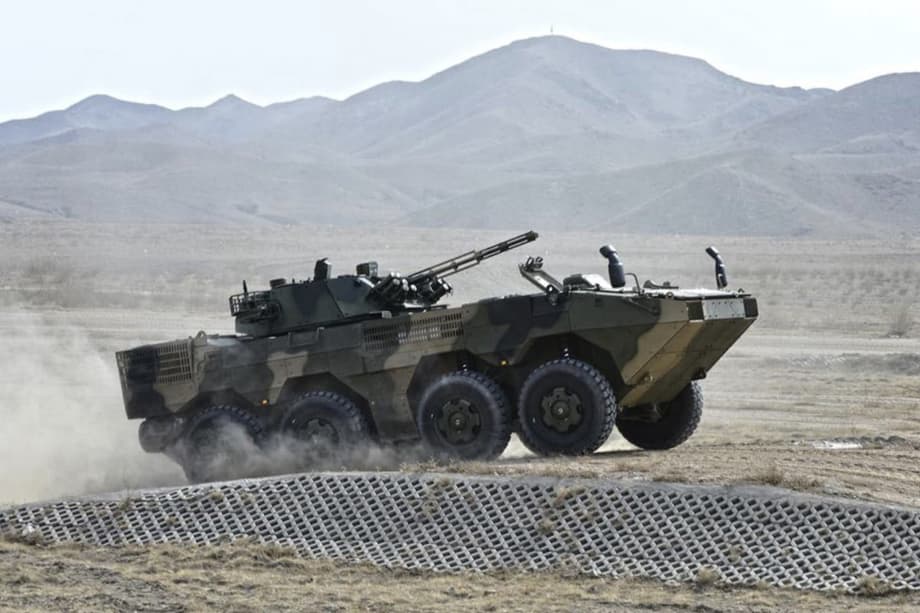
The Royal Thai Army has finalized a deal to acquire an additional 20 Chinese-made VN-1 armored vehicles, continuing a procurement pattern that has seen Bangkok increasingly turn to Beijing for military hardware despite its decades-old security alliance with Washington. The contract, valued at 1 billion baht (approximately $32 million), was signed on January 12 at the Beijing headquarters of China North Industries Group Corporation (Norinco), with Lieutenant General Natthaporn Khwan-yam, chief of the Thai army’s ordnance department, attending the ceremony alongside senior Chinese officials.
This latest acquisition brings Thailand’s fleet of VN-1 vehicles, a derivative of China’s ZBL-09 infantry fighting vehicle, to more than 120 units. The purchase forms part of Bangkok’s 2025 defense budget allocation aimed at strengthening front-line infantry capabilities, a priority heightened by ongoing border tensions with neighboring Cambodia. The deal proceeded under a government-to-government framework, reflecting the increasingly institutionalized nature of Sino-Thai military commerce.
The transaction represents merely the latest chapter in a broader trend that has seen China supplant the United States as Thailand’s primary arms supplier. Between 2016 and 2022, Bangkok received military equipment valued at $394 million from China compared to $207 million from the United States, according to data from the Stockholm International Peace Research Institute (SIPRI). This shift has raised eyebrows among defense analysts who question the strategic consequences of a major non-NATO ally integrating Chinese hardware into its force structure.
The Submarine Saga
While the armored vehicle purchase grabbed recent headlines, the centerpiece of Sino-Thai defense cooperation remains the protracted acquisition of the S26T diesel-electric submarine. Royal Thai Navy Admiral Nares Wongtrakul visited China last month to inspect progress on the vessel, which represents the most expensive single defense item Bangkok has ordered from Beijing. The submarine program, worth approximately $412 million (13.5 billion baht) for the initial vessel, has faced repeated delays since the hull was laid down in Wuhan in 2019.
The project stalled when Germany blocked the export of MTU396 diesel engines to China, citing European Union arms embargoes imposed following the 1989 Tiananmen Square crackdown. Bangkok initially resisted accepting Chinese-made substitutes, demanding rigorous testing to ensure reliability. Chinese authorities eventually provided certification following more than 6,000 hours of engine testing, allowing the modified agreement to proceed. The revised contract extends construction by 40 months, pushing delivery to late 2028 and including provisions for technology transfer and crew training.
Analysts view the submarine deal as carrying symbolic weight beyond its tactical value. Greg Raymond, a senior lecturer at the Coral Bell School of Asia Pacific Affairs’ Strategic and Defence Studies Center, noted in a 2024 analysis that Thailand’s submarine purchase constituted a geopolitical signaling effort. Bangkok’s strategy prioritizes autonomy and ambiguity through dominance denial rather than exclusive alignment with either Washington or Beijing.
From Cold War Partners to Complex Relations
The current procurement patterns mark a significant departure from the historical trajectory of the US-Thai alliance. The two nations have maintained formal security ties since 1954, when Thailand joined the Southeast Asia Treaty Organization (SEATO) and signed the Manila Pact. During the Vietnam War, Bangkok proved a steadfast partner, contributing more than 37,000 troops to support American operations and opening U-Tapao Air Base for combat missions across Indochina. The United States designated Thailand a major non-NATO ally in 2003, cementing a relationship built on shared Cold War anxieties about communist expansion.
However, the partnership underwent severe strain following military coups in 2006 and 2014 that overthrew democratically elected governments. Washington responded to the 2014 coup by suspending $3.5 million in military aid and scaling back joint exercises, creating a vacuum that Beijing eagerly filled. While the United States gradually restored some cooperation, the episodes left lasting impressions on Thai military elites who concluded that China offered more reliable support without political conditions attached to human rights or democratic governance.
The divergence in threat perception further complicates the alliance. Washington views China as a revisionist power challenging the rules-based international order, while Bangkok sees no existential threat from Beijing. Thai military leaders have instead focused on internal stability and border security, priorities that do not necessarily align with American strategic objectives in the Indo-Pacific.
Pragmatism Over Alignment
Thai defense officials consistently cite pragmatic factors rather than political alignment when explaining the pivot toward Chinese weaponry. The primary attraction lies in cost effectiveness. Chinese military hardware typically costs significantly less than American or European equivalents, a crucial consideration for Bangkok as it manages budget constraints while modernizing forces that still operate aging equipment. The VN-1 vehicles, for instance, offer infantry support capabilities at a fraction of the price of comparable Western systems.
Also, Chinese arms deals come without the human rights conditions or end-use monitoring requirements that often accompany American Foreign Military Sales. This flexibility appeals to Thai military leaders who prefer uncomplicated transactions free from congressional oversight or lectures about democratic governance. The absence of conditions became particularly attractive after Washington suspended assistance following the 2014 coup, while simultaneously lifting similar restrictions on Egypt, creating perceptions of inconsistent American policy.
The procurement strategy also reflects Thailand’s tradition of bamboo diplomacy, a foreign policy approach characterized by flexibility and rootedness. Like bamboo bending with the wind, Bangkok seeks to maintain solid foundations while adapting to shifting geopolitical currents. By diversifying suppliers, Thailand preserves strategic autonomy and avoids over-dependence on any single power, a posture that served the kingdom well throughout previous centuries of great power competition in Southeast Asia.
Expanding Military Exercises
Beyond hardware transfers, Sino-Thai defense cooperation has expanded into increasingly sophisticated joint military exercises. The Falcon Strike series, initiated in 2015, has grown from basic aerial combat maneuvers to complex operations involving early warning aircraft, bombers, and air defense units. The 2024 iteration featured more comprehensive combat elements than previous years, demonstrating both sides’ commitment to deepening operational familiarity.
Similarly, the two militaries now conduct annual exercises across land, maritime, and air domains. These drills, while still less sophisticated than Thailand’s exercises with the United States, have moved beyond purely symbolic gestures. Recent naval cooperation has focused on counterterrorism tactics and anti-submarine warfare, while land exercises emphasize counterterrorism operations relevant to Thailand’s internal security challenges.
However, Thailand maintains clear boundaries in its security cooperation with Beijing. Despite possessing American-built F-16 and F-5 fighter jets, Thai forces follow agreements prohibiting deployment of these US-origin systems during exercises with China. This restriction, imposed by Washington, reflects American concerns about technological exposure and illustrates the complicated balancing act Bangkok performs between its competing partnerships.
Navigating Great Power Rivalry
Thailand’s current security environment requires careful navigation of competing pressures. The immediate catalyst for recent armored vehicle purchases involves ongoing border disputes with Cambodia, where tensions have escalated around contested temple sites and frontier regions. Both Bangkok and Phnom Penh have accused each other of unprovoked aggression, with Thailand rejecting third-party mediation offers from the United States, China, and Malaysia in favor of bilateral negotiations.
Within this volatile context, Thailand seeks to preserve maximum diplomatic flexibility. The kingdom maintains robust economic ties with China, which represents its largest trading partner, while simultaneously hosting Cobra Gold, Southeast Asia’s largest multinational military exercise co-sponsored with the United States. This dual approach allows Bangkok to extract benefits from both relationships without formally aligning against either.
The strategy carries risks. Washington has demonstrated reluctance to sell its most advanced systems, such as the F-35 fighter, to Thailand citing security concerns about potential technology transfer to China. Meanwhile, Beijing’s growing influence in neighboring Cambodia, including rumored naval base access at Ream, creates unease in Bangkok about Chinese power projection capabilities close to Thai borders. Thailand has also rejected Chinese proposals for Mekong River law enforcement patrols entering Thai territory, signaling limits to its accommodation of Beijing.
Washington’s Ongoing Engagement
Despite the pivot toward Chinese hardware, the United States maintains substantial defense engagement with Thailand. According to State Department figures, Bangkok holds more than $3 billion in active Foreign Military Sales cases, including Stryker infantry carriers, Black Hawk and Lakota helicopters, F-16 upgrade packages, and Harpoon missiles. From fiscal years 2019 through 2021, the United States authorized over $605 million in direct commercial defense exports to Thailand.
The bilateral relationship extends beyond equipment sales to encompass professional military education. In 2022 alone, Thailand sent personnel to 244 US-sponsored training courses, including attendance at American military service academies. These educational ties create lasting relationships with future Royal Thai Armed Forces leaders and promote interoperability between the two militaries. The United States also provides funding for maritime security initiatives and humanitarian assistance capabilities.
Recent high-level visits indicate Washington’s recognition of the relationship’s importance. In 2022, both Defense Secretary Lloyd Austin and Secretary of State Antony Blinken visited Bangkok, pledging assistance with military modernization and technological cooperation. The Biden administration authorized the largest American contingent in a decade to participate in the 2023 Cobra Gold exercise, signaling renewed commitment despite ongoing concerns about Thailand’s democratic backsliding.
Key Points
- Thailand signed a $32 million contract in January 2025 for 20 additional Chinese VN-1 armored vehicles, adding to a fleet exceeding 100 units
- The S26T submarine deal, valued at over $400 million, has resumed after years of delays caused by German engine export restrictions; delivery is now scheduled for 2028
- China became Thailand’s top arms supplier between 2016 and 2022, providing $394 million worth of equipment compared to $207 million from the United States
- Traditional US-Thai defense cooperation continues through Cobra Gold exercises, $3 billion in active Foreign Military Sales, and extensive professional military education programs
- Thailand maintains a strategy of strategic autonomy, avoiding exclusive alignment with either Washington or Beijing while managing ongoing border tensions with Cambodia