The Image That Stopped the Scroll
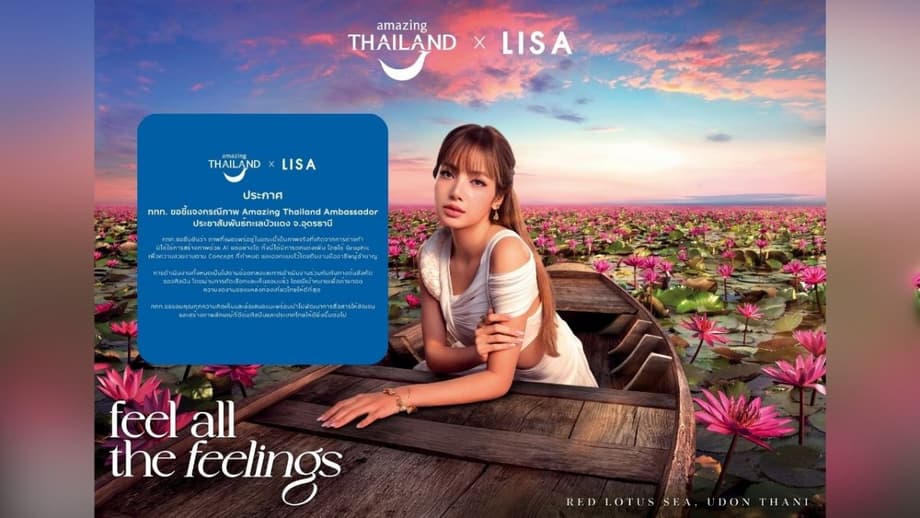
When the Tourism Authority of Thailand released its latest promotional poster featuring Lalisa Manobal, the global superstar better known as Lisa from BLACKPINK, the agency expected admiration. Instead, the image triggered an immediate storm of digital suspicion. The photograph, which depicts Lisa drifting serenely in a wooden boat across Udon Thani’s Red Lotus Sea, surrounded by impossibly vibrant pink blooms and cotton-candy skies, looked immaculate. Perhaps, critics suggested, it was too immaculate.
Within hours of appearing on social media platforms including Instagram and X, the image became the subject of intense scrutiny across multiple countries. On X, formerly Twitter, users debated whether the poster represented a genuine photograph or the output of artificial intelligence. One viral comment claimed the image was “definitely AI-generated,” while others noted that Lisa appeared to float unnaturally within the frame. Some observers pointed to the surreal quality of the lighting and the perfection of the composition as evidence of synthetic manipulation. The discussion quickly transcended niche tech circles, capturing the attention of mainstream media across Asia from Hong Kong to Seoul and fueling a broader conversation about authenticity in digital marketing and the responsibilities of state tourism organizations in an age of synthetic media.
The controversy highlighted a peculiar paradox of modern visual culture. In an era where generative AI tools can create photorealistic landscapes in seconds, traditional photography and graphic design now face unprecedented skepticism. The very qualities that once signaled professional excellence, sharp focus, perfect lighting, and flawless composition, now trigger alarm bells for digitally literate audiences conditioned to question what they see. This shift represents a fundamental change in how consumers interact with brand communications.
Star Power Meets Natural Wonder
To understand why this particular image generated such fervent debate, one must consider the weight of the personalities and places involved. Lisa, a native of Buri Ram province, stands as one of Thailand’s most influential cultural exports. As a member of BLACKPINK, she commands a global following that spans continents and demographics. When the Tourism Authority of Thailand appointed her as an Amazing Thailand Ambassador in October 2024, officials anticipated a significant boost to the nation’s tourism profile. The appointment represented a strategic effort to harness her massive influence across Southeast Asia and beyond.
The campaign’s first major visual focused on Talay Bua Daeng, or the Red Lotus Lake, in Udon Thani province. This natural wonder, which bursts into millions of pink lotus blooms during peak season from November through February, represents a side of Thailand that tourism officials are eager to promote beyond the familiar beaches of Phuket and Koh Samui. The location requires early morning visits to capture the flowers at their peak, when mist still hangs over the water and the light creates ethereal conditions that photographers prize. Local photographers and nature enthusiasts consider the lake one of the region’s most challenging subjects to capture authentically.
Previous campaigns featuring Lisa have demonstrated tangible economic impact. Her “Rockstar” music video, filmed in Thailand, triggered viral interest in locations such as Bangkok’s Yaowarat district and local street food vendors in her home province. This track record of what officials call the “Lisa Effect” set high expectations for the Red Lotus Sea campaign. The anticipation surrounding this particular campaign was heightened by the stunning natural setting and the star’s personal connection to the region. Audiences anticipated stunning visuals, but the line between aspirational beauty and artificial construct proved thinner than marketers expected.
When Perfection Breeds Suspicion
The skepticism surrounding the image reflects a seismic shift in how audiences evaluate visual content. On Reddit and other platforms, users dissected specific elements that triggered their AI detection instincts. Some noted that Lisa’s posture seemed physically improbable, with one commenter joking that she appeared to have “either no legs, or the boat has holes in the bottom so you can paddle like a duck.” Others pointed to the uniformity of the lotus flowers and the dreamlike quality of the sky as indicators of algorithmic generation rather than organic photography.
However, not all observers accused the agency of using AI. A significant portion of the online discussion suggested the image resulted from conventional computer-generated imagery and aggressive photo retouching rather than generative AI. This distinction matters technically but blurs perceptually for average viewers. Whether created by diffusion models or by human hands using Photoshop, the end result looked artificially enhanced to many eyes.
The debate struck a particular nerve with younger Thai netizens, many of whom have expressed growing anxiety about artificial intelligence’s encroachment into creative fields. Critics voiced concerns that AI-generated promotional materials could undermine the livelihoods of professional photographers, graphic designers, and artists. Others worried about the confusion such content creates for younger audiences still learning to distinguish between authentic imagery and synthetic media. This generational tension underscores a broader cultural reckoning with the rapid proliferation of AI tools in commercial contexts.
The Official Response
Faced with mounting speculation, the Tourism Authority of Thailand moved quickly to address the controversy. In an official statement released on January 22, the agency categorically denied using artificial intelligence to create the image. The statement provided specific details about the production process in an effort to rebuild credibility with skeptical audiences.
TAT would like to confirm that the image currently in circulation is a real photograph resulting from a filming and photography process. No AI image generation was used.
According to the agency, the photograph emerged from an actual photoshoot conducted at the Red Lotus Lake location. The production involved close collaboration with Lisa’s management team, with all materials undergoing review and approval by both the artist’s representatives and tourism officials. The agency acknowledged that the image underwent post-production enhancement to improve visual appeal and align with the campaign’s creative concept, but emphasized that these modifications employed standard graphic design techniques rather than generative AI.
The statement specified that an experienced creative team handled the enhancement work, suggesting that the polished appearance resulted from professional skill rather than algorithmic intervention. TAT concluded by thanking the public for their feedback and indicating that the agency would incorporate comments and suggestions into future communications. The response aimed to thread a delicate needle, affirming the image’s authenticity while acknowledging that it had been digitally refined.
Marketing in an Age of Synthetic Media
The Lisa poster controversy illuminates a growing crisis of confidence in visual media that extends far beyond Thai tourism. Marketing professionals across Asia are grappling with a fundamental reversal in audience psychology. Where high production value once signaled legitimacy and effort, it now frequently triggers suspicions of manipulation.
Carlos Mori Rodriguez, chief innovation officer at EON Group, explained this shift in perspective.
For decades, high production value signaled effort and legitimacy. Now, it signals potential manipulation. The accusations aren’t really about the technology. They’re shorthand for a deeper concern: ‘I no longer trust institutional imagery at face value.’
This skepticism proves particularly pronounced among Generation Z consumers, who demonstrate heightened sensitivity to synthetic content. Research from Forrester indicates that 24 percent of online adults in Singapore consider AI a serious societal threat, with deepfakes representing a primary concern. In Australia, trust in AI varies significantly by gender, with only 50 percent of women expressing confidence compared to 70 percent of men. These statistics reveal that audiences bring pre-existing anxieties about artificial intelligence to their interpretation of marketing materials.
Ivan Yeow, managing partner at Bacon Creatives, noted that the tools used matter less than the transparency surrounding them.
When ‘too perfect’ becomes commonplace, perhaps the concern is less about aesthetics and more about how easy perfection has become.
Jay Ng, founder of Hong Kong creative agency So Don’t Bore, added that audiences expect authenticity especially when global icons are involved.
When the final image looks so polished that it feels too good to be true, the audience starts to feel like the brand is cheating. Instead of seeing a professional photoshoot, they see a synthetic shortcut, which feels like a letdown when they were looking for a genuine connection with their idol.
The Transparency Imperative
The fallout from the campaign suggests that tourism marketing, which relies heavily on emotional authenticity and the promise of real experiences, faces unique vulnerabilities in the AI era. When promotional imagery appears artificially enhanced, whether through generative AI or traditional post-production, the core premise of tourism, that a destination is real, accessible, and worth experiencing, risks erosion.
Industry experts suggest that brands must adapt by prioritizing transparency and humanizing their creative processes. Guo-You Chew, APAC managing director at Tommy, observed that Gen Z audiences increasingly seek relatable content over aspirational perfection.
Audiences are getting increasingly wary of synthetic content, adopting a ‘guilty until proven human’ mindset. It reflects a growing desire for transparency and the preservation of authentic human craft in creative.
Some marketers advocate for behind-the-scenes content that documents the human effort involved in creating campaign visuals. Others suggest maintaining high production values while being explicit about the techniques employed. However, experts caution against manufactured imperfection as a response to AI skepticism. Hasbidin Hassan, managing partner at HYP Global, warned that deliberately degrading image quality to appear authentic simply replaces one form of artifice with another.
The challenge facing creative teams involves balancing ambition with authenticity. As Rodriguez noted, audiences seek evidence of human judgment and stakes, not merely aesthetic choices. For Thailand’s tourism campaign, the lesson appears clear: even when working with genuine photography and legitimate enhancement techniques, brands must proactively communicate their creative decisions to preempt suspicion.
Implications for the Future
The controversy surrounding Lisa’s promotional image arrives at a critical moment for Thailand’s tourism industry. Recent data from the Ministry of Tourism and Sports indicates a 7.25 percent decline in foreign arrivals compared to previous periods, with the country welcoming approximately 31.76 million international visitors in 2025. In this context, the “Lisa Effect” represents a crucial strategy for revitalizing visitor numbers and diversifying tourist interest beyond traditional beach destinations toward cultural and natural attractions like the Red Lotus Sea.
However, the incident reveals that leveraging celebrity influence now requires navigating complex audience expectations regarding digital authenticity. The same younger demographics that drive engagement with K-pop content also demonstrate the most sophisticated skepticism toward AI-generated media. For tourism boards and marketing agencies across Asia, the episode serves as a case study in how quickly well-intentioned creative work can become mired in authenticity debates.
Moving forward, agencies may need to provide provenance information alongside campaign imagery, documenting the human creative process from photoshoot to final edit. As artificial intelligence tools become more ubiquitous and more difficult to detect, the burden of proof regarding authenticity will likely shift increasingly onto content creators. The Lisa poster controversy did not involve AI, yet it sparked an AI panic. That distinction, perhaps, matters less than the reality that in today’s visual economy, perfection itself has become provocative.
Key Points
- The Tourism Authority of Thailand denied using artificial intelligence to create a viral promotional image featuring BLACKPINK star Lisa Manobal at Udon Thani’s Red Lotus Lake.
- Social media users questioned the image’s authenticity due to its hyper-polished appearance, with some claiming it appeared “definitely AI-generated” while others suggested heavy CGI and retouching.
- TAT confirmed the image resulted from an actual photoshoot with professional graphic enhancement using standard design techniques, not generative AI, and was approved by Lisa’s management.
- Younger Thai netizens expressed particular concern about AI in creative industries, fearing job displacement for artists and confusion regarding authentic versus synthetic media.
- Marketing experts note that high production values now trigger skepticism rather than admiration, with audiences adopting a “guilty until proven human” approach to polished visuals.
- The controversy highlights growing transparency demands in tourism marketing, where emotional authenticity and trust in real destinations remain paramount.
- Industry professionals recommend documenting human creative processes and being explicit about enhancement techniques to maintain audience trust in the AI era.