A Nation in Transition
Young people across Japan gathered in traditional ceremonies and formal attire on Monday to mark Coming of Age Day, a national holiday celebrating those who have turned 20 over the past year. Against the backdrop of these festivities, however, lies a sobering reality that government officials and demographers have been tracking with growing concern. According to the latest data from Japan’s Internal Affairs Ministry, approximately 1.09 million people reached adulthood as of January 1. This figure includes 560,000 men and 530,000 women, marking the second-lowest number on record since statistics began being compiled in modern form. Only the previous year saw a smaller cohort at 1.06 million new adults.
- A Nation in Transition
- Historical Context and Demographic Shifts
- Economic Implications of Population Decline
- Policy Responses and Government Initiatives
- Technological Innovation as a Response
- International Perspectives and Global Context
- Social and Cultural Implications
- Looking Toward 2050 and Beyond
- Key Points
The data accounts for both Japanese citizens and foreign residents who have lived in the country for more than three months, reflecting Japan’s increasingly international makeup even as its total population shrinks. For comparison, the number of new adults peaked in 1970 at 2.46 million during the first postwar baby boom, more than double the figure seen this year. After trending downward through the 1970s and 1980s, the numbers briefly rebounded to 2.07 million in 1994 before beginning what has become a prolonged and accelerating decline.
This demographic trend represents far more than just statistics. It signals profound challenges for Japan’s economy, social security systems, labor markets, and the very fabric of communities across the archipelago. As these young adults embark on their twenties, they inherit a society fundamentally different from that of their parents and grandparents, one defined by fewer peers supporting more elders and requiring innovative approaches to maintain prosperity and quality of life.
Historical Context and Demographic Shifts
Understanding Japan’s current situation requires examining the unique patterns of its demographic history. Unlike many Western nations that experienced extended baby booms lasting up to two decades after World War II, Japan’s postwar population surge lasted only about three years from 1947 to 1949. This relatively brief window created a specific age cohort structure that now drives many of the country’s demographic challenges as those baby boomers enter their late seventies and eighties.
The population pyramid, traditionally showing a broad base of young people supporting fewer elders, has been transforming for decades. According to projections from the National Institute of Population and Social Security Research (IPSS), Japan’s population of children under age 15 fell from 27 million in the early 1980s to 15.95 million in the 2015 census. The medium-fertility projection suggests this group will shrink below 10 million by 2056 and reach approximately 8.98 million by 2065.
Meanwhile, the elderly population aged 65 and older has grown dramatically. This group increased from 33.87 million in 2015 to 36.19 million by 2020 and is expected to peak at 39.35 million around 2042. Perhaps most strikingly, the proportion of elderly in the total population is projected to reach 38.4 percent by 2065, meaning roughly one in every 2.6 Japanese people will be senior citizens. This creates an unprecedented dependency burden on the working-age population.
The working-age population, defined as those aged 15 to 64, peaked at 87.26 million in 1995 but has declined steadily since. By 2015, this group had fallen to 77.28 million, and projections suggest it will drop below 70 million by 2029, below 60 million by 2040, below 50 million by 2056, and reach just 45.29 million by 2065 under medium-fertility assumptions. This shrinking workforce must support an expanding elderly population while also driving economic growth and funding social security systems.
Economic Implications of Population Decline
The economic consequences of Japan’s demographic shift extend across virtually every sector and policy domain. The International Monetary Fund has characterized Japan as the world’s laboratory for what it terms shrinkonomics, the study of economic management under conditions of population aging and decline. Analysis from the IMF suggests that Japan’s experience offers valuable lessons for other advanced economies soon to face similar demographic pressures.
One fundamental challenge involves labor force dynamics. With fewer workers available per capita, maintaining economic output requires either substantial increases in productivity or greater participation from nontraditional segments of the population. Japan has already made progress in this area, with female labor force participation reaching approximately 76 percent and about 25 percent of seniors aged 65 and older remaining in the workforce, both figures above OECD averages. Despite these gains, labor shortages persist across many sectors, particularly healthcare, construction, and manufacturing.
“Demographic change is having a fundamental impact on the global economy, but not in the way we once thought it would. A mere five decades ago, some observers were predicting that the human population was too big and would soon strip the world of resources. But the doomsday scenario of mass overpopulation did not materialize. Rather, for the first time in modern history, the world’s population is expected to virtually stop growing by the end of this century.”
This perspective from IMF research highlights how population trends have shifted dramatically over recent decades. Japan finds itself at the leading edge of this transformation, facing economic implications that include declining consumption patterns, pressure on pension and healthcare systems, and challenges to monetary policy effectiveness as demographic factors depress the natural rate of interest.
The dependency ratio, which measures the number of retirees relative to working-age population, has reached critical levels in Japan. Currently, roughly 2.3 workers support each senior resident. This ratio is projected to deteriorate to 2 workers per senior by 2023 and just 1.3 workers per senior by 2065. This demographic math creates tremendous pressure on public finances, as a shrinking tax base must fund expanding pension and healthcare obligations for a growing elderly population.
Policy Responses and Government Initiatives
The Japanese government has implemented various strategies aimed at addressing demographic challenges over the past three decades. In 1990, when the fertility rate fell to what was then considered an alarmingly low 1.57, policymakers began what has become an extensive series of interventions. These measures have included mandated childcare leave, expanded subsidized daycare services, campaigns encouraging men to take parental leave and share household responsibilities, and initiatives to reduce working hours.
Financial incentives have formed another pillar of government policy. Since 1992, Japan has provided cash allowances to families with children. Most recently, Prime Minister Fumio Kishida’s administration launched the “Direction on Strategy for Children’s Future” in June 2023, which aims to reverse declining birth rates through increased child allowances and enhanced financial support for childbirth, childcare, and education. The government also plans to introduce baby bonuses of 100,000 yen, approximately $670, for expecting mothers.
Despite these extensive efforts, the results have been disappointing. Japan’s total fertility rate remains stubbornly low at approximately 1.2 to 1.3 births per woman, far below the replacement level of 2.1 needed to maintain population size. Researchers suggest several reasons for this limited effectiveness, including the relatively modest scale of financial support compared to the actual costs of raising children, persistent social norms that discourage men from taking full advantage of parental leave, and broader economic factors such as wage stagnation and job insecurity that make family formation challenging for young adults.
More fundamentally, experts note that the most significant drivers of fertility declines worldwide reflect positive societal developments rather than problems to be solved. These include women’s increased educational attainment and workforce participation, greater access to contraception, and evolving values around personal fulfillment and family life. Without addressing deeper structural issues such as work-life balance, gender equality in domestic responsibilities, and economic security for young families, financial incentives alone appear insufficient to significantly raise birth rates.
Immigration Policy Shifts
Facing the limitations of pro-natalist policies, Japan has begun pursuing what would have once been considered unthinkable: opening its doors to significantly more foreign workers. For most of its modern history, Japan maintained one of the most restrictive immigration policies among developed nations, with foreign workers comprising less than 1 percent of the labor force until relatively recently.
This position has shifted dramatically in recent years. The number of foreign workers in Japan has quadrupled from just under 500,000 in 2008 to approximately 2.3 million in 2024. Most of these workers come from Vietnam, China, and other Southeast Asian countries, filling critical roles in sectors ranging from manufacturing to elderly care. In 2019, Japan introduced the Specified Skilled Worker System, creating a pathway for mid-skilled foreign nationals to work in industries facing severe labor shortages. More recently, the government announced plans to establish a new Employment for Skill Development program starting in 2027, which will replace the existing Technical Intern Training Program and provide better employment conditions and pathways to long-term residency.
Despite these changes, foreign residents still comprise only about 2 to 3 percent of Japan’s total population, well below the OECD average of 10 percent. This indicates both the cautious nature of Japan’s immigration approach and the significant potential for further expansion if political and social conditions permit. The fact that these reforms have occurred under the conservative Liberal Democratic Party government with relatively little public opposition suggests that Japanese society may be more adaptable to increased immigration than conventional wisdom once assumed.
Technological Innovation as a Response
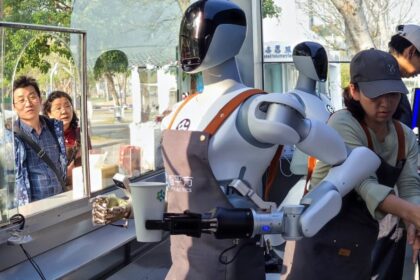
Beyond labor force and demographic policies, Japan has pursued technological solutions to address the challenges of a shrinking and aging population. The country has established itself as a global leader in robotics and automation, developing systems that can compensate for labor shortages across various sectors. From automated manufacturing lines to robotic devices that assist with elderly care, Japan’s investment in technology represents a strategic response to demographic constraints.
Examples include humanoid robots that can lift and transfer patients, monitoring systems that use sensors rather than cameras to detect falls among elderly residents, and automated checkout systems that reduce staffing needs in retail settings. The Japanese government has allocated approximately $440 million between 2020 and 2025 specifically for robotics development, with particular emphasis on applications in healthcare and elderly care.
Artificial intelligence offers additional possibilities for addressing demographic challenges. AI systems can help compensate for labor shortages in knowledge work, improve productivity in service industries, and even provide companionship and monitoring for isolated elderly individuals. The combination of robotics and AI may prove essential for maintaining quality of life and economic vitality in a society with fewer working-age people available to provide services and support.
However, technological solutions face inherent limitations, particularly in sectors requiring human touch, emotional intelligence, or complex social interactions. While machines can perform many physical tasks and process information, they cannot fully replace human caregivers, teachers, or service providers. This reality reinforces the need for a comprehensive strategy that combines technological innovation with policy reforms that increase labor force participation and potentially immigration.
International Perspectives and Global Context
Japan’s demographic challenges, while severe, are not unique. Many other developed nations face similar trends, making Japan a valuable case study for understanding the broader implications of population aging and decline. Countries such as South Korea, Italy, Germany, and China all confront fertility rates below replacement level and rapidly aging populations.
The United States presents an interesting contrast. While its fertility rate of approximately 1.6 births per woman remains below replacement, higher immigration levels have helped maintain more favorable demographics overall. The median age in the United States stands at 38.5 years, compared to 49.8 years in Japan. This difference affects everything from pension system sustainability to workforce composition and economic growth potential.
Research from the Center for Retirement Research at Boston College suggests that Japan serves as a harbinger of what other developed nations will likely experience in coming decades. The United States fertility rate has also declined over the past 15 years, and projections indicate that, without increased immigration or significant policy changes, it will face similar demographic pressures by mid-century. Understanding Japan’s experience, including both policy successes and failures, could help other nations prepare more effectively for their own demographic transitions.
“This is a real barometer of what a number of countries, the United States included, is going to confront in terms of demographics in the next decades and even centuries.”
This observation, made by journalists covering demographic trends, emphasizes how Japan’s current situation may preview challenges that will soon affect societies worldwide. As more countries enter what demographic analysts call the “first wave” of aging, Japan’s experiments with various policy responses will provide invaluable data on what works and what does not.
Social and Cultural Implications
Beyond economic and policy dimensions, Japan’s demographic shift carries profound social and cultural implications. With fewer children being born each year, schools face declining enrollments and some have closed permanently. The educational landscape is transforming as institutions adapt to serve smaller populations with different needs. Universities project shrinking applicant pools, potentially leading to consolidation in higher education.
Community structures face similar pressures. Rural areas have experienced depopulation for decades, with millions of abandoned houses now scattered across the countryside. Young people continue to migrate to urban centers in search of economic opportunity, accelerating population decline in smaller towns and regions. This geographic concentration creates disparities between thriving metropolitan areas and struggling rural communities.
Family structures are evolving as well. With fewer siblings and cousins, young adults have smaller immediate families. The traditional expectation of children caring for aging parents becomes more challenging when one child must shoulder this responsibility alone, or when family members live far apart. Meanwhile, elderly Japanese face greater risks of social isolation as communities shrink and mobility becomes more difficult without nearby family members for support.
Cultural attitudes toward work, family, and gender roles are also shifting, albeit slowly. Despite policy encouraging greater participation by men in childcare and household duties, traditional gender norms persist in many workplaces and homes. The cultural expectation that mothers should shoulder most domestic responsibilities continues to discourage many women from having children or pursuing careers simultaneously. Addressing these deep-seated cultural patterns may prove as important as any policy reform in supporting demographic renewal.
Looking Toward 2050 and Beyond
Projections for Japan’s demographic future present a stark picture. By 2050, the total population is expected to fall to between 105 million and 87 million, depending on fertility and immigration assumptions. The working-age population will have declined substantially, while those over 65 will comprise nearly 40 percent of all Japanese people. This demographic structure will require fundamental adaptations across virtually all aspects of society.
Keiichi Yasunaga, a 19-year-old student preparing to enter university, offered one perspective on this future. “It is hard for me to imagine what it will be like by 2050. I think AI will be at the center of our daily lives. I also think pensions will eventually disappear, and the retirement age will keep getting pushed back, to 80, or maybe even 90 in the worst case.”
This young person’s expectations highlight how demographic anxiety has already permeated the consciousness of Japan’s youth, who anticipate working longer, relying more on technology, and potentially receiving less government support in retirement than previous generations. These expectations could themselves become self-fulfilling prophecies, affecting family formation decisions, career choices, and political attitudes.
Some analysts suggest alternative perspectives on population decline, arguing that smaller populations could bring benefits such as reduced environmental impact, less congestion, and different opportunities for social organization. Countries like Finland and Sweden have maintained strong economies despite declining populations through investments in education, research and development, and innovation. From this viewpoint, demographic change represents not just a crisis to be managed but an opportunity to reimagine social and economic systems for different conditions.
Whatever perspective one takes, it is clear that Japan must continue adapting its institutions, economy, and culture to function effectively with fewer people and different age structures. The success or failure of these adaptations will have significant implications not just for Japan but for other nations soon to face similar demographic realities.
Key Points
- Approximately 1.09 million people turned 20 in Japan this year, the second-lowest figure on record after hitting 1.06 million in 2024.
- The number of new adults peaked at 2.46 million in 1970 during the first postwar baby boom, more than double the current level.
- Japan’s working-age population is projected to fall from 77.28 million in 2015 to 45.29 million by 2065.
- The elderly population aged 65 and older will grow from 33.87 million in 2015 to a peak of 39.35 million around 2042.
- By 2065, approximately 38.4 percent of Japan’s population will be aged 65 or older, roughly one in 2.6 people.
- The old-age dependency ratio will deteriorate from 2.3 workers per senior today to just 1.3 workers per senior by 2065.
- Government pro-natalist policies including childcare support and financial incentives have failed to significantly increase the fertility rate, which remains around 1.2 to 1.3.
- Japan has quadrupled its foreign worker population since 2008 to approximately 2.3 million, though foreigners still comprise only about 2 to 3 percent of the total population.
- The country has invested heavily in robotics and automation to compensate for labor shortages, allocating $440 million to robotics development between 2020 and 2025.
- Many developed nations face similar demographic challenges, making Japan an important case study for global population aging trends.