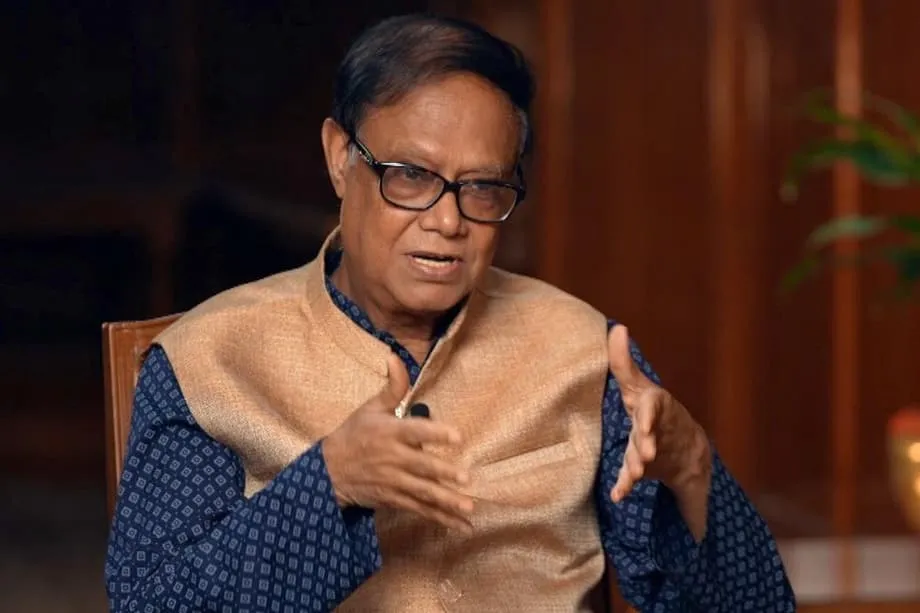
A Governor Learns of His Dismissal on Television
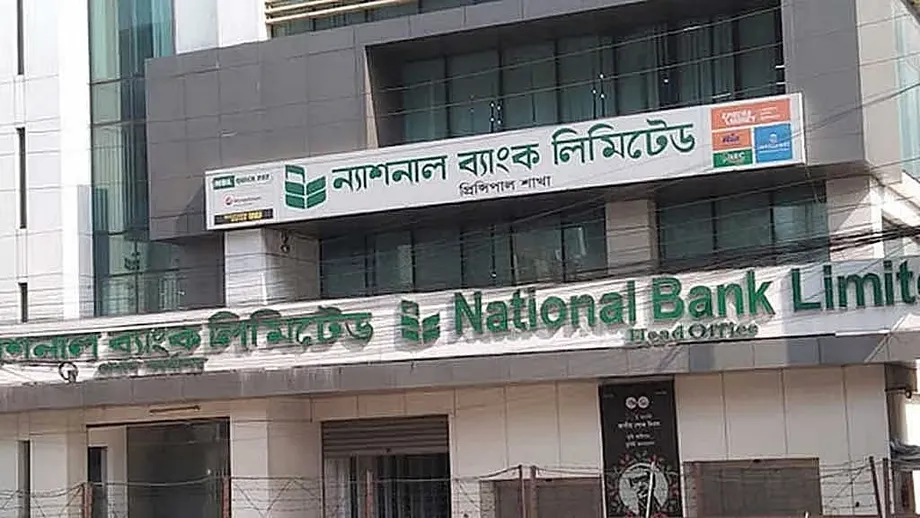
Bangladesh removed central bank governor Ahsan H. Mansur on February 25, 2026, replacing the former International Monetary Fund economist with garment exporter Md Mostaqur Rahman. The change came while the country was rebuilding foreign exchange reserves, repairing troubled banks and pursuing money allegedly taken abroad by people connected to the previous government.
Contents
- A Governor Learns of His Dismissal on Television
- How the Transition Unfolded
- The Crisis Mansur Inherited
- What Improved During His Tenure?
- The Search for Money Taken Abroad
- Reputation Attacks and Unfinished Recovery Work
- Who Is Mostaqur Rahman?
- Why His Company's Loans Matter
- Who Controls Bangladesh Bank?
- The Economic Choices Facing the New Governor
- Key Points
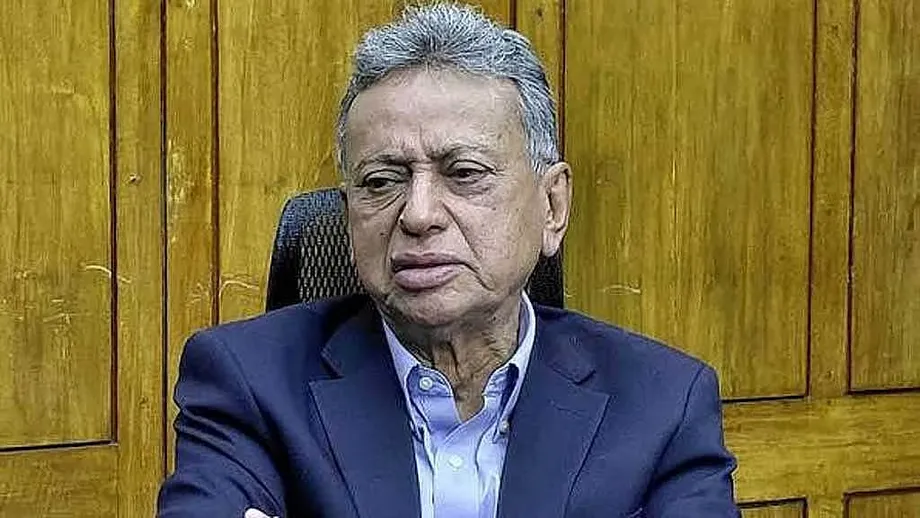
Mansur, 74, arrived at Bangladesh Bank headquarters in Dhaka's Motijheel financial district expecting to continue that work. Instead, he faced protesting central bank officials and learned through television news that his tenure had ended. He said he had received no government phone call, formal notification or meeting with his superiors.
As he left the headquarters around 2:00 pm, Mansur described what he knew to journalists:
I have not resigned, nor have I been removed. I saw it in the media, so I am going home,
His departure came about 18 months into a term scheduled to last four years. Only two days earlier, he had met Finance Minister Amir Khosru Mahmud Chowdhury, briefed him on banking reforms and received assurances that the newly elected Bangladesh Nationalist Party government intended to continue the recovery programme.
Central bank officials also reportedly surrounded Mansur's adviser, Ahsan Ullah, and forcibly escorted him from the building. The confrontation added to concerns about how the leadership change was being carried out at the institution responsible for managing money and supervising commercial banks.
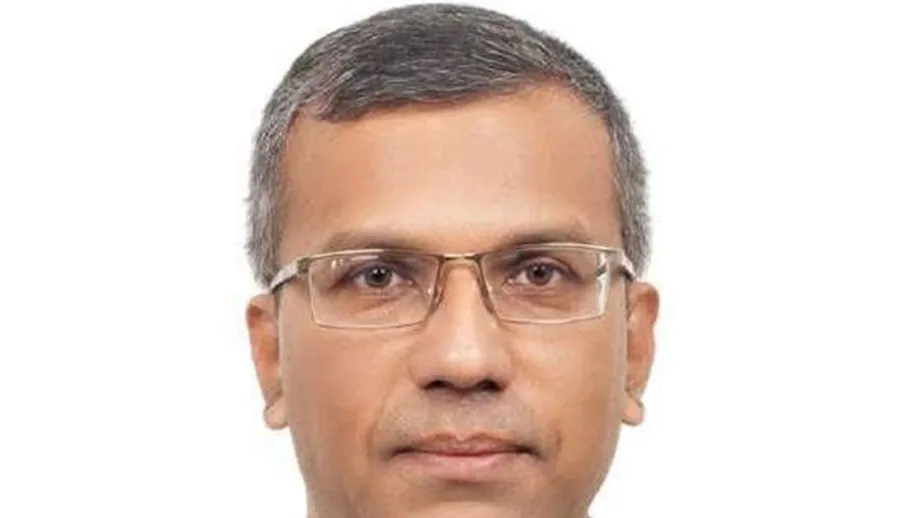
The government immediately named Rahman, a 59-year-old garment exporter and cost and management accountant, as Mansur's replacement. He had no central banking experience. The appointment placed a businessman with connections to the governing party in charge of an economy that had narrowly escaped a balance of payments crisis about 18 months earlier.
How the Transition Unfolded
Mansur had been appointed in August 2024 by the interim government led by Nobel laureate Muhammad Yunus. His task was to stabilise the economy after the student uprising that brought down Sheikh Hasina's government and exposed severe weaknesses in the financial system.
The leadership change followed a period of economic repair, investigations into alleged financial theft and preparations for further banking reforms. The main dates show how quickly the final decision arrived:
- August 2024: Mansur became Bangladesh Bank governor under the Yunus interim government.
- December 2024: Foreign exchange reserves stood at roughly $18.8 billion.
- Late March 2025: Mansur travelled to London to seek help tracing and recovering money allegedly taken from Bangladeshi banks.
- December 2025: Mutual Trust Bank rescheduled approximately Tk 89 crore in stressed loans for Hera Sweaters, Rahman's company.
- February 23, 2026: Mansur met Finance Minister Chowdhury and received assurances that banking reforms would continue.
- February 25, 2026: The government removed Mansur and appointed Rahman through administrative notifications.
By March 1, the central issue was whether Rahman would maintain the policies that had helped stabilise the currency and rebuild reserves while continuing difficult work on troubled banks. The government defended its authority to change personnel, while economists questioned the effect on central bank independence.
The Crisis Mansur Inherited
Bangladesh's foreign exchange reserves had exceeded $48 billion in 2021 before falling to roughly $18.8 billion by December 2024. Reserves are foreign currencies held by the central bank, helping a country pay for imports and meet payments abroad when incoming dollars are scarce.
The taka had weakened under an artificially managed exchange rate, inflation had reached a high of 11.36%, its highest level in 12 years, and banks faced deep problems linked to lending to politically connected industrialists. Mansur described the alleged extraction of money from banks in stark terms:
a designed robbery of the financial system
Mansur brought nearly three decades of experience at the IMF in Washington. His response centred on tighter monetary policy and a more flexible exchange rate, with financial discipline taking priority over pressure to make borrowing cheaper.
Bangladesh Bank dismantled the rigid exchange rate system that had encouraged a black market for dollars. Allowing the taka to move towards a market rate reduced the gap between official dollar prices and those available outside formal channels.
Interest rates rose from 8.5% to 10%, an increase of 1.5 percentage points. Higher rates make borrowing more expensive and can slow spending, reducing pressure on prices. The policy also signalled a move away from creating money to meet politically driven demands.
Businesses faced a difficult tradeoff: tighter credit could restrict activity, but unstable prices and an unpredictable exchange rate had already made trade harder. Mansur's programme sought to restore enough stability for companies and households to make financial decisions with greater certainty.
What Improved During His Tenure?
The taka settled between Tk122 and Tk123 per US dollar, reducing the currency volatility that had disrupted trade. A steadier exchange rate helped importers estimate how many taka they would need to pay bills denominated in dollars.
Remittances, money sent home by Bangladeshis working abroad, rose to record levels. Unfavourable official exchange rates had previously encouraged senders to use informal channels. A more realistic rate helped draw those dollars back into the formal financial system.
Foreign exchange reserves reached $30.3 billion by February 2026, enough to cover more than four months of imports. Compared with the December 2024 figure of $18.8 billion, that represented an increase of $11.5 billion, or about 61%. The reserve stock was still below the level of more than $48 billion recorded in 2021.
Inflation moved down from its 11.36% peak towards single digits. Food inflation fell from 14.5% to 8.5%, a reduction of six percentage points. Lower inflation means prices rise more slowly, easing the pace at which household purchasing power is lost.
Mansur's team also began Bangladesh's first bank mergers, targeting distressed institutions. A merger combines banks into a single organisation, a way to reorganise institutions struggling with weak finances. He also pushed for an asset management company to deal with toxic loans, debts that banks have little prospect of collecting in full.
Mansur's IMF experience helped reassure international investors, rating agencies and multilateral lenders about Bangladesh's commitment to financial rules. The IMF continued disbursements under a $4.7 billion bailout programme during his tenure, while Bangladesh sought an additional $3 billion in augmented financing.
The stronger reserve position and steadier currency gave the economy room to recover. Repairing the banking system remained a larger unfinished task, particularly where borrowers were failing to repay loans and institutions needed fresh capital or consolidation.
The Search for Money Taken Abroad
Mansur pursued another campaign alongside economic stabilisation: recovering billions of dollars allegedly laundered out of Bangladesh by allies of the previous regime. He estimated that tens of billions of dollars had been diverted from the banking system, with London a major destination.
In late March 2025, he travelled to London for meetings with British Foreign Office ministers, the National Crime Agency and private firms specialising in asset recovery. He sought help tracing funds believed to have been taken from Bangladeshi banks and invested in British property.
Mansur explained whom he wanted investigators to pursue:
My primary target is those who have looted my banks,
He said the money had been moved to Singapore, Dubai, London and other destinations. Recovering assets across borders requires investigators to trace ownership and work through the legal systems of the countries where property or funds are held.
Mansur hosted a London summit bringing together law firms and litigation funders to discuss recovery strategies. Litigation funders provide money for legal proceedings. The National Crime Agency also supplied technical assistance to Bangladeshi investigators.
The wider investigations had already reached prominent political figures. Tulip Siddiq, the former British City minister and Sheikh Hasina's niece, resigned from her ministerial position after Dhaka's Anti-Corruption Commission filed criminal cases against her family. Mansur maintained that he had never made public comments specifically about Siddiq.
The pursuit of assets was a sensitive part of his work because it involved people with substantial wealth and political connections. His removal has left attention focused on whether that effort will continue under the new leadership.
Reputation Attacks and Unfinished Recovery Work
British members of parliament received emails shortly before Mansur's London visit containing links to articles attacking his integrity and his daughter. The articles appeared under the names of supposed journalists using fake identities and stock photographs as profile pictures.
Mansur believed the campaign came from the people whose assets he was trying to recover. Speaking about the attacks on his reputation, he said:
The sole purpose is to diminish my reputation,
The governor said he would continue despite the pressure:
If I quit, they win.
His banking reforms included a strategy described as "ring-fencing" large industrial defaulters. The aim was to keep their businesses operating while preventing management from taking further benefits out of them. That approach sought to preserve productive operations while restricting the people responsible for unpaid debts.
Mansur also sought legal changes that would enable authorities to seize assets in Bangladesh and abroad. Such measures formed part of the effort to turn investigations into actual recoveries of money or property.
No official explanation connected his removal to the asset recovery campaign. The abrupt departure nevertheless came while that work, and delicate negotiations with the IMF and World Bank, were still under way.
Who Is Mostaqur Rahman?
Md Mostaqur Rahman is the managing director and chief executive of Hera Sweaters Ltd., a garment export company. He chairs the Bangladesh Garment Manufacturers and Exporters Association's standing committee on the central bank and is a member of the BNP's election steering committee.
His appointment breaks with Bangladesh's tradition over roughly 50 years of choosing bureaucrats, economists or career bankers to lead the central bank. Rahman is a Fellow Cost and Management Accountant, known by the professional designation FCMA, and holds accounting degrees from Dhaka University.
Mansur's advanced economics training and decades at the IMF contrast with Rahman's experience running a business. Supporters of the new governor argue that his private sector background gives him practical knowledge of the credit constraints facing Bangladeshi companies.
Rahman identified "Restoring confidence" in the banking sector as an immediate priority. He pledged to continue reforms while bringing a perspective more responsive to business needs to monetary policy.
The central bank's responsibilities extend beyond helping companies obtain credit. It sets monetary policy, manages currency conditions and supervises the banks that lend to those companies. Decisions that make borrowing easier must be weighed against inflation, repayment risks and the stability of the financial system.
Rahman's political role has also drawn scrutiny. His membership of the BNP election steering committee places him within the governing party's inner circle, at a time when economists are calling for stronger protection of the central bank's independence.
Why His Company's Loans Matter
Mutual Trust Bank rescheduled approximately Tk 89 crore in stressed loans for Hera Sweaters in December 2025, only months before Rahman's appointment. A crore is 10 million, making Tk 89 crore equivalent to Tk 890 million.
The restructuring used a special facility for distressed borrowers. It gave the company a repayment period of 10 years and a grace period of two years. Rescheduling changes the timetable for repaying debt, providing breathing space for a borrower struggling to meet the original terms.
A commercial bank managing director, speaking anonymously, questioned how the arrangement would sit alongside Rahman's new regulatory responsibilities:
How can someone who rescheduled loans for his own company under special terms work in the interest of the country's banks?
Legal experts said Rahman must sever all professional ties with other institutions before assuming office. The concern is that the central bank supervises lenders whose decisions can affect the governor's former business interests and the sector in which he worked.
Deen Islam, a professor at Dhaka University, framed the independence concern this way:
How can Bangladesh Bank remain independent if it is led by an active business figure from a sector it must regulate?
Rahman's supporters see business experience as an advantage in understanding borrowers. Critics focus on the governor's duty to apply banking rules impartially, including when those rules impose costs on companies or restrict lending.
Who Controls Bangladesh Bank?
Finance Minister Chowdhury defended the change as a decision available to a newly elected administration implementing its vision. He said personnel changes were happening across government:
not only in Bangladesh Bank but in many places
The Financial Institutions Division completed Mansur's removal and Rahman's appointment within hours through administrative notifications. The speed of the process, alongside employee protests at the bank, intensified concern about the strength of institutional procedures.
Selim Raihan, executive director of the South Asian Network on Economic Modeling, explained why the governor's position carries responsibilities beyond economic policy:
A central bank is not merely a policy-making body; it is also the regulator and supervisor of commercial banks.
Raihan warned that a governor drawn from business might instinctively favour corporate interests over controlling inflation and preserving financial stability. Central bank independence is intended to give monetary authorities room to make those decisions without being directed by short term political demands.
Birupaksha Paul, a professor of economics at the State University of New York, said amendments to the Bangladesh Bank Order intended to give the institution greater autonomy had stalled. Consequently, the choice of governor remained effectively at the finance minister's discretion.
The contrast with the United States illustrates the concern. President Donald Trump has pressured Federal Reserve Chairman Jerome Powell to lower interest rates and publicly demanded his resignation, despite having appointed him. The American legal framework protects central bank leadership against arbitrary dismissal to preserve monetary independence.
Bangladesh's rapid replacement of its governor demonstrated how much authority the executive retains. Economists fear that weak legal protection, combined with Rahman's party connections, could draw Bangladesh Bank closer to the government's political priorities.
The Economic Choices Facing the New Governor
Bangladesh's banking system remains fragile despite the improvement in reserves and the exchange rate. Non-performing loans officially stand at 36%. These are loans on which borrowers are failing to make required payments, reducing banks' ability to collect income and extend sound new credit.
Several institutions still need recapitalisation or mergers. Recapitalisation means putting fresh money into a bank to strengthen its financial base and help absorb losses. The need for such repairs explains why stabilising the currency was only one part of Mansur's assignment.
Bangladesh had narrowly avoided the kind of crisis experienced by Sri Lanka and Pakistan, which required severe IMF adjustment programmes after exhausting their reserves. The gains made during Mansur's tenure created a stronger starting point, but unresolved bank losses continued to weigh on the recovery.
Rahman's promise to continue reform will be tested through decisions on interest rates, exchange rate flexibility, distressed banks and asset recovery. Maintaining tight monetary policy and action against financial wrongdoing would preserve the main direction of his predecessor's programme.
His relationships with domestic entrepreneurs could help rebuild trust between borrowers and banks and support private investment. That benefit would depend on lending being accompanied by reliable repayment and effective supervision.
A return to loose credit, politically directed lending or tolerance of unpaid loans would put pressure on the gains of the preceding 18 months. Cheaper borrowing can support activity, but expanding credit while bank losses remain unresolved can leave lenders more exposed.
International investors and lenders will be assessing the predictability of policy under the new governor. Mansur's departure removed a figure who had supplied credibility during a difficult recovery. The BNP administration now carries responsibility for keeping that recovery moving while ensuring that the central bank can regulate businesses and banks impartially.
Key Points
- Ahsan H. Mansur was removed on February 25, 2026, about 18 months into a term of four years, and learned of the decision through television news.
- Foreign exchange reserves rose from roughly $18.8 billion in December 2024 to $30.3 billion by February 2026, while the taka stabilised between Tk122 and Tk123 per dollar.
- Interest rates increased from 8.5% to 10%, and food inflation fell from 14.5% to 8.5% during the stabilisation programme.
- Mansur pursued money allegedly taken abroad, initiated bank mergers and sought legal changes to support asset seizures.
- His replacement, Md Mostaqur Rahman, is a garment exporter, accountant and BNP election steering committee member with no central banking experience.
- Hera Sweaters received a restructuring of approximately Tk 89 crore in stressed loans in December 2025, prompting concerns about conflicts of interest.
- With non-performing loans officially at 36%, the new governor faces unfinished bank repairs alongside demands to preserve monetary stability and regulatory independence.