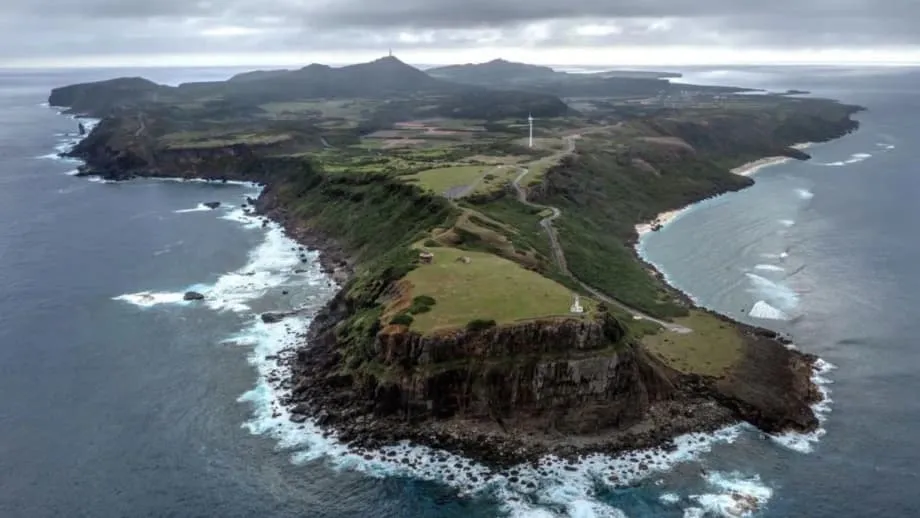
A Missile Deadline Just 110 Kilometers From Taiwan
Japan plans to deploy Type-03 medium range surface-to-air missiles on Yonaguni Island by March 2031, placing an expanded air defense force on its westernmost territory, just 110 kilometers east of Taiwan. Defense Minister Shinjiro Koizumi announced the schedule on Tuesday, giving the first concrete deployment target for a plan proposed three years earlier.
Contents
- A Missile Deadline Just 110 Kilometers From Taiwan
- What the Type-03 System Is Designed to Do
- How Yonaguni Became a Military Outpost
- A Defense Network Across the Southwestern Islands
- The Taiwan Remarks Behind the Diplomatic Dispute
- Senkaku Tensions and Drone Flights Near Yonaguni
- Export Restrictions Add Economic Pressure
- Residents Face a Choice Between Protection and Exposure
- A Record Budget and Wider Security Risks
- The Essentials
The target falls in fiscal year 2030, which ends in March 2031. Construction progress could still change the timing. The Defense Ministry is conducting basic studies for improvements on the eastern side of Camp Yonaguni, where the missile infrastructure and additional personnel would be accommodated.
About 100 personnel are expected to join approximately 160 Self-Defense Force members already stationed on the island for coastal surveillance around the clock. That would bring the garrison to roughly 260, an increase of about 63 percent from its current size.
Yonaguni lies approximately 1,900 kilometers southwest of Tokyo. Taiwan's eastern coastline can be seen from its shores on clear days, making the island's exposure to a possible conflict over Taiwan a practical concern for its approximately 1,500 residents.
The announcement comes amid a dispute between Tokyo and Beijing over Prime Minister Sanae Takaichi's comments about a possible Japanese response to an attack on Taiwan. China claims the democratic island as its territory and has refused to renounce force to achieve what it calls reunification.
Japan is proceeding despite Chinese diplomatic and economic pressure. Koizumi describes the deployment as defensive, intended to reduce the possibility of attacks on Japan and protect its citizens' lives and peaceful livelihoods. Some Yonaguni residents support that argument, while others fear that more weapons could make their home a target.
What the Type-03 System Is Designed to Do
The planned unit will operate Japanese Type-03 guided missiles, also known as Chu-SAM. Developed by Mitsubishi Electric and manufactured by Mitsubishi Heavy Industries, the system is intended to counter hostile aircraft and incoming ballistic missiles.
Each missile has an operational range exceeding 50 kilometers and can travel at Mach 2.5, or about two and a half times the speed of sound. Surface-to-air means the missile is launched from the ground to intercept a threat in the air.
The system's radar provides surveillance through 360 degrees, allowing operators to watch every direction. Its Active Electronically Scanned Array, or AESA, technology can track up to 100 targets simultaneously while the system engages up to 12 threats at once.
The missile uses inertial guidance and command updates during flight, followed by active radar homing in its final approach. In simple terms, it follows a calculated course, receives updated instructions and then uses radar to find its target as it closes in.
Koizumi said the weapons would provide a protective umbrella over strategically important waters between Japan and Taiwan. The planned batteries will also include improvements designed to counter hypersonic glide vehicles, according to Defense Ministry specifications released in December 2022.
Hypersonic glide vehicles are advanced warheads capable of traveling faster than Mach 5, or five times the speed of sound. Preparing for them extends the deployment's purpose beyond existing threats to weapons Japan expects its defenses may need to confront in the future.
The Defense Ministry's documentation previously given to municipal authorities states that the missile unit will not conduct exercises involving live ammunition on Yonaguni. Its presence will nevertheless require facilities and space for the weapons, supporting equipment and additional troops.
How Yonaguni Became a Military Outpost
Yonaguni was previously known chiefly as a tourist destination associated with indigenous miniature horses and seasonal hammerhead shark migrations. Over the past decade, it has acquired an expanding military role because of its position near Taiwan and disputed waters in the East China Sea.
Residents narrowly voted in favor of hosting the initial Self-Defense Force base in 2015. Japan established the Ground Self-Defense Force camp in 2016, deploying coastal surveillance units and radar installations on mountain peaks.
The garrison watches Chinese naval movements around the clock. Its surveillance contributes to early warning of activity through the Miyako Strait, an air and maritime passage across Japan's exclusive economic zone.
Japan also plans to establish an electronic warfare unit on Yonaguni during fiscal year 2026. Such a unit can disrupt an opponent's communications and radar, making it harder for hostile forces to exchange instructions or locate targets.
The island's military development has followed a sequence: surveillance first, electronic warfare next, and missile defense planned for fiscal year 2030. Together, those functions would allow the garrison to detect activity, interfere with hostile electronic systems and intercept aerial threats.
Important dates in that expansion and the surrounding dispute include:
- 2015: Yonaguni residents narrowly supported hosting the initial Self-Defense Force base.
- 2016: Japan opened the Ground Self-Defense Force camp with coastal surveillance capabilities.
- 2022: The Defense Ministry announced plans to strengthen defenses on remote western islands, including the proposed missile deployment.
- December 2022: Ministry specifications described improvements intended to counter hypersonic glide vehicles.
- November 2025: Takaichi discussed a possible Japanese military response to a Taiwan conflict, and Koizumi visited Yonaguni to affirm the deployment plans.
- Fiscal year 2026: Japan plans to establish an electronic warfare unit on the island.
- Fiscal year 2030, ending March 2031: Japan aims to deploy the Type-03 missile unit, subject to construction progress.
A Defense Network Across the Southwestern Islands
Yonaguni is part of a wider effort to strengthen Japan's Nansei island chain. Japan has already stationed Type-03 air defense systems and Type-12 surface-to-ship missiles on Ishigaki Island, farther north in the chain.
The two missile types serve different tasks. Surface-to-air missiles intercept aerial threats, while surface-to-ship missiles are intended to strike vessels. Their deployment across several islands creates a distributed defense network with overlapping areas of coverage.
Japan uses that network to monitor, and potentially obstruct, Chinese naval movements through the Miyako Strait and other important passages in the first island chain. Chinese military planners regard those routes as necessary for projecting power beyond the East China Sea.
The strategy combines surveillance, electronic warfare and missile defenses across islands including Ishigaki and Yonaguni. Spreading those capabilities across several locations increases the potential cost and difficulty of military action in the area.
The Defense Ministry's 2022 plans marked a broader shift in priorities, moving resources from traditional northern threats associated with Russia toward growing challenges in the East China Sea. Yonaguni's expansion is one part of that realignment.
The Taiwan Remarks Behind the Diplomatic Dispute
Takaichi's November 2025 remarks to parliament brought the Taiwan issue into sharper focus. She suggested that Japan would activate its Self-Defense Forces if a conflict posed an existential threat to Japanese security, meaning a threat to the country's survival.
Her comments moved away from decades of strategic ambiguity about Taiwan's defense. Strategic ambiguity means leaving some uncertainty about how a government would respond, rather than declaring a firm course of action in advance.
China responded with diplomatic and economic measures. Beijing discouraged Chinese citizens from visiting Japan, affecting a tourism sector that is an important part of the Japanese economy. Chinese authorities also restricted exports of rare earth minerals used in Japanese manufacturing involving advanced technology and imposed broad curbs on technologies with both civilian and military uses destined for Japanese defense contractors.
Wang Yi, China's top diplomat, accused forces within Japan of trying to revive militarism during remarks at the Munich Security Conference earlier in February. Takaichi answered by telling parliament that China was intensifying attempts to change the status quo through force or coercion in the East and South China Seas.
Takaichi described Japan's security environment as the most severe and complex since the end of World War II. Her government's position is that stronger defenses are necessary to respond to those conditions.
The missile schedule gives that position a concrete timetable, although the deployment proposal predates the November dispute. Japan is turning an earlier plan into a scheduled expansion while relations with China remain strained.
Senkaku Tensions and Drone Flights Near Yonaguni
The uninhabited Senkaku Islands, approximately 150 kilometers from Yonaguni, are another source of tension between Japan and China. Tokyo administers the islands, which Beijing also claims and calls the Diaoyu.
Repeated entries by Chinese vessels into Japanese waters around the Senkakus have required continued vigilance from the Yonaguni garrison. The island's surveillance role therefore concerns both Taiwan's proximity and a territorial dispute involving islands administered by Japan.
Koizumi visited Yonaguni in November to affirm the missile deployment plans. Beijing accused Japan of creating regional tension and provoking military confrontation.
Within days of the visit, Chinese drones flew near Yonaguni, prompting Japan to scramble fighter jets. The exchange of military signals has continued into 2026, with both countries increasing their presence in contested waters and airspace around the island chain.
For Yonaguni, those movements bring the diplomatic dispute close to home. Radar monitoring, aircraft responses and the planned deployment are linked to activity in the seas and skies surrounding the island.
Export Restrictions Add Economic Pressure
China imposed export restrictions on 20 Japanese companies and entities one day before the missile announcement. The affected organizations included subsidiaries of Mitsubishi Heavy Industries and Japan's space agency.
Beijing cited national security concerns and accused the organizations of contributing to Japan's remilitarization and alleged nuclear ambitions. Chinese commerce ministry officials described the restrictions as completely legitimate, reasonable and lawful, while maintaining that honest Japanese businesses had nothing to fear.
Deputy Chief Cabinet Secretary Kei Sato strongly opposed the action, describing it as absolutely intolerable and extremely regrettable. Tokyo's response reflected its rejection of economic pressure aimed at changing Japan's defense decisions.
The latest restrictions sit alongside rare earth export controls, limits on tourism and cancellations of cultural exchanges. Rare earth minerals matter because they are used in manufacturing involving advanced technology, while technologies with both civilian and military uses can be affected by controls directed at defense activity.
China has also arranged for pandas to return from Japanese zoos and canceled planned concerts and cultural events. Those actions have been interpreted as symbolic expressions of diplomatic displeasure.
A Chinese diplomat in Japan reportedly suggested extreme consequences for Takaichi's continued defiance. Official channels have concentrated mainly on economic coercion, alongside the drone flights and naval maneuvers that form part of the military signaling.
The pressure connects security policy to civilian economic interests. Tourism businesses, manufacturers and cultural organizations can feel the effects of a diplomatic dispute even when the immediate disagreement concerns missile deployments or statements about Taiwan.
Residents Face a Choice Between Protection and Exposure
The Defense Ministry plans to brief Yonaguni's approximately 1,500 residents during the week following the announcement. The proposed missile unit would expand a military presence that has already changed the island over the past decade.
Residents remain divided. The narrow 2015 vote supported the original base, but some islanders now fear that continued military expansion will make their home more threatening in Beijing's eyes and therefore more likely to be attacked.
Other residents see the weapons as a necessary deterrent against Chinese expansion. Deterrence means trying to prevent an attack by making its likely cost too high for an opponent to accept.
Koizumi's case rests on that protective purpose: stronger defenses should reduce the chance of an armed attack and protect peaceful daily life. The concern among opponents is that concentrating soldiers and weapons on a small island could increase its exposure during a conflict.
The planned addition of about 100 personnel is substantial beside a current garrison of roughly 160. The decision to avoid exercises involving live ammunition on Yonaguni addresses one aspect of the unit's operation, while construction and the larger permanent military presence remain central to the local debate.
A Record Budget and Wider Security Risks
Japan has approved a record defense budget of nine trillion yen, approximately $58 billion, for the coming fiscal year. The spending supports military modernization despite China's economic retaliation.
Tokyo's broader program includes obtaining counterstrike capabilities and easing restrictions on exports of lethal defense equipment. Counterstrike capabilities refer to the ability to strike back at an attacker, extending Japan's military options beyond intercepting incoming threats.
Those changes represent a departure from Japan's postwar pacifist constraints. Takaichi's recent electoral victory has given her administration political room to press ahead with stronger defense capabilities.
A Chinese attack on Taiwan could lead to direct military confrontation between Washington and Beijing and potentially draw Japan into the conflict through its mutual defense treaty obligations with the United States. Yonaguni's position makes it particularly exposed to such a regional confrontation.
Placing missile defenses within sight of Taiwan gives the island a role as an early point of contact in a wider crisis. Its planned combination of surveillance, electronic warfare and air defense shows that Tokyo is preparing for a possible conflict through concrete deployments.
Strategic partners in Southeast Asia and East Africa are also watching because fighting or a blockade in the Taiwan Strait could disrupt shipping and supply chains. Interruptions to advanced semiconductor and manufactured goods supplies would affect technology and automotive production, while disrupted maritime routes would threaten economies dependent on those goods.
Japan's approach is to strengthen its own ability to defend its territory while continuing to rely on its alliance with the United States. Across the southwestern islands, the aim is to make military action more costly, while Yonaguni's residents must live with both the promised protection and the risks created by their location.
The Essentials
- Japan aims to deploy Type-03 missiles on Yonaguni by March 2031, with timing subject to construction progress.
- Yonaguni is 110 kilometers east of Taiwan and approximately 1,900 kilometers southwest of Tokyo.
- About 100 additional personnel would join a garrison of roughly 160 on an island with approximately 1,500 residents.
- The missiles have a range exceeding 50 kilometers; the system can track 100 targets and engage up to 12 threats simultaneously.
- An electronic warfare unit is planned for fiscal year 2026, and the missile unit will not conduct exercises involving live ammunition on Yonaguni.
- China has imposed export restrictions on 20 Japanese companies and entities amid tensions over Takaichi's Taiwan remarks.
- Japan has approved a record defense budget of nine trillion yen, approximately $58 billion, for the coming fiscal year.
- Residents are divided between viewing the expansion as protection and fearing that it could make their island a target.