Fewer Visitors, Lower Earnings and a Deepening Crisis
Cambodia's Angkor Archaeological Park welcomed 955,131 international visitors in 2025, a decline of 6.7%, and earned $44.7 million from tickets, down 6.5%. January 2026 brought a sharper setback: visits fell 36% compared with January 2025, while revenue dropped 34.5% to $4.52 million. As of February 7, the figures point to mounting pressure during the country's current tourism high season.
Contents
- Fewer Visitors, Lower Earnings and a Deepening Crisis
- How the Thai Border Became a Barrier to Tourism
- Scam Compounds Have Changed Cambodia's Image
- A Student's Death and Government Travel Warnings
- Asian Markets Shrink While Europe Holds Up
- What Thai Forces Found at Royal Hill
- Arrests, Deportations and Pressure to End Cyber Fraud
- Hotels, Restaurants and Small Vendors Bear the Losses
- Visa Relief and a Broader Tourism Pitch
- Recovery Depends on Rebuilding Trust
- Key Points
Cambodia faces two connected problems. Armed conflict with Thailand has closed important land routes used by tourists, while the country's reputation as a center for online fraud has frightened travelers, especially in Asian markets. Together, these pressures threaten years of destination promotion and investment in tourism infrastructure.
Ministry data released during the week showed that tourism contributed 9.4% of Cambodia's gross domestic product in 2024, compared with 12.1% in 2019. Gross domestic product, or GDP, measures the value of goods and services produced in a country. Tourism's share therefore fell by 2.7 percentage points between those years, leaving it below one tenth of the economy.
Visitors from the Asia Pacific region, traditionally the foundation of Cambodia's tourism business, declined 20% in 2025. Some source markets recorded falls exceeding 50%. The losses extend beyond the lingering effects of the pandemic, reaching hotels, restaurants, transport operators and vendors whose earnings depend on a steady stream of visitors.
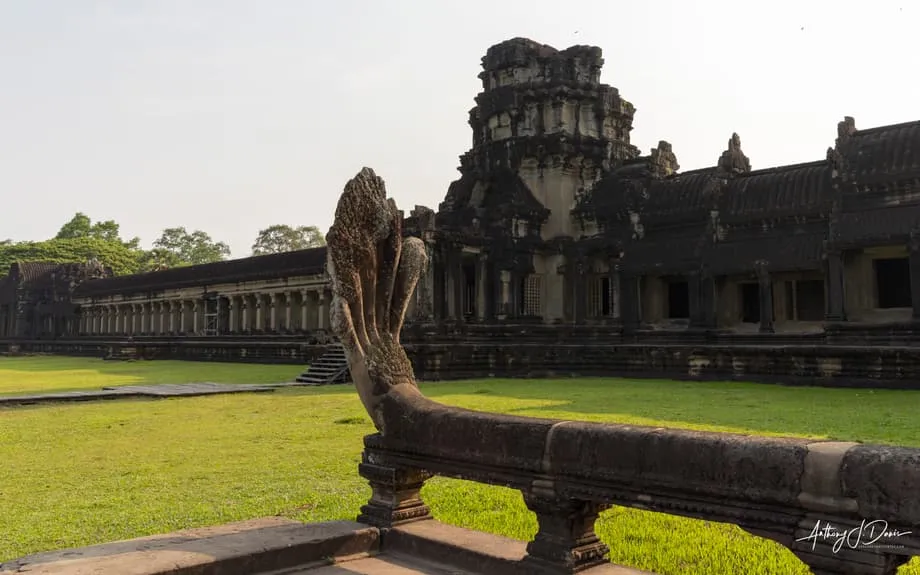
Angkor Wat and the carved stone faces and detailed reliefs of Bayon remain central attractions. Yet Cambodia's ancient monuments now share international attention with reports of scam compounds, trafficking and fighting along its western frontier. Early results for 2026 suggest that the damage is still spreading.
How the Thai Border Became a Barrier to Tourism
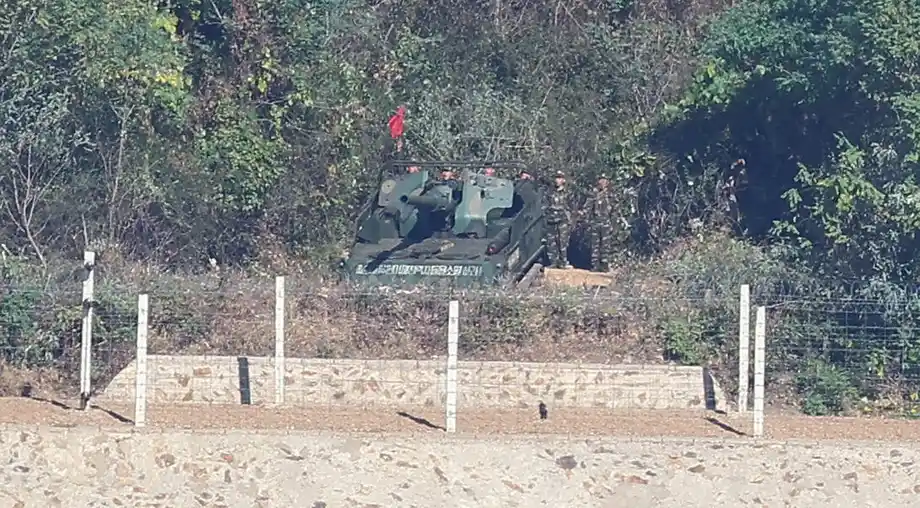
Thailand and Cambodia experienced their worst border conflict in more than a decade during 2025. Longstanding disputes over territory near the Preah Vihear temple escalated into sustained fighting, including artillery exchanges and military strikes. At least one Cambodian soldier died, and both countries imposed severe restrictions on movement across the border.
Thailand banned tourist crossings through seven provinces, blocking vehicles and travelers from entering Cambodia by land. The Thai military described the restrictions as matching the security situation. Prime Minister Paetongtarn Shinawatra also linked them explicitly to efforts against scam operations in Cambodian border towns.
Land arrivals into Cambodia fell 26.5% through September 2025, representing about 800,000 fewer visitors than a year earlier. Visitors from Thailand, historically Cambodia's largest source market, declined more than 35% between January and September. In September alone, the fall reached 91% as the closure took full effect. Thai visitor numbers were down more than 50% across 2025.
Laos also registered sharp visitor declines as the restrictions disrupted transit routes. The effects reached Siem Reap, even though it is far from the border conflict zones. Many travelers had traditionally reached Angkor Wat by road from Thailand, combining destinations across Southeast Asia in a single journey. Closing that route removed an established connection to the UNESCO World Heritage site.
A ceasefire took effect on December 27, 2025, but remained fragile after an earlier agreement in June collapsed. The sequence of conflict, restrictions and renewed diplomacy helps explain why a truce alone had not restored normal tourism flows by early February.
- June 2025: An earlier agreement intended to halt the border conflict subsequently collapsed.
- January to September 2025: Thai visitor arrivals fell more than 35%, with a 91% decline in September alone.
- November 2025: Cambodia and South Korea began coordinating responses to transnational scam cases.
- December 2025: Thai forces bombed and occupied the Royal Hill compound in O'Smach during border clashes.
- December 27, 2025: A new ceasefire took effect between Cambodia and Thailand.
- January 2026: Angkor visits fell 36%, and China's embassy warned about the damage caused by Cambodia's scam hub reputation.
Scam Compounds Have Changed Cambodia's Image
Cambodia's online scam operations have become another obstacle to attracting visitors. Criminal groups have established compounds, often in casino resorts and special economic zones, capable of housing thousands of workers. Special economic zones are areas set aside for business activity under particular investment arrangements; some have become locations for these criminal operations.
Many people working inside the compounds are victims of human trafficking. They were drawn by false promises of employment, then forced to carry out fraud under conditions approaching slavery. The operations generate billions of dollars annually through romance scams, fake investment platforms, cryptocurrency fraud and impersonation schemes.
Romance scams use an invented relationship to gain a victim's trust before asking for money. Impersonation schemes rely on a different kind of pressure, with criminals pretending to be police officers, bank employees or other trusted figures. Both methods can be run across borders from the same compound.
The United Nations Office on Drugs and Crime has described reports of illicit profits flowing to political elites in Cambodia. Those financial ties create competing interests that have hampered enforcement. Authorities face pressure to close criminal businesses while dealing with the apparent involvement of domestic power structures benefiting from them.
East Asian travelers have been especially exposed to news and social media coverage of abductions, torture and deaths linked to Cambodia. Western travelers often have less awareness of these dangers. That difference helps explain why some European markets have held up while important Asian markets have weakened.
A Student's Death and Government Travel Warnings
A South Korean student's death brought the scam crisis into particularly sharp focus. The student was allegedly tortured after being lured to work in a Cambodian scam compound. Seoul responded with Level 4 warnings, the highest tier in its travel warning system, effectively banning travel to parts of Cambodia where employment fraud had surged.
South Korea later lowered warnings to Level 2 or Level 1 for different regions following diplomatic negotiations and cooperation on scam cases. The initial restrictions had placed affected areas in a category comparable to active war zones, and their psychological effect on potential Korean visitors persisted after the changes.
Australia's advisory urged its citizens to exercise a high degree of caution in Cambodia and warned against travel within 50 kilometers of the Thai border. It cited armed conflict, military strikes and landmine risks, described the security situation as unpredictable, and said land border crossings remained closed.
China applied pressure through diplomatic channels. In January, the Chinese embassy in Cambodia posted on WeChat that the country's reputation as a scam hub risked damaging bilateral relations. Beijing demanded action against operations that primarily target Chinese citizens, adding pressure on Phnom Penh to dismantle the networks.
International warnings compound the practical problems caused by closed routes. Travelers deciding whether to book a holiday must weigh access to Cambodia against concerns about personal safety. Lowering an advisory can help, but the change takes place against continuing public attention to trafficking and fraud.
Asian Markets Shrink While Europe Holds Up
South Korean tourism fell 20.6% following the implementation of the travel warnings. Alongside the steep Thai decline and reduced arrivals from Laos, that loss weakened the regional visitor base on which Cambodia had long relied.
French visits rose 9.7%, and arrivals from the United Kingdom increased 17%. Those gains show that Cambodia's tourism decline has varied by market rather than affecting every country in the same way. European resilience, however, has come alongside substantial losses among nearby countries.
Chinese arrivals rose 41.5% in December 2025, providing one encouraging signal. Even with that increase, the Chinese market remained at less than half its level before the pandemic. Cambodia was therefore still missing many of the visitors who once spent heavily in luxury hotels in Siem Reap and Phnom Penh.
The combination leaves businesses facing an uneven recovery. Growth from France and the United Kingdom has occurred while regional arrivals have fallen 20%. Restoring the flow of visitors from nearby Asian countries is especially consequential because those markets previously formed the foundation of the sector.
Stephen Higgins, managing partner at Mekong Strategic Capital, observed that perceptions of danger affect East Asian travelers more intensely than Western visitors. His assessment helps explain the pattern in the arrival figures: European markets have shown resilience, while several crucial regional markets remain depressed.
What Thai Forces Found at Royal Hill
In O'Smach, a Cambodian border town, Thai forces occupied a compound called Royal Hill after bombing it during the December clashes. The building had six stories. Its abandoned rooms revealed the scale and organization of fraud operations that had been operating inside.
Some rooms were designed to resemble police stations from at least seven countries, including Australia, Singapore, China and Brazil. Uniforms and insignia made to look official helped complete the setting. Workers could use these rooms as backdrops while pretending to be police and threatening victims with arrest unless they immediately transferred money.
Other rooms copied bank branches. One replicated a Vietnamese bank, with service counters and waiting areas intended to convince targets that they were communicating with a real financial institution. The physical sets supported fraud built around familiar symbols of authority.
Documents left in the compound included detailed profiles of intended victims. One concerned a Japanese retiree aged 73 and contained telephone numbers and bank account balances. Investigators also found romance scam scripts in several languages.
The Thai military recovered 871 SIM cards used for anonymous international communication, dozens of smartphones and hard drives containing what appeared to be extensive databases of potential targets. Together, the equipment, scripts and personal records showed how workers could approach victims across countries and languages.
Lt. Gen. Teeranan Nandhakwang, director of the Thai army's intelligence unit, described the operation as highly organized, with established systems and workflows intended to maximize fraud efficiency. The compound also contained military style equipment for controlling riots and protocols for emergency drills. Those findings revealed arrangements for controlling captive workers through force, alongside the machinery used to deceive people abroad.
Arrests, Deportations and Pressure to End Cyber Fraud
Cambodian authorities have launched enforcement operations as tourism losses and international pressure mount. The Ministry of Interior announced nearly 2,000 arrests connected to scam centers, while figures for recent operations put the number of suspects detained at more than 2,000. The difference leaves the recent detention total described at two levels of precision.
Over the preceding seven months, authorities detained more than 5,000 suspects of 23 nationalities and deported more than 4,500 to their home countries. The broader totals show that the enforcement campaign extends beyond a single operation or nationality.
Cambodian police also arrested Chen Zhi, an alleged leading figure behind major fraud operations, and extradited him to China to face trial. His transfer followed Chinese demands for stronger action against networks targeting Chinese citizens.
Another 73 South Koreans were repatriated to face investigations into their alleged involvement in scams that cheated fellow Koreans out of $33 million. Their return illustrates how these cases involve both crimes committed from Cambodia and victims and suspects in other countries.
Interior Ministry spokesperson Touch Sokhak pledged to eliminate cyber fraud by April. Previous enforcement failures have left skepticism about whether that deadline can be met. The government's task is to dismantle the operations and prevent criminal networks from simply moving elsewhere.
Cambodia and South Korea have worked together since November 2025 to coordinate responses to transnational scam cases. That cooperation contributed to Seoul lowering its travel warnings. It also links criminal enforcement directly to one of Cambodia's most pressing tourism problems: restoring confidence among travelers who have followed the reports of abuse.
Hotels, Restaurants and Small Vendors Bear the Losses
Hotels and restaurants in tourist districts reported occupancy rates below projections for 2026. Business owners have been forced to reconsider investment plans and staffing levels as fewer visitors arrive during a period when they had expected stronger demand.
Transport providers and tour operators face the same pressure. Fewer people arriving by land means fewer transfers, excursions and onward journeys. At Angkor, falling attendance also reduces opportunities for the thousands of small vendors who depend on temple visitors for their daily income.
The tourism share of GDP, down from 12.1% in 2019 to 9.4% in 2024, shows a reduced contribution to the national economy. The subsequent losses in 2025 and the sharp Angkor decline in January 2026 add pressure to a sector already less prominent than before the pandemic.
The loss of regional travelers represents a change that could take years to reverse, even if immediate security concerns are resolved. Businesses must contend with both interrupted travel routes and damaged confidence, which affect bookings through different channels.
Visa Relief and a Broader Tourism Pitch
Cambodia's Ministry of Tourism introduced a visa exemption for Chinese citizens scheduled to run from June 15 to October 15. The measure is intended to help restore a market associated with substantial spending, including stays at luxury hotels.
Tourism Board CEO Kim Minea has acknowledged the need for a different marketing approach. He suggested campaigns centered on Cambodian people and less explored food and coastal attractions, rather than relying solely on Angkor Wat.
That proposal broadens the country's tourism pitch while retaining the temples as a major attraction. It also responds to a problem that advertising alone cannot resolve: potential visitors are encountering news of fraud and border fighting before they encounter Cambodia's holiday destinations.
The government has sought to address the border crisis through ceasefire agreements. The December 27 truce offers a basis for reducing fighting, but its fragility follows the failure of the earlier June agreement. Continued diplomatic work and criminal enforcement therefore sit alongside visa measures and destination promotion.
Recovery Depends on Rebuilding Trust
Cambodia must convince potential visitors that isolated scam compounds in remote provinces are distinct from its major tourism corridors, including Siem Reap and Phnom Penh. That effort is complicated by continuing reports of gun crime, explosions arising from personal disputes and street crimes such as bag snatching in tourist areas.
Industry assessments describe reputational damage as spreading faster than news of recovery. Arrests and revised travel warnings can help change perceptions, but travelers who have followed accounts of detention, forced criminal activity and deaths may take longer to regain confidence.
The recovery measures identified include sustained elimination of scam operations, rather than temporary displacement; definitive legal arrangements to resolve border tensions, rather than reliance on fragile ceasefires; and marketing that gives Cambodian culture and people a larger place alongside the ancient monuments.
European visitor growth and the December rise in Chinese arrivals provide grounds for cautious hope. Cambodia nevertheless enters February 2026 with a weakened regional market, closed land crossings and a sharp January decline at Angkor. Its challenge is to turn enforcement and diplomacy into conditions that support reliable travel and renewed bookings.
Key Points
- Tourism contributed 9.4% of Cambodia's GDP in 2024, down from 12.1% in 2019.
- Asia Pacific arrivals fell 20% in 2025, with some source markets declining more than 50%.
- Angkor recorded 955,131 international visitors and $44.7 million in ticket revenue in 2025.
- January 2026 Angkor visits fell 36%, while ticket revenue declined 34.5% to $4.52 million.
- Thai border restrictions disrupted land travel, and a ceasefire took effect on December 27, 2025.
- Cambodia detained more than 5,000 suspects of 23 nationalities over seven months and deported more than 4,500.
- South Korea lowered regional travel warnings following cooperation on scam cases.
- Chinese arrivals rose 41.5% in December 2025 but remained below half their level before the pandemic.
- Authorities pledged to eliminate cyber fraud by April, while a Chinese visa exemption is scheduled for June 15 to October 15.