Before Sunrise, the Queue for New Notes Was Already Growing
At 5:30am on February 3, dozens of people were already queuing outside DBS Bank's Kovan branch to exchange notes for Chinese New Year. Loh Chwee Ngo, a 78-year-old retiree, arrived before sunrise. Cleaner Loh Min Xuan, 64, reached the branch around 6am and found more than 60 people ahead of her.
Contents
- Before Sunrise, the Queue for New Notes Was Already Growing
- Who Can Walk In and Who Needs a Booking?
- DBS Uses Bundles to Speed Up Exchanges
- ATMs Offer Another Route to Festive Cash
- What Fit Notes Are and Why MAS Promotes Them
- Digital Red Packets Gain Users Across Age Groups
- DBS Adds Prizes to Its Digital Gifting Campaign
- Scam Fears Shape the Choices of Some Seniors
- A Daughter Helps Keep the Envelope Tradition Alive
- Why Crisp Notes and Red Packet Designs Still Matter
- What to Know
Both were determined to get fresh currency for their red packets, or hongbao, the envelopes given to convey good wishes and luck for the new year. Their early arrivals showed how strongly the custom of giving crisp notes endures, even as Singapore's banks promote digital gifts and clean used notes.
DBS, OCBC and UOB began their annual notes collection period on February 3, following the opening of online bookings on January 27. At Kovan, customers waited beneath temporary tentage with chairs and electric fans. Many were seniors who wanted to leave with new notes rather than switch to an electronic alternative.
Thomas Toh, deputy branch service manager at DBS's Kovan branch, oversaw the crowds with branch ambassadors and additional staff assigned to manage queues. He explained how queue numbers gave customers some freedom during the wait.
By issuing queue numbers, our customers can walk around or have their breakfast before coming back to the branch at a later time.
Loh Chwee Ngo has followed the practice for decades and takes genuine satisfaction in handling fresh, uncirculated currency. Loh Min Xuan expressed a firmer belief that the condition of the money matters to the occasion.
Why would I queue for used notes? Only new notes are lucky. How can I take used notes for the new year?
Who Can Walk In and Who Needs a Booking?
The Monetary Authority of Singapore (MAS) required customers to reserve their notes online, except for people aged 60 and above and persons with disabilities. Those two groups retained access to exchanges at branches without an appointment, allowing customers with accessibility needs to continue using the service in person.
Other customers had to book through official bank websites or mobile applications before collecting their notes. The arrangements combined advance reservations with access for older customers, whose preference for physical currency was evident in the queues at Kovan.
The main dates for the exchange period were:
- January 27, 2026: Online bookings opened for new notes and fit-for-giving notes.
- February 3, 2026: Collection began at bank branches, alongside the annual ATM arrangements.
- February 16, 2026: DBS's pop-up ATM service is scheduled to finish, with shortened operating hours on Chinese New Year eve.
UOB set aside the first hour of branch opening exclusively for seniors and customers with disabilities. More than 80 temporary staff were deployed across its locations to help manage traffic, providing extra support during the busy exchange period.
DBS Uses Bundles to Speed Up Exchanges
DBS introduced packages of notes prepared in advance at 30 branches, expanding an approach tested successfully in 2025. Each bundle is worth $800, with two combinations designed around the $2, $10 and $50 denominations commonly used for festive gifts.
One bundle contains 200 notes of $2 and 40 notes of $10. The other contains 40 notes of $10 and eight notes of $50. Both add up to the same amount, but give customers a choice between more small notes and a mix that includes larger denominations.
DBS also used past demand to decide where to send its stock. Heartland branches serving larger senior populations received more notes than locations in the Central Business District. This matched supplies to places where more customers were expected to seek exchanges in person.
The prepared bundles and extra queue staff addressed different parts of the same process. Bundles made exchanges quicker once customers reached the counter, while queue numbers allowed people to have breakfast or walk around before returning for their turn.
ATMs Offer Another Route to Festive Cash
DBS deployed 71 pop-up ATMs across 47 locations to reduce pressure on branches. The machines operate from 10am to 10pm daily until February 16, with shorter hours on Chinese New Year eve.
UOB designated 34 ATMs for new notes and four for fit-for-giving notes. Customers were limited to three withdrawals during the exchange period. OCBC arranged 25 dedicated ATMs across 14 locations, including five machines dispensing fit notes.
The automated options allowed customers to withdraw up to $1,800 worth of notes using debit cards or mobile QR codes. Customers therefore had another way to obtain festive cash without joining a queue for a counter exchange.
The ATM arrangements also placed new notes and fit notes within the same wider collection system. Customers could continue giving cash in a physical envelope while choosing whether that cash needed to be newly printed.
What Fit Notes Are and Why MAS Promotes Them
Fit-for-giving notes are clean used bills of high quality, similar to the currency normally dispensed by ATMs. They may have minor fold lines or stains, but remain legal tender and are suitable for gifting. Their monetary value is the same as that of new notes.
MAS strongly encouraged customers to choose these notes to reduce the environmental impact of printing and transporting fresh currency. The approach keeps usable notes in circulation while preserving the practice of giving money in red packets.
More than 16 million fit notes were exchanged during the 2025 Lunar New Year period, according to MAS. That was a 40 percent increase from 2024. The emissions saved were equivalent to the annual carbon footprint of powering 280 HDB flats with four rooms.
A MAS survey in 2025 found that two in three Singaporeans were open to receiving fit notes. The finding suggested that many recipients placed greater importance on the gesture than on whether the currency was new.
Cindy Mok, Assistant Managing Director for Finance, Risk and Currency at MAS, welcomed the increase and encouraged Singaporeans to consider both reused notes and electronic gifts.
The 40 per cent increase in fit notes exchanged last year is a very encouraging development that reflects the public's growing acceptance towards sustainable gifting. This Lunar New Year, we hope that more Singaporeans will choose fit notes or e-hongbao. Together, we can contribute to a greener future, while keeping our cherished traditions alive.
Digital Red Packets Gain Users Across Age Groups
OCBC recorded a nearly fivefold increase in the number of digital red packet users between 2022 and 2025. Customers aged above 64 sent 50 percent more e-hongbao in 2025 than in the previous year, showing that electronic gifting was also growing among older users.
UOB reported that the total amount sent through digital gifts rose by close to 50 percent during the 2025 festive season compared with the year before. Its figure measured the money transferred, while OCBC's figures described growth in users and gifting activity.
DBS reported that two in three customers who sent digital Ang Baos during the previous Chinese New Year were using the service for the first time. Its options include fully electronic eGifts and QR Ang Baos, which combine a physical red packet with a digital transfer.
A DBS QR hongbao contains a code that the recipient scans with the DBS PayLah! application to redeem the cash value. The recipient still receives a paper envelope, but the money arrives electronically instead of as banknotes.
DBS's usage figures showed different preferences by age. Customers aged 30 to 45 accounted for 40 percent of digital gifters using both QR and fully electronic options. Those aged 46 to 62 preferred QR Ang Baos and represented 22 percent of users in that segment. Young adults aged 18 to 29 leaned toward fully digital eGifts, making up 35 percent of that user base.
The figures point to several ways of adapting the same gifting custom. Some customers favour a transfer made entirely through an app, while others retain the envelope and the moment of handing it to a relative or friend.
DBS Adds Prizes to Its Digital Gifting Campaign
DBS launched an expanded festive draw offering prizes of up to $2,828 or a Prosperity Horse Medallion Set. Customers qualify by sending digital gifts of at least $8 and either keeping their total cash withdrawals below $500 or depositing $8,000 in fresh funds.
The campaign gives identical prizes to selected senders and their first recipients. By including both people in the reward, the bank encourages participation on both sides of a digital gift.
Calvin Ong, Managing Director and Head of Consumer Banking Group at DBS Singapore, described the bank's aim of offering choices that preserve the celebration while changing how money is delivered.
Since introducing digital gifts in 2015, we have focused on making it easier for our customers to share blessings in ways that blend tradition with technology, from fully digital eGifts to phygital QR Ang Baos. Through continued innovation, we seek to provide various options to customers so they can celebrate the festive season in ways that they are most comfortable and joyful with.
The term phygital refers to a combination of physical and digital elements. For a QR Ang Bao, the envelope is the physical part and the transfer accessed through the code is the digital part.
Scam Fears Shape the Choices of Some Seniors
Loh Chwee Ngo remained hesitant about moving away from cash. She cited unfamiliarity with applications and concern about becoming a scam victim, illustrating why the convenience of an electronic transfer may offer little reassurance to someone uncomfortable with the technology.
DBS included digital literacy and scam education in community workshops. The sessions provided practical guidance on using digital gifts safely, including avoiding QR codes from unknown sources and refusing to load codes through external websites.
MAS confirmed that banks would not send SMS messages containing clickable links during the booking period. The precaution addressed phishing, in which fraudulent messages try to draw customers to websites that seek their personal or banking information.
UOB's reserved opening hour and additional staff supported customers who continued to use branches. Together with DBS's workshops, these measures addressed both the immediate needs of people exchanging cash and the concerns of those considering digital alternatives.
A Daughter Helps Keep the Envelope Tradition Alive
Anna Leong, 66, found a way to use digital gifts with help from her daughter. After learning about the environmental costs of printing currency, she switched to digital methods while continuing to place QR codes inside physical red envelopes.
Leong described preparing the packets together as a family ritual resembling the help she once gave her own mother. Her daughter handles the loading of the DBS QR hongbaos, allowing Leong to retain the familiar preparation and presentation of the gifts.
My daughter helps me to do the loading. So she helps me to wrap the hongbao before Chinese New Year, just like I used to for my mother. It's still like the tradition, except that when they receive it, it's not cash. It's a QR code.
Her experience illustrates why QR packets can appeal to people who want an alternative to notes without abandoning the ceremony. The envelope remains something to prepare, wrap and hand over, even though its value is redeemed through an application.
Why Crisp Notes and Red Packet Designs Still Matter
New notes carry associations with fresh beginnings in Chinese tradition. Red packets express wishes for luck, while crisp currency represents purity and prosperity. For customers who attach importance to those meanings, used or worn notes can feel unsuitable even when their value is identical.
The amounts inside the envelopes also follow customary preferences. Singaporeans typically give even numbered sums such as $2, $6, $8 or $10, while avoiding odd numbers traditionally associated with funerals. Four is also avoided because its pronunciation resembles the word for death in Mandarin.
These customs help explain the demand for particular denominations and the strength of Loh Min Xuan's preference for new notes. The decision is about the meaning attached to the gift as well as the amount enclosed.
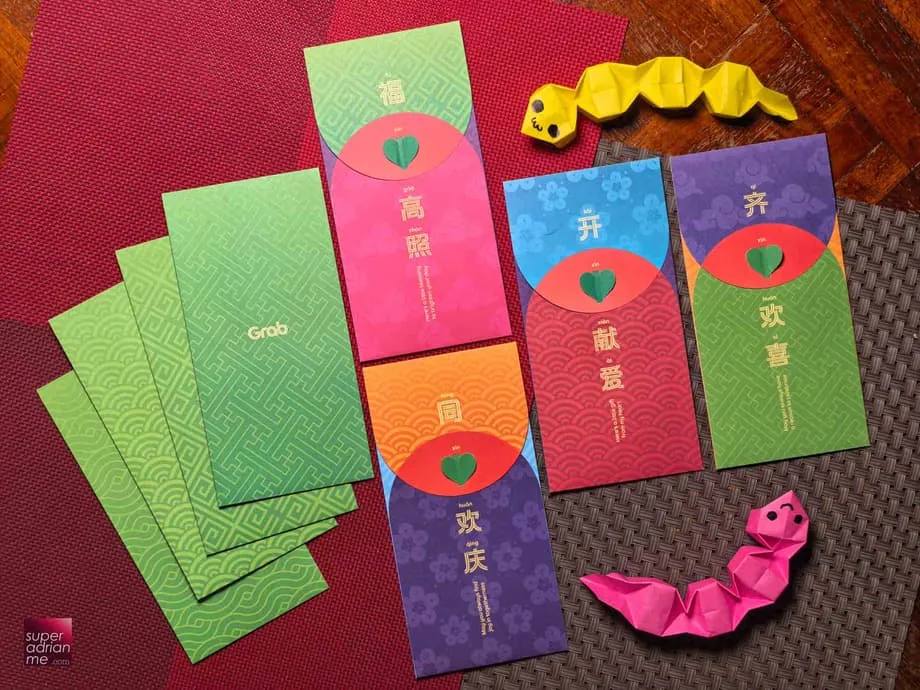
The envelope itself remains a valued part of the occasion as electronic transfers become more common. Banks and corporations issue limited edition designs featuring zodiac motifs, embossed calligraphy and interactive elements. Some premium envelopes become artistic displays when opened, while others feature characters such as Hello Kitty for younger recipients.
Singapore's arrangements for Chinese New Year 2026 accommodate these different priorities. New notes remain available through branches and ATMs, fit notes offer a way to give cash with less environmental impact, and electronic gifts range from fully digital transfers to QR codes tucked into traditional envelopes.
What to Know
- Online bookings opened on January 27, and notes collection began on February 3.
- Customers aged 60 and above and persons with disabilities may exchange notes at branches without booking; other customers must reserve online.
- DBS offers $800 bundles at 30 branches and operates 71 pop-up ATMs across 47 locations until February 16.
- UOB designated 34 ATMs for new notes and four for fit notes; OCBC arranged 25 dedicated ATMs, including five dispensing fit notes.
- More than 16 million fit notes were exchanged in 2025, up 40 percent from 2024, with emissions savings equivalent to powering 280 HDB flats with four rooms for a year.
- Digital gifting grew at DBS, OCBC and UOB, with QR hongbaos preserving the physical envelope while transferring money electronically.
- DBS's festive draw offers prizes of up to $2,828 or a Prosperity Horse Medallion Set, subject to its digital gifting and banking conditions.
- Banks will not send SMS messages containing clickable links during the booking period, while dedicated branch access and workshops support seniors.