A minerals agreement with a 19 percent tariff
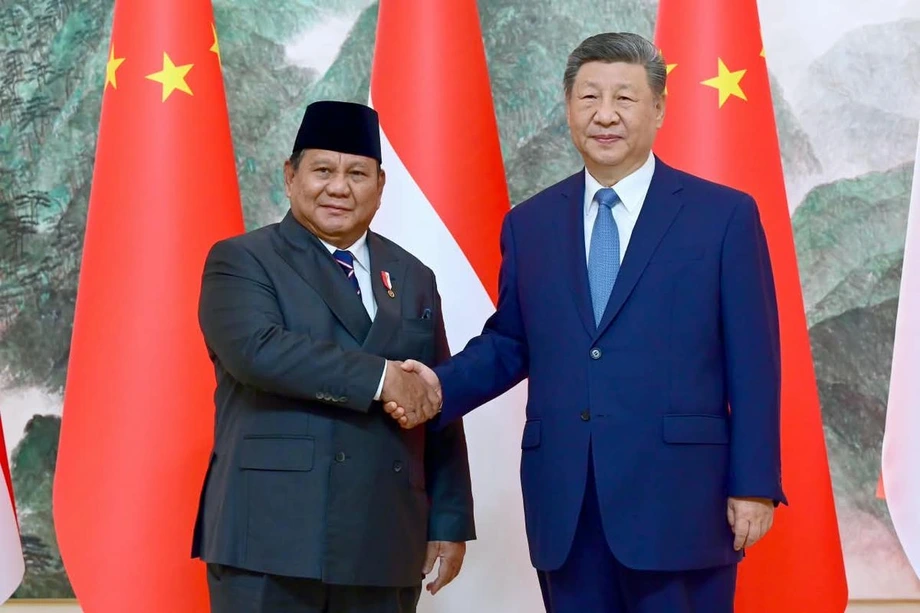
The United States and Indonesia finalized a trade agreement on Thursday that gives American companies unrestricted access to Indonesia's vast nickel reserves and other industrial commodities. Negotiated over seven rounds of talks, the arrangement combines access to critical minerals with a 19 percent tariff on Indonesian goods, the removal of duties on more than 99 percent of American exports to Indonesia, and commitments to purchase $38.4 billion in US products.
Contents
- A minerals agreement with a 19 percent tariff
- What Jakarta and Washington agreed to exchange
- How China's companies became central to Indonesian nickel
- Lower costs helped create a global supply glut
- Forests, communities and coal bear the costs
- Worker safety and forced labor concerns
- Indonesia seeks more partners without losing China
- Production restrictions have pushed prices upward
- Battery technology and subsidy changes alter demand
- Ownership rules and refining capacity test implementation
- The Bottom Line
The agreement could reshape global supply chains and challenge China's dominance in Indonesian mineral processing. Its central difficulty is that access to a mineral deposit and control of the factories that turn it into usable material are different things. Chinese companies control approximately 80 percent of Indonesia's battery-grade nickel production and have invested an estimated $30 billion in its mineral processing infrastructure over the past decade.
Indonesia agreed to remove export restrictions on nickel, bauxite and copper destined for the United States. That includes lifting restrictions on raw nickel ore for the American market, a substantial change from the country's 2020 ban on raw ore exports, which was designed to make buyers process minerals inside Indonesia.
American investors are also promised access to mining, processing and downstream production, including rare earth elements. Downstream production means turning processed minerals into materials or products further along the manufacturing chain. The agreement requires industrial parks under foreign ownership to meet the same tax and legal requirements as other companies.
As of February 25, 2026, the agreement's commercial promise sits alongside unresolved questions about ownership rules, implementation and the legal durability of American tariffs. Indonesia has promised greater access, while existing mining laws require foreign companies to transfer majority ownership to Indonesian entities over time.
What Jakarta and Washington agreed to exchange
Indonesia's commitment to buy $38.4 billion in American goods covers energy commodities, aircraft and agricultural products. Alongside those purchases, the removal of duties on more than 99 percent of US exports gives American businesses broader access to the Indonesian market, while Indonesian goods face the agreed 19 percent US tariff.
The agreement states that Indonesia will not restrict US investors' ownership of local businesses through measures such as mining sector divestment requirements. Divestment means selling or transferring an ownership stake. This provision is scheduled for review within 12 months, making it a central issue for companies considering investments that would operate for many years.
Jakarta also agreed to align with Washington on export controls, restricting transfers of goods covered by American technology restrictions. Export controls govern whether particular goods or technologies can be sent to certain buyers or destinations, extending the agreement beyond ordinary taxes on trade.
Indonesia must consult Washington before entering digital trade agreements with other countries that might jeopardize US interests. It also agreed not to impose digital services taxes that discriminate against American companies. Together, these provisions connect market access with Washington's concerns about technology and national security.
The United States has pressed for terms allowing it to terminate the agreement if Indonesia enters deals that threaten American interests. Jakarta views that condition as intrusive, and Indonesian officials have reportedly stepped back from some negotiating commitments, particularly those that could limit their freedom to manage relations with China and Russia.
How China's companies became central to Indonesian nickel
Indonesia holds 42.3 percent of the world's nickel reserves, according to the US Geological Survey, and accounts for roughly 60 percent of global mine supply. Its 2020 prohibition on raw ore exports forced international buyers to build smelters inside the country or lose access to the world's largest nickel reserves.
Chinese investment helped turn Indonesia from an exporter of raw materials into the world's dominant nickel processor. Tsingshan Holding Group, Zhejiang Huayou Cobalt and Ningbo Lygend are among the companies involved. Chinese firms have constructed more than 90 percent of Indonesia's nickel smelters.
Many facilities use High Pressure Acid Leach technology, known as HPAL, to extract nickel and cobalt suitable for batteries from low-grade laterite ores on islands such as Sulawesi. The process uses acid under high pressure to recover metals from ore that contains relatively little of them.
Chinese companies' approximately 80 percent share of battery-grade nickel production gives them a strong position at the processing stage. American companies gaining permission to buy ore or invest in mines would still need access to the factories and technical capacity that make the material suitable for their customers.
Chinese investment in Indonesia increased 31 percent over the past six years, reaching $35 billion between 2020 and 2025. More than $15 billion went into metal processing. Those figures cover a different investment period and scope from the estimated $30 billion invested in mineral processing infrastructure over the past decade.
Lower costs helped create a global supply glut
Chinese facilities in Indonesia have benefited from lower environmental and labor standards than Western competitors. Their reported cash costs were $3.17 per pound, compared with $6.56 to $8.24 per pound at Western-operated mines such as Sorowako and Weda Bay. Cash costs describe the direct spending needed to produce the metal.
The $3.17 figure is less than half the $6.56 figure at the bottom of that comparison range. This cost advantage helped producers expand supply while maintaining pressure on competitors with more expensive operations.
Nickel prices fell 44.7 percent in 2023 and another 26.1 percent in 2024 as a global supply glut developed. Producers in Australia and New Caledonia suspended operations because of higher costs, while Indonesia increased its market share.
American businesses entering the sector would therefore face a commercial challenge alongside the political one. The agreement opens access to resources, but established producers already have extensive processing infrastructure and low production costs. New investment must compete in a market where rapid increases in supply have previously driven steep price declines.
Forests, communities and coal bear the costs
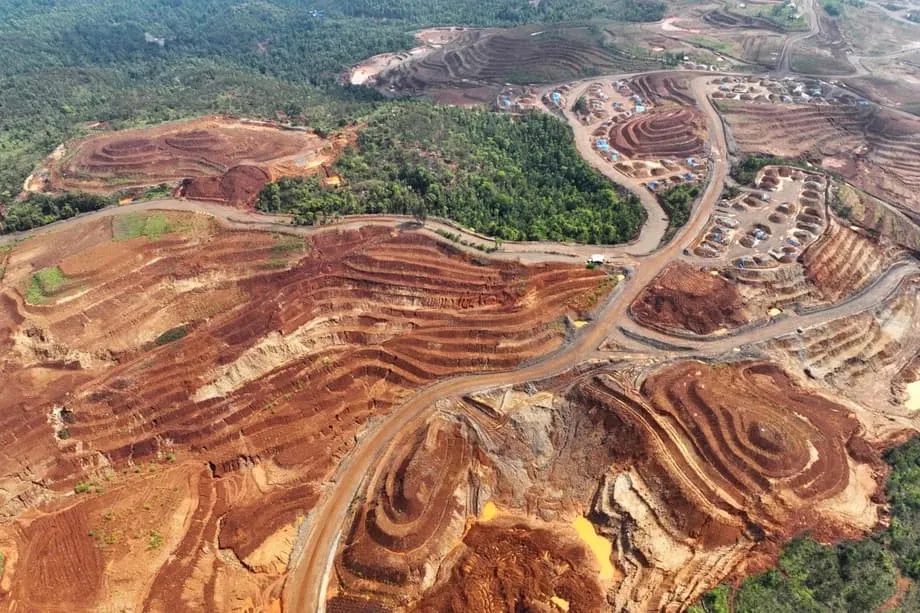
Indonesia's nickel expansion has been linked to the destruction of at least 156,000 hectares of forest since 2000. Much of that forest was old-growth rainforest, which stores carbon and helps keep it out of the atmosphere.
Mining on Sulawesi and Halmahera has displaced indigenous communities, including uncontacted groups such as the Hongana Manyawa. Operations have also polluted sensitive reef habitats in the Coral Triangle, placing pressure on communities and ecosystems near the mines and processing plants.
Coal supplies much of the electricity used by processing facilities. Industrial parks account for 15 percent of Indonesia's coal power output, with that share projected to reach 24 percent as new projects begin operating. The projected increase is nine percentage points.
Major nickel producers emitted approximately 15 million metric tons of greenhouse gases in 2023, largely because of coal consumption used to process laterite ore into Class 1 nickel suitable for batteries. That creates a tension for electric vehicle supply chains: a material used in batteries is being produced through an energy system heavily dependent on fossil fuels.
Environmental groups say submarine tailings disposal continues despite official prohibitions. Tailings are the waste left after minerals have been extracted, and submarine disposal puts that waste into the sea. The groups describe contamination in the Morowali Sea, which they identify as containing 76 percent of the world's coral reefs.
Worker safety and forced labor concerns
The US Department of Labor has flagged Indonesian nickel products for forced labor concerns, particularly at smelters owned by Chinese companies. Those concerns add another issue for American buyers assessing where their materials come from and how they are produced.
A furnace explosion at a nickel factory owned by a Chinese company in Morowali killed 20 workers in December 2023. The disaster highlighted safety deficiencies and helped drive demands from civil society organizations for stricter oversight of the industry.
The US government has reportedly funded labor monitoring through organizations including China Labor Watch. The organization received grants to train Indonesian unions and document forced labor cases.
Those initiatives aim to prepare evidence that can be used in enforcement action, connecting labor violations to specific corporate actors and global buyers. Such documentation could affect the reputation of facilities operated by Chinese companies and the businesses purchasing their output.
Labor and environmental conditions are therefore part of the agreement's practical investment setting. Expanded access to nickel brings American companies into a sector already facing scrutiny over worker treatment, industrial safety, forest loss and pollution.
Indonesia seeks more partners without losing China
Washington's push for access to Indonesian nickel forms part of its effort to counter Beijing's influence in Southeast Asia and secure materials for electric vehicle batteries and defense applications. Global demand for electric vehicles continues to grow despite recent market volatility, making control of mineral supply and processing capacity a strategic concern.
President Prabowo Subianto, who succeeded Joko Widodo in 2024, has maintained his predecessor's resource nationalism policies while seeking more American investment. Resource nationalism means keeping greater national control over natural resources and the economic benefits they generate.
China remains Indonesia's largest trading partner and buys the majority of its palm oil, coal and nickel exports. An estimated one percentage point slowdown in China's economic growth reduces Indonesian growth by 0.3 percentage points. That connection helps explain why closer ties with Washington could carry economic risks if they strain relations with Beijing.
Indonesia joined the BRICS economic bloc in January 2025 while also seeking stronger ties with the United States. Prabowo's recent visit to Moscow, where he discussed nuclear energy cooperation with Vladimir Putin, adds another element to Jakarta's relationships with major powers.
Jakarta's approach is to gain advantages from several partners rather than become exclusively dependent on Washington or Beijing. The nickel agreement offers a route to diversify investment, while China's role as a buyer and industrial investor gives Indonesia strong reasons to preserve that relationship.
Production restrictions have pushed prices upward
Nickel prices jumped more than 30 percent between mid-December and January after Indonesia decided to restrict mining volumes. The rise showed how production decisions in a country supplying roughly 60 percent of global mined nickel can quickly affect the wider market.
Lavinia Forcellese, a commodities analyst with Goldman Sachs Research, described Indonesia's growing influence over prices and supply:
Now Indonesia's supply decisions are the lever the market is watching. And relatively small changes in policy or approvals can have an outsize impact on global balances and prices.
Indonesia's state-owned mining company has recently moved to tighten control of the sector, seizing more than 4 million hectares of mining concessions allegedly obtained through bribery or improper licensing. Potential seizures covering another 4.5 million hectares are planned for this year.
A mining concession gives a company rights to operate in a defined area. Taking back concessions can strengthen state control, but it also introduces uncertainty for investors whose plans depend on licenses and access to deposits.
Indonesia's role now cuts both ways for buyers. Its vast production capacity helped create a surplus and falling prices in 2023 and 2024, while restrictions on mining volumes later contributed to a sharp price increase. Access under a trade agreement would still operate within that changing production environment.
Battery technology and subsidy changes alter demand
Lithium iron phosphate batteries, known as LFP batteries, contain no nickel and now power nearly half of all electric vehicles globally. Chinese automakers have increasingly moved toward these batteries because they are cheaper and more stable than alternatives that contain large amounts of nickel.
Further growth in LFP use could reduce the returns from Indonesia's strategy of expanding nickel production capacity. Electric vehicle sales can increase while demand shifts toward a battery design that does not require the mineral at the center of that strategy.
American subsidy policy has also changed. Under previous Foreign Entity of Concern provisions governing Inflation Reduction Act tax credits, much of Indonesia's nickel production would have been ineligible for subsidies because of majority Chinese ownership. Those rules addressed the involvement of entities considered a concern to the United States.
Recent legislation eliminated the Section 30D clean vehicle tax credit, removing that particular eligibility barrier. It also removed an incentive for American automakers to source minerals from Indonesia under a qualifying trade arrangement.
Without the subsidy premium for minerals compliant with free trade agreement requirements, Indonesian nickel must compete on price and availability rather than a regulatory preference. American concerns about supply security and potential market manipulation by Beijing continue even though the specific tax credit restriction has gone.
Ownership rules and refining capacity test implementation
Indonesia's mandatory divestment laws require foreign mining companies to transfer 51 percent ownership to Indonesian entities over time. That requirement conflicts with the agreement's promise to remove ownership restrictions for American investors and creates uncertainty over how the two sets of rules will work together.
Existing mining operations often retain operational control after ownership transfers. New entrants face higher barriers and less bargaining power, making the scheduled review of the ownership provision within 12 months particularly relevant to prospective American investors.
Indonesia primarily produces Class 2 nickel, which is suitable for stainless steel. Most US defense and battery applications require Class 1 nickel, a more highly refined material. Turning Indonesian production into material suitable for batteries requires sophisticated refining capacity that remains largely under Chinese control.
The agreement therefore has several stages to navigate: access to ore, permission to invest, ownership arrangements and the ability to refine material to the required standard. Changes to export restrictions address the first stage, while the other stages depend on Indonesian law, investment decisions and industrial capacity.
Legal uncertainty also exists in the United States. The Supreme Court recently considered challenges to the administration's use of emergency powers to impose tariffs, leaving questions about the durability of the agreement's tariff framework.
American access to Indonesia's resources could broaden supply options and give Jakarta another major investment partner. China's established factories, lower costs and extensive economic ties mean that any shift in control would depend on implementation and new industrial investment, rather than the signing alone.
The Bottom Line
- The agreement sets a 19 percent tariff on Indonesian goods and removes duties on more than 99 percent of American exports to Indonesia.
- Indonesia committed to $38.4 billion in US purchases and to lifting export restrictions on nickel, bauxite and copper destined for the United States.
- Chinese companies control approximately 80 percent of Indonesia's battery-grade nickel production and have built more than 90 percent of its nickel smelters.
- Indonesia holds 42.3 percent of global nickel reserves and supplies roughly 60 percent of mined nickel.
- Forest destruction, coal consumption, forced labor concerns and the December 2023 Morowali explosion remain central issues for the industry.
- Indonesia's requirement for 51 percent local mining ownership conflicts with the agreement's ownership commitments, which face review within 12 months.
- Nickel prices rose more than 30 percent between mid-December and January after Indonesia restricted mining volumes.
- Batteries containing no nickel and the elimination of the Section 30D tax credit have changed the commercial incentives for American buyers.