China's share grows even as shipments fall
Japan bought fewer rare earths from China in January 2026, yet its dependence on Chinese supplies increased. China accounted for 76% of Japan's rare earth imports, up from 72.6% in January 2025, as shipments from alternative suppliers fell faster.
Contents
- China's share grows even as shipments fall
- Why these metals matter to factories
- How Taiwan became the trigger
- What China's export restrictions cover
- Manufacturers have already faced shortages
- The potential cost of a prolonged disruption
- Japan tests extraction 6,000 meters below the sea
- A supply security system built over decades
- Diversification gains have been difficult to sustain
- Vietnam, France and Australia offer alternatives
- Japan and the United States coordinate their response
- South Korea pursues refining and seabed resources
- What to Know
Japanese customs figures put January imports from China at 1,127 tons of metal equivalent, a measure that expresses the amount of rare earth metal contained in imported materials. That was down 5.7% from a year earlier. Japan's total rare earth imports fell by nearly 10% to approximately 1,478 tons.
China's share therefore rose by 3.4 percentage points without an increase in the volume it supplied. The figures show how Japan can reduce purchases from China while still becoming more dependent on it: other sources must remain available in sufficient quantities for diversification to hold.
Vietnam was Japan's second largest supplier in January, providing approximately 221 tons of metal equivalent. France followed with 79 tons. Imports from Malaysia, where Australian miner Lynas Rare Earths operates a processing plant, increased by 32%, but reached only slightly more than 1 ton.
The January figures came amid a dispute over Taiwan that has brought Chinese export restrictions, military confrontations and fresh pressure on Japanese manufacturers. By March 1, Japan was pursuing several responses, including overseas investment, stockpiles, recycling, magnets that use fewer scarce materials and an ambitious project to recover rare earths from the Pacific seabed.
Those efforts build on fifteen years of diversification since a supply crisis in 2010. The latest import figures show the difficulty of maintaining alternative supplies at the scale Japan's industries need, especially when China controls much of the processing required to turn mined materials into usable industrial inputs.
Why these metals matter to factories
Rare earths comprise 17 metallic elements, including neodymium, dysprosium and terbium. They are essential ingredients in powerful magnets used in electric vehicle motors, wind turbines, missile guidance systems and consumer electronics.
Despite their name, rare earths are geologically abundant. The challenge lies in extracting them and separating closely related elements into usable materials. Refining requires sophisticated processes and produces toxic byproducts, making processing capacity as important as access to mineral deposits.
China has built a commanding position in that processing stage. It refines more than 99% of global heavy rare earth supplies and maintains approximately 60% of mining capacity. Heavy rare earths include materials that help magnets keep working at high temperatures, an important requirement for demanding industrial applications.
Japan's magnet manufacturers Proterial, Shin-Etsu Chemical and TDK depend heavily on Chinese supplies of neodymium-praseodymium, dysprosium and terbium oxides and metals. These are used to make neodymium-iron-boron magnets, which power traction motors in Toyota, Honda, Nissan and Mazda vehicles and serve precision guidance systems in defense applications.
How Taiwan became the trigger
Prime Minister Sanae Takaichi set off the current dispute in November 2025 when she told the National Diet that a Chinese attack on Taiwan could constitute an existential threat to Japan. Such a finding could potentially justify a Japanese military response under the concept of a survival-threatening situation.
Beijing interpreted her comments as a departure from Japan's traditional strategic ambiguity over Taiwan. That approach had left Japan's possible response to a conflict less explicit. China viewed Takaichi's remarks as justification for Japanese military involvement in a potential conflict across the Taiwan Strait.
China's response combined military pressure with economic measures. In December, J-15 fighter jets operating from the Liaoning aircraft carrier twice locked their radar onto Japanese aircraft near Okinawa, a maneuver widely interpreted as a direct threat signal.
The People's Liberation Army then conducted Justice Mission 2025 exercises on December 29 and 30. The drills involved 130 aircraft, 14 navy ships and eight coastguard vessels, simulating a blockade of Taiwan.
The exercises followed the United States' announcement of an $11 billion arms package for Taiwan. Chinese state media asserted that the drills demonstrated the ability to intercept weapons deliveries, connecting the military activity to the issue of outside support for Taiwan.
What China's export restrictions cover
China's Ministry of Commerce announced restrictions on January 6, 2026, banning dual-use exports to Japanese military end-users. Dual-use goods have both civilian and military applications, which makes materials used in vehicle motors and defense equipment particularly sensitive.
The measures cover seven medium and heavy rare earth elements and products containing them, including permanent magnets. The ministry explicitly linked the restrictions to Takaichi's comments about Taiwan.
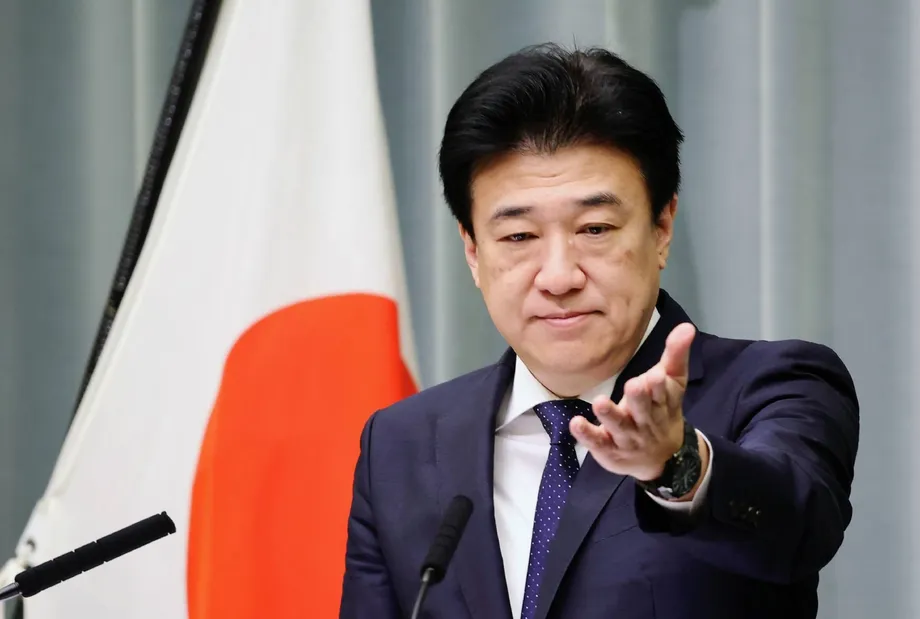
Japanese Chief Cabinet Secretary Minoru Kihara condemned the measures as absolutely unacceptable and deeply regrettable. He said that targeting a single country differed substantially from international practice.
Beijing expanded the pressure in February by adding 40 Japanese entities to export control and watch lists. They included defense contractors Mitsubishi Heavy Industries and Kawasaki Heavy Industries, automaker Subaru and the National Defense Academy.
The dispute has developed through a succession of political, military and trade actions:
- November 2025: Takaichi told the National Diet that a Chinese attack on Taiwan could create an existential threat to Japan.
- December 2025: Chinese J-15 fighters twice locked radar onto Japanese aircraft near Okinawa.
- December 29 and 30, 2025: China conducted Justice Mission 2025 exercises simulating a blockade of Taiwan.
- January 6, 2026: China's Ministry of Commerce announced restrictions on dual-use exports to Japanese military end-users.
- January 12, 2026: Japan's research drilling vessel Chikyu departed for a month of testing near Minamitorishima Island.
- February 2026: China added 40 Japanese entities to export control and watch lists.
Manufacturers have already faced shortages
Japanese automakers experienced disruptions during China's April 2025 export restrictions. Nissan and Suzuki Motor reported supply shortages, and Suzuki temporarily suspended production of its Swift model.
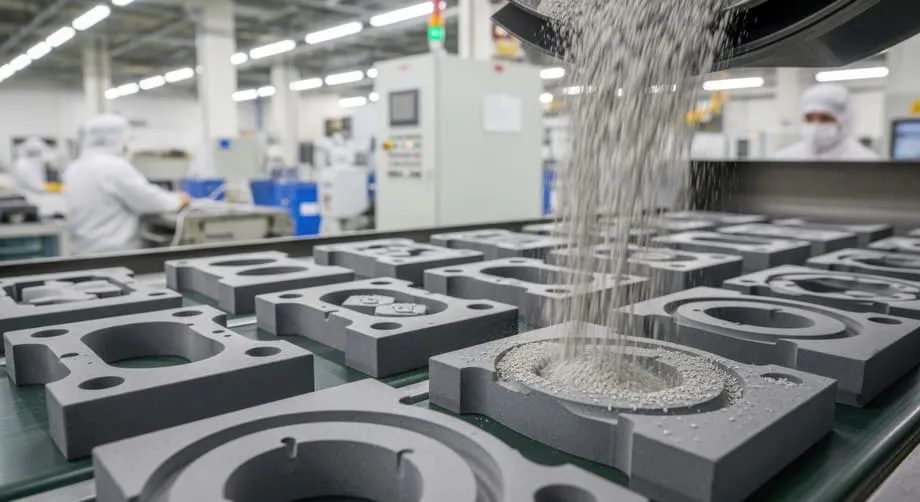
Proterial produces between 2,500 and 3,000 tons of sintered neodymium-iron-boron magnets annually for automotive applications. Sintering is a manufacturing process that turns material into a solid magnet. Shin-Etsu operates approximately 3,400 tons of annual capacity across Japan and Vietnam.
Prolonged delays in raw material licensing could restrict magnet output and affect production schedules for electric vehicles and wind turbines. The pressure extends from imported oxides and metals through magnet factories to manufacturers that need those magnets for finished products.
The potential cost of a prolonged disruption
Nomura Research Institute economist Takahide Kiuchi estimated that a three-month curb on Chinese rare earth exports, similar to the disruption during the 2010 dispute, could cost Japanese businesses 660 billion yen ($4.2 billion). His estimate put the reduction in annual gross domestic product at 0.11%.
A ban lasting a year would cut GDP by 0.43%, according to Kiuchi's estimate. GDP measures the value of goods and services produced across an economy, so the projected losses extend beyond the businesses directly importing rare earths.
Japan's vulnerability is particularly acute for heavy rare earths. Dysprosium and terbium help magnets perform at high temperatures, while China's dominance of their refining leaves manufacturers with limited alternatives.
Japan has invested in recycling and other sources of supply, but those capacities remain insufficient to replace a complete interruption of Chinese supplies in the immediate term. The economic estimates explain why Tokyo is pursuing several approaches at once, from maintaining reserves to reducing the amount of scarce material needed in each magnet.
Japan tests extraction 6,000 meters below the sea
The research drilling vessel Chikyu departed on January 12, 2026, for a month-long mission near Minamitorishima Island, Japan's easternmost territory. Its task was to test extraction of sediment rich in rare earths from depths of approximately 6,000 meters.
The mission marked the world's first attempt to retrieve such materials from the ocean floor at those depths using specialized equipment mounted on the research vessel. Japan has accelerated the project as pressure on existing supplies has grown.
The Cabinet Office's Strategic Innovation Promotion Program has funded the work since 2018. It targets mud deposits considered large enough for development on an industrial scale, including the scarcer heavy rare earths whose processing is dominated by China.
Some researchers estimate that the seabed around Minamitorishima may contain enough heavy rare earths to meet global demand for several hundred years. The Strategic Innovation Promotion Program uses more measured language, saying the deposits appear sufficient for development on an industrial scale.
Program Director Shoichi Ishii acknowledged the difficulty of operating at unprecedented depths. Describing the technical challenge facing the initial extraction attempt, he said:
A perfect success on the first try may be difficult,
Japan's plan, if the initial phase succeeds, is to demonstrate a large offshore drilling system capable of processing 350 tons of sediment a day by February 2027. Independent refinement testing would follow. Commercial production timing has not been given.
Takaichi has described the effort as a first step toward industrialization of domestically produced rare earth in Japan. The government has also expressed its intention to cooperate with the United States on future development of these resources.
A supply security system built over decades
Japan's institutions for mineral security predate the current dispute by decades. Tokyo established the Metallic Minerals Exploration Financing Agency in 1963 during its postwar industrial expansion.
The Rare Metal Stockpiling System followed in 1983. In 2004, the institutional framework was consolidated into the Japan Organization for Metals and Energy Security (JOGMEC), bringing exploration, equity investment, debt guarantees, technical assistance and stockpiling into a single organization.
Equity investment gives the agency a financial stake in a project, while debt guarantees help projects obtain financing. Together with technical support and reserves, these tools allow Japan to work on future production while preparing for interruptions in current supply.
The framework became crucial during the September 2010 dispute over the Senkaku Islands, when China abruptly halted rare earth exports to Japan for two months. China supplied approximately 85% of Japan's rare earth imports at that time.
Tokyo activated existing mechanisms, including JOGMEC's $250 million investment in Australia's Lynas Rare Earths in 2011. That investment helped establish a major source of light rare earths outside China.
Over the following fifteen years, Lynas expanded from the Mount Weld mine in Australia to processing facilities in Malaysia and the United States. The January 2026 import figures nevertheless show how small Japan's recorded shipments from Malaysia were compared with its purchases from China.
Diversification gains have been difficult to sustain
JOGMEC supported more than 100 overseas projects between 2004 and 2020, providing more than $600 million in financial support. By 2024, the agency had offices in 15 countries and more than 30 active projects.
Japan reduced China's share of its rare earth imports from 85% in 2009 to 58% in 2020. That was a decline of 27 percentage points. Dependence subsequently rose again to approximately 63% to 76% in recent years as diversification momentum slowed without acute crisis pressure.
The 2020 International Resource Strategy increased national stockpiling targets to 60 days for standard minerals and as much as 180 days for materials considered high risk. Stockpiles provide reserves that can be used during supply interruptions while other responses are organized.
Japan is also working to reduce the need for particular rare earths. Proterial announced new lines in 2025 for mass production of magnets without dysprosium and terbium, with production increasing through 2026.
Researchers are developing alternative magnet compositions and better ways to recover rare earths from products at the end of their useful lives. Discarded electronics and industrial waste can become urban mines, meaning sources of reusable material already present in manufactured goods.
A UK company has reportedly developed technology to recover rare earth elements easily from used products, and a Japanese company plans to introduce it domestically. These efforts address both access to material and the amount manufacturers need to buy.
Vietnam, France and Australia offer alternatives
Vietnam supplied 32% of Japan's rare earth imports in 2024, making it a critical alternative source. Its January 2026 shipments of approximately 221 tons kept it in second place behind China, although Japan's total import mix had become more concentrated on Chinese supply.
The Dong Pao mine joint venture involving Toyota Tsusho and Sojitz has struggled to achieve consistent production. Vietnam's law banning exports of unprocessed rare earths, effective January 1, 2026, adds another complication despite Japanese investment in processing facilities between mining and finished manufacturing.
The Vietnamese rule makes the stage at which material is exported important to the supply chain. Japan's investments in processing are part of its effort to secure usable inputs rather than relying solely on access to deposits.
France and Australia also feature in Japan's diversification strategy. JOGMEC and Iwatani have committed up to 110 million euros to France's Caremag rare earth refining project, while the investment in Lynas links Japan to Australian mining and processing outside China.
France's January shipments of 79 tons made it Japan's third largest supplier. The combination of those deliveries, Vietnam's supplies and investment in further refining capacity shows that diversification depends on several separate production routes, each with its own scale and constraints.
Japan and the United States coordinate their response
Japan and the United States signed a Critical Minerals Framework in October 2025. It established dialogue at ministerial level for joint investment, coordination of stockpiles and a Rapid Response Group.
The partnership gives Washington access to Japan's decades of institutional experience in protecting mineral supplies. It connects investment in future production with planning for immediate disruptions.
The United States has also launched Project Vault, a critical minerals stockpile backed by a $10 billion loan from the Export-Import Bank. Stockpiling and shared investment sit alongside Japan's interest in cooperating with the United States on developing resources near Minamitorishima.
Japan's domestic extraction project, overseas financing and bilateral framework address different parts of the same problem. Deposits must be developed, materials must be refined, and manufacturers need supplies while new capacity is being built.
South Korea pursues refining and seabed resources
South Korea is pursuing its own role in supply chains outside China. Korea Zinc is developing advanced hydrometallurgical refining technology, which uses liquid chemical processes to extract and separate metals.
The company says the technology reduces pollution by 60% to 70% compared with traditional methods. It is investing in a Tennessee facility scheduled to begin operations in 2029, potentially integrating zinc, copper, nickel and rare earth production within a supply chain based in the United States.
South Korea's research vessel Tamhae 3 identified deposits with high concentrations of rare earths at depths of 5,800 meters in the western Pacific in January 2026. Seoul plans to apply for exclusive exploration rights from the International Seabed Authority.
Japan and South Korea are therefore examining seabed resources while companies and governments invest in refining and reserves on land. For Japan, the immediate challenge remains the gap between those developing alternatives and the Chinese supplies its factories currently depend on.
What to Know
- China supplied 76% of Japan's rare earth imports in January 2026, up from 72.6% a year earlier, even though Chinese shipments fell 5.7% to 1,127 tons.
- Japan's total imports fell nearly 10% to approximately 1,478 tons. Vietnam supplied about 221 tons and France 79 tons.
- China announced dual-use export restrictions on January 6 after Takaichi's Taiwan comments, then added 40 Japanese entities to export control and watch lists in February.
- Earlier restrictions caused shortages at Nissan and Suzuki, with Suzuki temporarily suspending Swift production.
- Kiuchi estimated that a three-month export curb could cost businesses 660 billion yen and reduce annual GDP by 0.11%. A year-long ban would cut GDP by 0.43%.
- Japan began testing seabed extraction near Minamitorishima at approximately 6,000 meters, with a demonstration targeting 350 tons of sediment daily planned for February 2027 if the initial phase succeeds.
- Japan's response combines stockpiles, overseas investment, recycling, magnets without dysprosium and terbium, and cooperation with the United States.
- Alternative refining and extraction projects in France, Australia, Vietnam and South Korea are developing alongside Japan's efforts to reduce dependence on China.