A Nationwide Guide for Crisis Readiness
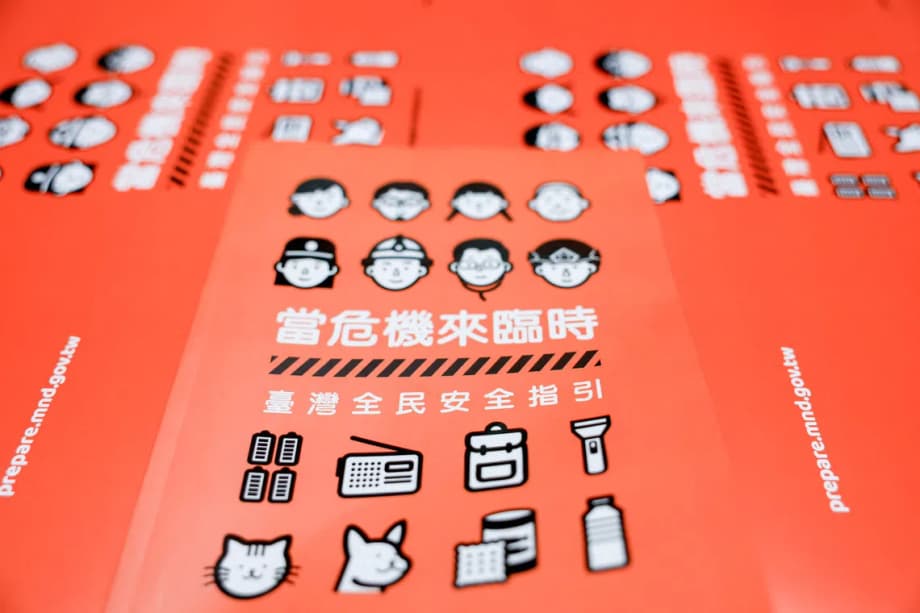
After months of heightened pressure from Beijing, Taiwan has begun mailing a new civil defense handbook to every household, marking the largest public preparedness push since the handbook first appeared in 2022. The 2025 edition lays out clear steps for dealing with disasters and conflict, including instructions in the event of contact with enemy troops and a firm warning that any announcement of Taiwan’s surrender is false.
- A Nationwide Guide for Crisis Readiness
- What the Handbook Tells Citizens to Do
- Scenarios Taiwan Is Preparing For
- How and When the Handbook Will Arrive
- China’s Response and the Regional Stakes
- Lessons from Ukraine and Northern Europe
- Challenges that Still Need Work
- How Families Can Put the Guide to Work
- Key Points
The Ministry of National Defense’s All Out Defense Mobilization Agency produced about 11 million copies for delivery to around 9.83 million registered households. Distribution starts this week and runs in phases through early January. Copies will also be provided in English for foreign missions, media and residents. The government plans a follow on campaign to help families assemble personal emergency kits and practice plans.
The rollout reflects Taiwan’s twin realities. The island must prepare for typhoons, earthquakes and landslides, while also living with more frequent military activity around its coasts and airspace. Fighter jets and warships from China operate near the island on a regular basis. Cyber intrusions and influence operations form part of what Taipei calls hybrid warfare.
Officials frame the handbook as a practical tool, not a source of fear. The defense ministry says the point is preparedness during peacetime, so that communities can function during any emergency.
Shen Wei chih, director of the defense ministry’s All Out Defense Mobilization Agency, said the goal is a better prepared society that stays calm during shocks.
The more prepared we are, the safer we will be.
While the guide avoids political rhetoric, it is explicit about common tactics in a crisis. Residents are told how to find shelters, how to secure basic supplies, and how to verify reliable information when networks are disrupted.
What the Handbook Tells Citizens to Do
The handbook organizes advice into checklists and diagrams. It asks every household to maintain at least one week of food, water, medicines, sanitation supplies and a way to power phones or radios. It suggests prepacking a go bag near the door with water, ready to eat food, copies of documents, cash, a flashlight, a compact sleeping bag, clothes and prescription drugs. New guidance covers hazards such as barrier lakes that can form after earthquakes, a risk highlighted by a deadly incident in Hualien County.
Safety steps during attacks and interruptions
For air raids, residents should move to basements or designated shelters. If no shelter is available, the advice is to stay low and away from exterior walls and windows, remain behind two walls if possible, and cover the head and neck. Outside, lie flat with feet pointing toward the blast and keep the mouth slightly open to reduce pressure injuries.
Civilians are told not to film or share the movements of Taiwan’s armed forces. Posting or live streaming troop locations can compromise operations. If you encounter armed actors or there is military activity nearby, leave the area quickly or shelter in place if movement is unsafe.
The guide also devotes space to digital risk. It cautions that social and messaging apps connected to China could expose users to data capture or targeted disinformation. The recommendation is to limit permissions, keep devices updated, and be cautious about apps that request wide access to contacts or cameras.
Scenarios Taiwan Is Preparing For
The handbook outlines a spectrum of contingencies short of outright invasion and up to large scale conflict. They include sabotage of undersea cables that carry Internet data, cyber attacks on services, unilateral declaration of no fly or no sail zones near Taiwan, enemy drone flights, inspections or boarding of Taiwanese registered ships by a hostile force, and blockades that restrict trade. It also covers direct attacks on infrastructure and ground operations.
Undersea cables are a special concern for any island economy. These cables sit on the seabed and connect Taiwan to global networks. Damage can disrupt banking, logistics and emergency communications. The guide explains how to access information if connections go down, including the use of radio, landlines, community bulletin boards, police stations and local government offices.
Taiwanese officials describe the constant presence of gray zone pressure. While a D day style assault has not occurred, daily coercion is ongoing through military sorties, cyber intrusions and influence campaigns.
Lin Fei fan, Deputy Secretary General of the National Security Council, has been a public face of the rollout. He says the message is deterrence through resilience.
People across the strait should understand there will be a huge cost if China makes the wrong decision. We are already facing hybrid warfare. The handbook shows our determination to defend ourselves.
Beijing claims Taiwan as its territory and has not ruled out force. Taipei rejects that position and says only Taiwan’s people can decide their future.
How and When the Handbook Will Arrive
The mailing is led by the Ministry of Transportation and Communications with Chunghwa Post. Deliveries proceed in four phases, starting with offshore counties and remote areas, then moving to urban centers. The target is to reach almost 9.83 million households by January 5. Hard copies also go to selected embassies and foreign representative offices. Additional channels are being planned to reach more than eight hundred thousand foreign workers.
The defense ministry says about 11 million copies were printed at a cost of NT$42.79 million, or roughly NT$3.89 per handbook. Funding came from the Cabinet Second Reserve Fund through a public bidding process. Officials say the mailout responds to feedback after the September release, including requests from older residents who prefer a physical guide.
Some lawmakers questioned the environmental footprint and the need for paper. The ministry counters that printed guides reduce the digital divide and remain useful when power or cellular networks fail.
English language editions, approximately 105,000 copies, are being provided to foreign missions, media and residents starting December 19. Electronic versions in Mandarin and English are also available.
The ministry has stressed that the goal is readiness without panic.
The aim is not to cause panic but to get people ready for crises, from earthquakes to conflict.
China’s Response and the Regional Stakes
China’s Taiwan Affairs Office has criticized the booklet, calling it full of lies and distortions and accusing Taipei of trying to intimidate the public and spread fear of war. Chinese forces continue to stage joint combat readiness patrols near the island, a pattern that Taipei monitors several times a month.
Tensions are drawing in regional partners. Debate in Tokyo has grown over how Japan would respond to a Taiwan conflict. The United States maintains close, unofficial ties with Taipei and says peace and stability in the Taiwan Strait are vital to regional security and commerce.
Taiwan’s leaders argue that steady civil preparation strengthens deterrence and reduces the risk of miscalculation. President Lai Ching te has urged citizens to build readiness before a crisis, pointing to recurring natural disasters and the danger of aggression from China.
Our safety rests on our will and readiness to defend ourselves before a crisis occurs.
Lessons from Ukraine and Northern Europe
The updated handbook reflects practical lessons from Ukraine’s defense and from European countries that revived civil preparedness. Finland and Sweden have public guides that encourage self help and mutual aid during conflict. Taiwan is adopting similar practices, adapted to an island setting with dense urban areas and limited strategic depth.
The All Out Defense Mobilization Agency has released three editions since 2022. Over time the handbook has become more user friendly, with illustrations, plain language and checklists. A newer chapter addresses cognitive warfare and how to spot and resist disinformation during a crisis.
International collaboration is widening through the Global Cooperation and Training Framework and ties with partners in Northern and Baltic Europe. Exchanges focus on crisis communications, critical infrastructure protection and how to keep local services running when supply chains are strained.
Challenges that Still Need Work
Experts see gaps that will take time to close. Shelter access differs by city and neighborhood. Critical infrastructure is exposed to sabotage, drones and long range strikes. The recommended one week self reliance window may not be enough in a protracted emergency.
Turning plans on paper into local action is difficult. Inter agency coordination, political competition and polarized debate can slow drills and communications. Building trust is essential because citizens must accept alerts and guidance when stress is high.
The handbook does not center on a direct invasion. It places more emphasis on blockades, cyberattacks and inspections at sea. Critics say the balance should include clearer guidance for urban fighting or extended power outages. Officials respond that constant updates will capture evolving risks and that communities can supplement the guide with local plans.
How Families Can Put the Guide to Work
The booklet is a start. The value comes from practice at home and in neighborhoods. Families can walk to the nearest shelter, identify at least three meeting points, memorize contact numbers and assemble a go bag that stays packed and refreshed.
Good household kits include a water plan, bulk staples such as rice or noodles, a camping stove or power bank, a battery or hand crank radio, copies of documents and medicines. People with infants, elders or pets should tailor supplies and consider special needs.
Parents can talk through the crisis guide with children, answer questions honestly and choose calming activities to lower stress. Limit news exposure when it feels overwhelming and do short practice drills so the steps become routine.
During military activity, move away from the area or shelter in place. Do not film or share troop movements. When the internet is down, use radio and seek updates at police stations or government offices. Treat any circulating message about surrender as false and verify information with official channels.
Key Points
- Taiwan is mailing a civil defense handbook to about 9.83 million households with delivery targeted by January 5.
- About 11 million copies were printed so each home receives a physical guide, with 105,000 English copies for foreign missions, residents and media.
- The handbook explains how to prepare a one week supply kit and a go bag, and how to find shelters and stay safe during air raids.
- It warns that any message claiming Taiwan has surrendered is false and urges citizens not to share troop movements.
- Scenarios include undersea cable sabotage, cyberattacks, no fly and no sail zones, ship inspections, drone incursions, blockades and direct strikes.
- Distribution is being handled in four phases by Chunghwa Post, starting with offshore and remote areas.
- Officials say the aim is preparedness without panic, and follow on campaigns will help families assemble kits.
- China’s Taiwan Affairs Office denounced the booklet while Chinese forces keep up patrols near the island.
- The guide reflects lessons from Ukraine and European civil preparedness programs and adds advice on resisting disinformation.
- Experts say gaps remain in shelter access, infrastructure protection and the length of the self reliance window.