A bigger opening for international visitors
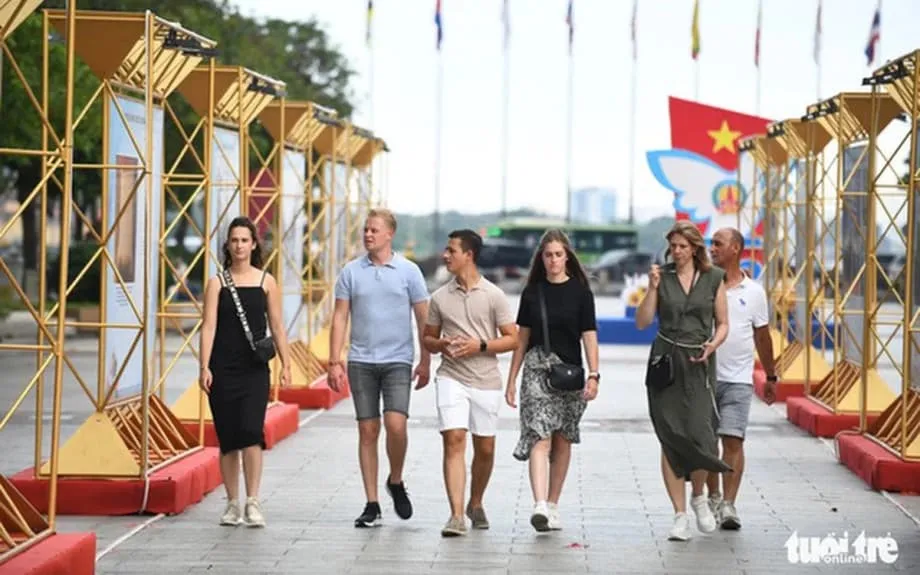
Vietnam is preparing to expand its unilateral visa waiver programme after welcoming a record 21.2 million foreign tourists in 2025, an increase of 20.4% from the previous year. Its next target is 25 million international visitors in 2026, alongside 150 million domestic travellers, as the government seeks to make tourism a larger pillar of the economy.
Contents
- A bigger opening for international visitors
- Who can enter without a visa now?
- The dates behind the tourism push
- Why visitor spending matters alongside arrivals
- Faster entry and better connections
- Neighbours are competing for the same travellers
- Longer residence proposals reach beyond holidays
- Tourism fits into a much larger growth ambition
- Growth brings environmental and economic pressures
- Several ministries must turn policy into practice
- The Bottom Line
As of January 28, 2026, the Ministry of Public Security has been assigned to work with the Ministry of Foreign Affairs to study and propose more open visa policies. The priority is to extend unilateral exemptions to major visitor markets and countries with strong potential to send more tourists. A unilateral exemption means Vietnam allows eligible foreign nationals to enter without requiring a visa, through a decision it makes itself.
Deputy Prime Minister Mai Van Chinh placed the proposed expansion within a broader effort to improve tourism, covering entry procedures, transport, visitor spending and the quality of travel experiences. He described the initiative in these terms:
This is among a package of coordinated and breakthrough measures to promote sustainable tourism development.
The General Statistics Office reported the 2025 arrivals figure, the highest Vietnam has recorded. The World Tourism Organization also ranked Vietnam among the world's fastest growing tourism destinations, reflecting the strength of its recovery following the global pandemic.
Vietnam's next expansion remains at the study and proposal stage. No new list of eligible countries or implementation date has been announced. Travellers therefore still need to use the existing rules, which differ according to nationality, destination and immigration category.
Who can enter without a visa now?
Vietnam currently offers tourism visa exemptions to ordinary passport holders from 39 countries. Permitted stays range from 14 to 90 days, depending on nationality. The existing framework gives the government a foundation for attracting more visitors while it considers further changes.
Japan, South Korea, the United Kingdom, Germany, France, Italy, Spain and Russia are among the important visitor markets whose citizens can stay for up to 45 days without a visa. A longer permitted stay gives tourists more time to visit different parts of the country without arranging another entry document.
Vietnam also has exemptions for particular groups and destinations. These arrangements have different conditions and lengths of stay:
- APEC Business Travel Card holders can stay for up to 60 days.
- Visitors to Phu Quoc Island can remain without a visa for 30 days.
- Overseas Vietnamese, and foreigners who are spouses or children of Vietnamese citizens, can receive visa exemptions valid for five years, allowing multiple entries and stays of up to 180 days per visit.
The five years in the family and overseas Vietnamese arrangement refers to the validity of the exemption. The permitted stay on each visit is up to 180 days, allowing eligible people to return repeatedly during that period.
Resolution 229/NQ-CP expanded access in August 2025 by adding 12 European countries: Belgium, Bulgaria, Croatia, the Czech Republic, Hungary, Luxembourg, the Netherlands, Poland, Romania, Slovakia, Slovenia and Switzerland. Citizens of those countries can enter without a visa for stays of up to 45 days.
The resolution's exemption lasts for three years, until August 14, 2028. That deadline gives the existing European expansion a defined period, while the wider initiative announced in January concerns possible further additions.
The dates behind the tourism push
Vietnam's visa plans sit within a sequence of policy changes and economic targets extending from the recent tourism recovery to its development ambitions for 2045. The immediate focus is the first year of the country's new economic planning period.
- August 2025: Vietnam expanded its visa exemption programme to 12 additional European countries under Resolution 229/NQ-CP.
- 2025: International tourist arrivals reached a record 21.2 million, up 20.4% from the previous year.
- January 2026: General Secretary To Lam was reappointed at the 14th National Party Congress.
- 2026: Vietnam aims for 25 million international visitors and 150 million domestic travellers.
- 2026 to 2030: The government begins a new five year socioeconomic development plan, alongside a goal of 10% annual economic growth.
- August 14, 2028: The current exemption period for the 12 European countries ends.
- 2045: The Communist Party aims for Vietnam to become a high income economy.
The 2026 international visitor target is described as a 16% increase over 2025. The government has directed ministries, sectors and local authorities to address bottlenecks, shortcomings and constraints through practical measures that can accelerate tourism development effectively and sustainably.
Why visitor spending matters alongside arrivals
The Ministry of Culture, Sports and Tourism has been instructed to restructure Vietnam's visitor markets and improve the industry's quality and competitiveness. The emphasis is moving beyond the number of arrivals to the spending power of visitors and the length of their stays.
A tourist who stays longer can pay for more nights of accommodation, meals, transport and activities. Vietnam wants to attract international markets where visitors have the means and interest to make those longer trips, increasing the economic benefit from each arrival.
The tourism ministry will monitor travel trends and visitor demand to guide the development of tourism products. Its priorities include green tourism, wellness tourism, MICE tourism and golf tourism, all identified as segments with higher value.
Green tourism focuses on travel with greater attention to environmental protection. Wellness tourism centres on health and wellbeing. MICE refers to meetings, incentives, conferences and exhibitions, covering business gatherings and organised travel connected with work. Golf tourism combines travel with playing the sport.
These segments typically attract visitors who stay longer and spend more each day. The government's strategy seeks greater economic benefits while potentially reducing environmental impact. Whether that environmental benefit is achieved will depend on how tourism development and services are managed.
The Ministry of Culture, Sports and Tourism must also review the 2017 Law on Tourism and related legal documents. It is expected to propose amendments, additions or the removal of outdated provisions so that the legal framework better matches modern industry needs and international best practices.
Faster entry and better connections
Deputy Prime Minister Chinh has assigned the Ministry of Public Security to accelerate the use of information technology and digital systems in electronic visa issuance. Recent improvements have reduced electronic visa processing to under 24 hours, making it one of the fastest visa processing systems in Southeast Asia.
An electronic visa lets a traveller complete the application digitally. Faster processing can make planning easier for visitors who still require a visa, while exemptions remove the application requirement for eligible travellers.
The government is also seeking simpler procedures and shorter immigration clearance times at border checkpoints. The aim is to make entry more convenient and reduce delays at the start of a trip, an important part of the experience for visitors who value efficiency.
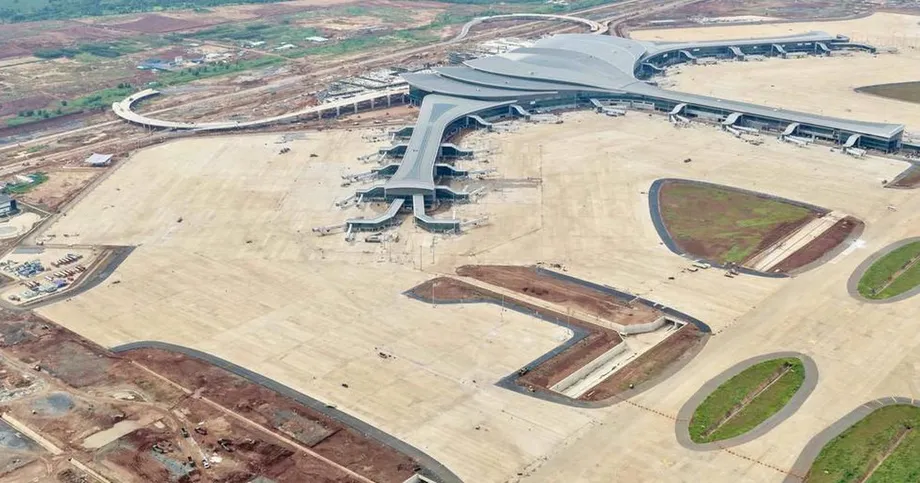
The Ministry of Construction has been directed to prioritise investment resources for strategic infrastructure. Airports, seaports, expressways and direct connections to national tourism sites and destinations are all part of that work.
Vietnam's infrastructure priorities connect the entry policy to what happens after arrival. Visitors need to reach their destinations smoothly, whether travelling from an airport to a city or between tourism areas. Modern transport and connected routes affect satisfaction and the likelihood of a return visit.
The Ministry of Culture, Sports and Tourism will also advise on adjustments to the Tourism System Master Plan for 2021 to 2030, with a vision to 2045. The updates are intended to align tourism planning with urban and rural planning and the restructuring of administrative units, opening new space for development.
Neighbours are competing for the same travellers
Vietnam's push comes as other Asian destinations broaden access and compete for tourism spending. Thailand has emerged as the leader in ASEAN passport rankings, ahead of regional neighbours including Vietnam, Indonesia, Cambodia and Myanmar.
Thailand's extensive visa free access to more than 80 countries reflects diplomatic efforts and numerous bilateral agreements. Passport access concerns where a country's citizens can travel, while Vietnam's proposed exemptions concern which foreign visitors it will admit without a visa. Both form part of the region's wider movement towards easier travel.
Thailand and Malaysia have rolled forward their visa waiver programmes for Indian passport holders until December 31, 2026. India is therefore a market where travellers have competing destinations offering easier entry.
China has expanded its transit policy allowing 240 hours without a visa to 65 ports across 24 provinces. Travellers from 55 countries can use the arrangement for 10 days of travel without applying for a visa beforehand. Sri Lanka has announced plans to allow entry without a visa for nationals of 40 countries starting in January 2026.
Vietnam is pursuing its reforms against this regional competition in both entry rules and tourism infrastructure. Easier access can help a destination win consideration when visitors compare places to travel, while transport and tourism services shape the experience once they arrive.
Longer residence proposals reach beyond holidays
The Ministry of Public Security is reviewing a draft decree to create new visa categories for foreigners seeking long term residence. These proposals target people with skills, professional standing or investment connections that could contribute to Vietnam's economic development.
The proposed groups include executives and investors from the world's top 100 companies by market capitalisation. Market capitalisation is the total stock market value of a company's shares, providing the measure used to identify those firms.
Other proposed categories cover experts and scholars in science, technology, engineering and mathematics from OECD countries who hold doctoral qualifications; medical scientists affiliated with hospitals or universities of a high standard; artists and athletes with international recognition; and technology professionals working in national priority sectors, including semiconductors and artificial intelligence.
The Vietnam Tourism Advisory Board has separately proposed a golden visa for long term residents. Its proposed validity would be five to ten years, with the possibility of renewal, for people making economic, scientific or cultural contributions to Vietnam.
The golden visa proposal would offer longer stays and broader eligibility than existing investor categories. It is a separate initiative from the draft decree being reviewed by the Ministry of Public Security, although both seek to attract people whose contribution could extend beyond spending during a short visit.
Tourism fits into a much larger growth ambition
General Secretary To Lam has set a goal of 10% annual economic growth from 2026 to 2030. Tourism is expected to contribute alongside manufacturing and technology as the Communist Party pursues its ambition for a high income economy by 2045.
Lam consolidated his power following his reappointment at the 14th National Party Congress in January 2026. He has prioritised economic performance and repeatedly called for a stronger private sector and a move beyond a growth model built on cheap labour, exports and foreign investment.
Lam expressed the scale of the growth objective directly:
We must achieve double-digit growth to reach the set goals.
His administration has cut tens of thousands of public sector jobs, merged ministries, redrawn provincial boundaries and pushed through major infrastructure projects. These reforms aim to reduce red tape, simplify rules and speed up decisions in support of rapid economic growth.
The World Bank forecasts growth of 6.3% in 2026 and 6.7% in 2027, below the government's 10% ambition. Reaching double digit growth would require large improvements in productivity and a successful shift towards economic activities that generate more value.
Tourism's focus on visitors who spend more follows that wider economic direction. Increasing receipts from longer stays and more valuable services is intended to help the sector contribute more than a rise in arrival numbers alone.
Growth brings environmental and economic pressures
Vietnam faces an ageing population, climate risks, weak institutions and external pressures including United States tariffs. These challenges form part of the economic setting in which the tourism and visa reforms must operate.
China is Vietnam's largest trading partner, while the United States is its largest export market. Vietnam must carefully balance its relationships with both powers as it pursues faster development and responds to pressures affecting trade.
Corruption also remains an obstacle despite Lam's campaign against it. Transparency International has noted that Vietnam has become more corrupt in recent years, a concern that can weaken investor confidence and create difficulties for tourism development.
Rapid growth in visitor numbers and tourism infrastructure brings environmental concerns as well. Vietnam has strengthened its rhetoric on green growth, but turning those intentions into concrete policy choices remains a challenge.
The government's sustainable tourism goal requires balancing economic expansion with environmental protection. Airports, roads and tourism facilities can help visitors reach more destinations, while the pace and form of development will shape the pressure placed on those places.
Several ministries must turn policy into practice
The Ministry of Foreign Affairs has been instructed to expand communication about Vietnam's visa policies to international partners. It will also review and propose amendments to relevant legal documents, supporting both the development of policy and its explanation abroad.
The Ministry of Industry and Trade will integrate Vietnam's tourism brand and image into trade promotion programmes, international fairs and exhibitions. Overseas trade offices are expected to act as a bridge, connecting efforts to promote business with efforts to attract travellers.
The ministry assignments bring together several parts of the visitor journey. Public Security handles entry procedures and proposed immigration changes; Foreign Affairs supports international outreach and legal work; Culture, Sports and Tourism develops markets, products and planning; Construction focuses on strategic connections; and Industry and Trade promotes Vietnam abroad.
Vietnam's immediate objective is to build on the record 21.2 million international arrivals in 2025. Meeting the 2026 targets will require the proposed visa opening, better services, improved transport and more effective promotion to work together, while the longer residence proposals serve a separate ambition to attract people who can contribute over several years.
The Bottom Line
- Vietnam is studying wider unilateral visa exemptions for major and promising visitor markets.
- International arrivals reached a record 21.2 million in 2025, up 20.4%.
- The 2026 targets are 25 million international visitors and 150 million domestic travellers.
- Ordinary passport holders from 39 countries currently receive tourism visa exemptions, with stays ranging from 14 to 90 days.
- The exemption for 12 European countries added in August 2025 allows stays of 45 days and runs until August 14, 2028.
- Recent electronic visa improvements have reduced processing to under 24 hours.
- Green, wellness, MICE and golf tourism are priorities for attracting longer stays and higher spending.
- New residence categories and a golden visa valid for five to ten years remain proposals.
- The tourism strategy supports a goal of 10% annual economic growth from 2026 to 2030 and a high income economy by 2045.
- Regional competition, environmental pressures, corruption and infrastructure needs remain central challenges.