A Road Project Opens a Window Into Life in 736 CE
A man who died at 63 in 736 CE and was buried with his wife in Taiyuan, northern China, left behind an unusually vivid record of the world around him. Inside their brick tomb, painted figures grind grain, prepare noodles, fetch water and tend animals. Among them stands a blond, bearded foreigner leading camels and horses, a figure researchers believe may represent a Sogdian from Central Asia.
Contents
- A Road Project Opens a Window Into Life in 736 CE
- Inside the Couple's Brick Tomb
- Figures Beneath Trees Give the Paintings Their Shape
- Grain, Noodles and the Work of Feeding a Household
- Water, Horses and Possible Portraits of the Owners
- Who Is the Blond Man Leading the Animals?
- A Provincial Tomb Connected to the Silk Road
- Why the Everyday Scenes Matter to Archaeology
- From an Eighth Century Burial to a Modern Discovery
- Key Points
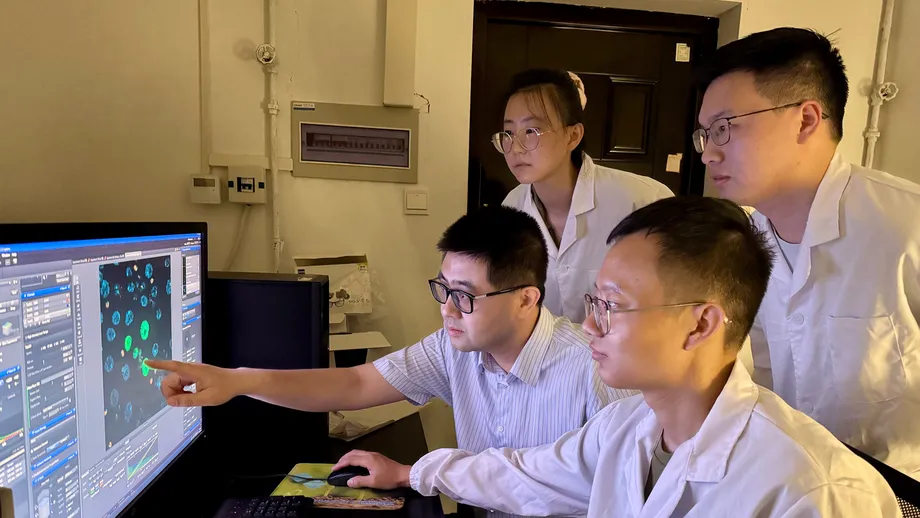
Construction workers discovered the burial in 2018 while rebuilding a hillside road along the old Jinci Road on the outskirts of Taiyuan, the capital of Shanxi Province. Ancient brickwork appeared during excavation, prompting archaeologists from the Jinyang Ancient City Research Institute, part of the Taiyuan Cultural Relics Protection Research Institute, to investigate.
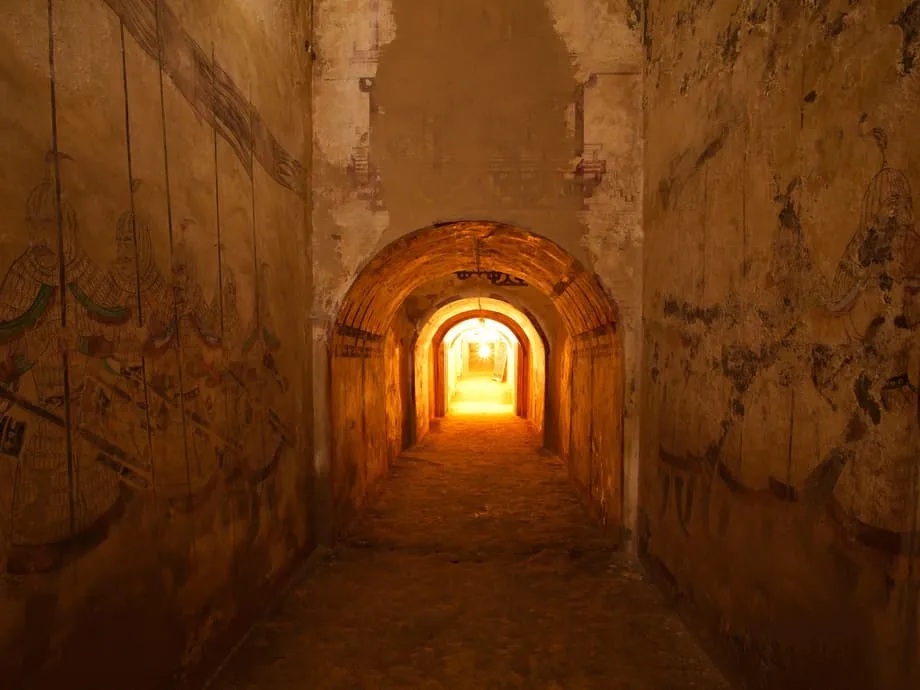
The chamber had remained hidden for nearly 1,300 years. Its paintings survived across almost every interior surface except the floor, preserving scenes of ordinary work alongside images connected with burial customs and the afterlife. Detailed findings were made public later, bringing attention to both the household activities and the foreign figure.
An epitaph, an inscription recording information about the deceased, identifies the principal occupant as a man aged 63 who died in 736 CE. He and his wife were buried together that year. The date places the burial in the eighth century, during the Tang Dynasty, which lasted from 618 to 907 CE.
The discovery brings two scales of history into the same small space: the labor needed to feed and supply a household, and the movement of people and goods across the Silk Road. Its most compelling details are practical ones, from the tools used to process grain to the animals accompanying a traveler.
Inside the Couple's Brick Tomb
The burial consists of a single brick chamber approached through a sloping passage, an entrance corridor and a decorated doorway. Its physical size is modest, but the paintings make the interior a rich record of clothing, work, animals and social relationships.
Near the entrance, painted guardians or doorkeepers wear yellow robes and carry swords tied at their waists. Other doormen hold ceremonial objects or what appears to be the coffin itself. These figures belong to Tang burial traditions in which attendants guarded the deceased against spiritual harm and provided a formal welcome into the afterlife.
The domed ceiling carries a different kind of image: what appears to be a dragon or phoenix. Both mythical creatures were associated with power, authority and immortality in traditional Chinese cosmology. Beneath that symbolic ceiling, the walls turn largely toward earthly activity.
The mixture gives the tomb a protective outer setting and an intimate domestic interior. Rather than concentrating on imperial ceremonies, major historical events or heavenly palaces, its artists devoted considerable attention to the tasks that sustained everyday existence.
Figures Beneath Trees Give the Paintings Their Shape
The murals follow an artistic approach known as the "figures under the tree" style. Human figures appear beneath stylized trees, arranged in relatively flat compositions rather than scenes built around an illusion of depth. Strong black outlines, little shading and white backgrounds give the paintings their distinctive appearance.
This approach originated during the Han Dynasty and remained especially popular in Shanxi during the Tang period. In the Taiyuan tomb, trees help organize the activities, placing people, tools and animals within individual scenes while maintaining a consistent visual language across the chamber.
Long Zhen, director of the Jinyang Ancient City Research Institute, identified close stylistic similarities with murals in the tomb of Wang Shenzi, a ruler associated with the ninth century and the founding monarch of Min during the subsequent Five Dynasties and Ten Kingdoms period.
Researchers have suggested that the same master painter may have worked on both tombs, despite the time separating their creation. The comparison has also prompted discussion of professional muralists traveling between commissions or maintaining workshops that served elite families across generations. The suggested connection remains an interpretation based on artistic resemblance.
Grain, Noodles and the Work of Feeding a Household
The southeast wall shows men pushing heavy millstones to grind grain, while women operate smaller stone mills to make fine flour for cooking. Other panels depict men pounding rice with wooden hammers and preparing noodles by hand.
These activities show the effort involved in turning harvested crops into food. Milling broke grain down into usable ingredients, while pounding and other preparation supported cooking and storage in an era before modern preservation methods.
Victor Xiong, a professor of history at Western Michigan University who examined the findings, described the value of the scenes for understanding work during the period:
The murals provide never-before-seen representations of daily chores and agricultural labor during the Tang Dynasty.
The detail is what makes these paintings especially useful. Different tools and actions appear together, allowing researchers to study particular techniques rather than simply recognizing a general image of farm or household labor.
The domestic focus also sets the tomb apart from many imperial and aristocratic burials. Those often feature official court life, grand events or mythical beings in heavenly settings. Here, ordinary responsibilities occupy much of the painted space, offering a view associated with educated households, minor aristocratic families or landowners outside the imperial court.
Water, Horses and Possible Portraits of the Owners
Women fetching water appear with an unusual device described as involving oranges mounted in a tree to draw water from a deep well. The precise operation of this arrangement is not explained. Researchers have connected the detail with the possibility that the owners held land containing orchards and used inventive methods to manage everyday work.
Another scene shows a woman in a brightly colored gown leading four horses. A bearded man stands nearby holding a whip. The grouping has been interpreted as a sign that the couple maintained substantial livestock holdings.
An elderly man appears repeatedly elsewhere in the chamber. He reaches toward a snake, carries an axe and bundles of firewood, holds ceremonial bowls close to his chest and points toward flowering trees. Archaeologists believe recurring figures may represent the tomb owners at different stages of their lives.
That interpretation gives the paintings a personal dimension. The people at work may reflect the couple's own experiences and responsibilities, rather than anonymous laborers or standard images of the afterlife. The specific grain processing methods and unusual water device have likewise been interpreted as details drawn from actual household routines.
The paintings therefore offer researchers several connected subjects to examine: how food was prepared, how water was obtained, how animals were managed and how a family chose to remember its earthly life in a burial chamber.
Who Is the Blond Man Leading the Animals?
On the southwestern wall, a blond man with a full beard leads camels and horses through a mountainous landscape dotted with trees. His facial appearance, clothing and bearing differ from those of the other figures in the tomb.
Researchers identify him as a "Westerner," most likely a Sogdian from Central Asia. His identity remains an interpretation of the painted appearance and dress. The epitaph supplies information about the burial's principal occupant, while the foreign figure is understood through the visual details of the mural.
The Sogdians were an ancient Iranian people with merchant communities in areas now within Tajikistan and Uzbekistan. Samarkand, an oasis city, was a particularly important center. During the Tang period, Sogdian merchants acted as major intermediaries along the Silk Road, the network of routes connecting China with India, Persia, the Byzantine Empire and other regions.
Historical records and archaeological evidence indicate that some Sogdians had light hair and eyes, including blond hair. Their populations reflected long histories of mixing among Indo-Iranian, Turkic, Tocharian and other nomadic peoples of the Eurasian steppe.
Ancient DNA studies associated with sites such as Samarkand and Panjikent have also been cited in explaining this complex ancestry. They describe western Eurasian genetic components connected with the steppe and Iranian plateau alongside eastern Eurasian elements. This population history provides context for the range of appearances associated with Central Asia.
A Provincial Tomb Connected to the Silk Road
The foreign man's animals are an important part of the scene. A figure holding the reins of an Asian camel and accompanying horses fits the movement of goods and people that linked Tang China to distant trading communities.
During the Tang Dynasty, the Chinese empire reached its greatest territorial extent and became a major center of international commerce. Merchants, diplomats and religious missionaries traveled to it from across the known world. Sogdian trading networks stretched across routes connecting the Mediterranean Sea and the Pacific Ocean.
Sogdians worked as translators, traders, money lenders and intermediaries between cultures. Their linguistic abilities, mathematical skills and commercial knowledge helped them operate across regions with different languages and customs.
The Sogdian language served for centuries as a shared language of Central Asian commerce. Its script developed from Aramaic. Sogdian art also drew on several traditions, including Greco-Buddhist, Persian and Chinese influences, reflecting the communities' connections across a wide geographical area.
In Taiyuan, the inclusion of a possible Sogdian beside domestic scenes suggests that foreign commerce had a place in the household's understanding of its world. The interpretation is that contact with merchants from distant regions was familiar and economically meaningful enough to appear in a private burial.
Painted foreign figures have also been found in Xinjiang, Shandong, Shaanxi and Gansu. The Taiyuan image belongs within that wider pattern of Tang art recording people whose appearance and origins differed from those of Han Chinese communities. Its particular value comes from placing such a figure alongside detailed scenes of household work.
Why the Everyday Scenes Matter to Archaeology
The survival of the murals gives archaeologists an opportunity to investigate eighth century painting techniques, pigment mixtures, brushwork and composition. The same images provide material for studying social organization, clothing and domestic arrangements.
The tomb has been interpreted as reflecting the lives of middle class landowners or minor aristocratic families. That social perspective broadens a picture of the Tang period often shaped by imperial courts, major religious institutions and monumental art.
The Mogao Grottoes near Dunhuang offer a useful contrast. Their murals extend for approximately 25 kilometers and are closely associated with Buddhist art and devotion along the Silk Road. The Taiyuan tomb instead concentrates largely on secular life, meaning activities outside a primarily religious setting.
Burial beliefs still frame the chamber through guardians, attendants and the creature on the ceiling. Within that setting, however, milling flour, preparing noodles, collecting firewood and handling horses occupy prominent positions. The result joins ideas about the afterlife with memories or representations of practical earthly responsibilities.
The possible Central Asian merchant also challenges a picture of provincial Tang society as culturally uniform. Researchers interpret his presence as evidence that even relatively modest officials or landowners could have direct or indirect connections with international trading networks stretching thousands of miles.
The larger theme is an ancient form of interconnection: goods, artistic ideas and people traveled long distances well before digital communications or air travel. In this chamber, that wide geographical story appears beside the smallest routines of a household.
From an Eighth Century Burial to a Modern Discovery
The chronology separates the couple's lifetime from the modern recovery of their painted surroundings. The inscription supplies the burial date, while the road project explains how the chamber came back into view.
- 618 to 907 CE: The Tang Dynasty ruled China, providing the political and cultural setting for the burial.
- 736 CE: A man aged 63 died and was buried with his wife in the brick chamber at Taiyuan.
- 2018: Workers rebuilding a hillside road along the old Jinci Road encountered ancient brickwork, leading to an archaeological investigation.
- After the discovery: Detailed findings became public, drawing attention to the domestic murals and the possible Sogdian figure.
Research into the pigments, brushwork and arrangement of the paintings continues to shape interpretations of the chamber. The central historical interest lies in how its inhabitants represented themselves: protected by burial guardians, surrounded by familiar work and connected, through one distinctive traveler, to a much larger world.
Key Points
- Road construction in Taiyuan, Shanxi Province, uncovered the tomb in 2018.
- An epitaph records that its male occupant died at 63 in 736 CE and was buried with his wife that year.
- Murals cover nearly every interior surface except the floor and use the regional "figures under the tree" style.
- Scenes show milling grain, pounding rice, making noodles, fetching water, collecting firewood and managing horses.
- A blond, bearded man leading camels and horses is interpreted as a possible Sogdian from Central Asia.
- Long Zhen identified stylistic similarities with paintings in Wang Shenzi's tomb, prompting discussion of a possible artistic connection.
- The chamber combines evidence of everyday Tang life with images reflecting burial beliefs and Silk Road contacts.