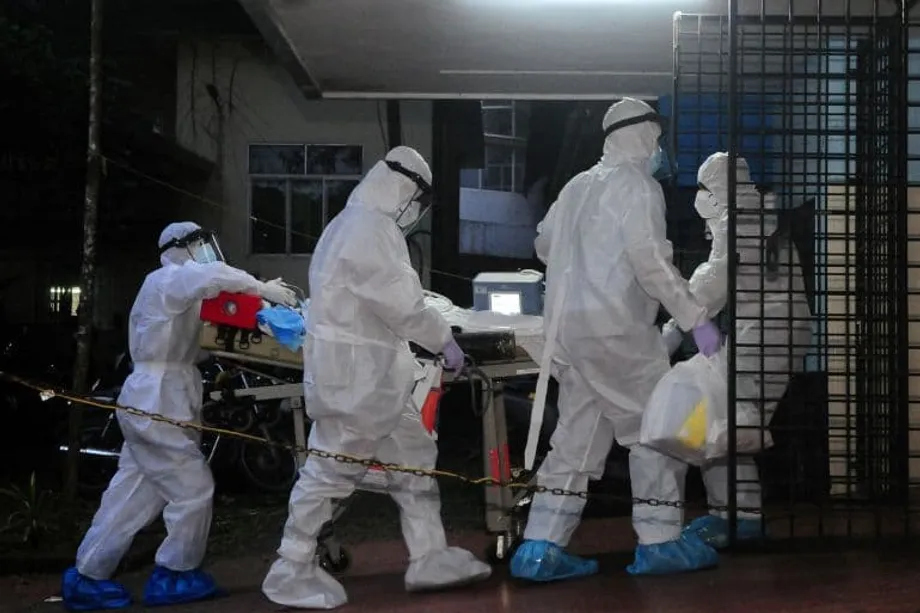
Two Confirmed Cases and 196 Contacts Tested
India's Ministry of Health and Family Welfare says a Nipah virus outbreak in West Bengal has been contained after two laboratory confirmed infections and an investigation that identified, traced, monitored and tested 196 contacts. All those contacts tested negative. By January 28, 2026, the announcement had been accompanied by airport checks, travel advisories and stronger surveillance across nine Asian countries and territories.
Contents
- Two Confirmed Cases and 196 Contacts Tested
- How India Organised the Response
- How Nipah Reaches People
- Why Early Diagnosis Is Difficult
- West Bengal's Earlier Outbreaks
- Thailand and Singapore Tighten Airport Measures
- Border Precautions Across the Region
- Hong Kong Weighs Health and Travel Concerns
- What Kerala's Repeated Outbreaks Show
- Treatment and Testing Still Have Limits
- Why the Risk Keeps Returning
- The Bottom Line
The two patients are healthcare workers whose infections were detected in late December 2025 and early January 2026. They had travelled to Purba Bardhaman district on personal business before becoming ill. Both were reported to be in critical condition at AIIMS Kalyani, receiving treatment under strict isolation procedures.
The ministry's statement, issued late Tuesday, described the response as achieving "timely containment" through stronger surveillance, laboratory testing and field investigations. Thailand, Nepal, Singapore, Malaysia, Indonesia, Vietnam, Myanmar, China and Hong Kong nevertheless took steps to reduce the chance of infections arriving across their borders.
Nipah can cause severe illness affecting the brain and respiratory system. Its reported fatality rate ranges from 40% to 75%, far above that associated with coronavirus. There is no approved vaccine or specific treatment, so care centres on managing complications and supporting patients through the illness.
West Bengal's previous outbreaks occurred in 2001 and 2007, making this its first outbreak in about 18 years. Its proximity to Bangladesh, where Nipah outbreaks have occurred annually since 2001, adds urgency to identifying infections quickly. The immediate task is to find anyone exposed to the patients, monitor their health and prevent further transmission, particularly in hospitals where staff and relatives have close contact with sick people.
How India Organised the Response
The health ministry's confirmed total of two cases differed from early reports of five infected healthcare workers at a Kolkata hospital and about 100 close contacts placed in quarantine. Hong Kong's Centre for Health Protection initially cited those higher case figures in an advisory urging residents to avoid nonessential travel to West Bengal.
The ministry rejected what it called "speculative and incorrect figures" and said only two cases had been confirmed since December. Its contact count was 196, with all testing negative. The ministry described the measures supporting its containment announcement:
enhanced surveillance, laboratory testing, and field investigations
The ministry also stated:
all necessary public health measures are in place.
A national joint outbreak response team was deployed to assist West Bengal authorities. Contact tracing covered North 24 Parganas, Purba Bardhaman and Nadia, reflecting the infected workers' travel patterns. The state government established three public helplines to answer concerns and bring information into a central channel.
AIIMS Kalyani provided intensive supportive care under protocols described as Biosafety Level 4, the highest containment standard for infectious agents. The patients' reported critical condition remained a central concern even as authorities announced containment.
The changing case figures also illustrated a practical problem during a health emergency: preliminary information can spread quickly through social media before laboratory results and contact investigations are complete. Authorities must communicate promptly while checking their numbers. Premature announcements can cause unnecessary alarm, while slow responses can give an infection more opportunities to spread.
How Nipah Reaches People
Nipah is a zoonotic virus, meaning it can pass from animals to humans. It belongs to the Henipavirus genus within the Paramyxovirinae subfamily. The World Health Organization identifies it as a priority pathogen alongside COVID-19 and Zika because of the threat it presents to public health.
Fruit bats of the Pteropodidae family are its natural reservoir, the animals in which the virus normally persists. Flying foxes are particularly relevant because they roost in trees across South and Southeast Asia. People can become infected through contact with infected bats or their secretions, contaminated fruit or date palm sap, or infected pigs and other animals that act as intermediate hosts.
Nipah can also pass between people through bodily fluids. Although this route is relatively rare, it has driven outbreaks in hospitals, where patients have infected healthcare workers and family members. A single infection can therefore lead to a cluster when people caring for a patient are exposed.
The incubation period, the interval between infection and symptoms, ranges from four to 21 days. During that window, an infected person may travel and meet other people while appearing well. This makes identifying exposure histories and monitoring contacts a substantial part of the response.
Why Early Diagnosis Is Difficult
Early Nipah symptoms can resemble influenza and other common viral illnesses. Patients may develop fever, muscle pain, sore throat and breathing difficulties. Vomiting can occur, and severe disease may progress to disorientation, seizures, convulsions or coma.
Encephalitis, inflammation of the brain, is among its most dangerous complications. Respiratory illness can also become severe. The combination means a patient may require intensive care for both breathing problems and neurological damage.
Doctors can miss Nipah when they do not specifically test for it. Recognition may come only after several linked patients become ill or someone's condition deteriorates rapidly. That delay matters particularly in hospitals, where repeated contact with a seriously ill patient can expose staff and caregivers.
Dr. Rajeev Jayadevan, former president of the Indian Medical Association's Cochin chapter, described the diagnostic difficulty:
Sometimes a diagnosis of Nipah can be missed because it is not specifically tested for,
Jayadevan also stressed the need to recognise the first infection before hospital transmission produces a larger cluster:
It's extremely important to identify the first patient who develops the infection
West Bengal's Earlier Outbreaks
West Bengal shares a border with Bangladesh, which recorded more than 100 Nipah deaths over two decades after annual outbreaks began in 2001. Earlier West Bengal clusters in 2001 and 2007 were described as claiming more than 50 lives together; the individual figures given for those outbreaks were 45 and five deaths, respectively.
The Siliguri outbreak of 2001 involved 66 probable cases and 45 documented deaths between January 31 and February 23. Investigators found clear evidence of transmission between people, with an incubation period of about 10 days. There was no concurrent animal illness or direct animal exposure among the cases, and transmission occurred in healthcare settings.
The Siliguri investigation reported a case fatality rate of 74%, prompting calls for stronger infection control in South Asian hospitals. The experience showed how a disease associated with animals could spread through human contact once a patient entered the healthcare system.
In April 2007, another outbreak struck Belechuapara village in Nadia district, a few kilometres from the Bangladesh border. Five members of one family were described as dying within days of developing symptoms. The account also identified three relatives and a healthcare worker who performed a CT scan on the first patient among those who subsequently died.
The first patient was a farmer aged 35 who drank palm liquor. His infection was considered likely to have come from bats roosting in trees around his home. Genomic analysis found 99.2% genetic identity between virus samples and Bangladeshi strains, suggesting circulation of closely related viruses across the border.
The sequence of outbreaks places the current response in a longer regional history:
- January 31 to February 23, 2001: Siliguri recorded 66 probable cases and 45 documented deaths, with evidence of hospital transmission.
- April 2007: Nipah struck Belechuapara in Nadia district, with five deaths reported and virus samples closely matching Bangladeshi strains.
- Late December 2025 and early January 2026: Two healthcare workers in West Bengal were confirmed infected.
- January 28, 2026: India had announced containment, while Asian authorities were increasing screening and surveillance.
Thailand and Singapore Tighten Airport Measures
Thailand introduced screening at three international airports serving Bangkok and Phuket that receive direct flights from West Bengal. Passengers were required to complete health declarations and undergo temperature checks, while staff watched for visible symptoms.
Thai authorities also assigned designated parking bays to aircraft arriving from affected areas. This arrangement allows a quicker response when someone aboard appears ill. Health officials expressed confidence in the measures while acknowledging the seriousness of Nipah.
Singapore's Communicable Diseases Agency announced a response plan with six elements. The measures described included temperature screening at Changi Airport, stronger surveillance of newly arrived migrant workers from South Asia and direct contact with health authorities in South Asian countries.
Singapore also disclosed that surveillance of local bat populations, running since 2011, had never detected Nipah. That finding provided reassurance about domestic risk while authorities continued precautions against infections arriving from abroad.
Border Precautions Across the Region
Nepal placed its health system on "high alert" and introduced screening at Kathmandu airport and land crossings. Its porous land border with India makes both routes relevant to the response.
China strengthened disease prevention in border areas and began risk assessments and training for medical staff. Myanmar advised against nonessential travel to West Bengal and increased airport fever surveillance using arrangements originally established during the COVID-19 pandemic.
Vietnam instructed local authorities to increase monitoring at border crossings, health facilities and within communities. Malaysia introduced health screening at international ports of entry. Indonesia was also among the countries taking precautions to prevent the virus crossing its borders.
These responses combined checks on arriving travellers with preparation inside health systems. Countries with substantial trade and population movement across the subcontinent faced both public health and economic costs if an arriving infection went undetected. India's containment announcement and the surrounding countries' precautions therefore addressed different parts of the same problem: stopping local spread and identifying possible imported illness.
Hong Kong Weighs Health and Travel Concerns
Hong Kong's Centre for Health Protection urged residents to avoid nonessential travel to West Bengal in its early advisory. Nipah was already among 53 notifiable infectious diseases under the Prevention and Control of Disease Ordinance.
Notifiable status means infections must be reported to the authorities. The ordinance supports rapid reporting and quarantine powers, giving officials tools to respond if a case is identified.
Hong Kong's substantial Bengali community also faced possible disruption to family visits and business travel. Vishal Melwani, vice-president of the India Association Hong Kong, predicted effects on those journeys in the short term while dismissing fears of lasting economic disruption.
The differing regional responses reflected geography and varying confidence in India's containment measures. Airport surveillance was especially visible, while countries sharing land routes with India had to consider travellers entering through border crossings as well.
What Kerala's Repeated Outbreaks Show
Kerala, in southern India, has experienced nine documented Nipah outbreaks since 2018, including annual occurrences that have made it one of the world's regions most affected by recurring Nipah. Repeated emergencies have driven investment in diagnosis, treatment and outbreak response.
The 2018 outbreak was India's first in the south. Of 23 identified patients, only two survived, giving a case fatality rate of 91%. Its origin was traced to a well contaminated by bat secretions, followed by transmission in hospitals.
Kerala was already known for the quality of its healthcare, but the outbreak exposed gaps in infection control and diagnostic capacity. The large loss of life pushed the state to develop more specialised ways of handling subsequent infections.
By 2023, four of six confirmed patients survived, with mortality reported at 33%. Compared with 2018, survival had increased from two of 23 patients to four of six. The improvement was associated with heavy state investment in monoclonal antibody treatments and antiviral drugs, including remdesivir repurposed from COVID-19 treatment protocols.
Monoclonal antibodies are manufactured antibodies designed to target a particular infection. For Nipah, the treatment must be administered within days of symptoms appearing, while global supplies remain severely limited. Kerala's experience therefore combines improved response capacity with continuing difficulty obtaining promising experimental treatments quickly enough.
Treatment and Testing Still Have Limits
Nipah treatment currently relies on intensive supportive care. Patients may need mechanical ventilation when they cannot breathe adequately, treatment for swelling in the brain and medicines to manage seizures. Experimental interventions are also used, but there is no approved vaccine or specific antiviral therapy.
The monoclonal antibody m102.4, developed through collaboration between the United States and Australia, has shown promise in animal studies and compassionate use cases. Compassionate use allows access to an experimental treatment for seriously ill patients. Quantities of m102.4 remain extremely limited.
Remdesivir was originally developed for Ebola and later repurposed for COVID-19. It has demonstrated activity against Nipah in laboratory studies. Several Nipah vaccine candidates remain in development, but none has completed clinical trials.
Scientific complexity and limited commercial incentives have slowed the development of approved products. Nipah is a rare disease affecting primarily poorer populations in South Asia, and pharmaceutical investment has remained limited despite its potential to cause epidemics.
Confirming infection requires specialised laboratory capacity. Tests include serum neutralisation, ELISA antibody detection and RT-PCR, which looks for the virus's genetic material. These methods identify either the virus itself or the body's response to it.
Definitive diagnosis was described as requiring specialised Biosafety Level 4 laboratory facilities, of which India has few, with a turnaround of 10 days. That delay leaves a period in which patients may receive treatment for another suspected illness and caregivers may be exposed before Nipah is recognised.
Why the Risk Keeps Returning
Fruit bats are essential pollinators and seed dispersers in tropical ecosystems. Many species have adapted to landscapes changed by people, including fragmented forests and urban green spaces. The recurring outbreaks reflect contact between these animals, human activities and susceptible people.
Raw date palm sap collection is a traditional livelihood in Bangladesh and eastern India. Bats can lick collection pots overnight, leaving secretions that contaminate the sap. Collectors and consumers can then encounter the virus through a food product that appears ordinary.
The farmer who first became ill during the 2007 West Bengal outbreak drank palm liquor and lived near trees where bats roosted. His case illustrates how local food practices and nearby wildlife can create opportunities for infection.
Climate change and habitat destruction may expand areas of risk. Changes in flowering and fruiting affect where bats move and the stresses they experience, potentially increasing the release of virus in their secretions. More intensive agriculture also brings people into closer contact with wildlife reservoirs.
These ecological and social conditions are difficult to address through a single intervention. They suggest that Nipah and similar infections passing from animals to people are likely to become more frequent rather than diminish in coming decades. For the current West Bengal outbreak, the immediate response remains centred on the two patients, their contacts and preventing further hospital transmission.
The Bottom Line
- As of January 28, 2026, India said the West Bengal Nipah outbreak was contained, with two confirmed cases and all 196 traced contacts testing negative.
- The infected healthcare workers were reported critically ill at AIIMS Kalyani after travelling to Purba Bardhaman.
- Early reports cited five cases; India's health ministry rejected that figure and confirmed two infections since December.
- Nine Asian countries and territories increased screening, issued travel advice or strengthened surveillance.
- Nipah spreads through infected animals, contaminated food and contact with infected people, including in hospitals.
- The reported fatality rate is 40% to 75%, and there is no approved vaccine or specific treatment.
- West Bengal previously experienced outbreaks in 2001 and 2007; Kerala has recorded nine outbreaks since 2018.
- Kerala's reported mortality fell from 91% in 2018 to 33% in 2023, while access to experimental treatments remained limited.