Two Billion People, Two Decades of Negotiations
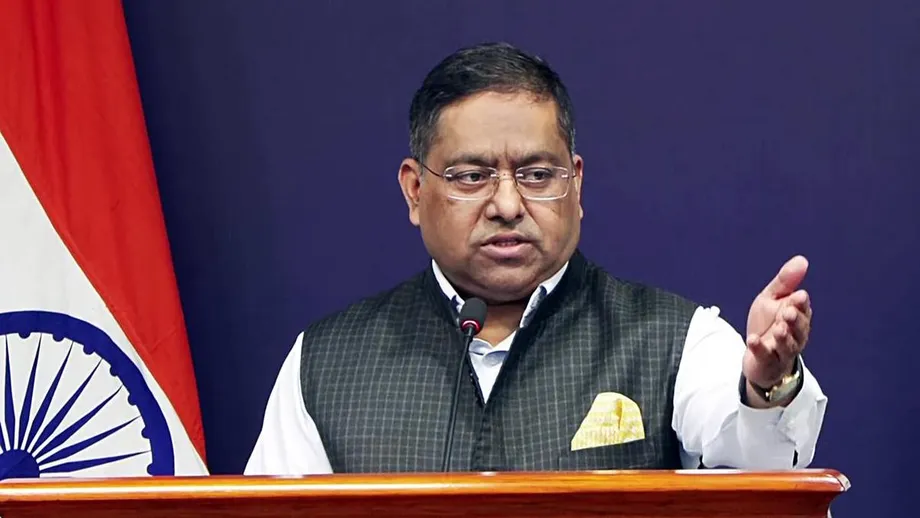
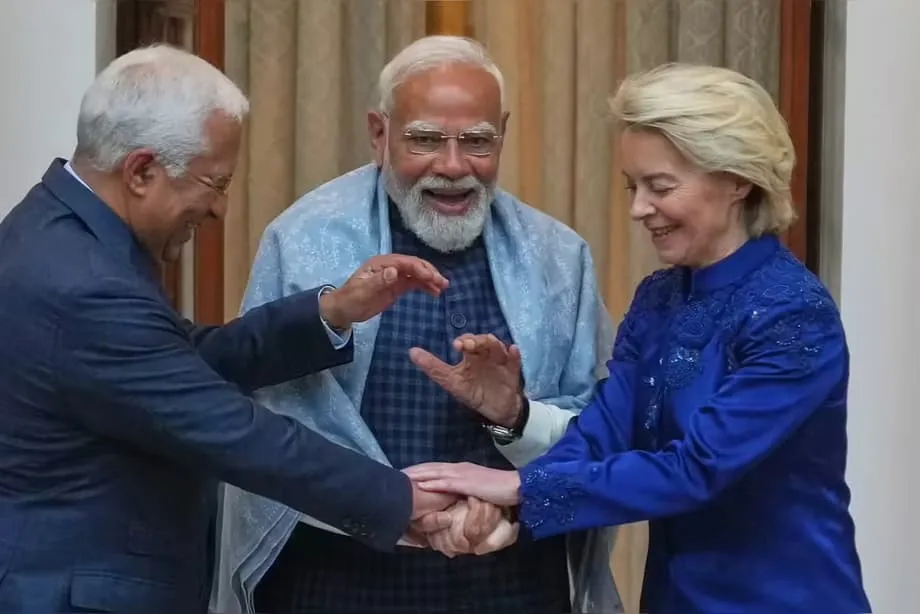
European Commission President Ursula von der Leyen and Indian Prime Minister Narendra Modi announced the conclusion of the EU-India Free Trade Agreement in New Delhi on January 27, 2026. After nearly 20 years of negotiations, the agreement brings together economies with roughly 2 billion people and approximately 25% of global gross domestic product, the total value of goods and services produced.
Contents
- Two Billion People, Two Decades of Negotiations
- Why Talks Stalled and Then Restarted
- What the Tariff Numbers Mean
- Cars, Luxury Goods and Other Business Opportunities
- Services, Digital Trade and Smaller Businesses
- What the Mobility Framework Changes
- Climate and Workers' Rights Become Commitments
- How US Pressure and Russian Energy Shaped the Deal
- Approval Still Stands Between the Deal and Businesses
- A Different Model for Major Economic Partnerships
- The Bottom Line
Von der Leyen described the agreement in sweeping terms:
mother of all deals.
The agreement builds on a relationship generating €180 billion in annual trade. Projections suggest EU goods exports to India could increase by 107.6% by 2032, meaning they would more than double. Its reach extends from cars, machinery and clothing to financial services, digital commerce and the movement of professionals.
US President Donald Trump's aggressive tariffs on allies and adversaries helped give Brussels and New Delhi a shared reason to accelerate negotiations. A 25% levy on selected Indian exports, linked to India's purchases of Russian energy, increased New Delhi's incentive to seek other commercial partners.
Europe's approach combines closer trade ties with continued political disagreements, including over Russia. Washington has increasingly used tariffs to exert geopolitical pressure. The EU-India agreement offers a different approach: expanding economic cooperation while leaving room for each side's foreign policy choices.
As of January 28, the negotiations have concluded, but the agreement still needs legal review and approval before its benefits take effect. Implementation could begin in early 2027. Businesses therefore face a period of preparation before the promised reductions in tariffs, taxes charged on imported goods, become available.
Why Talks Stalled and Then Restarted
The EU and India established a strategic partnership in 2004 and launched formal trade negotiations in 2007. Their original ambitions covered goods, services, investment protection, public procurement, intellectual property and regulatory cooperation. Public procurement means purchases by governments and public bodies, while intellectual property covers rights over inventions, brands and creative work.
Europe sought greater access for services, automobiles, wine and spirits, pharmaceuticals and public procurement. It also pressed for strong intellectual property and investment protections. India placed particular weight on "Mode 4" access, the temporary movement of skilled professionals across borders to provide services, while preserving freedom to pursue development priorities and regulate its economy.
By 2013, those differences had brought negotiations to a practical halt. The effects of Europe's financial crisis and changes in India's political priorities after 2014 added to the difficulties. During the long pause, the EU increasingly attached sustainability, labor and environmental requirements to trade agreements. India became more cautious about comprehensive deals, concentrating on domestic manufacturing, economic resilience and strategic autonomy, meaning the ability to make decisions independently.
The relaunch in 2021-2022 separated trade, investment protection and geographical indications into parallel negotiating tracks. Geographical indications protect product names associated with particular places. Breaking the negotiations into parts allowed progress without settling every issue in one package.
- 2004: The EU and India established a strategic partnership.
- 2007: Formal trade negotiations began.
- 2013: Negotiations came to a practical halt.
- 2021-2022: Talks restarted through separate negotiating tracks.
- January 27, 2026: Leaders announced the conclusion of the trade agreement.
- 2026: Legal review, translation and approval are expected to proceed.
- Early 2027: Implementation could begin.
COVID-19 disruptions to supply chains, growing US-China rivalry and Europe's search for dependable partners strengthened the case for agreement. Russia's war in Ukraine complicated relations but also increased the incentive to diversify partnerships. Western pressure over India's Russian energy purchases exposed the costs of relying too heavily on any single partner.
What the Tariff Numbers Mean
The agreement's scope exceeds that of any trade pact either party has previously concluded. The EU will eliminate tariffs on more than 90% of tariff lines, covering 91% of trade value. India will eliminate tariffs on 86% of lines, representing 93% of value. A tariff line is a product category used by customs authorities; its share of the product list can differ from its share of actual trade.
Including partial reductions, coverage reaches 99.3% for the EU and 96.6% for India. The agreement also establishes that 99.5% of bilateral trade will receive some form of tariff concession. These measures describe different levels of access: some products will enter without tariffs, while others will receive a smaller reduction.
For Indian exporters, the EU will remove all tariffs on 90% of Indian goods immediately, extending access without tariffs to 93% within seven years. Marine products, textiles, apparel, leather, footwear, gems and jewelry are among the sectors receiving substantial reductions. Engineering goods also gain preferential access to the world's second-largest market.
European machinery and electrical equipment currently facing duties as high as 44% will see tariffs fall to zero for almost all products. Chemicals facing tariffs of up to 22% and pharmaceuticals facing 11% will receive similar elimination. Medical equipment also benefits from substantial tariff removal.
India will keep dairy, cereals and automobiles outside full liberalization. The EU will maintain tariffs on beef, sugar, rice, poultry, milk powders, bananas and honey, with carefully set quotas limiting imports of table grapes and cucumbers. A quota limits the amount that can enter under particular trade terms.
A bilateral safeguard mechanism allows either side to take protective action if imports cause serious injury to domestic industry. This gives governments a way to respond when increased imports severely damage local producers, even after agreeing to lower trade barriers.
Cars, Luxury Goods and Other Business Opportunities
European carmakers secure access they have sought for years. Tariffs on cars made in the EU will fall from 110% to 10% over five years under an annual quota of 250,000 vehicles. The agreement also provides for 160,000 vehicles with internal combustion engines and 90,000 electric vehicles to enter without duties at full implementation.
Renault immediately identified India as a "top priority." Chief Growth Officer Fabrice Cambolive pointed to the market's growth potential and improved accessibility for European companies. Renault is relaunching its Duster SUV in India and developing additional products through 2030. It hopes hybrid technology and connectivity powered by Google will help distinguish its vehicles in a market dominated by Tata Motors and Mahindra & Mahindra.
Germany's VDMA engineering association described the agreement as "much-needed oxygen" for mechanical engineering businesses that depend on exports. Its executive director, Thilo Brodtmann, welcomed the result and its message about international trade:
the EU has delivered
a clear signal in favour of rules-based trade and against the law of the jungle.
Luxury businesses including LVMH, Hermès and L'Oréal's Luxe division benefit from lower effective tax rates on designer handbags, perfumes and cosmetics. Swiss watchmakers and luxury groups, including Richemont's Cartier and Van Cleef & Arpels, gain pricing advantages over rivals outside Europe.
France's cognac industry, facing weaker sales in its traditional American and Chinese markets, welcomes a reduction in spirits tariffs from 150% to 40%. Aerospace benefits from the elimination of 11% tariffs on aircraft and spacecraft, while financial services receive privileged access to Indian markets.
Companies will need to match their plans to the timetable for individual concessions. Some tariff changes begin when the agreement takes effect, while others develop over several years. The benefits for an exporter therefore depend on what it sells and when the relevant reduction applies.
Services, Digital Trade and Smaller Businesses
Services trade between the EU and India reached €59.8 billion in 2024. Services are activities rather than physical goods, such as banking, telecommunications and maritime transport. The agreement improves on the World Trade Organization's General Agreement on Trade in Services framework, giving the EU access to 144 services subsectors and India access to 102.
Financial services, maritime transport and telecommunications are among the areas covered. For businesses in these sectors, access involves the rules governing operations and service provision as well as the ability to enter a market.
Digital trade provisions create a more predictable environment for data moving across borders and protect software source code from mandatory disclosure. Source code is the set of instructions behind a computer program. The agreement incorporates most rules from the WTO Electronic Commerce Joint Initiative, even though India does not belong to that arrangement involving a group of WTO members.
Consumer protection and provisions against spam address practical concerns in online commerce. Intellectual property commitments cover copyright, trademarks, designs, trade secrets and plant varieties, backed by comprehensive enforcement mechanisms.
Competition provisions require independent enforcement against conduct that harms fair competition and allow cooperation between authorities. A dedicated chapter for small and medium enterprises requires business information to be published on single digital platforms and establishes contact points. These measures are intended to help smaller companies understand requirements and use the new access.
What the Mobility Framework Changes
The EU and India also concluded a parallel Comprehensive Framework for Cooperation on Mobility, India's first agreement of this kind at the level of an entire bloc. It addresses India's longstanding interest in opportunities for professionals while giving European employers a structured route to Indian talent.
The framework creates legal templates for EU member states to issue permits for short stays involving study, research and seasonal work to Indian nationals through accelerated procedures. It also establishes an EU "Legal Gateway Office" in New Delhi and commits both sides to digitizing Schengen visa processing.
Schengen visas concern travel within the participating European countries. The mobility framework does not grant unrestricted movement. Its value lies in setting out more organized procedures for specific purposes, alongside the broader services commitments.
India's original negotiating priority was the ability of skilled people to cross borders to provide services. The combination of services access and a separate mobility framework addresses that concern while allowing European countries to retain their permit and immigration processes.
Climate and Workers' Rights Become Commitments
The Trade and Sustainable Development chapter contains legally binding commitments on environmental protection, climate change and workers' rights. Dedicated consultation mechanisms bring in technical experts and political decision makers to address their implementation.
The EU and India commit to implementing the Paris Climate Agreement and relevant multilateral environmental agreements. Specific provisions cover forest conservation, biodiversity, illegal wildlife trade and logging, and fishing that is illegal, unreported or unregulated.
Cooperation also covers renewable energy, reducing maritime emissions and moving toward a circular economy. A circular economy keeps materials in use through reuse and recycling rather than relying on a repeated cycle of production and disposal.
Labor commitments draw on core International Labour Organization principles: freedom of association and collective bargaining, ending forced labor, abolishing child labor, preventing discrimination and providing safe working environments. Collective bargaining allows workers, usually through unions, to negotiate employment conditions with employers.
Gender equality and women's economic empowerment receive dedicated attention, with commitments to relevant UN and ILO conventions. Both sides retain the right to regulate and agree not to weaken environmental or labor laws to attract trade or investment.
Civil society organizations receive active roles in monitoring implementation, supported by institutional arrangements for participation in oversight. The sustainability provisions therefore place obligations alongside commercial concessions, reflecting the EU's growing use of environmental and social standards in trade policy.
How US Pressure and Russian Energy Shaped the Deal
The Trump administration's 25% levy on selected Indian exports was explicitly tied to Russian oil purchases. Washington presented India's energy choices as incompatible with a "rules-based international order." Indian officials viewed that position as hypocritical while Western trade with Russia continued in sectors including liquefied natural gas, uranium and palladium.
India, with 1.46 billion people, treats energy security as a development necessity. Russian crude rose from a marginal role to 35-40% of India's crude mix by mid-2025. Bilateral trade between India and Russia exceeded $68 billion in 2024-25.
Indian officials also pointed to approximately €67.5 billion in EU goods trade with Russia in 2024 and record European imports of Russian liquefied natural gas of 16.5 million metric tons. Those figures formed part of India's argument that energy and commercial ties remained necessary for other economies as well.
Europe continued to condemn Russia's invasion of Ukraine and maintain extensive sanctions. Its engagement with India nevertheless recognized that energy and trade flows remained essential to economic stability. That approach left room for deeper cooperation despite disagreement over Russia.
The United States originated the "Indo-Pacific" concept as a strategic framework linking the Indian and Pacific oceans through security alliances, supply chains and governance norms. Washington has concentrated on strategic competition and security alignment, often using trade to signal geopolitical priorities. European actors have approached the region primarily through commerce, connectivity and economic diversification.
The agreement positions Europe to gain economically from that regional framework. For India, it expands the choice of partners at a time when US trade pressure has increased the cost of dependence on the American market.
Approval Still Stands Between the Deal and Businesses
The agreement requires legal review, translation into the EU's 24 official languages, and approval by all 27 member states and the European Parliament. That process is expected to run through 2026, with implementation potentially beginning in early 2027. No firm date for entry into force was given.
The EU-Mercosur agreement provides a recent warning about political and legal difficulties. Concluded after 25 years of negotiations, just days before the India deal, it immediately faced referral to the Court of Justice of the European Union for an opinion on compatibility with EU policies.
France, Poland, Austria, Ireland and Hungary had voted against the Mercosur agreement in the European Council, with agricultural concerns especially contentious. The India agreement avoids some similar disputes by excluding the most sensitive farm products on both sides.
Questions about intellectual property, sustainability enforcement and labor law conventions could still complicate approval or implementation. The Atlantic Council's analysis suggests that the agreement may deliver less dramatic change than headline figures imply, with gains appearing gradually rather than immediately.
India must complete cabinet approval and parliamentary processes. The government's comfortable majority suggests limited domestic political obstacles. A larger practical task is helping local industries use the new market access and adapting regulatory systems to EU requirements.
Those requirements include sanitary and phytosanitary measures, which protect human, animal and plant health; technical barriers to trade, which concern product standards and regulations; and customs procedures. Lower tariffs provide an opportunity, while meeting the relevant requirements determines whether businesses can use it.
A Different Model for Major Economic Partnerships
The WTO's increasingly paralyzed multilateral framework has encouraged major economies to build alternative arrangements. The EU-India agreement shows how large economies with different development models can reach a comprehensive deal through gradual progress and mutual accommodation.
European officials place the agreement within a broader strategic autonomy agenda: diversifying supply chains and reducing reliance on China and an increasingly unpredictable United States. Deals with Japan, Indonesia, Mexico and South America over the past year, alongside the India agreement, outline a European commercial strategy that can operate independently of American preferences.
India's approach is also more pragmatic after years of skepticism about broad trade agreements. It has accepted progress through separate negotiating tracks, protected sensitive industries and secured concessions on services and mobility. The parallel conclusion of investment protection and geographical indications negotiations suggests that the same approach could be used elsewhere.
The agreement's wider importance lies in linking economies more closely during a period of mounting protectionism and geopolitical fragmentation. Europe and India have chosen interdependence, human welfare and mutual benefit alongside political principle, allowing commercial relationships to deepen even when foreign policy positions differ.
Businesses and workers will experience those choices through specific tariff schedules, services rules, mobility procedures and sustainability commitments. The immediate achievement is a concluded negotiation. Turning that agreement into functioning access now depends on approval and implementation.
The Bottom Line
- The EU and India concluded their trade agreement on January 27, 2026, after nearly 20 years of negotiations.
- The agreement creates the world's largest free trade zone, covering roughly 2 billion people and about 25% of global GDP.
- The EU will eliminate tariffs on more than 90% of tariff lines and India on 86%, with broader concessions reaching 99.3% and 96.6%, respectively.
- EU car tariffs will fall from 110% to 10% over five years under an annual quota of 250,000 vehicles.
- Services access, digital trade rules and a parallel mobility framework extend the agreement beyond goods.
- Climate, environmental and labor commitments accompany protections for sensitive sectors.
- US tariff pressure linked to Russian energy purchases helped accelerate the search for closer EU-India ties.
- Legal review and approval remain necessary, with implementation potentially beginning in early 2027.