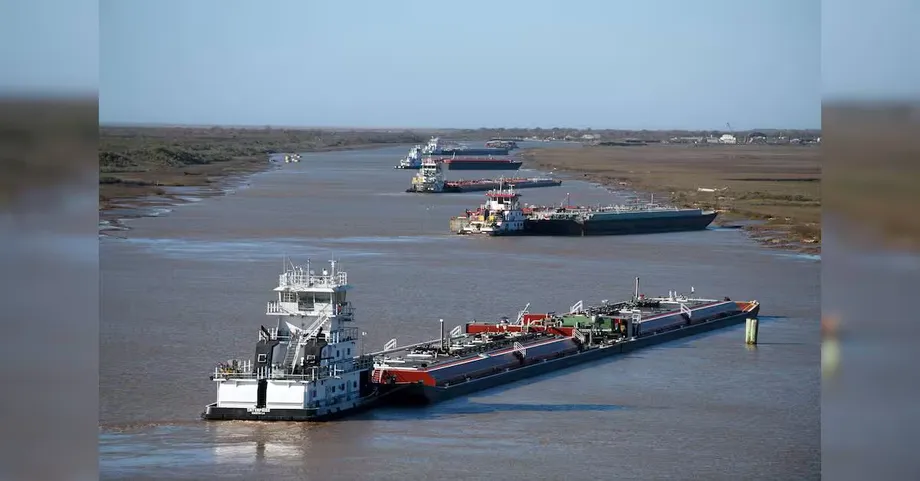
Seven Shipments Put EU Fuel Restrictions Under Scrutiny
Six cargoes from Reliance Industries' Jamnagar refinery in Gujarat reached European Union ports in September 2026, according to the Centre for Research on Energy and Clean Air (CREA), eight months after the bloc banned imports of fuel made from Russian crude. A seventh shipment came from Turkiye's Tupras Izmit refinery.
Contents
- Seven Shipments Put EU Fuel Restrictions Under Scrutiny
- Where Did the Fuel Go?
- What the EU Ban Covers
- Why Northern Cyprus Is Counted Separately
- India Bought Less Russian Crude
- India and China Dominate Russia's Crude Trade
- Discounts Persist as Buyers Compete
- Lower Volumes Still Leave Russia With Large Revenues
- Key Points
CREA's September sanctions analysis, written by Luke Wickenden and Isaac Levi, puts the shipments within a wider trade worth about 1 billion euros ($1.2 billion). Refineries in India, Turkiye and Brunei that process Russian crude exported that amount of oil products to countries imposing sanctions on Russia, an increase of 43% from August.
The EU received 667 million euros of those products, followed by Australia with 168 million euros, the United States with 154 million euros and New Zealand with 19 million euros. CREA estimated that 295 million euros of the products were made from Russian crude, roughly three tenths of the rounded export total.
Crude oil is the raw material that refineries turn into diesel, petrol and other fuels. A refinery can buy crude from several countries, making the origin of the oil used in exported fuel central to enforcing restrictions. CREA identifies shipments from plants processing Russian crude as a priority for investigation. Its analysis gives no enforcement decision on the seven September arrivals.
India's purchases of Russian crude moved in the opposite direction during the month, falling 13% to their lowest level since April. Rising fuel exports and falling crude imports therefore occurred together, putting attention on both refinery trading patterns and the rules governing access to Western markets.
Where Did the Fuel Go?
Italy received three of the seven shipments unloaded at EU ports, Romania received two, and Spain and the Republic of Cyprus received one each. Jamnagar supplied six shipments, making the Indian refinery the main departure point in CREA's September count.
Exports reported as destined for EU ports rose 80% in value from August. That measure included a cargo of 104,000 tonnes of gasoil, another name for diesel, from Jamnagar that was still travelling to Rotterdam at the end of September. The EU figure therefore covers a trade flow that includes cargo still at sea, while the seven shipments refer specifically to arrivals during the month.
Jamnagar also supplied 122 million euros of products to the United States. Turkiye's STAR refinery supplied another 33 million euros, according to CREA. Jamnagar's shipments amounted to about four fifths of the rounded 154 million euro US total.
US purchases from the refineries covered by the analysis fell 16% from August, while exports headed to Australia increased 12%. The combined 43% rise across sanctioning markets consequently included different movements among buyers, with the strongest reported growth in shipments destined for Europe.
What the EU Ban Covers
The EU prohibition on imports of oil products made from Russian crude took effect on 21 January 2026, according to CREA. It addresses a trade route in which Russian oil is refined outside Russia before the finished fuel is sold into the bloc.
The European Commission's refined-products ban guidance identifies the legal provision as Article 3ma of Council Regulation 833/2014. It covers petroleum products falling under customs code CN 2710 obtained from Russian crude oil falling under CN 2709 00. Operators are expected to give customs evidence identifying the country where the crude used to make the fuel was extracted, except for imports from partner countries listed in Annex LI. The guidance calls for enhanced due diligence on shipments from India, Turkiye and China because of their increased imports of Russian crude.
For refineries that process Russian and other crude, the guidance allows EU imports from a separately processed, documented non-Russian production line. Supporting checks include a rolling 60-day comparison of Russian crude deliveries against the capacity of the line supplying domestic or non-EU markets, alongside independently verified evidence that the production lines and their logistics are segregated. That volume-based check alone does not prove non-Russian origin. Where crude cannot be processed separately, evidence that the production line received or processed no Russian crude in the 60 days before the cargo's bill of lading can support imports; without segregation or reasonable assurance of separate processing, imports are not allowed. An aggregate accounting claim that Russian crude serves domestic consumption while other crude supplies exports is not accepted.
Russian crude accounted for 32% of Jamnagar's crude imports between July and September. CREA calls for authorities in EU member states to investigate fuel shipments from refineries processing Russian crude, including cargoes departing through ports connected to those plants.
The restriction gives products originating in net crude exporters, meaning countries that export more crude than they import, a presumption that they were made from domestic rather than Russian crude. CREA argues that this creates a gap because a country can sell more crude abroad than it buys while still importing Russian oil for some of its refineries. A country's total trade balance and an individual refinery's purchases describe different parts of the supply chain.
Under the Commission's guidance, importers using that presumption need to establish the finished product's origin rather than the upstream crude's origin. Authorities can rebut the presumption and request evidence about the crude where there are reasonable grounds, supported by significant evidence, to suspect Russian feedstock. Those grounds can include significant or disproportionate Russian crude deliveries to a country or refinery, or indications that a net exporter is being used as a hub to falsely label products made elsewhere.
CREA recommends barring products from any refinery that has processed Russian crude in the preceding six months, whatever origin is declared for the finished fuel. This is the research and advocacy group's proposal, rather than current EU policy. It would shift the test toward a plant's recent crude purchases and require exporters seeking access to the market to account for that history.
Why Northern Cyprus Is Counted Separately
Three additional shipments were unloaded at Kalecik in northern Cyprus during September. CREA excludes them from the seven arrivals counted under the EU fuel ban because the application of EU law is suspended in the northern part of the island.
The report cites Article 1(1) of Protocol No 10 to the 2003 Act of Accession. That provision concerns areas where the government of the Republic of Cyprus does not exercise effective control. The shipment counted for the Republic of Cyprus and the three Kalecik arrivals therefore fall into different legal categories.
CREA also states that the suspension does not give EU nationals or companies a blanket exemption from EU sanctions when they participate in transactions involving Kalecik. For businesses handling the cargoes, the relevant considerations include both the destination and the obligations applying to the people and companies involved.
India Bought Less Russian Crude
India's 13% decline in Russian crude imports marked a second consecutive monthly fall. All three of its largest importing refineries reduced their intake, but at different rates: Jamnagar's purchases fell 27%, Indian Oil Corporation's Paradip refinery recorded a 21% decline, and Nayara Energy's Vadinar refinery registered an 8% fall.
Vadinar's smaller reduction changed the ranking among India's major buyers. CREA, the organisation tracking the trade, described the result in its monthly analysis:
Despite the decline, Vadinar overtook Jamnagar as India's largest importer of Russian crude.
Several smaller installations also received less Russian crude. Intake at the HMEL Mundra Oil Terminal fell 74%, while Kochi refinery recorded a 32% reduction from August.
Indian Oil Corporation's Mundra Oil Terminal moved the other way, receiving 570,000 tonnes in September after receiving none in August. The increase at that terminal occurred alongside declines at most of the other installations identified by CREA. It also shows why figures for individual facilities can move sharply even when the national total is falling.
India and China Dominate Russia's Crude Trade
India remained Russia's second largest fossil fuel customer in September, spending 4.1 billion euros on Russian hydrocarbons. Crude accounted for 88% of those purchases, worth 3.6 billion euros. Coal contributed 309 million euros and oil products another 161 million euros.
China was the only larger buyer, purchasing 9.1 billion euros of Russian fossil fuels during the month, including 6 billion euros of crude. Its total purchases were more than twice India's 4.1 billion euros.
The longer trading record shows how concentrated Russia's crude sales have become. From 5 December 2022 through September 2026, China bought 50% of Russian crude exports and India bought 37%, according to CREA. Together, they accounted for 87%, leaving 13% for all other buyers.
India had been a relatively small buyer before Russia's full scale invasion of Ukraine in 2022. Its purchases expanded after Western customers withdrew and Russia offered substantial discounts. The September figures show that India retained a central place in Russia's export market even as its monthly intake declined.
Discounts Persist as Buyers Compete
Russia's Urals crude averaged $90.70 a barrel in September, trading $23 below Brent, the international oil benchmark. That discount was unchanged from August. Using those figures, the implied Brent price was about $113.70, making Urals roughly 20% cheaper.
For a refinery, cheaper crude can reduce the cost of producing fuel. The final commercial result also depends on transport, processing expenses and the price buyers pay for the finished products. September's continued discount helps explain the attraction of Russian supplies even when purchasing them brings additional sanctions scrutiny.
Kpler analysts attributed India's lower import volumes partly to tighter supply and stronger competition from China, alongside US pressure. Their explanation places commercial availability and competition between buyers alongside the political forces influencing the trade.
Kpler expected India's Russian crude imports to remain between 1.8 million and 1.9 million barrels a day in October. That forecast pointed to continued substantial purchases after September's decline.
CREA also reported that Urals averaged more than twice the EU and UK price cap of $44.10 a barrel. The price cap governs access to covered maritime services for Russian oil, while the EU fuel import ban governs which products can enter its market. Both seek to restrict Russia's oil trade, but they operate at different stages of the journey.
Lower Volumes Still Leave Russia With Large Revenues
Russia's total fossil fuel export revenues averaged 625 million euros a day in September, broadly unchanged from August despite a 6% decline in export volumes. Crude export revenues fell 8% to 339 million euros a day, while crude volumes dropped 11%.
Other energy sales helped support the total. Revenue from liquefied natural gas, or LNG, rose 68% to 75 million euros a day, its highest level since January 2023. LNG is natural gas cooled into liquid form so ships can carry it over long distances.
The EU itself became Russia's third largest fossil fuel buyer in September, purchasing 1.7 billion euros directly from Russia. Pipeline gas accounted for 817 million euros, LNG for 615 million euros and crude delivered through the Druzhba pipeline to Slovakia and Hungary for 290 million euros. Those purchases form a separate trade flow from the 667 million euros of refined products supplied by the refineries in India, Turkiye and Brunei.
The dates trace how India's role and the EU restrictions developed:
- 2022: India's Russian crude purchases expanded after the invasion of Ukraine and the withdrawal of Western buyers.
- 5 December 2022: The period begins for CREA's cumulative figures showing China and India buying 87% of Russian crude exports.
- 21 January 2026: The EU ban on oil products made from Russian crude took effect.
- July to September 2026: Russian supplies accounted for 32% of Jamnagar's crude imports.
- September 2026: Seven shipments from refineries processing Russian crude were unloaded at EU ports, while India's Russian crude imports fell 13%.
- October 2026: Kpler expected Indian imports of Russian crude to remain at 1.8 million to 1.9 million barrels a day.
For EU enforcement agencies, CREA's immediate recommendation is to investigate the shipments and their refinery connections. For Indian refiners, the figures describe a continuing commercial balance: Russian crude remains discounted, competition for supplies is strong, and access to major fuel markets increasingly depends on the rules governing the oil used to make those products.
Key Points
- Refineries in India, Turkiye and Brunei using Russian crude exported about 1 billion euros of fuel to sanctioning countries in September, up 43% from August.
- The EU received 667 million euros of products. Jamnagar supplied six of seven shipments unloaded at EU ports.
- CREA estimated that 295 million euros of the combined exports were made from Russian crude.
- The EU fuel ban under Article 3ma of Council Regulation 833/2014 took effect on 21 January 2026. Products originating in net crude exporters benefit from a rebuttable presumption of domestic crude use, not a blanket exemption. CREA's proposed restriction based on a refinery's preceding six months of crude use is not current policy.
- India's Russian crude imports fell 13%, but its 4.1 billion euros of fossil fuel purchases kept it second only to China among Russia's buyers.
- Urals crude remained $23 a barrel below Brent, while Kpler expected substantial Indian purchases to continue in October.