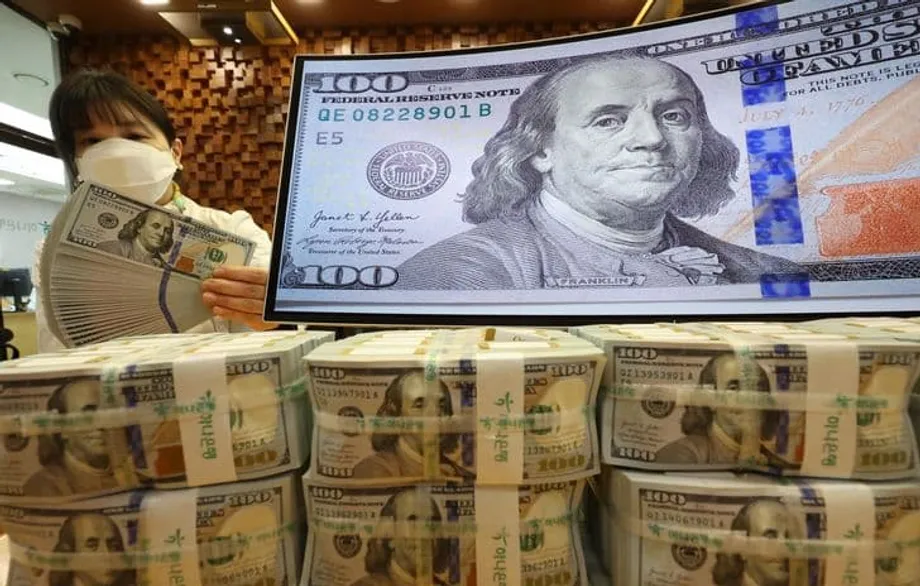
A Weaker Won Meets a Vast Investment Commitment
South Korea's promise to invest $350 billion in the United States is putting pressure on its currency and testing its ability to keep a trade agreement on track. As of February 2, 2026, the won has recently traded near 1,470 per dollar, approaching its weakest levels since the global financial crisis in 2009, while Seoul faces demands from Washington to accelerate implementation.
Contents
- A Weaker Won Meets a Vast Investment Commitment
- Why Dollar Demand Is Outrunning Supply
- How Seoul Plans to Finance the Payments
- Why the First Installment Is Likely to Wait
- Trump's Tariff Threat Returns Pressure to Seoul
- Trade Friction Extends Beyond the Investment Fund
- Washington Offers Support for the Won
- Bond Trading Adds Another Source of Pressure
- How the Dispute Developed
- A Commitment That Could Stretch Across a Decade
- Key Points
President Donald Trump and South Korean President Lee Jae Myung reached the agreement in July 2025. Seoul committed to American business projects in exchange for lower tariffs on Korean exports. The arrangement includes $200 billion in cash, to be paid in stages with an annual ceiling of $20 billion, and another $150 billion designated for shipbuilding and other strategic sectors.
Finance Minister Koo Yun-cheol said in mid-January that the first planned $20 billion installment was unlikely to be allocated during the first half of 2026. Selecting projects takes time, and South Korea also needs stability in its foreign exchange market before moving ahead.
Trump raised the pressure on January 26, announcing that tariffs on South Korean autos, lumber, pharmaceuticals and other goods would rise from 15 percent to 25 percent. He said South Korea's legislature had not acted quickly enough to implement the agreement.
Seoul now faces two competing demands. Sending investment funds abroad could add pressure to a weak currency, while delaying the program risks renewed trade penalties. The annual payment limit was intended to protect South Korea's reserves and prevent market disruption, yet even that gradual approach has become difficult under current conditions.
Why Dollar Demand Is Outrunning Supply
South Korean residents invested $129.4 billion in overseas securities between January and November 2025, according to a Korea Institute of Finance report. During the same period, the country's current account surplus was $101.8 billion.
The current account records transactions with the rest of the world, including trade in goods and services and income from investments. A surplus helps bring foreign currency into a country. Buying overseas securities, such as foreign shares and bonds, creates demand for foreign currency to pay for those assets.
The two figures show the scale of the pressure: overseas securities investment exceeded the current account surplus by $27.6 billion. Residents were putting more money into foreign securities than the country was earning through its current account surplus over those 11 months.
Song Min-ki, a researcher at the Korea Institute of Finance, explained that the surge in overseas investment had placed substantial pressure on the won. He also said it did not fully account for the recent increase in demand for dollars.
South Korean investors have been seeking higher returns abroad and protection against domestic economic uncertainty. Their appetite for foreign assets is adding to the dollar demand associated with the government's much larger investment commitment.
An exchange rate near 1,470 won per dollar means buyers need about 1,470 won to purchase one dollar. When demand for dollars rises faster than their supply, the number of won needed can increase. Expectations about future transfers matter as well, because investors make decisions before the government actually sends the funds.
How Seoul Plans to Finance the Payments
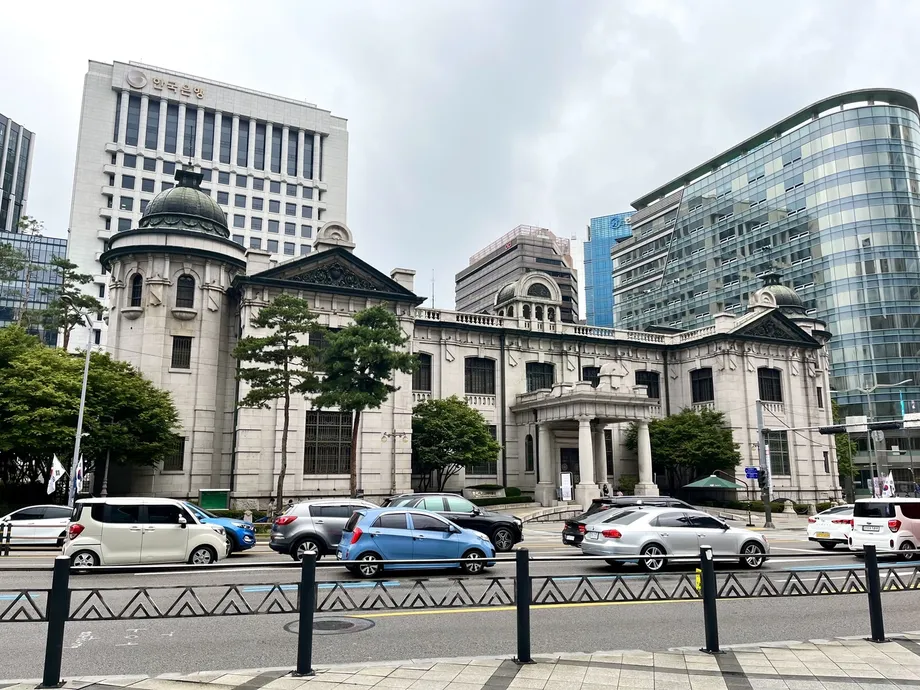
The Bank of Korea manages approximately $420 billion in foreign exchange reserves. Nearly 90 percent of those holdings are invested in securities, generating returns of about $15 billion annually.
South Korea has historically reinvested those returns to increase its reserves. Under the new financing framework, the income will instead help fund the investment pledge to the United States. The government says this approach will reduce the effect on the domestic dollar and won market by avoiding direct withdrawals from the principal reserve amount.
The principal is the underlying stock of reserve assets, while investment returns are the money those assets earn. Redirecting the earnings allows Seoul to support the US program while preserving the main reserve holdings. It also means money that previously helped reserves grow will be used elsewhere.
The figures underline the size of the financing task. Annual reserve income of about $15 billion is smaller than the $20 billion annual payment ceiling. The ceiling is a maximum rather than a requirement to transfer that amount every year, making the selection and timing of projects central to the rollout.
Ha Gun-hyung, an analyst at Shinhan Investment & Securities, said the prospect of capital flowing to the United States remains a factor weakening the won's fundamentals. Lim Hye-yoon, an economist at Hanwha Investment & Securities, said investment that could have taken place domestically would instead occur overseas, limiting the currency's potential to strengthen over the medium to long term.
The financing plan therefore addresses one part of the problem: how to provide dollars without directly reducing the core reserves. The broader pressure comes from the scale of expected investment abroad, alongside the continuing demand for foreign assets among South Korean residents.
Why the First Installment Is Likely to Wait
Koo's warning in mid-January shifted expectations for the first $20 billion installment. The finance minister cited both the lengthy process of choosing investment projects and the need to maintain foreign exchange stability.
The $20 billion annual limit had already been negotiated to protect South Korea from the disruption that a much larger payment could cause. Currency conditions have made even that measured pace difficult to pursue immediately.
A person familiar with the government's thinking said the investment would have to wait until the foreign exchange situation stabilized. No target exchange rate was specified, and no firm payment date was given. With allocation unlikely in the first half of 2026, the second half would be the earliest period left that year if the delay proceeds as indicated.
Koo also pointed to uncertainty surrounding a US Supreme Court ruling on Trump's tariffs that was expected soon. The outcome could affect the process, adding another consideration to project selection and currency conditions.
Washington expects South Korea to fulfill the investment commitment promptly. Seoul is trying to prevent the rollout from deepening the won's weakness. Those different priorities explain why a program designed around gradual payments has still become a source of diplomatic friction.
Trump's Tariff Threat Returns Pressure to Seoul
Trump announced the proposed tariff increase on social media on January 26, 2026. Moving the rate from 15 percent to 25 percent would add 10 percentage points to the tariff on the affected South Korean goods.
The announcement surprised South Korean officials. Trade Minister Yeo Han-koo had met US Trade Representative Jamieson Greer in Davos just days earlier without hearing complaints about delays in implementing the agreement.
For Korean autos and auto parts, the threat would reverse the reduction that took effect on November 1, 2025. Those tariffs had fallen from 25 percent to 15 percent, bringing them into line with the rate applied to Japanese competitors.
South Korea's presidential Blue House said the country remained committed to carrying out the deal. Lee's chief policy aide convened an emergency meeting, and the industry minister prepared to travel to Washington to meet Commerce Secretary Howard Lutnick.
The ruling Democratic Party said five pending bills needed to establish the investment fund and its managing corporation could potentially pass in February with opposition support. That placed the legislative framework at the center of Seoul's immediate response, even as the payment schedule remained constrained by currency conditions.
During the week before February 2, both governments appeared to soften their positions. Trump said the United States and South Korea would work something out, while Seoul continued preparing the legislation. His later comments eased the tone of the confrontation without providing a settled investment timetable.
Trade Friction Extends Beyond the Investment Fund
Choi Seok-young, a former South Korean trade negotiator, suggested that Trump's tariff threat was a political move aimed at applying maximum pressure during negotiations over barriers other than tariffs.
Such barriers involve regulations or other rules that affect companies' access to a market rather than a tax charged on imported goods. The United States has raised concerns about South Korean regulations affecting American technology firms.
Recent regulatory actions against Coupang are part of that dispute. Coupang operates in online retail and is listed in the United States. Its presence in the discussion connects the investment negotiations with Washington's concerns about how South Korean rules affect businesses with American ties.
Choi's assessment places the tariff threat within a wider negotiation. Trump publicly focused on the legislature's pace, while the talks also involved regulatory issues. Seoul's effort to pass the investment bills was consequently taking place alongside disagreements extending beyond the mechanics of the fund.
Washington Offers Support for the Won
US Treasury Secretary Scott Bessent took the unusual step of publicly supporting the South Korean currency on January 14, 2026. After meeting Koo, he described the won's recent declines as excessive.
Bessent's remarks appeared on social media and in official Treasury Department statements. He said excessive volatility in foreign exchange markets was undesirable, signaling Washington's recognition that currency stability matters to the success of the investment agreement.
Choi Ji-young, a senior official at South Korea's Ministry of Economy and Finance, said the two finance ministers shared concerns about the recent sharp depreciation. They agreed that a stable currency was an important factor in bilateral trade and economic cooperation.
South Korea nevertheless ruled out seeking a bilateral currency swap with Washington. A currency swap allows monetary authorities to exchange currencies, providing access to funds such as dollars when needed. Choi said such an arrangement could be considered only in a foreign exchange crisis and that dollar supply remained sufficient.
The two governments were instead concentrating on ways to deploy the investment funds with fewer market shocks. Officials had recognized the potential disruption from sending funds upfront. Bessent's intervention and Seoul's position on a swap together show the policy response taking shape: concern about the won's movement, paired with efforts to manage the timing of investment transfers.
Bond Trading Adds Another Source of Pressure
Foreign investors sold approximately 10.4 trillion won, equivalent to $7.4 billion, in Korean government bond futures during three trading sessions in late September 2025. It was one of the largest retreats within a single week since the start of the COVID-19 pandemic.
Bond futures are contracts linked to government bonds. Their prices and trading activity reflect investors' expectations about borrowing costs and market conditions. Traders said a substantial share of the proceeds associated with the selling was converted into dollars, adding upward pressure to the dollar and won exchange rate.
The yield on government bonds maturing in three years rose to 2.562 percent, its highest level since April. The yield on bonds maturing in 10 years reached 2.943 percent, its highest level since the beginning of 2025.
A bond yield measures the return available at its market price. The rise in yields accompanied the retreat by foreign investors and added another sign of strain during negotiations over the investment commitment.
Ahn Dong-hyun, an economics professor at Seoul National University, said foreign bond investors react to currency swings as well as expectations about exchange rates. Uncertainty surrounding the $350 billion investment fund was increasing volatility in the won and encouraging their withdrawal from Korean bonds.
The resulting feedback loop is straightforward: a weaker or more volatile won encourages investors to move money away, and converting that money into dollars adds pressure on the won. The September selling showed how the investment negotiations could affect financial markets well before the first government installment was allocated.
How the Dispute Developed
The investment agreement, bond market retreat, tariff reduction and January confrontation unfolded over several months. The sequence helps explain why Seoul is facing legislative, trade and currency pressures at the same time.
- July 2025: Trump and Lee reached the trade agreement, including South Korea's $350 billion investment pledge.
- Late September 2025: Foreign investors sold about 10.4 trillion won in Korean government bond futures over three sessions.
- November 1, 2025: US tariffs on Korean autos and auto parts fell from 25 percent to 15 percent.
- January 14, 2026: Bessent publicly described the won's recent declines as excessive after meeting Koo.
- Mid-January 2026: Koo said the first $20 billion installment was unlikely to be allocated in the first half of the year.
- January 26, 2026: Trump announced an increase from 15 percent to 25 percent for tariffs on several categories of Korean goods, citing legislative delays.
- February 2026: The ruling Democratic Party said the five investment bills could potentially pass with opposition support.
February's legislative prospects offer a possible step toward implementing the agreement. The timing of actual investment allocations also depends on selecting projects and managing the foreign exchange conditions that prompted Seoul's caution.
A Commitment That Could Stretch Across a Decade
The cash portion of the pledge presents a lengthy financial commitment. Paying $200 billion at the maximum rate of $20 billion annually would take 10 years. Smaller installments or delays would extend that schedule.
The annual ceiling is close to the approximately $22 billion that South Korea invested directly in the United States in 2024. That comparison shows how large the planned government program is alongside an existing annual flow of Korean investment into the American economy.
South Korea's reserves are currently the world's tenth largest. Diverting investment returns toward the US pledge means those reserves will likely stagnate rather than grow as they did when earnings were reinvested. As other central banks build reserves to prepare for possible market volatility, South Korea could eventually fall in that ranking.
Lee Hyo-seob, a senior research fellow at the Korea Capital Market Institute, warned that heavy depreciation pressure and expected dollar demand could quickly push the exchange rate to 1,500 won per dollar. Such a move would take policy into unfamiliar territory for modern South Korean monetary management and could prompt more drastic intervention.
Seoul's task is to calibrate the timing and size of transfers so that a commitment lasting at least a decade can proceed without destabilizing the currency. Washington's tariff pressure makes that task more urgent, while the won's weakness makes immediate deployment more difficult.
By February 2, the tone between the two governments had moderated, but the central challenge persisted. South Korea was preparing the legal framework for the fund while seeking room to protect its currency. How those efforts are reconciled will shape the won's trajectory and the stability of one of Asia's major trade relationships.
Key Points
- The won recently traded near 1,470 per dollar, approaching its weakest levels since the 2009 global financial crisis.
- The $350 billion pledge includes $200 billion in cash installments capped at $20 billion annually and $150 billion for shipbuilding and other strategic sectors.
- Residents invested $129.4 billion in overseas securities from January through November 2025, exceeding the $101.8 billion current account surplus by $27.6 billion.
- Koo said the first $20 billion installment was unlikely in the first half of 2026, citing project selection and currency stability.
- Trump announced on January 26 that tariffs on several categories of Korean goods would rise from 15 percent to 25 percent over legislative delays.
- Bessent described the won's decline as excessive; Seoul said dollar supply remained sufficient and ruled out seeking a bilateral currency swap.
- Foreign investors sold about 10.4 trillion won, or $7.4 billion, in government bond futures over three sessions in late September 2025.
- Five bills to establish the investment fund and its managing corporation could potentially pass in February with opposition support.
- Funding the pledge with reserve earnings would preserve principal holdings while limiting future reserve growth.