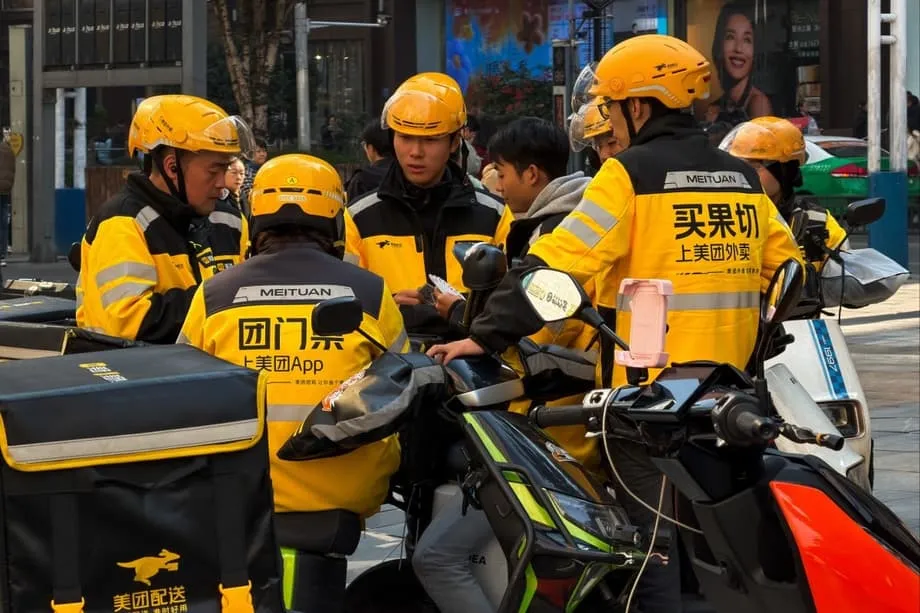
Ikea Joins the Race for Delivery Within an Hour
Ikea launched instant delivery on JD.com in late January 2026, bringing small household items to customers in nine major Chinese cities with a promise of delivery within one hour. The Swedish furniture retailer is entering a market valued at $143.9 billion just months after Chinese regulators pressed domestic technology companies to curb a subsidy war that consumed billions of dollars and drove major businesses into steep losses.
Contents
- Ikea Joins the Race for Delivery Within an Hour
- The Delivery Network Behind the Opportunity
- How the Subsidy War Began
- Billions Spent, Major Losses Recorded
- Beijing Presses Platforms to Pull Back
- Why China Matters to Foreign Retailers
- Service and Supply Chains Become the Battleground
- New Entrants Keep Investing
- Competition and Operational Risks Remain
- What the Retail Shift Means for Global Brands
- Key Points
German tyre manufacturer Continental, German discount supermarket chain Aldi Nord and US warehouse retailer Sam's Club are also establishing instant retail operations in China. Their services are faster and more comprehensive than the delivery models they use in their home markets, reflecting the expectations of Chinese shoppers.
Instant retail means delivering purchases within roughly 30 to 60 minutes of an order. Its reach now extends beyond meals to phone chargers, clothing, electronics and household goods. For foreign companies, the attraction is a combination of consumer demand and delivery infrastructure that offers opportunities unavailable elsewhere.
The timing matters. Meituan, Alibaba and JD.com spent much of 2025 fighting for customers through heavily discounted food and deliveries. Following regulatory intervention, they publicly promised in August to curb aggressive promotions. Foreign retailers are betting that this opening will let them compete through their products and operations without immediately having to match the most expensive subsidies.
As of February 2, 2026, that bet still carries substantial risks. Competition remains intense, losses are large, and the platforms continue to want control of the apps through which consumers buy from nearby businesses. The pause in extreme discounting offers greater predictability, but the commercial rivalry remains.
The Delivery Network Behind the Opportunity
China's parcel industry handled its 150 billionth parcel of 2024 by mid-November, according to the State Post Bureau. That milestone was more than ten times the 14 billion parcels processed in 2014. On peak days, the industry processes more than 729 million parcels, while monthly shipment volumes regularly exceed 13 billion.
This enormous logistics ecosystem supports the expansion of instant retail. The sector was valued at 650 billion yuan, or $90 billion, in 2023, and analysts project that it will exceed 2 trillion yuan, or $280 billion, by 2030. Using the yuan figures, that forecast represents more than three times the 2023 market size.
Consumers have increasingly come to regard rapid delivery as a daily requirement rather than an extra convenience. An industry observer described an expectation of immediate access extending from food to chargers, clothing, electronics and furniture. For retailers, a product's availability increasingly includes how quickly it can reach the customer.
Fu Yifu, a special researcher at Su Merchants Bank in Nanjing, explained why foreign brands see an opportunity in the country's digital economy:
China leads the world in internet penetration and boasts a well-developed digital infrastructure,
Fu also described the commercial value of speed in a crowded market:
In China's highly competitive market, providing instant retail services can help foreign brands to drive sales growth more effectively.
Foreign brands can combine their product strengths with the experience and delivery systems of local platforms. Those partnerships can help compensate for limited knowledge of local shopping habits while meeting demanding expectations for speed and service.
How the Subsidy War Began
JD.com entered food delivery in February 2025 after becoming concerned about Meituan's expansion into general retail. The move challenged Meituan in its core business and helped ignite a contest involving Meituan, JD.com and Alibaba backed Ele.me. Analysts described the rivalry as a "game of chicken," with each company spending heavily while waiting for competitors to pull back.
Platforms offered coffee for as little as 2 yuan, or $0.28, alongside free lunches and extensive coupon campaigns. Alibaba's Taobao Instant Commerce pledged 50 billion yuan, or $7 billion, in subsidies over 12 months. JD.com announced two separate investment rounds of 10 billion yuan each.
Meituan responded with record promotions. Its daily orders reached 120 million on a single Saturday in July, and the surge crashed its servers. The discounts brought extraordinary traffic, but each subsidised purchase also increased the financial burden on the companies funding it.
Subsidies reduce the price paid by customers by having a platform cover part of the cost. They can attract shoppers quickly, yet sustained discounts require continued spending. In this contest, the companies were trying to establish themselves as the consumer's main gateway to local commerce, making the battle larger than food delivery alone.
The strategic pressure was shared across the platforms. Meituan wanted to protect its food delivery position while expanding into other purchases. JD.com sought to counter that expansion, and Alibaba committed substantial funding to its own instant commerce push. Each company's attempt to defend or gain customers encouraged rivals to keep spending.
Billions Spent, Major Losses Recorded
Meituan reported a loss of 16 billion yuan, or $2.3 billion, in the third quarter of 2025, its largest since listing. JD.com's new business arm, which includes food delivery, lost nearly 16 billion yuan despite doubling revenue. Alibaba's earnings fell by half.
Nomura analysts estimated that cash consumed across the industry exceeded $4 billion in the second quarter alone. Goldman Sachs projected delivery related losses of 41 billion yuan for Alibaba and 26 billion yuan for JD.com over the following year. Those projections added to concerns about how long the companies could sustain the contest.
JD.com's results illustrate the problem particularly plainly: revenue doubled, yet the business arm still recorded a loss approaching 16 billion yuan. More purchases can bring in more money while also creating larger losses when the cost of winning and fulfilling those orders remains too high.
Small merchants and delivery riders also faced pressure. Merchants were pushed to absorb discount costs, reducing their margins, while riders faced intense demands during the promotional rush. The financial damage therefore extended beyond the platforms' quarterly results to the businesses and workers handling the orders.
Beijing Presses Platforms to Pull Back
The State Administration for Market Regulation, known as SAMR, began summoning the three platforms in May 2025. It urged them to end "involution-style" competition, a term Chinese policymakers use for destructive rivalry in which participants spend ever more effort and money while harming one another.
By late July, SAMR demanded compliance with fair competition rules and rational market behaviour. Authorities were concerned that the rush to ever lower prices was distorting price signals, disrupting markets, creating waste and squeezing small merchants. The intervention also formed part of broader policies against excessive internal competition across industries.
In August, Meituan, Alibaba and JD.com publicly committed to reducing aggressive discounting. Meituan promised to eliminate unfair competition and comply with regulations prohibiting sales "significantly below cost." Alibaba said it would distribute subsidies rationally and resist unhealthy competition. JD.com vowed not to use order volume to create market bubbles.
The platforms also ended the "free lunch" promotions associated with the summer battle. Their commitments shifted attention toward service quality, efficient infrastructure and growth that could be sustained without continual extreme discounts.
The main events unfolded over several months:
- February 2025: JD.com launched food delivery after Meituan expanded into general retail.
- May 2025: SAMR began summoning the platforms over destructive competition.
- July 2025: Meituan reached 120 million daily orders on one Saturday; by late July, regulators demanded rational competition.
- August 2025: The three platforms pledged to curb aggressive discounting and ended free lunch promotions.
- Third quarter of 2025: Meituan and JD.com's new business arm recorded losses of about 16 billion yuan each.
- Late January 2026: Ikea launched instant delivery through JD.com in nine Chinese cities.
Why China Matters to Foreign Retailers
China accounts for approximately 15 percent of global revenue for the 200 largest multinational corporations from Japan, Europe and the United States, according to Bain & Company data. Defending that business is a substantial consideration for companies weighing further investment.
An analyst also pointed to China's importance within global supply chains, supported by an industrial ecosystem that produces goods efficiently at competitive costs. For multinational companies, the country is both a customer market and a major part of how their wider businesses operate.
Chinese consumers increasingly view delivery within 30 minutes as standard, while shoppers in Western markets may wait days for an online purchase. This difference is changing the competitive requirements for foreign brands. Rapid delivery is becoming a basic expectation rather than an optional extra, and companies that fail to adapt risk losing relevance in a market described as their second largest.
Ikea's partnership with JD.com offers a practical shortcut. By using an existing rider network and warehouse system, the retailer could begin serving nine cities immediately. Building an equivalent network independently could take years.
Local partnerships also let foreign companies concentrate on their products while using infrastructure already adapted to Chinese consumers. The result is a combination of international brands and local delivery capabilities that may be unavailable in their home markets.
Service and Supply Chains Become the Battleground
The regulatory push against destructive discounting increases the importance of product quality, reliable supply chains and the shopping experience. Companies such as Aldi and Ikea bring established brands and operational experience to a market where fulfilling an order consistently may matter more as subsidy spending becomes less aggressive.
A report from the Chinese Academy of International Trade and Economic Cooperation identified the operational factors expected to shape competition:
Supply chain capabilities, fulfillment efficiency and service quality will be the key factors that determine the future landscape,
Fulfilment means the work required to complete an order, from finding and preparing the product to getting it to the customer. For instant retail, that work must happen within a very short window. A recognised brand still needs stock close enough to customers and an effective way to deliver it.
Platforms are also investing in the workforce behind those promises. JD.com committed 2 billion yuan to improve benefits for riders working full time. Meituan began a nationwide pension insurance rollout covering 1 million riders. Better benefits can help stabilise the workforce on which rapid delivery depends.
Taobao Instant Commerce reported 100 percent growth in categories beyond food across 1,205 product types. The expansion points to customers using instant delivery for a wider range of purchases, including general merchandise, electronics and home goods, areas in which foreign retailers already specialise.
New Entrants Keep Investing
East Buy, the ecommerce arm of education company New Oriental, recently announced plans to develop instant retail fulfilment in Beijing, Shanghai and Guangzhou. It plans to build massive warehouses supporting delivery within 30 minutes.
East Buy's stock rose 14 percent following the announcement. The response suggested that investors still saw growth potential in the sector despite the losses produced by the subsidy war.
As instant delivery becomes embedded in daily routines, an analyst observed, it begins to behave more like utility infrastructure than a conventional retail category. Customers rely on an established network to meet repeated needs, while operators must keep investing to maintain that network.
That model can require lengthy investment and competition before profitability emerges. Foreign retailers entering now have an opportunity to establish a position without the immediate pressure of matching the summer's extreme subsidies, but they still need operations that can support frequent purchases and tight delivery deadlines.
Competition and Operational Risks Remain
Meituan retains roughly 50 percent of the food delivery market and handles 71 million daily orders. Alibaba holds 42 percent, while JD.com has captured about 8 percent. JD.com is still struggling to justify the expense of its expansion.
The leading platforms therefore retain powerful positions even after reducing extreme discounts. Foreign retailers joining their networks gain access to customers and delivery capacity, while entering a market where established companies already process enormous volumes.
Furniture and automotive parts create different operational demands from traditional retail deliveries. Meeting a deadline of 30 minutes requires placing inventory near likely buyers and anticipating demand. Predictive logistics means using expected purchasing patterns to decide where goods should be stocked before an order arrives.
Foreign companies must adjust their global operating models to those local requirements. For Ikea, the announced service covers small household items, while the wider market's expansion into furniture and other goods creates more complex challenges for inventory and delivery planning.
Regulatory attention also extends to labour practices, food safety and data privacy. Authorities have expressed a "zero-tolerance" attitude toward disorderly competition, requiring new entrants to consider their promotional strategies carefully.
The truce remains fragile because the reason for the original contest persists: platforms want to control the consumer's main interface with local commerce. Meituan chief executive Wang Xing told analysts that the company would keep investing to defend its position:
We will make the necessary investments to maintain our leading position.
The lasting strength of the August commitments remains uncertain. Public promises of rational competition sit alongside continuing incentives to win customers and protect market share.
What the Retail Shift Means for Global Brands
Bain & Company's recent assessment of Chinese retail said brand growth could no longer depend on expanding supply or deepening discounts. Companies instead need to understand why customers choose particular shopping channels and identify the moments when they decide to buy.
Membership stores grew 40 percent in 2025, while discount stores grew 92 percent. These figures point to shoppers seeking value through different retail formats, with their choices extending beyond the lowest price alone. Instant delivery adds speed and convenience to the decision.
Multinationals are entering as the sector moves toward a more mature phase. Domestic platforms spent heavily to establish customer habits and competing networks. Foreign retailers now aim to earn returns through dependable operations and products that distinguish them from rivals.
China is also an innovation laboratory for these companies. Delivery capabilities developed with JD.com and similar platforms may inform their strategies elsewhere. The comparison with mobile payments is instructive: systems that once appeared unusual outside China later became global standards. Instant retail could similarly influence how companies approach commerce in other markets.
The market has 545 million online food delivery users, giving platforms a vast base of consumers familiar with ordering through apps. Combined with the forecast of more than 2 trillion yuan in instant retail sales by 2030, that scale explains why new entrants continue to invest despite the recent financial damage.
Ikea, Aldi Nord, Continental and Sam's Club are betting that the market will remain open long enough for them to establish sustainable positions before it consolidates further. Their opportunity rests on combining global product strengths with local delivery systems, while the regulatory intervention has created a window of greater stability.
The central commercial challenge is straightforward: retailers must deliver the right products quickly, at a cost their businesses can support. China's consumer expectations and infrastructure make that opportunity unusually large, but the experience of 2025 shows how expensive the contest can become.
Key Points
- Ikea launched delivery within one hour for small household items through JD.com in nine Chinese cities in late January 2026.
- Continental, Aldi Nord and Sam's Club are also establishing instant retail services tailored to Chinese shoppers.
- The market is valued at $143.9 billion; analysts project it will exceed 2 trillion yuan by 2030, compared with 650 billion yuan in 2023.
- The 2025 subsidy war produced major losses, including 16 billion yuan at Meituan and nearly 16 billion yuan at JD.com's new business arm in the third quarter.
- Following SAMR intervention, Meituan, Alibaba and JD.com pledged in August 2025 to curb aggressive discounts and ended free lunch promotions.
- Product quality, supply chains, fulfilment and rider stability are becoming central to competition, while the platforms continue defending their market positions.
- China's 545 million online food delivery users and extensive logistics infrastructure underpin the opportunity for further instant retail growth.