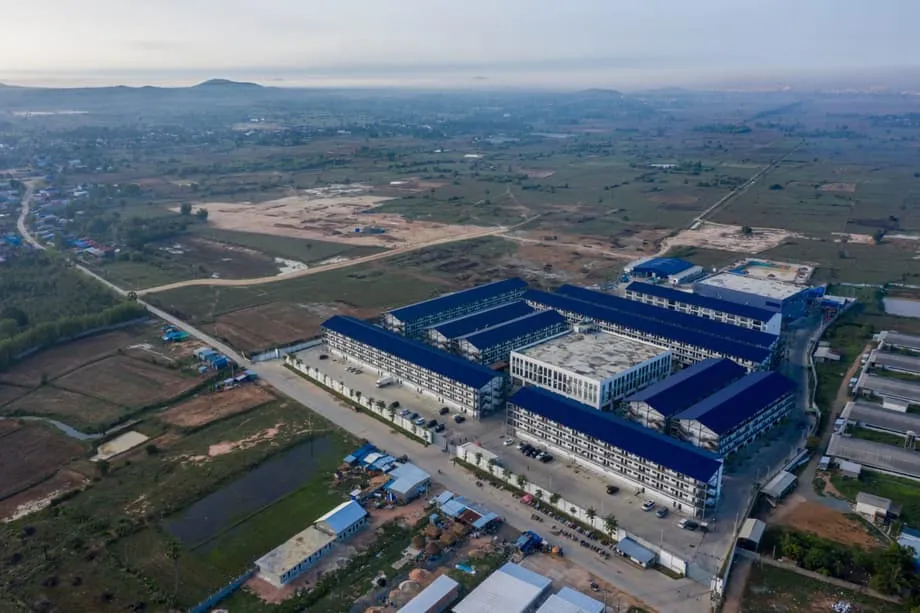
Embassy arrivals expose the scale of the crisis
A total of 1,726 Indonesians escaped from online scam operations across Cambodia and sought help at the Indonesian Embassy in Phnom Penh between January 16 and 21, 2026, according to Indonesia's Ministry of Foreign Affairs. Their arrival has created an urgent task for both governments: arranging their return while examining who was exploited and who may have helped run the criminal operations.
Contents
- Embassy arrivals expose the scale of the crisis
- Returnees face checks in Cambodia and Indonesia
- Authorities give different accounts of exploitation
- Amnesty documents 53 scam compounds
- A promised hotel job became 11 months of captivity
- Scam operations cross national borders
- Indonesia expands immigration cooperation
- Scam losses far exceed the money recovered
- Travel documents, care and individual assessments
- Key Points
Indonesian Ambassador to Cambodia Santo Darmosumarto said the embassy had intensified coordination with relevant agencies in both countries to manage the unprecedented influx. The people seeking assistance had left scam centers operating in different parts of Cambodia.
The ministry's more comprehensive count put the number at 1,726, following an initial figure of 1,440. An additional 269 Indonesians arrived at the embassy on January 21, although the number of arrivals gradually decreased as authorities began addressing the crisis.
The embassy handled 5,008 similar cases throughout 2025. The January arrivals therefore add to an existing burden involving Indonesians who need travel documents, assistance and an assessment of their circumstances after leaving suspected fraud operations.
The events and responses span several periods:
- During 2024 and 2025, Indonesia's anti scam reporting system received 411,000 reports of scam crimes.
- In May 2025, Indonesian and Cambodian immigration authorities signed a letter of intent on cooperation against trafficking.
- Throughout 2025, the Indonesian Embassy in Phnom Penh handled 5,008 similar cases.
- Between January 16 and 21, 2026, 1,726 Indonesians escaped scam operations and sought embassy assistance, according to the foreign ministry.
- On January 21, another 269 Indonesians arrived at the embassy as the daily influx began to decline.
Returnees face checks in Cambodia and Indonesia
Deputy Minister for Migrant Worker Protection Dzulfikar Ahmad Tawalla said the workers lacked legal placement arrangements because Indonesia and Cambodia have no bilateral agreement governing the placement of migrant workers. Speaking in Yogyakarta, he described their employment status in direct terms.
"They are clearly illegal, because to date there is no bilateral agreement between the Indonesian and Cambodian governments on labor placement," Dzulfikar said.
Cambodian authorities will conduct immigration and civil administration checks before repatriation. Once the Indonesians arrive at Soekarno-Hatta International Airport, they will undergo further examinations to determine each person's legal status.
Dzulfikar said those examinations would look beyond travel papers and include the condition and circumstances of each returnee.
"The screening process includes health and psychological assessments, as well as in-depth profiling upon arrival at the airport," Dzulfikar explained.
The findings will determine whether individuals face further legal action or are classified solely as victims of criminal networks. For someone recruited through deception and forced into fraud, the process could involve both an assessment of the abuse they suffered and an investigation into activities they carried out inside a scam operation.
The Indonesian government is coordinating with Cambodian authorities to arrange safe and orderly repatriation through official immigration channels. No date was given for completing the return of the group or announcing the results of individual screenings.
Authorities give different accounts of exploitation
Indonesian officials have described citizens caught in these operations as victims of human trafficking. Cambodian police involved in the cases said the Indonesians were not victims of trafficking or online scams, arguing that they had not been detained or beaten.
Cambodian authorities also concluded that some Indonesians were not trafficking victims and held them in immigration detention centers for overstaying their residence permits. An expired permit concerns permission to remain in a country; an assessment of trafficking examines how a person was recruited, controlled and exploited.
The United Nations explains that traffickers can use deception, coercion, abuse of power or threats of violence, as well as physical force, to exploit people for profit. A promise of legitimate employment can therefore be part of the recruitment process that leads someone into forced scam work.
Officials from Indonesia's Ministry for the Protection of Indonesian Migrant Workers, known as KP2MI, confirmed that 97 Indonesians had fled companies suspected of running online fraud operations. Another 13 were successfully rescued from workplaces in Chrey Thum.
A preliminary assessment of 11 Indonesians who reported experiencing violence found that four had acted as ringleaders in the scam operations and were suspected of committing violence against fellow workers. Those findings help explain why officials intend to examine individual roles alongside claims of abuse.
Amnesty documents 53 scam compounds
Amnesty International's report, "I Was Someone Else's Property," describes trafficking, torture, forced labor and modern slavery inside Cambodia's scam industry. Its investigation lasted 18 months, identified at least 53 scamming compounds and included interviews with 58 survivors from eight nationalities, among them nine children.
The investigation described jobseekers from Asia and beyond being recruited through deceptive advertisements promising well paid employment. After being trafficked into Cambodia, people were held in compounds resembling prisons and forced to conduct online scams.
Agnes Callamard, Amnesty International's secretary general, described the connection between recruitment promises and the violence used to make people work.
"Jobseekers from Asia and beyond are lured by the promise of well-paid work into hellish labour camps run by well-organized gangs, where they are forced to scam under the very real threat of violence," stated Amnesty International's Secretary General Agnes Callamard.
Amnesty's regional research director, Montse Ferrer, accused Cambodian authorities of allowing the operations to continue despite knowing what happened inside them. Her statement placed responsibility on the state's response as well as on the criminal groups running the compounds.
The Cambodian authorities know what is going on inside scamming compounds, yet they allow it to continue. Our findings reveal a pattern of state failures that have allowed criminality to flourish and raises questions about the government's motivations.
The report's findings describe the wider conditions facing people recruited into Cambodia's scam industry. The Indonesian returnees now face interviews and assessments intended to identify their own experiences and the roles they held.
A promised hotel job became 11 months of captivity
Lisa, a survivor described in Amnesty's investigation, was trafficked at the age of 18. Recruiters showed her photographs of a hotel with a swimming pool and promised high salaries.
Instead, she was taken across a river at night into Cambodia, where she spent 11 months held against her will. Her account shows how an attractive employment offer could lead to confinement and violence.
Lisa described being restrained by several men while a boss struck her feet with a metal pole.
"There were four men... three of them held me down while the boss hit me on the soles of my feet with a metal pole... They told me that if I don't stop screaming, they're going to keep hitting [me] until I stop," she recounted.
Her testimony gives a personal account of the threats and physical abuse described in the investigation. For people held in such conditions, leaving the workplace means escaping captivity as well as ending employment.
Scam operations cross national borders
A joint Thai and Cambodian operation in early 2026 rescued 215 people from a scam compound in Poipet. The group included 109 Thais, 50 Pakistanis, 48 Indians, five Taiwanese and three Indonesians.
Thai authorities began the crackdown after a victim emailed police asking for help. The nationalities of those rescued show how a single compound can draw workers from several countries, requiring cooperation beyond the country where the operation is based.
In Myanmar, where the scam industry is even more extensive, authorities dismantled a major online fraud network near the Thai border. They detained more than 2,000 suspects and seized dozens of Starlink satellite terminals, equipment used to connect to the internet through satellites.
The United Nations estimates that more than 120,000 people have been trafficked into Myanmar, where at least 10 scam cities have been built, and a further 100,000 into Cambodia. The estimates describe a regional crisis much larger than the group currently seeking assistance in Phnom Penh.
The operations form a shadow economy worth billions of dollars and target people around the world. Their methods include romance scams, fake investment opportunities and fraud known as "pig-butchering," in which scammers build a person's trust before exploiting that relationship to take their money.
People forced to carry out these schemes and people who lose money to them are harmed at different points in the same criminal activity. The first group may face confinement and violence; the second faces deception designed to drain their savings.
Indonesia expands immigration cooperation
Indonesia has intensified cooperation with authorities in Thailand and Cambodia to combat human trafficking. In May 2025, Indonesia's Immigration and Corrections Ministry and Cambodia's General Department of Immigration signed a letter of intent committing them to exchange information, provide technical assistance and develop personnel capacity to protect citizens from traffickers.
Yuldi Yusman, the ministry's acting immigration director general, announced that Jakarta would assign a special attaché to Phnom Penh to strengthen cooperation against trafficking and address other immigration issues.
Yuldi outlined plans to establish designated contacts in both countries and improve the exchange of immigration information.
"As part of our commitment to combat human trafficking, we will designate focal points in both countries, enhance immigration information exchanges and share best practices for addressing the issues faced by Indonesian citizens in Cambodia," Yuldi stated.
Indonesia's strategy includes cooperation through bilateral, regional and international forums, alongside stringent sanctions on human traffickers. Authorities have also delayed passport issuance and stopped departures when citizens were suspected of attempting to migrate through illegal channels.
The measures address several stages of the problem: recruitment and departure from Indonesia, the identification of citizens in Cambodia, and arrangements for their return. The embassy influx has made coordination on those tasks especially urgent.
Scam losses far exceed the money recovered
Indonesia's Financial Services Authority, known as OJK, said it had blocked around Rp400 billion in funds associated with scams. Of that amount, Rp161 billion had been returned to victims through the Indonesia Anti Scam Centre, or IASC.
The figures for 2024 and 2025 show the much larger scale of reported losses. The IASC system received 411,000 scam crime reports, with victims reporting losses totaling Rp9 trillion. Authorities successfully blocked Rp402.5 billion in victim funds.
Against the reported Rp9 trillion in losses, the Rp402.5 billion blocked represents about 4.5 percent. Blocking funds and returning them are different steps: money must first be stopped from moving before it can be recovered for the person who lost it.
OJK said the effectiveness of blocking funds depends heavily on how quickly victims report a scam. Money can move immediately from conventional banking systems into payment channels that are harder to trace, narrowing the opportunity for authorities to stop it.
The financial figures show why the response extends beyond raids and repatriation. Authorities also need to interrupt the movement of stolen money, while victims need a way to report losses quickly enough for that intervention to work.
Travel documents, care and individual assessments
The Indonesian Embassy in Phnom Penh has been issuing Temporary Travel Documents to citizens without proper travel papers. It has also provided medical assistance to vulnerable people and conducted interviews to assess potential human trafficking risks.
Dzulfikar said the screening process would determine which returnees face legal action and which are classified as victims. Health and psychological assessments form part of that process, alongside immigration checks and investigations into each person's role.
Indonesian officials have urged people to be cautious about overseas job offers that do not follow official procedures. The government plans to strengthen cooperation across ministries and law enforcement agencies to dismantle illegal fraud networks involving Indonesian citizens.
Prevention plans include education, supervision and law enforcement. For the 1,726 Indonesians who sought help during the January influx, the immediate priorities are assistance in Cambodia, an orderly return and decisions based on their individual circumstances.
Key Points
- The foreign ministry counted 1,726 Indonesians who escaped Cambodian scam operations and sought embassy help between January 16 and 21, 2026.
- Returnees face immigration checks in Cambodia and health, psychological and legal assessments in Indonesia.
- Indonesian and Cambodian officials have given different accounts of whether affected citizens were trafficking victims.
- A preliminary assessment identified four suspected ringleaders among 11 Indonesians who reported violence.
- Amnesty International identified at least 53 Cambodian scam compounds and interviewed 58 survivors, including nine children.
- A rescue in Poipet freed 215 people from five nationalities.
- Indonesia and Cambodia signed an immigration cooperation letter of intent in May 2025.
- Indonesia recorded Rp9 trillion in reported scam losses during 2024 and 2025, while Rp402.5 billion was blocked.
- OJK said Rp161 billion had been returned to victims through the Indonesia Anti Scam Centre.
- The Indonesian Embassy in Phnom Penh handled 5,008 similar cases during 2025.