A Power Deal With Consequences for Decades
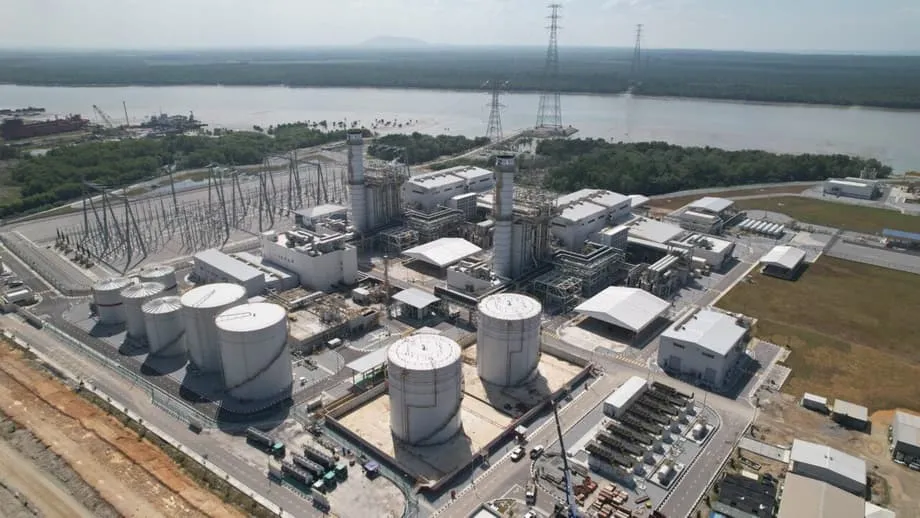
Malaysia's decision to grant a company based in China a long concession to develop combined-cycle gas power plants on the East Coast has opened a debate about who should control the country's strategic electricity assets. The immediate justification is demand: foreign-owned data centres need dependable electricity, and the government wants generation capacity to grow quickly.
Contents
- A Power Deal With Consequences for Decades
- How Malaysia's Electricity Structure Shapes the Debate
- Why Power Purchase Agreements Matter
- China's Existing Role in Malaysian Energy
- How the Relationship Has Developed
- Regional Deals Show Different Forms of Control
- Indonesia Brings Environmental and Safety Risks Into Focus
- Does the Energy Roadmap Build Domestic Capability?
- Local Projects Show Other Ownership Options
- How Chinese Financing Supports Long Commitments
- Key Points
As of January 28, 2026, the debate reaches beyond the need for more power. Critics argue that the concession puts speed ahead of national control, domestic industrial development and planning for costs that could last for decades. With new leadership at the Energy Commission (EC) and the economy ministry, the decision has become a test of how Malaysia balances foreign investment against energy sovereignty, meaning its ability to make and enforce decisions about its own electricity supply.
The company receiving the concession, its duration, the plants' capacity and the detailed commercial terms were not identified. Those details matter because ownership, operating rights and payment obligations determine how much influence an investor holds and how much financial exposure remains with Malaysian institutions and consumers.
Energy analysts critical of the decision argue that electricity generation cannot be assessed simply by counting megawatts. Power costs affect household bills, industrial growth, national security and the government's finances. A combined-cycle gas plant produces electricity using gas turbines and then uses their waste heat to generate additional power. The technology addresses generation needs, while the contract determines who controls the asset and receives its income.
How Malaysia's Electricity Structure Shapes the Debate
Malaysia has approximately 27,000 megawatts (MW) of installed generation capacity. Tenaga Nasional Berhad (TNB) controls about 52% of actual generation, while independent power producers (IPPs) supply the remainder. Installed capacity describes how much electricity plants can produce at a given moment; actual generation describes what they produce in operation.
Electricity generated by IPPs goes into TNB's grid, with TNB acting as the sole system aggregator, bringing supplies together for delivery. With the exception of Sarawak, TNB maintains a monopoly as the sole electricity supplier and owner of all transmission infrastructure.
TNB's central position in the grid does not give it sole control over the price paid to generators. Purchases from IPPs are governed by individual Power Purchase Agreements (PPAs), many of which run for long periods and remain commercially confidential. There is no single publicly listed tariff per kilowatt-hour covering those agreements.
A megawatt measures generating capacity, while a kilowatt-hour measures electricity delivered over time. For consumers, the practical issue is how the contracts behind that electricity divide costs between investors, TNB and the public. Owning transmission lines and controlling generation contracts are different forms of influence over the same electricity system.
Why Power Purchase Agreements Matter
PPAs generally divide payments into two parts: capacity payments and energy payments. Capacity payments compensate an IPP for keeping an agreed amount of generating capacity available to the grid, whether or not TNB dispatches electricity from that plant.
Those fixed payments cover operating costs, debt servicing and an agreed return on investment. Critics argue that this arrangement places much of the financial risk on the wider electricity system while reserving returns for private investors. The obligation to pay for available capacity can continue even when a plant produces less electricity than expected.
Energy payments cover electricity actually generated and dispatched by TNB. These variable charges depend heavily on fuel costs, principally coal and gas. Fuel costs pass through to TNB and ultimately to consumers through the Automatic Fuel Adjustment (AFA) mechanism.
Long PPAs therefore make generation attractive to investors by providing predictable contractual revenue. They can also leave the government and electricity system exposed to changes in demand and fuel prices. Critics of the East Coast concession argue that assessing the investment requires looking at those obligations alongside the promised generating capacity.
The sovereignty concern centres on who can make decisions throughout the operating life of a plant. An investor may hold ownership rights and a protected income stream for decades, while Malaysian authorities remain responsible for reliable supply, affordable electricity and the wider economic effects of energy costs.
China's Existing Role in Malaysian Energy
Chinese companies already have substantial interests in Malaysian generation and industries that consume large amounts of electricity. The Malaysia-China Kuantan Industrial Park (MCKIP), established in 2013, focuses on steel, clean technology, renewable energy and petrochemical industries.
China General Nuclear Power Corp (CGN) and PowerChina have supported renewable energy and gas projects through technology and financing. CGN's investments include the 2.24 gigawatt (GW) Edra Melaka Power Plant, a gas facility. CGN ranks as Malaysia's second-largest independent power producer, and its cumulative electricity supply to Malaysia exceeded 200 billion kilowatt-hours by 2025.
Malaysia also supplies fuel to China. In 2021, Petronas signed an agreement to deliver 2.2 million metric tons of liquefied natural gas (LNG) annually to CNOOC for 10 years. LNG is natural gas cooled into liquid form so it can be transported by ship.
Prime Minister Anwar Ibrahim's government has continued strengthening economic ties with Beijing. During Chinese President Xi Jinping's visit in April 2025, the two countries signed more than 30 cooperation agreements, including agreements concerning green technology.
The relationship therefore runs in both directions: Chinese businesses invest in Malaysian energy assets and industrial demand, while Malaysia supplies fuel to China. Critics of the new concession argue that the growing relationship makes careful decisions about ownership and contractual control more urgent.
How the Relationship Has Developed
Malaysia's current energy debate follows years of industrial cooperation, fuel agreements and expanding Chinese generation interests. The main dates show how these connections have accumulated:
- 2013: The Malaysia-China Kuantan Industrial Park was established, focusing on steel, clean technology, renewable energy and petrochemicals.
- 2021: Petronas signed its agreement with CNOOC to supply 2.2 million metric tons of LNG annually for 10 years.
- December 2023: An explosion at a nickel plant funded by Chinese investment in Indonesia killed at least 13 workers, adding to regional concerns about industrial safety.
- April 2025: Xi Jinping visited Malaysia, and the two countries signed more than 30 cooperation agreements.
- By 2025: CGN's cumulative electricity supply to Malaysia exceeded 200 billion kilowatt-hours.
- January 28, 2026: Malaysia's East Coast gas concession is drawing scrutiny over energy control, contract obligations and domestic participation.
These developments connect several parts of the same policy debate: access to investment, growing industrial demand, dependable fuel supplies and the responsibilities that accompany large infrastructure projects.
Regional Deals Show Different Forms of Control
Laos provides an example of Chinese investment extending into transmission infrastructure. China Southern Power Grid Company (CSG) holds a 90% stake in Électricité du Laos Transmission Company Ltd (EDLT), which operates high-voltage power lines under a concession lasting 25 years. That arrangement gives the Chinese company substantial control over infrastructure used to move electricity.
Another project in Laos, the Pak Beng dam, involves China Datang Overseas Investment and Thailand's Gulf Energy Development PCL. The project is valued at $1.88 billion and is designed to produce 912MW. Thailand's Electricity Generating Authority plans to buy its electricity for 29 years, beginning in 2033.
Cambodia has also received heavy Chinese investment in hydropower dams, which now supply substantial portions of its electricity. Across these projects, concessions and purchase agreements commit infrastructure and future electricity revenue for extended periods.
Malaysia's debate concerns generation, while the Laos transmission concession concerns the network carrying electricity. Both arrangements put the length and scope of operating rights at the centre of questions about national control. The Pak Beng agreement also shows how a plant in one country can depend on decades of purchases by another.
Indonesia Brings Environmental and Safety Risks Into Focus
Indonesia has recently revoked permits for a hydropower project backed by Chinese investment and a gold mining unit operated by conglomerate Astra International. The action followed accusations that environmental breaches worsened the floods of 2025, which killed 1,200 people.
The hydropower project, Batangtoru, is controlled by China's SDIC Power Holdings Co. Ltd and was being built by PowerChina. It had been expected to become fully operational by the end of 2025, with installed capacity of 510MW.
Environmental experts have linked the severity of the floods to widespread deforestation for mines and plantations, including projects involving Chinese companies. Communities near coal power plants in Indonesia have also reported unusually high levels of respiratory illness.
The December 2023 explosion at a nickel plant funded by Chinese investment, which killed at least 13 workers, added workplace safety to the concerns surrounding large industrial developments. Chinese energy projects across Southeast Asia have faced recurring criticism over environmental and safety safeguards.
For Malaysia, critics are calling for close scrutiny of the Environmental Impact Assessment (EIA) process for the East Coast gas plants. An EIA examines a project's likely effects on its surroundings. That review forms part of the country's effort to balance development with environmental commitments under the Paris Agreement.
Does the Energy Roadmap Build Domestic Capability?
Malaysia's National Energy Transition Roadmap (NETR) is the government's guiding framework for the energy sector's future. It addresses decarbonisation, new generating capacity and participation by domestic capital markets. Decarbonisation means reducing the carbon emissions associated with activities such as producing electricity.
Critics argue that the roadmap has become policy cover for decisions that deepen dependence on external companies. Their concern is that strategic generation assets are increasingly developed, financed or controlled by foreign entities, with operating rights that extend well beyond the initial investment.
Foreign direct investment brings capital into the country. In energy infrastructure, the accompanying rights may also determine who operates a plant, receives its income and develops technical knowledge over many years. Critics say those lasting rights deserve closer attention than the investment amount alone.
Local companies and small and medium enterprises, they argue, are being denied opportunities to build expertise, join supply chains and capture intellectual property. They contend that Malaysia's preference for large projects proposed by foreign investors leaves too few lasting benefits for domestic industry.
The history of Edra Energy under 1MDB is central to that criticism. Critics describe public funds being raised at high cost to buy ageing, inefficient power plants at inflated prices, benefiting external investors while local capabilities were neglected. They see that episode as a warning about judging energy transactions by their immediate financing benefits.
Renewable energy, grid modernisation and energy storage are stated NETR goals. The dispute is whether decisions about new plants give those priorities and domestic industrial development enough weight alongside the immediate need for reliable electricity.
Local Projects Show Other Ownership Options
JAKS Resources Bhd recently announced the sale of its entire stake in JAKS Solar Nibong Tebal to Sunview Group Bhd. The transaction comprises RM15 million in cash plus up to RM40 million owed.
The solar plant has capacity of 50MW and operates under Malaysia's Large Scale Solar 4 programme. It sells electricity to TNB through a PPA lasting 25 years. The project illustrates how domestic companies can participate in generation through the same broad tool, a long purchase agreement, that also attracts foreign investors.
In Sabah, Jentayu Sustainables Berhad (JSB) has secured a PPA valued at RM2.8 billion for its flagship hydropower project with capacity of 162MW. The development is described as one of Sabah's largest renewable energy ventures.
The project uses a run-of-river model, drawing energy from flowing water. It has a concession lasting 40 years under a Build-Own-Operate-Transfer (BOOT) arrangement. Under that structure, an investor builds, owns and operates the asset before transferring it at the end of the agreed period.
JSB's project is fully financed through domestic private investment without public funds. Together, the Sabah hydropower development and the Nibong Tebal solar transaction show that Malaysian businesses can own and finance electricity assets under long contracts.
Their relevance to the East Coast debate lies in the ownership and operating arrangements. Critics argue that Malaysia can seek investment while giving domestic companies a greater role in technical work, supply chains and control of assets throughout their operating lives.
How Chinese Financing Supports Long Commitments
Chinese infrastructure financing under the Belt and Road Initiative (BRI) includes several forms of lending. China Development Bank (CDB), for example, has provided special loans totalling 250 billion RMB for infrastructure, production capacity and financial cooperation associated with the initiative.
Financing tools include medium and long term project loans in foreign currencies, syndicated loans, export buyer's credit and seller's credit. A syndicated loan brings several banks together to finance one borrower or project. Export credit supports purchases involving goods or services sold across borders.
The Attarat Oil Shale Fired Power Plant Project in Jordan illustrates the scale of such lending. Four Chinese state-owned banks signed a syndicated loan agreement worth $1.582 billion: the Industrial and Commercial Bank of China, Bank of China, China Construction Bank and China Eximbank.
Chinese financing structures often combine lending with equity stakes, giving companies ownership interests alongside their financial involvement. In power projects, operating and revenue rights commonly extend for 25 to 30 years. The combination can give investors substantial influence throughout a plant's working life.
Malaysia's new EC chairman and economy minister face pressure to show how future deals will protect national interests within such arrangements. Critics accuse the commission of prioritising expedient agreements and want stronger attention to domestic capability, technology transfer and local industrial development.
The decision facing Malaysia is how to secure reliable electricity while managing the obligations that make new plants possible. Data centre demand creates pressure for speed. Long concessions, confidential purchase agreements and foreign ownership make the terms of that expansion consequential for consumers, domestic businesses and the state for decades.
Key Points
- Malaysia's East Coast gas power concession to a company based in China has prompted concern about strategic control and lasting financial obligations.
- TNB controls about 52% of actual generation in a system with approximately 27,000MW of installed capacity.
- IPP contracts combine payments for available capacity with charges for electricity generated, including fuel costs passed through the system.
- Chinese energy interests already include CGN's 2.24GW Edra Melaka plant, industrial investment and fuel trade with Petronas.
- Projects in Laos and Cambodia show the reach of long concessions, while Indonesia's permit revocations have sharpened environmental scrutiny.
- Domestic solar and hydropower ventures offer alternative ownership and financing structures.
- Malaysia's energy leadership faces calls to align new capacity with NETR goals, domestic expertise and national control.