Record Arrivals Bring a Broader Push for Order
Japan welcomed 42.7 million foreign visitors in 2025, up 16% from the previous year, while its foreign resident population reached about 3.8 million, roughly 3% of the population. Against that backdrop, the government has compiled a wide policy package covering citizenship, residency, unpaid medical bills, tourism congestion and property ownership.
Contents
- Record Arrivals Bring a Broader Push for Order
- Citizenship and Residency Face Stricter Screening
- Medical Debts and Public Housing Enter the Review
- Why Some Communities Feel Under Pressure
- A Central Office Links the Government Response
- Higher Travel Charges Could Fund Tourism Controls
- Tourism Policy Turns Toward Less Crowded Regions
- Property Purchases Draw Housing and Security Scrutiny
- Political Pressure Meets Economic Dependence
- Dates Behind the Policy Shift
- The Bottom Line
As of January 28, 2026, the package combines stricter requirements for obtaining Japanese nationality with measures intended to reduce pressure on crowded destinations. Drawn up at a meeting of relevant Cabinet ministers, it sets out the government's goal of a society where Japanese and foreign nationals can live safely, securely and prosper together under Japanese laws and rules.
Kimi Onoda, the minister responsible for policies on foreign nationals, said the directive brings together problems identified so far. She also stressed the need to explain progress and emerging issues to the public.
"It is vital for the government to update the public on the progress achieved, as well as on additional issues that arise, in order to deliver safety and peace of mind," Onoda said.
Onoda's office is to serve as the command center, working with ministries and agencies to carry out the measures. The administrative changes reflect the urgency attached to managing a growing foreign population while visitor numbers reach records and Japan's own population ages and shrinks.
The package brings together two connected pressures: Japan needs workers and tourism spending, while some communities want stronger action against congestion, misconduct and misuse of public services. Several measures remain proposals or matters for consideration, including higher travel charges, the use of language learning in residency screening and a framework for foreign property purchases.
Citizenship and Residency Face Stricter Screening
The government plans tougher requirements for obtaining Japanese nationality, with the stated aim of ensuring that new citizens are deeply integrated into Japanese society. Citizenship means becoming a Japanese national; residency status determines the conditions under which a foreign national can remain in the country.
Officials also plan a program to help foreign residents learn Japanese and understand the country's social rules. They will consider whether a participant's understanding should become a factor in residency screening. That could make language ability and knowledge of local expectations relevant when a person seeks to renew or extend permission to stay.
Japan has gradually eased its strict immigration rules to help fill jobs in a shrinking and aging workforce. The increase in foreign residents has brought economic benefits, but its pace has also prompted officials to reconsider how newcomers are screened and monitored after arrival.
The approximately 3.8 million foreign residents account for about 3% of Japan's population, a share still small compared with many other countries. Public concern has nevertheless grown alongside the rapid increase, bringing economic need and anxiety about social change into the same policy debate.
Medical Debts and Public Housing Enter the Review
Foreign visitors who leave medical bills unpaid will face tougher scrutiny. Japan already shares information on substantial payment arrears with immigration authorities, and the updated policy will extend that reporting to smaller unpaid bills identified by medical institutions.
The measure is intended to address visitors who receive medical care during a short stay and leave without paying. Sharing the debt information gives immigration authorities more information when assessing those travelers.
The government also plans to record the nationalities of new residents entering public housing. That would provide more detailed information about demographic changes in individual communities.
These measures extend the package beyond entry requirements. Medical payment records and public housing data bring the operation of local services into the government's wider effort to manage foreign nationals and respond to concerns about the use of administrative systems.
Why Some Communities Feel Under Pressure
Local frustration has been described as 'foreigner fatigue,' a sense of exhaustion associated with the sharp increase in foreign residents and visitors following the pandemic. Minor infractions, cultural misunderstandings and deliberate breaches of etiquette have circulated widely through social media and news coverage.
Japan has long been a relatively homogeneous society with a culture of high trust, where unwritten expectations guide much public behavior. People arriving from different cultural backgrounds may encounter rules that are familiar to residents but less obvious to newcomers. In some places, those differences have contributed to friction.
Nara has seen incidents involving tourists mistreating sacred deer. At Mount Fuji, litter left by climbers has drawn complaints. In Kyoto, visitors pursuing photographs have harassed geisha. These incidents have helped fuel resentment about the conduct of some travelers.
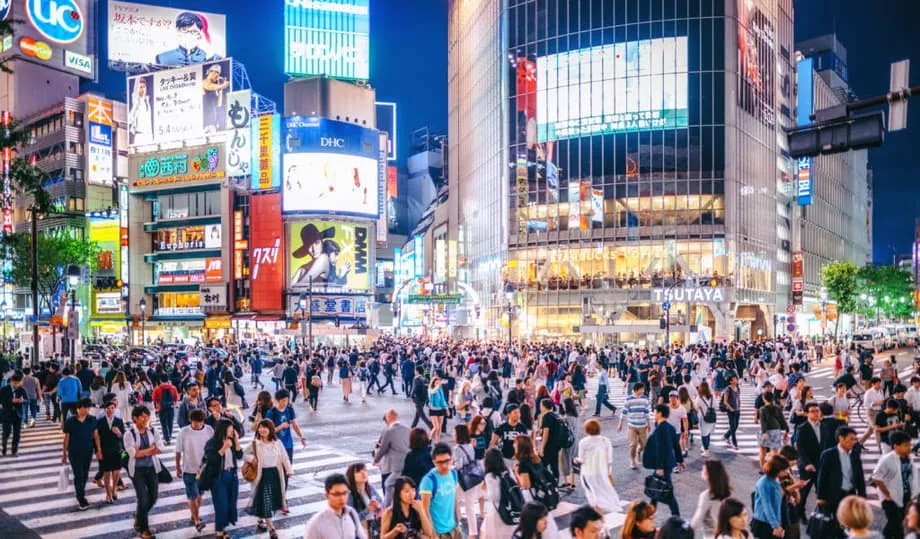
Residents of Asakusa and Shibuya have also complained that the volume of visitors has changed their neighborhoods into places resembling 'cultural Disneylands.' The pressure has contributed to hostile encounters between residents and visitors, with everyday life increasingly shaped by tourism.
Shigeru Ishiba, speaking as prime minister at a recent kickoff ceremony for a new administrative body addressing these concerns, linked public anxiety to misconduct and the use of government systems.
"Crimes and disorderly conduct by some foreign nationals, as well as the inappropriate use of various administrative systems, have created a situation in which the public feels uneasy and cheated," said Prime Minister Shigeru Ishiba during a recent kickoff ceremony for a new administrative body addressing these concerns.
Stagnant wages and a rising cost of living have added to that frustration. A weak yen gives many overseas visitors greater spending power in Japan, making their spending more conspicuous to residents facing tighter household budgets. Some voters consequently welcome stricter enforcement as patience wears thin.
A Central Office Links the Government Response
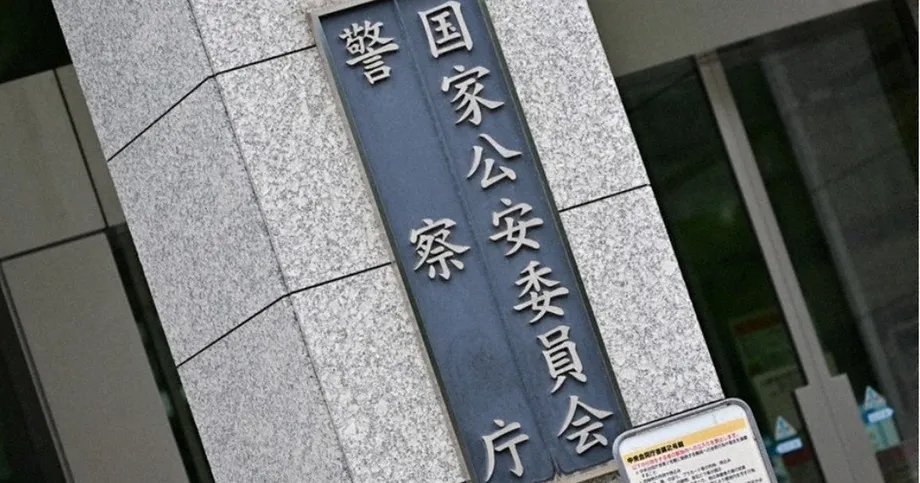
The Cabinet Secretariat has established a dedicated administrative body to coordinate work on crime, overtourism and other issues involving foreign nationals. Described as a 'control tower,' it is intended to connect agencies whose responsibilities previously produced a more fragmented response.
A new panel of experts is tasked with discussing a 'society of orderly and harmonious coexistence with foreign nationals.' Earlier panels focused primarily on coexistence. The explicit addition of order signals a stronger focus on compliance with the expectations and rules of Japanese society.
The panel is expected to discuss tighter immigration and residency management, rules governing land purchases by foreign nationals, and Japanese language education. Those subjects reach across several areas of government, from border administration to education and property policy.
Onoda's office is to coordinate implementation and provide a single point of accountability to the public. The government has made public order and safety its priority even as foreign labor remains necessary to support the economy.
Higher Travel Charges Could Fund Tourism Controls
The government is considering higher visa fees, an increased departure tax and a new charge for screening travelers before entry. The approach would raise revenue while potentially reducing the influx of tourism that places a heavy burden on local communities.
Officials argue that current charges are low compared with international levels and that some have remained unchanged since 1978. A Japanese visa allowing one entry currently costs about 3,000 yen, compared with approximately 28,000 yen for a United States tourist visa.
The departure tax could rise from 1,000 yen to around 3,000 yen, three times the present charge. Japanese nationals would also pay the increase, although the millions of foreign travelers leaving Japan would provide most of the revenue.
The government plans to direct the additional money toward overtourism measures and stronger immigration screening. A proposal would use revenue left over after those costs to expand free high school tuition, a popular domestic policy.
Foreign nationals cannot vote in Japanese elections, making charges directed at visitors politically attractive to the ruling coalition. With inflation making domestic tax increases unpopular, collecting more from travelers offers a way to fund infrastructure and administration without placing the entire burden on voters.
Tourism businesses have expressed concern that large fee increases could discourage travel and damage local economies. The risk is particularly relevant in regions that have become heavily dependent on spending by visitors from abroad.
Tourism Policy Turns Toward Less Crowded Regions
The 42.7 million foreign arrivals in 2025 brought valuable spending but also intensified crowding in popular destinations. The government's response centers on encouraging travelers to visit a wider range of places beyond heavily visited cities such as Kyoto, Tokyo and Osaka.
Redirecting some of that traffic could relieve pressure on the busiest destinations while bringing revenue to rural areas facing economic stagnation. The aim is to change where visitors travel, rather than concentrate the benefits and disruption in the same places.
The Sustainable Tourism Promotion Headquarters has been developing guidelines for that transition. Measures include better transport connections to regional destinations, services allowing tourists to store luggage away from their immediate route, and support for cashless payments in more than 20 regions.
The luggage services are promoted under the name 'Hands-Free Tourism.' They are intended to let visitors travel without carrying their bags throughout a journey. Tottori and Shimane are among the model regions identified for developing distinctive experiences that draw travelers away from the heavily visited Golden Route.
Local responses address different pressures. Kyoto plans to steer more visitors toward railways because tourists frequently crowd its buses. At Mount Fuji, an entry fee and a daily limit on hikers have been introduced to protect the environment and improve safety.
Hakuba and Shirakawa-go are addressing late night noise, graffiti and congestion caused by tour buses. Central government support connects these local measures to the wider goal of protecting residents' quality of life while keeping the economic benefits of tourism.
Property Purchases Draw Housing and Security Scrutiny
The government plans a survey of transactions involving newly built condominiums in major cities, including properties resold after a short period and purchases by overseas buyers. Some lawmakers are concerned that foreign capital is pushing prices beyond what local residents can afford.
Land near military bases and other strategic facilities has also attracted attention because foreign ownership can raise security concerns. The package treats property policy as both a housing issue and a matter of national interest.
Officials will consider bringing remote islands with unknown owners into state ownership. The proposal follows concerns about foreign entities buying uninhabited islands without clear purposes. Control over such territory is viewed as relevant to sovereignty, national security and border management.
The government aims to compile a framework for regulating real estate purchases by foreign nationals by the summer. Officials will first study other countries that have introduced comparable restrictions.
As regional geopolitical tensions grow, the government's approach gives greater weight to control over physical territory rather than treating land solely as an asset traded in an open market. Foreign investment in Japanese property consequently faces closer scrutiny and possible restrictions.
Political Pressure Meets Economic Dependence
Sanseito, the populist party advocating a 'Japanese First' agenda, has put pressure on the ruling Liberal Democratic Party to take a tougher position on immigration and tourism. Opinion polls show that concerns involving foreign nationals connect strongly with voters and have helped parties promising stricter controls gain popularity.
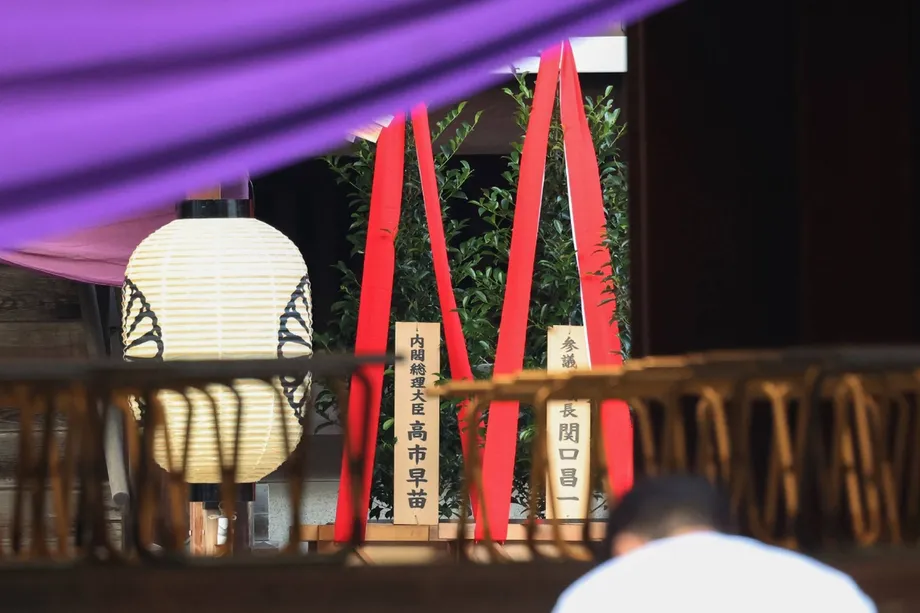
Prime Minister Sanae Takaichi's conservative government has stressed a firm response to illegal acts by some foreign nationals while publicly rejecting xenophobia. Takaichi has acknowledged labor shortages caused by population decline, but insists that coexistence must be 'orderly.'
The political framing places greater weight on managing demographic change and enforcing rules than on describing foreign residents as a cultural asset. Japan's reliance on overseas workers and tourism spending makes that position a difficult balance: the people bringing labor and revenue are also the focus of demands for tighter control.
Foreign residents who have lived in Japan for many years report feeling they need to 'tread carefully.' Some are changing their behavior to avoid negative attention and fear more surveillance, stricter enforcement of minor infractions and fewer routes to permanent settlement.
The government's task is to reconcile that uncertainty with public demands for stability and the preservation of familiar social norms. The package ties stronger enforcement to language learning and coordination across ministries, while leaving several major decisions under consideration.
Dates Behind the Policy Shift
The policy debate stretches from charges left unchanged for decades to the surge in travel following the pandemic. The next stated milestone is the proposed property regulation framework in the summer.
- 1978: Some of the travel charges now under review have remained unchanged since this year.
- Following the pandemic: The increase in foreign residents and visitors contributed to growing local frustration.
- 2025: Japan received a record 42.7 million foreign visitors, a 16% increase from the previous year.
- January 28, 2026: The government's basic policy package covers nationality, residency, tourism, medical debts and property ownership.
- Summer 2026: Officials aim to compile a framework for regulating property purchases by foreign nationals after studying approaches in other countries.
The summer framework will address an area where affordability, foreign investment and national security concerns overlap. For residents, visitors and businesses, the broader package means tighter oversight alongside efforts to make tourism less disruptive and help newcomers understand Japanese language and social rules.
The Bottom Line
- Japan's foreign resident population has reached about 3.8 million, roughly 3% of the total population.
- The government plans stricter citizenship requirements and may use understanding of Japanese language and social rules in residency screening.
- Medical institutions will share information on smaller unpaid visitor bills, while public housing authorities will track the nationalities of new residents.
- Onoda's office and a Cabinet Secretariat body will coordinate the response across ministries and agencies.
- Proposals include higher visa fees, a departure tax increase from 1,000 yen to around 3,000 yen, and a charge for screening before entry.
- Tourism measures seek to spread visitors beyond crowded destinations and address congestion, noise, litter and other local problems.
- A property purchase framework is planned for the summer, alongside consideration of state ownership for remote islands with unknown owners.
- The government faces pressure for stricter controls while continuing to depend on foreign workers and visitor spending.