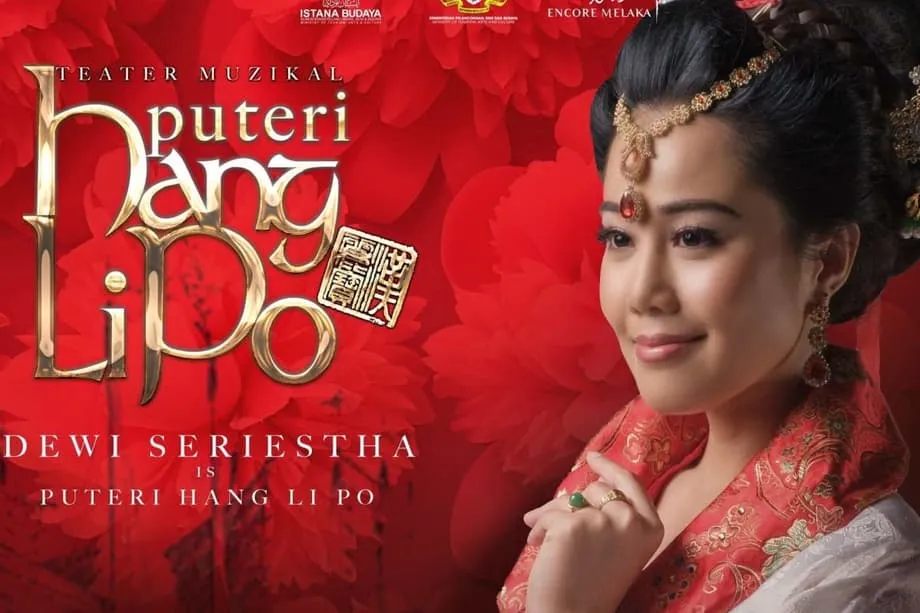
A Royal Marriage, Two Sultans and a Missing Record
A Chinese princess, an entourage of 500 followers and a marriage to Sultan Mansur Shah, who ruled Malacca from 1456 to 1477, form one of Malaysia's most familiar historical stories. Yet Hang Li Po has no recorded place in the Ming imperial records, while a Portuguese account written between 1512 and 1515 describes a different Chinese bride marrying a different Malaccan ruler.
Contents
- A Royal Marriage, Two Sultans and a Missing Record
- The Port Behind the Princess Story
- What the Malay Annals Say Happened
- The Emperor's Illness and the Sultan's Status
- Why Historians Question the Imperial Marriage
- The Different Bride in the Portuguese Account
- Could Zheng He Connect the Two Stories?
- How the Legend Expresses Royal Power
- Bukit Cina and the Peranakan Connection
- How Straits Chinese Became a Colonial Identity
- A Dance Drama Chooses Playfulness
- History, Tourism and Malaysian Identity
- Key Points
Those competing narratives lie at the heart of a debate about whether Hang Li Po was an imperial princess, a woman whose identity changed through generations of storytelling, or a legendary figure created to express Malacca's royal prestige. The Malay Annals name her and describe her marriage. Tomé Pires's Suma Oriental instead describes an unnamed Chinese girl marrying Sultan Megat Iskandar Shah, who reigned from 1414 to 1424.
Malacca, known in Malaysia as Melaka, gives the story a physical setting. Bukit Cina, the hill traditionally associated with the princess and her followers, contains more than 12,000 graves. Its oldest grave dates to 1622. The city is also a UNESCO World Heritage site, where the memory of Chinese and Malay connections remains central to its identity.
Hang Li Po's importance reaches beyond the royal court. Her story has become a symbol of cultural exchange, intermarriage and the mixed traditions associated with the Peranakan community. It also carries a political message about the relationship between a powerful Chinese emperor and a Malay sultan. Understanding the debate means following both the accounts of her marriage and the purposes those accounts served.
The Port Behind the Princess Story
Malacca's history began long before European colonial rule. The Malacca Sultanate, which existed from around 1400 to 1511, developed into a cosmopolitan port where merchants from China, India, the Arab world and the Indonesian archipelago exchanged spices, textiles, ceramics and precious metals.
Chinese Ming dynasty patronage helped Malacca gain security and regional influence. The dynasty ruled from 1368 to 1644. Malacca became an entrepôt, a port where merchants brought goods to exchange or send onward, allowing languages and cultures to meet alongside commercial cargoes.
Parameswara's establishment of Malacca around 1400 coincided with renewed Chinese interest in maritime expansion. Before its founding, Chinese maritime trade had concentrated on ports in Java and Sumatra. Under the Yongle Emperor Zhu Di, who reigned from 1402 to 1424, the Ming court launched the Treasure Voyages to extend Chinese influence across the maritime world.
Zheng He, the eunuch admiral who led seven voyages through Southeast Asia and the Indian Ocean, reached Malacca on his first expedition in 1405. The port's location made it a useful stopping point for his fleets and supported the expansion of regional trade.
Malacca recognized Chinese suzerainty, meaning a relationship in which a stronger ruler claimed authority over another state while that state retained its own government. In return, Malacca received protection against rivals, especially Siam, now Thailand, and the Majapahit Empire of Java. Tribute and strategic cooperation both formed part of this relationship.
Chinese records document as many as 20 Malaccan missions to China between 1405 and 1435, several led by the sultan himself. When the Portuguese conquered Malacca in 1511, Malaccans described their territory as having been "protected by the great Emperor of China." Portuguese rule was followed by Dutch possession and later British colonial rule.
What the Malay Annals Say Happened
The Malay Annals, or Sejarah Melayu, place Hang Li Po's marriage during Sultan Mansur Shah's reign. Traditional accounts describe a Ming emperor impressed by the sultan's character and Malacca's growing importance, who offered his daughter's hand in marriage to strengthen friendship between the two courts.
Sultan Mansur Shah sent a delegation to China headed by his bendahara, the official commonly described as a prime minister. The delegation carried a letter for the emperor and impressed him with the sultan's achievements. Within the traditional narrative, this diplomatic exchange led to the princess's journey to Malacca.
Hang Li Po is described as beautiful and noble. After arriving, she adopted the local culture, converted to Islam and married the sultan. The Annals say she bore him a son named Paduka Mimat, extending the royal lineage.
Her entourage numbered 500 followers. Sultan Mansur Shah gave them a hill for their settlement in the middle of the 15th century, now known as Bukit Cina, or China Hill. The story also describes wells and other infrastructure serving the growing community.
The princess's Chinese attendants married local men, contributing to a community that combined Chinese and Malay traditions. This account makes the marriage both a diplomatic alliance and a story about the beginnings of cultural mixing in Malacca.
For generations of Malaysians, Hang Li Po has consequently represented more than a royal bride. As a woman of Chinese ancestry living among Malay Muslims, she is often presented as an early counterpart to the experience of people whose lives cross cultural boundaries in modern Malaysia.
The Emperor's Illness and the Sultan's Status
The Malay Annals add a dramatic episode to the marriage narrative. The Chinese emperor develops a disfiguring skin disease and can recover only by drinking and bathing in water that Sultan Mansur Shah used to wash his feet.
After the cure, the emperor promises never again to accept "obeisance" from the Raja of Ujong Tanah, identified in the account with Singapore, then under Melaka's control. Obéisance means an act of submission or respect toward someone of higher rank. The emperor extends the promise to later rulers.
The Annals give the emperor's declaration about relations with Melaka and its successors:
never demand 'obeisance' from the Raja of Melaka or those that come after him, but only friendship on equal terms.
The episode gives the sultan an authority greater than his apparent position beneath the Chinese emperor. Instead of ending with Malacca owing gratitude for an imperial bride, the story makes the emperor dependent on the sultan for his recovery.
Why Historians Question the Imperial Marriage
Historian Khoo Kay Kim researched Hang Li Po several decades ago and concluded that she was essentially a myth. His argument rested on the absence of her name and marriage from the Ming shi-lu, the Ming imperial records.
Chinese court scholars kept detailed records. A marriage between an imperial princess and a foreign ruler would therefore be an event for which historians would expect documentation. Hang Li Po is not listed as a daughter of any Ming emperor in the records discussed in this debate.
Khoo also pointed to the absence of a princess matching her identity under the Yongle Emperor. The dates deserve attention: Yongle ruled from 1402 to 1424, while the traditional marriage story belongs to Mansur Shah's reign from 1456 to 1477. Yongle's reign instead overlaps the earlier ruler named in the Portuguese marriage account, Megat Iskandar Shah.
Tomé Pires's Suma Oriental supplies another difficulty for the familiar story. Written between 1512 and 1515, shortly after the Portuguese conquest, it describes a Chinese marriage under Malacca's second ruler, Megat Iskandar Shah, rather than a princess marrying Mansur Shah.
The two reigns were separated by about three decades. Historians therefore have to consider whether the bride's status and the identity of her husband changed as the story was retold. The argument also includes the possibility that the Malay chronicle deliberately reshaped the marriage to increase the sultanate's prestige.
A question raised in that debate asks: "Hang Li Po has been known to not exist, at least not in the way the Malay fables say so. But was it written into the Sejarah Melayu to enhance the status of the Malacca Sultanate to discourage Siam the other competitor in the Straits that Melaka had to pay yearly tributes for 'Protection'?"
Hang Li Po's identity remains unresolved. The competing accounts offer a possible explanation for the legend, while the imperial marriage lacks the Chinese documentation historians have sought.
The Different Bride in the Portuguese Account
Pires describes Sultan Megat Iskandar Shah travelling to China near the beginning of his reign to pay allegiance to the emperor. The ruler received great honour and, when returning home, was entrusted to a "Great Captain" who travelled with him to Malacca.
Tomé Pires, the Portuguese author of Suma Oriental, describes the captain's daughter and the marriage:
The captain brought with him a beautiful Chinese daughter, and when the said Xaquem Darxa (Iskandar Shah) reached Malacca, in order to do honour to the said captain, he married her although she was not a woman of rank.
The woman later bore the sultan a son with the title Paduka Raja. In this telling, she was an ordinary Chinese Muslim girl rather than a princess who converted after arriving. Her husband was Megat Iskandar Shah, and the story included his visit to China, a journey absent from the Malay Annals' marriage narrative.
The accounts nevertheless share a recognizable structure. A Chinese official escorts a Chinese woman to Malacca, she marries a Malaccan ruler, and their son has a name or title containing Paduka. Those similarities support the possibility that both narratives developed from the same event or related events.
The Malay Annals were produced in Johor around 1612, nearly two centuries after the early events being discussed. Pires wrote much closer to the Portuguese conquest, in Malacca itself, although his account was also retrospective. It relied primarily on Javanese chronicles, which the Portuguese considered more reliable at the time.
Each narrative therefore brings a different setting and perspective to the marriage story. The Portuguese version offers a bride without royal rank; the Malay version gives Malacca a direct family connection to the Chinese emperor.
Could Zheng He Connect the Two Stories?
Zheng He, whose lifespan is given as 1371 to 1433 or 1435, provides a possible connection between the narratives. Before and after Megat Iskandar Shah's reign, Malacca served as his base of operations in Southeast Asia.
In 1419, Megat Iskandar Shah visited China in Zheng He's company. That documented connection makes the admiral a strong candidate for the "Great Captain" remembered in Pires's account. His movements and relationship with Malacca fit the description closely.
The Malay Annals name the Chinese official who sends Hang Li Po to Malacca as "Ling Ho." One interpretation treats this name as a changed rendering of Zheng He. If both officials refer to the admiral, Pires's unnamed Chinese Muslim woman could represent an earlier version of the Hang Li Po story.
Under that explanation, the writer of the Malay Annals associated an earlier marriage with Sultan Mansur Shah rather than Sultan Megat Iskandar Shah. It would account for some of the shared details and the difference between the rulers, while leaving the bride's exact identity uncertain.
The principal dates show why the chronology matters:
- Around 1400: Parameswara establishes Malacca.
- 1405: Zheng He's first voyage reaches Malacca.
- 1414 to 1424: Sultan Megat Iskandar Shah rules, the reign associated with the Chinese bride in Pires's account.
- 1419: Megat Iskandar Shah visits China with Zheng He.
- 1456 to 1477: Sultan Mansur Shah rules, the reign associated with Hang Li Po in the Malay Annals.
- 1511: The Portuguese conquer Malacca.
- 1512 to 1515: Pires writes Suma Oriental.
- Around 1612: The Malay Annals are produced in Johor.
- 1622: The oldest grave at Bukit Cina dates from this year.
How the Legend Expresses Royal Power
Researchers interpret the emperor's illness as part of the Malay Annals' political storytelling. Their explanation describes a belief within the narrative that contact with royal blood could cause chloasma, presented there as an unsightly and uncomfortable skin disease associated with an improper union between royalty and a common person.
The interpretation is expressed in these words: "in the historical context of Sejarah Melayu, a person may be infected with chloasma, an unsightly and uncomfortable skin disease, upon skin contact with a person of royal blood, suggesting an unhealthy union between that royal figure and common person."
Sultan Mansur Shah's daulat, or sovereignty and royal authority, is restored through the illness and cure. The episode asserts Malay supremacy to the audience even though the Chinese emperor initially appears to hold the higher position.
The marriage itself carries a tension about rank. In the traditional understanding described by researchers, "wife-giving affords a superior position to wife-taking." An emperor who supplied a royal bride could place the receiving ruler under an obligation.
That interpretation describes the emperor as having "calculated to coerce Melaka into indebtedness because Princess Hang Li Po, being a direct and abiding link to her father, binds Sultan Mansur Shah into submission." The cure then reverses the relationship by making the emperor depend on the sultan.
Researchers capture the princess's role in the narrative this way: "Hang Li Po is the medium to cement alliances and to add royal aura to a Malay monarch whose wife is a daughter of a great emperor. The blend of international migration, skin disease and magic cure add to the mystic of the Sultan himself."
Hang Li Po consequently operates as both a connection to China and a means of affirming Malacca's independence and prestige. The narrative explains how friendship with a powerful empire could coexist with a claim to equal royal standing.
Bukit Cina and the Peranakan Connection
Bukit Cina remains one of Malacca's most significant historical landmarks. Its association with the princess gives visitors a tangible place through which to encounter the story, while its more than 12,000 graves preserve the history of a Chinese community in the city.
Hang Li Po's marriage is often cited as the beginning of the Baba Nyonya community, also called the Straits Chinese, in the Malay Peninsula. Many people of Straits Chinese descent trace their ancestry to the popular legend, whether the bride is understood as a princess or a court maiden.
Chinese traders marrying local Malay women contributed to a culture combining Chinese traditions with Malay customs. Peranakan communities are found particularly in Malacca, Penang and Singapore, with cultural roots in the wider maritime Southeast Asian world.
The community maintained Chinese language, religious practices and cuisine while adopting Malay clothing, language and social customs. This mixing of traditions is sometimes called transculturation, meaning the creation of cultural practices through contact between different communities.
Hang Li Po's story has been described as a "memorial dream of intermarriage and cultural fluidity." It recalls a period before British colonial authorities, and later the independent states of Malaysia and Singapore, treated "Chinese" as a more fixed racial category.
The account also places the decline of interethnic marriage in the region alongside the Islamization of the Malay Archipelago from the 15th century onward. Against that changing setting, the princess's marriage became an especially enduring image of a shared cultural past.
How Straits Chinese Became a Colonial Identity
The name "Straits Chinese" has a specifically English origin and scope. From 1852, the British colonial administration used it as a legal identification category. The community adopted the term as a marker of status, wealth and continuity of tradition.
Unlike Chinese immigrants who arrived as labourers in the late 19th century, the Straits Chinese distinguished themselves through their established regional roots, wealth and command of English. The label expressed a particular position within the wider Chinese diaspora.
Baba and Peranakan were also community names, while Straits Chinese stressed this distinct colonial identity. Members described themselves as "King's Chinese," combining a strong sense of belonging to Malaya with loyalty to Britain as British subjects.
The community established the Straits Chinese British Association and sought representation in the Straits Settlements Legislative Council. These activities placed its cultural identity within the institutions and politics of colonial society.
Hang Li Po's story connects this later identity to a much earlier memory of Chinese settlement and Malay relationships. Its appeal rests partly on the idea that belonging in the region grew through family, language and custom over many generations.
A Dance Drama Chooses Playfulness
The National Academy of Arts, Culture and Heritage, known as Aswara, brought Hang Li Po into a dance drama developed by students from its dance, theatre and management faculties. The production included rarely seen traditional folk and classical Chinese dance styles.
Dr Joseph Gonzales, Aswara's head of dance, explained why the academy wanted to build its Chinese repertoire:
in the last few years, Aswara has become famous for its Malay and Indian dance repertoires, and we have received support and recognition from the entire industry for it. But our Chinese repertoire has been sorely lacking, and it has taken us a while to collect enough pieces to stage a full-length show.
The production used the uncertainty surrounding Hang Li Po to create an "interesting, fun and appealing piece of dance theatre instead of merely revisiting history." Gonzales made its approach explicit:
the tag line of our show is 'not based on a true story'—we wanted to be very clear that we were being playful and whimsical with a character that wasn't real.
Aswara's story begins with Hang Li Po in Malacca, longing to be with her father at the annual Spring Festival in Beijing. The sultan responds to her homesickness by agreeing to take her with him to China.
Scenes depict busy Chinese ports, with farmers selling fresh produce, traders offering goods from across China and travellers from different provinces gathering at the harbour. The princess becomes a vehicle for dance, theatre and cultural exploration rather than a straightforward reconstruction of court history.
History, Tourism and Malaysian Identity
Khoo Kay Kim's suggestion in 2014 that Hang Li Po, Hang Tuah and Hang Jebat might be myths rather than historical personalities generated considerable public debate. Critics argued that questioning these familiar figures weakened Malaysia's historical heritage and the foundations of national identity.
Hang Li Po carries particular significance because she represents a Chinese woman entering Malay royalty. Challenges to her historical identity can therefore become entangled with political and ethnic concerns about belonging in contemporary Malaysia.
Malacca's tourism industry also helps sustain the narrative. Its UNESCO World Heritage status and popularity with visitors encourage accessible stories, although those stories can become simplified or romanticized when presented without the uncertainties discussed by historians.
A Malacca Tourism Promotion Board guidebook drew criticism for historical inaccuracies, including placing the Portuguese arrival in the 15th century rather than at the 1511 conquest. Its treatment of Hang Li Po also attracted concern about potentially misleading information.
The debate extended to claims that Hang Tuah and his companions were Chinese rather than Malay because their names shared the prefix "Hang" with Hang Li Po. The prefix was common in classical Malay society and appeared in numerous names, including Hang Mahmud, Hang Tuah's father.
Discussion of the claim also pointed to variations of Hang Li Po's name in Chinese Wikipedia, suggesting different transliterations rather than a consistent historical identity. Transliteration means writing a name's sounds in another language or writing system.
Claims that DNA tests had established Hang Tuah's Chinese origin also faced criticism. The objections included the limits of using DNA to determine race and the plausibility of the testing process described, given the location and historical importance of the site involved.
Hang Li Po's continuing cultural role rests on a story of connection between China and the Malay world. The historical debate concerns her identity, royal status and chronology; the lasting cultural story concerns marriage, migration, sovereignty and the place of mixed traditions in Malaysia.
Key Points
- The Malay Annals describe Hang Li Po as a Ming princess who married Sultan Mansur Shah, ruler of Malacca from 1456 to 1477.
- The traditional story gives her 500 followers and associates their settlement with Bukit Cina, which contains more than 12,000 graves.
- Khoo Kay Kim questioned her existence because the Ming imperial records contain no mention of her or the marriage.
- Pires's account, written between 1512 and 1515, describes an unnamed Chinese woman marrying Sultan Megat Iskandar Shah, who ruled from 1414 to 1424.
- Zheng He's journey with Megat Iskandar Shah in 1419 offers a possible connection between the competing marriage narratives.
- The emperor's illness and cure in the Malay Annals express the sultan's royal authority and a claim to friendship on equal terms.
- Hang Li Po remains associated with Peranakan heritage, Malaysian cultural identity and artistic reinterpretations, including Aswara's dance drama.
- Her precise historical identity remains unresolved, while her place in Malaysia's cultural memory continues.