Nationwide Mandate Sparks Uncertainty
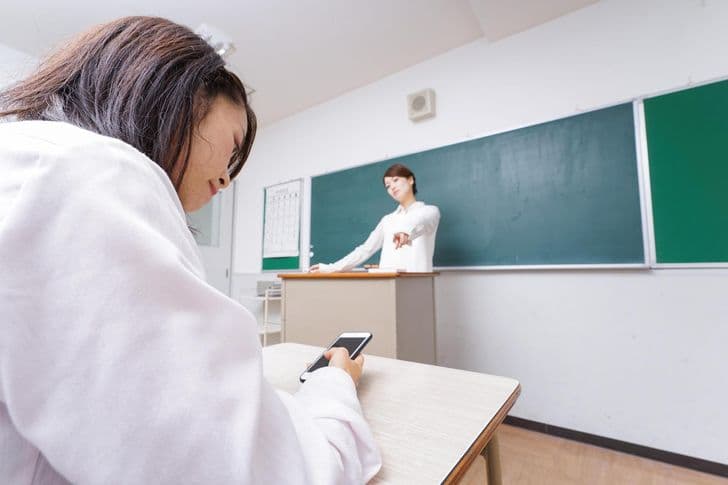
South Korea’s ambitious plan to eliminate smartphone distractions from classrooms is encountering substantial turbulence before it even takes flight. As the nation prepares to implement a sweeping nationwide ban on student cellphone use in schools this March, education officials are confronting an unexpected challenge: widespread confusion over how exactly to enforce the new rules. The Ministry of Education issued an administrative notice outlining proposed revisions to national guidelines governing student life and conduct, yet the document has left principals and teachers scrambling to interpret varying standards rather than providing the clarity lawmakers originally sought.
The revised Elementary and Secondary Education Act, which passed the National Assembly in August 2025, was designed to establish a uniform legal foundation for restricting smart devices in schools. While most educational institutions already maintained some form of cellphone restrictions, the legislation was intended to standardize these practices and provide clear authority for educators to manage device usage. However, the ministry’s recent notice requires school principals to establish specific regulations by August 31, creating a temporary vacuum where individual administrators must determine interim policies until formal rules are codified.
This transitional period has generated substantial anxiety among educators who fear that inconsistent enforcement will undermine the law’s effectiveness. Schools that previously maintained lenient approaches to technology must now rapidly develop stricter frameworks, while institutions with existing strict policies must ensure their methods comply with the new legal standards. The lack of centralized guidance has left many administrators questioning whether they possess adequate resources to implement collection systems or whether they should focus solely on usage restrictions during instructional hours.
Jang Seung-hyuk, a spokesperson for the Korean Federation of Teachers’ Associations, warned that inconsistent enforcement standards across nearby schools will inevitably trigger complaints from students and parents. In a statement reflecting growing frustration among the teaching community, he stressed that the education ministry should present standardized guidelines to actively protect schools from confusion and complaints rather than leaving individual institutions to navigate this complex regulatory landscape alone. His organization has urged the ministry since last year to introduce uniform regulations, arguing that patchwork approaches create inequitable learning environments.
The Legislative Framework
The upcoming restrictions represent a fundamental shift in how South Korea approaches digital device management in educational settings. Under the revised act, which takes effect with the start of the new school year in March, school principals and teachers will possess explicit legal authority to issue warnings to students and restrict the use of smart devices during class time. The legislation permits device usage only in narrowly defined circumstances: to assist students with disabilities or special educational needs, for specific educational purposes approved by instructors, or during genuine emergency situations.
Perhaps the most significant provision allows schools to collect and store student smart devices throughout the school day, effectively permitting administrators to ban not only the use but also the mere possession of phones during instructional hours. This collection authority marks a dramatic expansion of school power over student property, transforming what were previously informal classroom management techniques into legally sanctioned institutional policies. The ministry’s notice specifies that schools may implement bulk collection systems where students surrender devices upon arrival, or they may allow students to retain individual custody provided the devices remain powered off and stored away.
While the law establishes a baseline prohibition, it deliberately incorporates flexibility to accommodate diverse educational environments. Schools retain autonomy to determine whether restrictions apply only during formal instruction or extend through lunch periods, recess, and passing times. This discretionary authority, intended to respect local educational cultures, has become the primary source of the current implementation confusion. Some institutions are interpreting the law as mandating strict bell to bell prohibitions, while others view it as merely codifying existing classroom specific restrictions without altering break time policies. The ministry’s decision to permit temporary principal directed rules until August creates additional ambiguity regarding which standard should prevail during the initial implementation phase.
A Patchwork of Policies
The Korean Federation of Teachers’ Associations conducted a comprehensive review in December 2025 that illuminates the current chaotic landscape. Surveying 153 elementary, middle, and high schools nationwide, researchers discovered that while all institutions prohibit cellphone use during class, policies regarding possession and break time usage vary dramatically. Only 3.9 percent of surveyed schools currently ban possession altogether, while the majority allow students to carry devices provided they remain inactive during lessons.
The divergence becomes more pronounced when examining policies outside classroom hours. The survey revealed that 85 schools, representing 55.6 percent of respondents, permit cellphone use during breaks and lunch periods, while 68 schools, or 44.4 percent, maintain prohibitions throughout the entire school day. Device management approaches also differ substantially, with 90 schools implementing bulk collection systems and 57 allowing individual student custody. This statistical snapshot captures the precise fragmentation that the national law was intended to resolve, yet the ministry’s implementation timeline risks perpetuating these disparities through the upcoming academic year.
Teacher preparedness presents another variable complicating the rollout. In a nationwide survey of approximately 4,000 educators conducted by the association from late November through early December, 59.7 percent reported their schools were well prepared to enforce smart device bans. However, nearly one third, or 32.6 percent, indicated preparations remained insufficient. This gap in readiness suggests that even where policies exist, enforcement mechanisms and staff training may prove inadequate when the law takes effect in March. The survey results highlight the urgent need for standardized implementation protocols to ensure consistent application across all educational institutions.
The Human Rights Reversal
The legal foundation for South Korea’s aggressive device collection policies rests upon a dramatic reversal by the National Human Rights Commission. For over a decade, the commission maintained that confiscating student phones violated constitutional protections, specifically infringing upon freedom of action and communication as components of the right to pursue happiness. Since November 2014, the body had reviewed approximately 300 complaints related to phone collection, consistently ruling that dormitory regulations and school policies requiring device submission constituted human rights violations.
In October 2025, the commission dismissed a complaint filed by a high school student in South Jeolla who argued that mandatory phone collection infringed upon personal liberties. Voting eight to two in favor of dismissal, the commission determined that the harm to teacher authority and the right of students to learn resulting from phone related conflicts and disciplinary issues outweighed the rights infringement caused by device collection. The commission cited evidence that students excessively immersed in smartphones often struggle to interact properly with peers, and that allowing phone use during breaks could generate conflicts that substantially infringe upon educational rights.
This judicial shift provided the necessary legal justification for the legislative ban, clearing the path for schools to implement storage systems without fear of human rights litigation. The commission referenced UNESCO’s 2023 Global Education Monitoring report, which recommended limiting smartphone use to prevent confusion, learning setbacks, and cyberbullying, noting that international consensus increasingly views mobile phones as disruptive to educational outcomes.
Global Context: An International Trend
South Korea joins a growing cohort of nations and jurisdictions implementing stringent school cellphone restrictions, though it distinguishes itself as one of the few countries to codify such measures into national legislation. Australia recently expanded pioneering social media restrictions for teenagers, while the Netherlands implemented bans that studies have shown improve student focus. France is currently piloting smartphone prohibitions in 200 middle schools with potential nationwide expansion, and New Zealand enacted a complete ban on mobile phone use in all primary and secondary schools.
In the United States, the movement toward distraction free schools is accelerating rapidly. New York Governor Kathy Hochul secured a statewide bell to bell restriction on smartphones in K-12 schools as part of the FY 2026 budget, making New York the largest state to implement such comprehensive limitations. The policy, which takes effect in fall 2025, prohibits unsanctioned use of internet enabled personal devices throughout the entire school day, including lunch and study hall periods, while allocating $13.5 million for school storage solutions.
New York’s Implementation Model
New York’s approach offers instructive parallels for South Korea’s current challenges. The state policy requires schools to develop individualized storage plans while mandating that districts provide parents with reliable methods to contact students during school hours. Exemptions exist for students managing medical conditions, those with Individualized Education Programs requiring device access, and for academic purposes including translation services or family caregiving responsibilities.
However, New York City officials have already identified implementation complexities that mirror concerns emerging in Seoul. Schools Chancellor Melissa Aviles-Ramos acknowledged that enforcing a citywide ban presents significant logistical hurdles, noting that the journey between a great concept and implementation is sometimes a long one. City budget officials project implementation costs of $25 million, nearly double the state allocation, based on expenses for storage pouches and additional staffing required to manage collection systems.
The Opposition: Digital Rights Concerns
Despite broad political support for the ban, significant opposition has emerged from civil liberties advocates and student representatives. The left wing Jinbo Party has been particularly vocal, arguing that the law infringes upon the digital rights of students and their right to education. In official statements, party representatives contended that the measure prevents adolescents from learning to make responsible decisions independently and deprives them of opportunities to adapt to the digital environment.
Some students echo these concerns. Seo Min-joon, an 18-year-old high school student, expressed skepticism that banning phones during class time addresses underlying addiction issues, noting that students will still use their phones while traveling or lying in bed at night. He suggested that education about alternative activities should precede prohibition, arguing that simply confiscating devices does not teach students what they can do without their phones. This perspective emphasizes autonomy over restriction, suggesting that digital literacy develops through guided practice rather than absolute prohibition.
Representative Ko Min-jung from the Democratic Party of Korea raised procedural objections, suggesting that the law fails to recognize students as independent entities capable of self governance. She argued that schools should encourage students to create rules through self governance activities rather than imposing top down restrictions.
Evidence from the Classroom
Proponents of the ban cite mounting empirical evidence linking smartphone use to negative educational and psychological outcomes. Research from Hanyang University Hospital involving approximately 50,000 teenagers found that individuals using smartphones for more than four hours daily demonstrate higher likelihoods of developing mental health problems, including depression, anxiety disorders, insomnia, and suicidal impulses. Data from the Health Insurance Review and Assessment Service indicates that psychiatric visits for individuals under 18 increased 65 percent over the past four years, with approximately 250,000 students seeking treatment in the first half of 2025 alone.
International research supports these findings. A University of Southern California study published recently surveyed roughly 1,700 parents and 364 students ages 13 to 17, revealing that while 76 percent of teens support some form of cellphone restriction, approximately two thirds of students at schools with complete bans admit to using their devices during the day anyway. Students spend an average of 1.5 hours daily on phones during school regardless of policy strictness. However, the study also found that stricter policies correlate with more positive outcomes reported by teachers, with University of Pennsylvania Professor Angela Duckworth noting that focus on academics is higher in schools that do not permit students to keep their phones nearby, including in backpacks or back pockets.
Teachers in South Korea report similar experiences. Nearly 70 percent of educators report classroom disruptions due to smartphone use, with some students unable to control their emotions when teachers restrict usage, occasionally leading to verbal abuse or physical confrontations. The Korean Federation of Teachers’ Associations supports the bill precisely because it provides a much stronger legal basis for restricting mobile phone use, addressing situations where educators previously felt vulnerable to parental complaints when confiscating devices.
The Essentials
- South Korea’s nationwide ban on student cellphone use in classrooms takes effect in March 2026, following passage of the revised Elementary and Secondary Education Act in August 2025.
- Schools must establish specific regulations regarding smart device restrictions by August 31, 2026, but may set temporary rules under principal direction until that deadline.
- The law permits device usage only for students with disabilities, educational purposes approved by teachers, or emergency situations.
- Schools may collect and store student devices throughout the school day, a practice the National Human Rights Commission now deems permissible after reversing its previous stance against confiscation.
- Current school policies vary widely: 55.6 percent of surveyed schools allow cellphone use during breaks, while 44.4 percent ban it, and only 3.9 percent prohibit possession entirely.
- Approximately 32.6 percent of teachers report their schools are insufficiently prepared to enforce the new restrictions.
- The ban aligns with international trends in New York, Australia, the Netherlands, and France, though South Korea is distinctive in legislating the restriction nationwide rather than leaving policy to individual schools or districts.