A Deadly Virus Emerges in Eastern India
Indian health officials have moved swiftly to contain alarm after confirming two cases of the deadly Nipah virus in West Bengal state, declaring the outbreak successfully contained while neighboring Asian nations implemented emergency screening measures at airports and border crossings. The Ministry of Health and Family Welfare issued a statement late Tuesday emphasizing that “timely containment” had been achieved, even as Thailand, Nepal, Singapore, Malaysia, Indonesia, Vietnam, Myanmar, China, and Hong Kong scrambled to prevent the virus from crossing their borders.
- A Deadly Virus Emerges in Eastern India
- The Anatomy of a Viral Threat
- Historical Context: West Bengal’s Previous Encounters
- India’s Response: Containment Amid Controversy
- Regional Ripple Effects: Asia’s Border Response
- Kerala’s Experience: Lessons from India’s Nipah Hotspot
- The Science of Survival: Treatment Challenges
- Ecological Drivers: Why Outbreaks Persist
- The Bottom Line
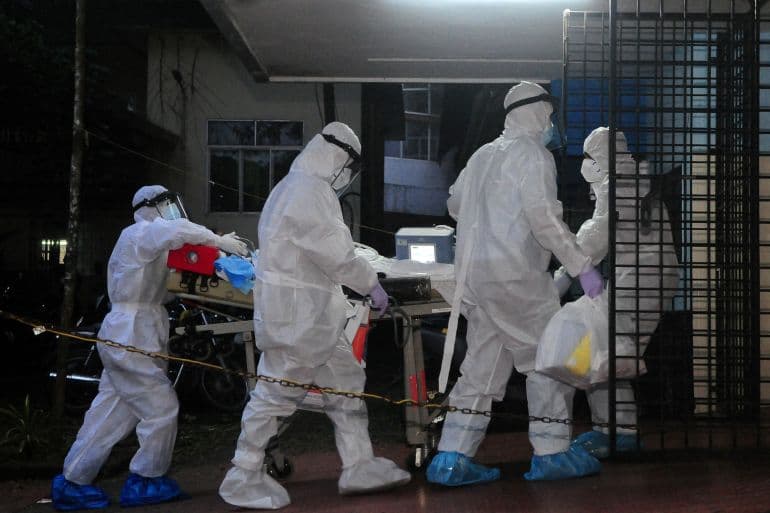
The two confirmed cases, detected in late December 2025 and early January 2026, involved healthcare workers who had travelled to Purba Bardhaman district on personal business before falling ill. Both patients were reported to be in critical condition at AIIMS Kalyani, where they were being treated under strict isolation protocols. The infections mark West Bengal’s first Nipah outbreak in nearly two decades, following previous clusters in 2001 and 2007 that together claimed more than 50 lives.
Nipah virus represents one of the most frightening pathogens in the modern medical landscape. Classified by the World Health Organization as a priority pathogen alongside COVID-19 and Zika, the zoonotic virus carries a staggering fatality rate of 40% to 75%, far exceeding that of the coronavirus. There is no approved vaccine and no specific treatment beyond supportive care to manage complications and keep patients comfortable. The virus attacks the brain and respiratory system, causing raging fevers, convulsions, vomiting, and in severe cases, fatal encephalitis.
The Anatomy of a Viral Threat
Understanding why Nipah triggers such aggressive international responses requires examining its unique biological characteristics. The virus belongs to the Henipavirus genus within the Paramyxovirinae subfamily, placing it among the most dangerous emerging infectious diseases tracked by global health authorities. Its natural reservoir is fruit bats of the Pteropodidae family, particularly flying foxes that roost in trees across South and Southeast Asia.
Transmission occurs through multiple pathways that make containment particularly challenging. Humans can contract Nipah through direct contact with infected bats or their secretions, consumption of contaminated date palm sap or fruits, contact with infected pigs or other intermediate hosts, and most alarmingly, through person-to-person spread via bodily fluids. This last route, while relatively rare, has driven several hospital-based outbreaks where infected patients transmitted the virus to healthcare workers and family members.
The incubation period ranges from four to 21 days, creating a diagnostic window during which infected individuals may travel and interact with others while showing no symptoms. When symptoms do appear, they initially resemble common influenza, fever, muscle pain, sore throat, and respiratory distress, before potentially progressing to severe neurological complications including seizures, disorientation, and coma. This diagnostic challenge means Nipah cases are frequently mistaken for other illnesses until clusters emerge or patients deteriorate rapidly.
Historical Context: West Bengal’s Previous Encounters
West Bengal’s geography makes it particularly vulnerable to Nipah outbreaks. The state borders Bangladesh, which has experienced annual Nipah outbreaks since 2001, recording more than 100 deaths over two decades. The 2001 Siliguri outbreak stands as one of the most significant Nipah events in medical history, with 66 probable cases and 45 deaths documented in a three-week period between January 31 and February 23.
That outbreak revealed the devastating potential of hospital-based transmission. Epidemiological investigations found clear evidence of person-to-person spread, with an incubation period of approximately 10 days. Strikingly, there was no concurrent animal illness or direct animal exposure among cases, the virus had jumped directly between humans in healthcare settings. The case-fatality rate of 74% shocked infectious disease specialists and prompted urgent calls for improved infection control protocols in South Asian hospitals.
Six years later, in April 2007, another outbreak struck the village of Belechuapara in Nadia district, just kilometers from the Bangladesh border. Five members of a single family died within days of symptom onset. The index case, a 35-year-old farmer with a palm liquor habit, likely contracted the virus from bats roosting in trees surrounding his home. Genomic analysis of virus samples revealed 99.2% genetic identity with Bangladeshi strains, suggesting cross-border viral circulation. Three relatives and a healthcare worker who performed a CT scan on the index patient subsequently died, demonstrating once again the virus’s capacity for nosocomial transmission.
India’s Response: Containment Amid Controversy
The current outbreak response has been complicated by conflicting reports and the challenge of communicating accurate information during a fast-moving health emergency. Initial media reports suggested five confirmed cases involving healthcare workers at a Kolkata hospital, with approximately 100 close contacts quarantined. Hong Kong’s Centre for Health Protection cited these figures in an early advisory urging residents to avoid nonessential travel to West Bengal.
India’s health ministry moved forcefully to correct what it termed “speculative and incorrect figures.” The official statement confirmed only two laboratory-confirmed cases since December, with 196 contacts identified, traced, monitored, and tested, all returning negative results. The ministry emphasized that “enhanced surveillance, laboratory testing, and field investigations” had ensured “timely containment” and that “all necessary public health measures are in place.”
The discrepancy between initial reports and official confirmation highlights the challenges of outbreak communication in the social media age, where preliminary information spreads rapidly and official verification lags. For public health authorities, balancing transparency with accuracy requires careful navigation, premature declarations can trigger unnecessary panic, while delayed responses may allow spread.
Behind the official statements, a sophisticated containment operation unfolded. A national joint outbreak response team deployed to support West Bengal authorities. Contact tracing extended across three districts, North 24 Parganas, Purba Bardhaman, and Nadia, reflecting the infected workers’ travel patterns. The state government established three public helplines to manage community anxiety and centralize information flow. At AIIMS Kalyani, patients received intensive supportive care under Biosafety Level 4 protocols, the highest containment standard for infectious agents.
Regional Ripple Effects: Asia’s Border Response
While Indian officials sought to project control, neighboring nations adopted markedly more cautious postures. The divergence reflects both geographic vulnerability and varying confidence in Indian containment capabilities. For countries with substantial trade and population flows across the subcontinent, the economic and public health stakes of a missed case are simply too high to rely on assurances alone.
Thailand implemented the most visible response, establishing health screening at three international airports, Bangkok and Phuket, that receive direct flights from West Bengal. Passengers must complete health declarations, undergo temperature checks, and submit to visual monitoring for symptoms. The country assigned designated parking bays for aircraft arriving from affected areas, a logistical measure that facilitates rapid response if a symptomatic passenger is identified. Thai health authorities expressed confidence in their defensive measures while acknowledging the seriousness of the threat.
Singapore’s Communicable Diseases Agency announced a six-point response plan that included temperature screening at Changi Airport, enhanced surveillance of newly arrived migrant workers from South Asia, and direct engagement with South Asian health counterparts. Notably, Singapore revealed ongoing bio-surveillance of local bat populations since 2011 that has never detected Nipah, providing reassurance about domestic risk while maintaining vigilance against imported cases.
China strengthened disease prevention in border areas and initiated risk assessments and medical staff training. Myanmar advised against nonessential travel to West Bengal and intensified fever surveillance at airports originally established during the COVID-19 pandemic. Vietnam directed local authorities to increase monitoring at border crossings, health facilities, and communities. Malaysia introduced health screening at international ports of entry. Nepal, sharing a porous land border with India, placed its health system on “high alert” with screening at Kathmandu airport and land crossings.
Hong Kong’s response carried particular economic significance given its substantial Bengali diaspora community. Vishal Melwani, vice-president of the India Association Hong Kong, predicted short-term impacts on family visits and business travel while dismissing fears of long-term economic disruption. The territory’s Centre for Health Protection maintained Nipah on its list of 53 notifiable infectious diseases under the Prevention and Control of Disease Ordinance, enabling rapid mandatory reporting and quarantine powers.
Kerala’s Experience: Lessons from India’s Nipah Hotspot
While West Bengal grapples with its first outbreak in 18 years, India’s southern state of Kerala has developed unfortunate expertise in Nipah management. Since 2018, Kerala has experienced nine documented outbreaks, including annual occurrences that have made it among the world’s most Nipah-endemic regions. This repeated exposure has driven remarkable investments in response capabilities that offer models for other affected areas.
The 2018 Kerala outbreak, India’s first in South India, demonstrated the virus’s devastating potential with a 91% case-fatality rate. Of 23 identified cases, only two survived. The outbreak’s origin was traced to a well contaminated by bat secretions, with subsequent hospital transmission amplifying casualties. The experience traumatized a state already renowned for its healthcare quality, revealing gaps in infection control and diagnostic capacity.
Subsequent outbreaks have shown improving outcomes as Kerala’s health system adapted. By 2023, mortality had dropped to 33%, with four of six confirmed patients surviving. This improvement reflects heavy state investment in monoclonal antibody treatments and antiviral drugs, including Remdesivir repurposed from COVID-19 protocols. The monoclonal antibody approach is particularly significant, the treatment must be administered within days of symptom onset and global supplies remain severely limited.
Dr. Rajeev Jayadevan, former president of the Indian Medical Association’s Cochin chapter, emphasized the diagnostic challenge that persists despite improved capacity. “Sometimes a diagnosis of Nipah can be missed because it is not specifically tested for,” he noted, explaining that early symptoms mirror common viral illnesses. “It’s extremely important to identify the first patient who develops the infection” because subsequent hospital transmission can amplify single cases into deadly clusters.
The Science of Survival: Treatment Challenges
The absence of approved vaccines or specific antiviral therapies for Nipah reflects both scientific complexity and commercial disincentives. As a rare disease affecting primarily poor populations in South Asia, Nipah has attracted limited pharmaceutical investment despite its pandemic potential. Several vaccine candidates remain in development, but none have completed clinical trials.
Current treatment relies on intensive supportive care, mechanical ventilation for respiratory failure, management of cerebral edema and seizures, and experimental interventions. The monoclonal antibody m102.4, developed through U.S.-Australian collaboration, has shown promise in animal studies and compassionate use cases but remains available only in extremely limited quantities. Remdesivir, originally developed for Ebola and repurposed for COVID-19, has demonstrated activity against Nipah in laboratory studies.
Diagnostic confirmation requires specialized Biosafety Level 4 laboratory facilities, of which India has few. Confirmatory tests include serum neutralization, ELISA antibody detection, and RT-PCR for viral RNA. The 10-day turnaround for definitive diagnosis creates a dangerous gap during which patients may receive inappropriate treatment and transmit infection to caregivers.
Ecological Drivers: Why Outbreaks Persist
The recurring pattern of Nipah outbreaks across South Asia reflects deep ecological and socioeconomic factors that resist simple intervention. Fruit bats, the virus’s natural reservoir, are essential pollinators and seed dispersers in tropical ecosystems. Their populations have adapted remarkably well to human environmental modification, with many species thriving in fragmented forests and urban green spaces.
Human behaviors create transmission bridges between bat populations and susceptible people. Raw date palm sap collection, a traditional livelihood in Bangladesh and eastern India, places collectors in direct contact with bat secretions when animals lick collection pots overnight. The 2007 West Bengal outbreak’s index case, the palm liquor-consuming farmer, illustrates how cultural practices intersect with ecological opportunity to generate risk.
Climate change and habitat destruction may be expanding these risk zones. Altered flowering and fruiting patterns affect bat movement and stress, potentially increasing viral shedding. Agricultural intensification brings human populations into closer contact with wildlife reservoirs. These dynamics suggest that Nipah and similar zoonotic threats will likely intensify rather than diminish in coming decades.
The Bottom Line
- Indian health officials confirmed two Nipah virus cases in West Bengal in late December 2025 and early January 2026, the state’s first outbreak since 2007
- Both infected individuals are healthcare workers in critical condition; 196 contacts have been traced and tested negative
- Nipah virus carries a 40-75% fatality rate with no approved vaccine or specific treatment beyond supportive care
- At least nine Asian countries and territories have implemented airport screenings, travel advisories, or enhanced border surveillance
- The virus spreads from fruit bats to humans through contaminated food, animal contact, and person-to-person transmission in healthcare settings
- West Bengal experienced previous outbreaks in 2001 (45 deaths) and 2007 (5 deaths), with genomic evidence linking regional strains to Bangladesh
- Kerala state has developed specialized response capacity through nine outbreaks since 2018, reducing mortality from 91% to 33% through improved treatment protocols
- Global health authorities classify Nipah as a priority pathogen due to its epidemic potential and high case-fatality rate