Unexpected Discovery Beneath a Shanxi Roadway
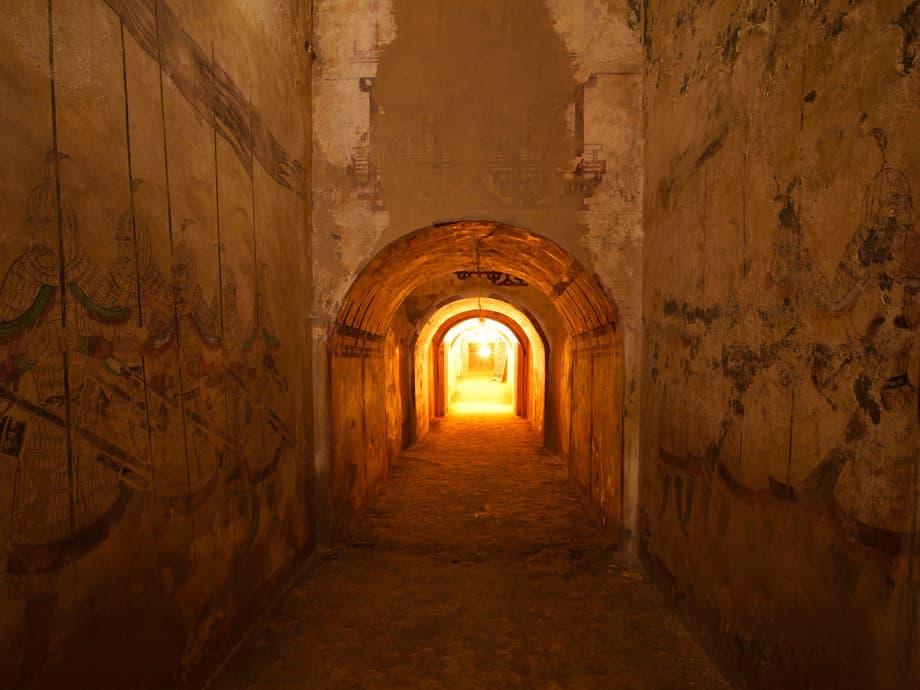
In 2018, construction crews working on a hillside road reconstruction project in Taiyuan, the capital of Shanxi Province in northern China, unearthed something that would captivate archaeologists and historians alike. While excavating along the old Jinci Road on the outskirts of the city, workers encountered ancient brickwork that signaled the presence of a buried structure. Archaeologists from the Jinyang Ancient City Research Institute, part of the Taiyuan Cultural Relics Protection Research Institute, were immediately summoned to the site. What they uncovered was a remarkably preserved tomb dating back to the eighth century, its interior walls adorned with vibrant murals that had remained hidden from human eyes for nearly thirteen centuries.
According to official reports from Xinhua, the excavation revealed a single brick chamber tomb featuring a sloping passage leading to an entrance corridor and decorated doorway. The structure, while modest in size, contained treasures far more valuable than gold or jade. An epitaph discovered within the burial chamber provided crucial historical context, identifying the occupants as a sixty-three-year-old man who died in 736 CE, along with his wife. The couple was laid to rest together that same year, interred in a structure that would eventually yield one of the most significant archaeological discoveries regarding daily life during the Tang Dynasty.
The Artistic Style of an Era
The murals coating nearly every conceivable surface of the tomb, with the sole exception of the floor, display a distinctive artistic approach known as the “figures under the tree” style. This technique, which originated during the Han Dynasty and remained particularly popular in the Shanxi region throughout the Tang period, features two-dimensional human figures engaged in various activities beneath artistically rendered trees. The paintings utilize strong black outlines with minimal shading against pristine white backgrounds, creating a stark yet elegant visual aesthetic that characterizes much of the era’s secular art.
Long Zhen, director of the Jinyang Ancient City Research Institute, noted striking similarities between these murals and those found in the tomb of Wang Shenzi, a ninth-century ruler and founding monarch of Min during the subsequent Five Dynasties and Ten Kingdoms period. The stylistic parallels are so pronounced that researchers speculate the same master artist may have worked on both tombs, despite the decades separating their creation. Such a connection would suggest the existence of professional muralists who traveled between commissions or maintained workshops that served elite families across generations. The domed ceiling of the chamber departs from the earthly scenes below, featuring what appears to be a dragon or phoenix, mythical creatures symbolizing power, authority, and immortality in traditional Chinese cosmology.
Scenes of Daily Life in the Tang Dynasty
Unlike many imperial or aristocratic tombs that typically depict grand historical events, mythical creatures inhabiting heavenly palaces, or scenes of official court life, this burial chamber offers an unexpectedly intimate portrait of quotidian existence among the educated or minor aristocratic classes. The murals present a series of domestic vignettes showing men and women engaged in routine agricultural and household tasks that sustained life in eighth-century China. On the southeast wall, detailed scenes show men pushing heavy millstones to grind grain while women operate smaller stone mills to produce fine flour for cooking.
Other panels depict men pounding rice with wooden hammers and making noodles by hand, activities essential to food preparation and storage in an era before modern preservation methods. Particularly intriguing are the innovative depictions of water retrieval, showing women using what appears to be an ingenious contraption involving oranges mounted in a tree to draw water from a deep well. This specific detail suggests the tomb owners possessed lands with orchards and employed clever engineering solutions to everyday challenges.
Additional scenes portray a woman in a brightly colored gown leading four horses while a bearded man stands nearby holding a whip, suggesting the couple maintained significant livestock holdings. An elderly man appears repeatedly throughout the chamber, shown in various stages of life reaching toward a snake, carrying an axe and bundles of firewood, holding ceremonial bowls close to his chest, and pointing at flowering trees. Archaeologists believe these recurring figures represent the tomb owners themselves, painted at various stages of their lives rather than anonymous laborers or generic depictions of the afterlife.
Victor Xiong, a professor of history at Western Michigan University who examined the findings, provided context regarding the significance of these depictions.
The murals provide never-before-seen representations of daily chores and agricultural labor during the Tang Dynasty.
The specificity of the activities, including particular techniques for processing grain and the distinctive orange-based water-lifting device, suggests these were not generic stock scenes but rather accurate depictions of the actual routines and responsibilities that defined the couple’s earthly existence.
The Blonde Bearded Stranger from Central Asia
Amidst the familiar scenes of Han Chinese domesticity stands a figure that immediately distinguishes itself from the rest through its striking physical appearance. Painted on the southwestern wall, a man with distinctly blond hair and a full beard leads both camels and horses through a mountainous landscape dotted with trees. His facial features, clothing style, and overall bearing differ markedly from the other tomb figures, immediately marking him as a foreigner in the eyes of Tang Dynasty Chinese society.
Based on his distinctive physical characteristics and attire, experts have identified this individual as a “Westerner,” specifically most likely a Sogdian from Central Asia. The Sogdians were an ancient Iranian people who established thriving merchant communities in what is now modern-day Tajikistan and Uzbekistan, particularly around the oasis city of Samarkand. During the height of the Tang Dynasty, these skilled merchants served as the principal middlemen along the vast network of trade routes collectively known as the Silk Road, facilitating the exchange of goods, ideas, and culture between China, India, Persia, and the Byzantine Empire.
The presence of this Central Asian trader in a provincial Chinese tomb suggests significant cultural and commercial connections extending far beyond the immediate Taiyuan region. Chinese historical records and extensive archaeological evidence indicate that some Sogdians possessed light hair and eyes, including blond variations, resulting from millennia of genetic mixing among Indo-Iranian, Turkic, Tocharian, and various steppe nomadic populations in Central Asia. Recent ancient DNA studies from archaeological sites like Samarkand and Panjikent confirm this complex ancestry combining western Eurasian genetic components from the steppe and Iranian plateau with eastern Eurasian elements.
Silk Road Connections and Cultural Exchange
The depiction of the Sogdian merchant holding the reins of an Asian camel and several horses directly references the trade networks that defined the Tang Dynasty’s cosmopolitan character and international reach. During this golden age, which lasted from 618 to 907 CE, the Chinese Empire reached its greatest territorial extent and became a center of international commerce, attracting merchants, diplomats, and religious missionaries from across the known world. The Sogdians, renowned throughout Asia for their linguistic abilities, mathematical skills, and commercial acumen, functioned as translators, traders, money lenders, and cultural brokers along routes stretching from the Mediterranean Sea to the Pacific Ocean.
Their language, written in the distinctive Sogdian script derived from Aramaic, served as the lingua franca of Central Asian commerce for centuries, while their art reflected a sophisticated blend of Greco-Buddhist, Persian, and Chinese influences. The appearance of such a figure in a private burial context suggests that interactions with foreign merchants were sufficiently commonplace and economically significant to warrant permanent inclusion in the tomb owner’s vision of the afterlife. Similar murals depicting foreign figures have been discovered in other Chinese provinces including Xinjiang, Shandong, Shaanxi, and Gansu, indicating that the presence of non-Han individuals in Tang art was not unique to this single Shanxi tomb but rather part of a broader pattern of cultural documentation reflecting the dynasty’s diverse population.
Near the tomb entrance, figures painted as guardians or doorkeepers wear distinctive yellow robes and bear swords tied at their waists, suggesting the protective duties assigned to such figures in Tang burial traditions. These sentries stand alongside doormen depicted holding ceremonial objects or the coffin itself, creating a formal welcome for visitors to the afterlife and protecting the deceased from spiritual harm.
Significance for Archaeology and Historical Understanding
The exceptional preservation of these murals offers archaeologists an extraordinarily rare opportunity to study eighth-century Chinese artistic techniques, pigment compositions, and social structures. The tomb joins other significant discoveries such as the world-famous Mogao Grottoes near Dunhuang, where murals extending for approximately twenty-five kilometers demonstrate the richness of Buddhist art and religious devotion along the Silk Road. However, unlike the predominantly religious themes dominating the Mogao caves, this Shanxi tomb focuses almost exclusively on secular life, providing invaluable insights into the routines, clothing, and domestic arrangements of middle-class landowners or minor aristocratic families rather than imperial courts or monastic communities.
The discovery challenges previous assumptions about the cultural homogeneity of Tang Dynasty provincial society, demonstrating conclusively that even relatively modest officials or landowners maintained direct or indirect connections to international trade networks stretching thousands of miles. The inclusion of the Sogdian trader alongside intimate domestic scenes suggests that foreign commerce was so thoroughly integrated into daily economic life that it warranted representation in the eternal dwelling place of the deceased.
As researchers continue analyzing the specific pigment mixtures, brushstroke techniques, and compositional approaches used in these murals, each detail adds nuance and depth to our understanding of how Tang Dynasty Chinese viewed themselves and their place within a vast, interconnected world. The tomb stands as tangible physical evidence that globalization, often considered a strictly modern phenomenon driven by digital technology and jet travel, had ancient roots stretching back more than a millennium, connecting ordinary people across continents through the universal languages of commerce and art.
Key Points
- The tomb was discovered in 2018 during road construction in Taiyuan, Shanxi Province, though detailed findings were only released to the public recently
- An epitaph identifies the tomb owner as a sixty-three-year-old man who died in 736 CE during the middle Tang Dynasty, buried alongside his wife in a brick chamber with sloping passage
- Murals cover nearly every surface using the “figures under the tree” style popular in the region, depicting daily chores including grinding grain, making noodles, pounding rice, and fetching water with innovative devices
- A uniquely depicted figure with blond hair and a beard appears to represent a Sogdian trader from Central Asia, specifically the region of modern Tajikistan and Uzbekistan, indicating extensive Silk Road connections
- The artistic style closely resembles murals in the tomb of Wang Shenzi from the late ninth century, suggesting the possibility that the same master painter created both works
- The discovery provides rare visual evidence of eighth-century daily life and documents the cultural exchange between Han Chinese and Central Asian merchants during the height of Tang cosmopolitanism