A Historic Return to the Streets
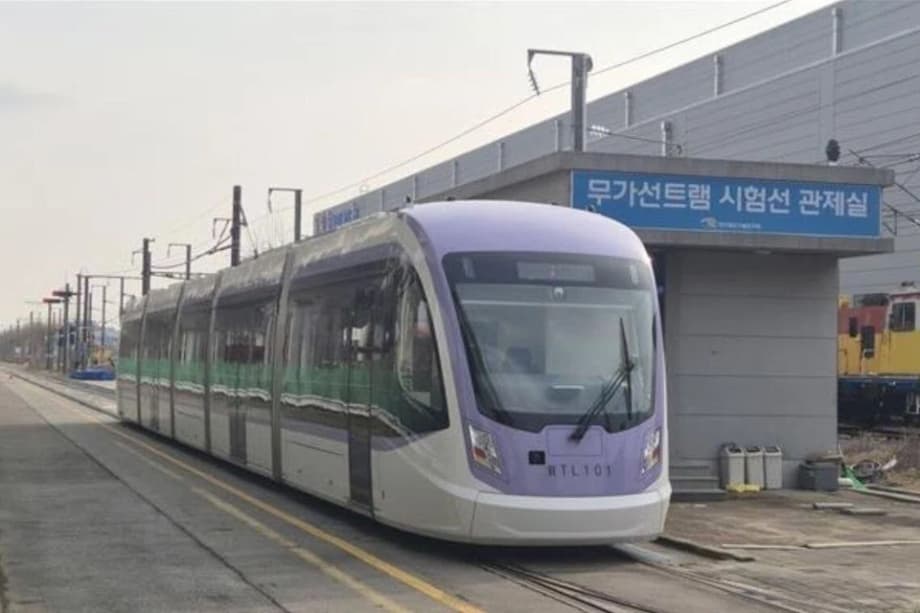
Seoul is preparing to welcome back a mode of transportation that vanished from its streets nearly six decades ago. Starting February, the South Korean capital will launch full-scale trial runs of the Wirye Line Tram, marking the first appearance of street-level rail transit in the city since 1968. This is not merely a nostalgic revival; the new tram represents a significant technological leap, operating as the countrys first wire-free, battery-powered streetcar system.
The 5.4-kilometer line will connect Macheon Station on Seoul Metro Line 5 with Bokjeong Station, which serves both Line 8 and the Suin-Bundang Line, while also providing access to Namwirye Station on Line 8. The route threads through Wirye New Town, a developing residential district in southeastern Seoul, offering crucial links between three major subway lines that currently require cumbersome transfers or bus connections.
City officials moved the first tram vehicle into the Wirye depot during the early hours of January 27, transporting the unit overnight between 11 p.m. and 5 a.m. to minimize traffic disruption. The operation required coordination with Songpa Police Station to manage traffic controls and deploy safety personnel along the transport route. This careful choreography reflects the broader safety-first approach that Seoul is taking as it reintroduces vehicles that will share road space with cars and pedestrians.
Bridging the Transit Gaps
Seoul boasts one of the worlds most extensive urban rail networks, with 23 metro lines serving 768 stations across the metropolitan area. Despite this density, gaps remain in the network, particularly in newer residential developments like Wirye New Town. The area, which spans parts of Seoul, Seongnam, and Hanam, has relied on bus connections and indirect subway transfers to link residents with the broader transit system.
The Wirye Line addresses this connectivity challenge directly. By creating a seamless corridor between Line 5 and Line 8, the tram eliminates the need for passengers to travel to central Seoul to transfer between these lines. For commuters traveling between the Gangdong and Songpa districts, the new service promises to reduce travel times while providing a more comfortable alternative to crowded buses.
The route includes 12 stops along its 5.4-kilometer path, with vehicles designed as five-section, low-floor articulated trams. This configuration allows for level boarding, making the system accessible for wheelchair users, elderly passengers, and parents with strollers. The low-floor design represents a significant improvement over older tram systems, which often featured high steps that created barriers for passengers with mobility challenges.
Battery Power Meets Urban Design
What sets the Wirye Line apart from traditional tram systems is its revolutionary power system. Unlike conventional trams that draw electricity from overhead wires (catenary systems), the Wirye vehicles operate using large-capacity batteries mounted on the roof. This catenary-free design eliminates the visual clutter of overhead wires while reducing infrastructure costs and construction complexity.
The battery technology aligns with global trends toward sustainable urban transportation. By removing overhead wires, the system reduces the visual impact on historic and residential neighborhoods while maintaining the environmental benefits of electric transit. The trams recharge their batteries at stations or depots, allowing them to operate silently along tree-lined streets without the industrial aesthetic of traditional wired systems.
Safety technology matches the advanced power systems. Each tram is equipped with a forward collision warning system that combines radar and camera sensors to detect obstacles ahead. If the system identifies a potential collision and the driver does not respond, it automatically activates emergency braking. This feature addresses one of the primary concerns about street-level trams: the interaction between rail vehicles and unpredictable urban traffic.
The rolling stock, manufactured by Woojin Industrial Systems in partnership with Hyundai Rotem, represents a significant investment in domestic manufacturing capabilities. Each of the 10 planned trainsets will feature this collision avoidance technology alongside the battery propulsion systems, creating a fleet that meets modern safety standards while pushing technological boundaries.
Rigorous Testing for Public Safety
Before carrying a single passenger, the Wirye Line will undergo one of the most comprehensive testing programs in Seouls recent transit history. The first vehicle already completed over 5,000 kilometers of preliminary testing at the Korea Railroad Research Institutes Osong test track in North Chungcheong Province during 2025. These tests verified acceleration, braking, curve handling, communication systems, ride comfort, and noise levels.
From February through August, the city will conduct mainline trial runs covering 16 distinct categories of performance and safety checks. These tests will examine running safety, coordination with ground-based facilities, and integration with existing traffic systems. Simultaneously, from April through December, comprehensive railway system tests will evaluate the stability and connectivity of all facilities, simulating various operational scenarios to ensure reliability.
Given that the tram will operate on shared road surfaces, Seoul has implemented extraordinary safety measures during the trial period. Safety personnel will stand watch at 13 intersections and 35 crosswalks along the entire route, manually directing traffic and pedestrians when necessary. A dedicated monitoring team will operate around the clock from a control center, ready to respond to any incidents. The test vehicles carry insurance specifically to cover potential accidents during this verification phase.
The city has issued specific guidance for pedestrians and drivers who will share space with the trams. Pedestrians are urged to follow traffic signals and instructions from safety staff, avoiding distracted walking behaviors such as wearing earphones while crossing tracks. Drivers must reduce speed when sharing lanes with trams, maintain safe following distances, and respect tram-priority signals at intersections.
Lim Chun-geun, head of the citys Urban Infrastructure Headquarters, emphasized the importance of this methodical approach.
We will ensure thorough testing and verification so citizens can use the service safely and conveniently.
The official statement reflects Seouls awareness that introducing a new transit mode into a dense urban environment requires public trust as much as technical proficiency.
From 1899 to 2026: A Cyclical History
The return of trams to Seoul carries particular historical weight. The city first introduced streetcars in 1899, operating them for nearly 70 years until the network closed in 1968. During that era, trams formed the backbone of public transportation, carrying millions of residents through a city transforming from a traditional Asian capital into a modern industrial center.
The decision to eliminate trams in 1968 reflected the transportation thinking of the era. City planners viewed trams as obstructing automobile traffic and believed that buses and subways could serve commuters more efficiently. The removal of street tracks facilitated the expansion of road networks designed primarily for private cars, a pattern repeated in cities worldwide during the mid-20th century.
The resurrection of the tram represents a reversal of that mid-century logic. Urban planners now recognize that surface rail can complement rather than compete with subway systems, particularly for medium-density corridors where full metro construction would be prohibitively expensive. The Wirye Line project, budgeted at 261.4 billion won (approximately $194 million), offers a cost-effective alternative to subway extension while providing higher capacity and reliability than bus rapid transit.
The project actually began in 2008 as a private investment initiative but was suspended due to feasibility concerns. Seoul Metropolitan Government revived the plan in 2018, taking direct responsibility for construction, which commenced in December 2022. After nearly two decades of planning and delays, the line is scheduled to open for commercial service in late 2026.
Cultural Symbolism in Modern Transit
Beyond its functional role, the Wirye Line carries deep cultural significance. The trams feature a distinctive purple exterior inspired by the royal robes of King Onjo, the founding monarch of the ancient Baekje Kingdom. King Onjo established his first capital in Wirye, making the color choice a deliberate nod to the areas historical importance dating back to 18 B.C.
The purple hue carries additional symbolism, representing the unity of three municipalities. Seoul, Seongnam, and Hanam each have distinct identities within the Seoul metropolitan area, represented traditionally by the colors red and blue. Purple, as a combination of these colors, visually expresses the integration of these three cities through the Wirye New Town development.
The design emerged from extensive public consultation, including surveys conducted through Seouls M-Voting platform and on-site feedback sessions. This participatory approach ensured that the vehicles would reflect local identity rather than appearing as generic transit equipment imposed upon the neighborhood. The result is a transit system that functions as moving public art, connecting residents not just to subway stations but to their shared heritage.
A Model for Future Expansion
The success of the Wirye Line could determine the future of surface rail in South Korea. Transportation experts view the project as a potential template for other suburban tramway developments across the country. If the battery-powered system proves reliable and safe in Seouls challenging urban environment, other cities may adopt similar technology to fill gaps in their own transit networks.
The project demonstrates how mid-capacity transit can bridge the gap between high-cost subway lines and lower-capacity bus routes. For rapidly developing new towns on urban peripheries, the Wirye model offers a middle path that provides rail transit amenities without the tunneling costs associated with metro construction. The wire-free technology specifically addresses aesthetic concerns that often stall surface rail projects in residential areas.
As the trial runs commence in February, observers will watch closely to see how Seouls motorists adapt to sharing roads with steel wheels after two generations without trams. The collision avoidance systems and safety personnel represent a cautious approach to this reintroduction, acknowledging that urban behavior patterns must adjust to accommodate the new infrastructure.
At a Glance
- The Wirye Line marks the return of street-level trams to Seoul after a 58-year absence since 1968
- The 5.4-kilometer route connects Macheon Station (Line 5) with Bokjeong and Namwirye Stations (Line 8)
- It is South Koreas first catenary-free tram system, operating on roof-mounted batteries rather than overhead wires
- Ten low-floor tram sets will serve 12 stations, with full commercial service expected to begin in late 2026
- Advanced safety features include radar and camera-based collision warning systems with automatic emergency braking
- Safety personnel will monitor 13 intersections and 35 crosswalks during the trial period beginning February
- The purple vehicle design honors King Onjo of the Baekje Kingdom and symbolizes unity between Seoul, Seongnam, and Hanam