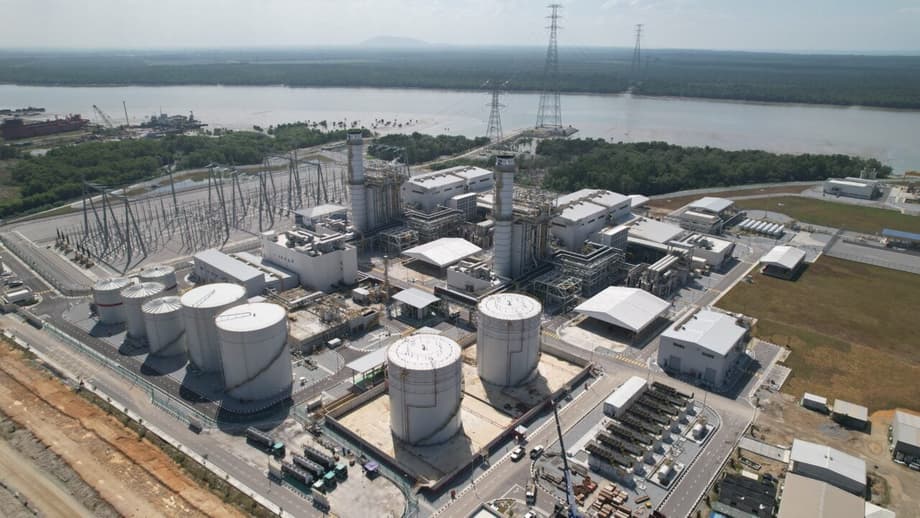
The recent long-term concession given to a China-based company to develop combined-cycle gas power plants on Malaysia’s East Coast has ignited a fierce debate about the country’s energy sovereignty and long-term strategic planning. This agreement, critics argue, represents more than a routine investment—it’s a test of leadership that Malaysia’s energy governance has failed. With the Energy Commission (EC) and economy ministry under new leadership, the concession raises fundamental questions about whether Malaysia is surrendering control of its strategic energy assets to expedite short-term needs.
- Malaysia’s Energy Sector Structure and Vulnerabilities
- China’s Strategic Energy Investments in Southeast Asia
- Comparative Analysis: Regional Energy Investment Patterns
- Malaysia’s National Energy Transition Roadmap Under Scrutiny
- Environmental and Security Concerns
- Alternative Models and Local Participation
- Financing Mechanisms and China’s Approach
- The Road Ahead for Malaysia’s Energy Governance
- Key Points
The concession rationale offered by authorities is familiar: foreign-owned data centers need reliable electricity, so Malaysia must rapidly expand electricity generation capacity. This logic, according to energy analysts, is dangerously shallow. Power generation is not merely about megawatts—it’s a strategic asset that shapes living costs, industrial growth, national security, and long-term fiscal stability. Handing it over through long-term concessions represents a decision with consequences that will last for decades.
Malaysia’s Energy Sector Structure and Vulnerabilities
At approximately 27,000MW of installed generation capacity, Malaysia’s electricity sector operates under a complex structure where Tenaga Nasional Berhad (TNB) controls only about 52% of actual generation, with the remainder supplied by independent power producers (IPPs). All electricity generated by IPPs is supplied to TNB’s grid, as TNB functions as the sole system aggregator. With the exception of Sarawak, TNB maintains its monopoly as the sole electricity supplier in Malaysia and owner of all transmission infrastructure.
Yet despite this centralized grid control, pricing power does not rest squarely with TNB. The price TNB pays independent power producers is not based on a transparent, publicly listed tariff per kWh. Instead, it is governed by individual Power Purchase Agreements (PPAs), many of them long-term and commercially confidential, structured around two components: capacity payments and energy payments.
Understanding Power Purchase Agreement Structure
Capacity payments: These are fixed payments made to IPPs for making defined generation capacity available to the grid, irrespective of whether the power is dispatched. Capacity payments cover fixed operating costs, debt servicing, and a pre-agreed return on investment. In effect, they socialize risk while privatizing returns.
Energy payments: These are variable payments tied to actual electricity generated and dispatched by TNB. Energy charges are largely driven by fuel costs, primarily coal and gas, which are passed through to TNB and ultimately to consumers via the Automatic Fuel Adjustment (AFA) mechanism.
Power generation, therefore, is not merely a utility function. It is a highly lucrative, contract-driven industry, insulated by long-term PPAs that lock in returns while transferring fuel price volatility and demand risk back to the government. This structure makes energy infrastructure an attractive target for foreign investment but raises concerns about long-term control.
China’s Strategic Energy Investments in Southeast Asia
China plays a significant role in Malaysia’s energy industry, with major investments in both power generation and energy-intensive industrial hubs. The flagship Malaysia-China Kuantan Industrial Park (MCKIP), established in 2013, focuses on steel, clean technology, renewable energy, and petrochemical industries.
Chinese firms such as China General Nuclear Power Corp (CGN) and PowerChina have supported Malaysia’s energy transition by exporting advanced technology and financing renewable and gas projects. CGN, through its 2.24 GW gas-fired Edra Melaka Power Plant and other investments, now ranks as Malaysia’s second-largest independent power producer with the firm’s cumulative power supply to Malaysia exceeding 200 billion kWh as of 2025.
Malaysia also plays a critical role as a fuel supplier for China: In 2021, Petronas signed a 10-year agreement with CNOOC to supply 2.2 million metric tons of LNG per year. This interdependence deepens as Malaysia’s government under Prime Minister Anwar Ibrahim strengthens economic ties with Beijing, with Chinese President Xi Jinping’s April 2025 visit seeing the two countries sign more than 30 cooperative agreements, including on green technology.
Comparative Analysis: Regional Energy Investment Patterns
Malaysia’s concession to China follows a pattern of Chinese energy investments across Southeast Asia. In Laos, for example, China Southern Power Grid Company (CSG) holds a 90% stake in Électricité du Laos Transmission Company Ltd (EDLT), which operates high-voltage power lines. This 25-year concession agreement gives China significant control over Laos’ power grid infrastructure.
The Pak Beng dam in Laos, involving China Datang Overseas Investment and Thailand’s Gulf Energy Development PCL, exemplifies the regional trend. The $1.88 billion project will provide 912 megawatts of electricity, with Thailand’s Electricity Generating Authority planning to purchase electricity for 29 years beginning in 2033. Similar patterns emerge in Cambodia, where Chinese firms have invested heavily in hydropower dams that now supply significant portions of the country’s electricity.
In Indonesia, China’s involvement has become more contentious. A China-backed hydropower plant and a gold mining unit run by conglomerate Astra International recently had their permits revoked by the Indonesian government following accusations of environmental breaches that worsened last year’s floods. The Batangtoru hydropower plant, controlled by China’s SDIC Power Holdings Co. Ltd, had been under construction by PowerChina and was expected to be fully operational by the end of 2025 with a total installed capacity of 510 megawatts.
Malaysia’s National Energy Transition Roadmap Under Scrutiny
Malaysia’s National Energy Transition Roadmap (NETR) is cited as the guiding framework for the country’s future energy. In practice, critics argue it has become policy cover for decisions that contradict its stated purpose. The NETR speaks of decarbonization, new capacity, and domestic capital market participation, but avoids confronting whether Malaysia is deepening its structural dependence on external players.
The roadmap’s effectiveness in promoting energy sovereignty is questionable. Strategic generation assets are increasingly developed, financed or controlled by foreign entities. These cannot be simply considered as Foreign Direct Investments (FDIs) because they represent long-term control of critical infrastructure.
Local companies and SMEs are sidelined—denied opportunities to build expertise, expand supply chains or capture intellectual property. What remains is dependence, not transition. Such poor decisions are not new. The EDRA Energy debacle under 1MDB serves as a cautionary tale where public funds were raised at high costs and used to buy ageing, inefficient power plants at inflated prices, enriching external investors while local capabilities were ignored.
Environmental and Security Concerns
Chinese-funded energy projects across Southeast Asia have faced routine criticism for lax environmental and safety safeguards. In Indonesia, reports from communities located near coal-fired power plants indicate unusually high levels of respiratory illness. The December 2023 explosion at a Chinese-funded nickel plant that killed at least 13 workers further highlighted these concerns.
The recent permit revocations in Indonesia following the devastating floods that killed 1,200 people serve as a stark reminder of potential risks. Environmental experts have linked the severity of these disasters to rampant deforestation for mines and plantations, including projects involving Chinese companies.
For Malaysia, the concession raises similar environmental questions. The Environmental Impact Assessment (EIA) process for the gas power plants needs rigorous scrutiny, particularly as Malaysia seeks to balance development with its environmental commitments under the Paris Agreement.
Alternative Models and Local Participation
Not all energy projects in Malaysia follow the concession model criticized by analysts. JAKS Resources Bhd recently announced the sale of its 100% stake in JAKS Solar Nibong Tebal to Sunview Group Bhd for RM15 million in cash plus up to RM40 million owed. The 50MW solar plant operates under Malaysia’s Large Scale Solar 4 programme, selling electricity to Tenaga Nasional Bhd under a 25-year power purchase agreement.
In Sabah, Jentayu Sustainables Berhad (JSB) has secured a RM2.8 billion Power Purchase Agreement for its flagship 162MW run-of-river hydropower project. The project represents one of the largest renewable energy ventures in Sabah, with a 40-year concession under a Build-Own-Operate-Transfer (BOOT) model. Importantly, it’s fully financed through domestic private investment without public funds.
These alternative models suggest that Malaysia has options for developing its energy infrastructure that prioritize local control and expertise while still attracting necessary investment. The key difference lies in the structure of ownership and control over the long-term operational phase.
Financing Mechanisms and China’s Approach
China’s approach to energy financing through initiatives like the Belt and Road Initiative (BRI) involves sophisticated mechanisms. The China Development Bank (CDB), for instance, has provided special loans of 250 billion RMB to support BRI-related infrastructure, production capacity, and financial cooperation.
Chinese financing typically includes medium- and long-term foreign exchange project loans, syndicated loans, and export buyer’s credit/seller’s credit. For the Jordan Attarat Oil Shale Fired Power Plant Project, a consortium of four Chinese state-owned banks signed a $1.582 billion syndicated loan agreement, including contributions from the Industrial and Commercial Bank of China, Bank of China, China Construction Bank, and China Eximbank.
These financing structures often come with equity stakes that give Chinese companies significant control over operations and revenue streams for extended periods—typically 25-30 years in power sector projects.
The Road Ahead for Malaysia’s Energy Governance
The new EC chairman and economy minister now have a narrow window to signal an important change in Malaysia’s power policy. To date, the commission has behaved as a facilitator of expedient deals rather than a guardian of national interest.
The government must answer key questions: Is the Energy Commission a guardian of national interest, or merely a facilitator of expedient deals? Can Malaysia’s energy transition prioritize domestic capability building, technology transfer, and local industrial development while still attracting necessary investment?
Renewable energy, grid modernization, and energy storage should anchor forward energy planning—stated goals in the NETR. Instead, Malaysia favors large projects mooted by foreigners that bypass local firms and generate minimal domestic spillover.
Key Points
- Malaysia’s recent concession to China for gas power plants raises concerns about energy sovereignty
- The power sector structure with PPAs creates lucrative opportunities but risks long-term control
- China’s energy investments across Southeast Asia follow similar concession models
- The National Energy Transition Roadmap may be facilitating foreign control rather than true energy transition
- Environmental and community impacts of Chinese energy projects have raised concerns in neighboring countries
- Alternative models like JAKS Resources and Jentayu Sustainables show paths for local energy development
- Financing mechanisms through Chinese banks often come with extended operational control periods
- Malaysia’s new energy leadership must balance investment needs with strategic sovereignty