Over 1,700 Indonesians Flee Cambodian Scam Operations in Mass Exodus
The Indonesian government has confirmed that over 1,700 citizens who crowded the Indonesian Embassy in Phnom Penh, Cambodia, between January 16 and 21, 2026, were individuals who had escaped from online scam syndicates operating across the country. According to Indonesian Ambassador to Cambodia Santo Darmosumarto, the embassy intensified coordination with relevant agencies in both countries to handle the unprecedented influx of nationals seeking assistance after leaving scam centers.
- Over 1,700 Indonesians Flee Cambodian Scam Operations in Mass Exodus
- Are They Victims or Illegal Workers? The Complex Legal Status Debate
- The Dark Reality of Cambodia’s Scam Industry: Trafficking, Torture, and Modern Slavery
- Contradicting Perspectives: Who Are the Real Victims?
- A Regional Epidemic: Multiple Nationalities Affected
- Regional Cooperation and the Fight Against Trafficking
- Financial Impact and Recovery Efforts
- The Road Ahead: Screening, Protection, and Prevention
- Key Points
Despite initial reports citing 1,440 individuals, more comprehensive data from the Indonesian Ministry of Foreign Affairs revealed that a total of 1,726 Indonesians escaped from various online scam operations during this period. By January 21, an additional 269 Indonesians arrived at the embassy, though the overall number of arrivals gradually decreased as authorities began addressing the crisis.
Are They Victims or Illegal Workers? The Complex Legal Status Debate
Deputy Minister for Migrant Worker Protection Dzulfikar Ahmad Tawalla stated that the workers’ illegal status was indisputable, as Indonesia and Cambodia have no bilateral agreement governing the placement of migrant workers. “They are clearly illegal, because to date there is no bilateral agreement between the Indonesian and Cambodian governments on labor placement,” Dzulfikar said in Yogyakarta.
The government emphasized that before repatriation, the Indonesians would undergo immigration and civil administration checks by Cambodian authorities. Upon arrival in Indonesia, they will face further examinations at Soekarno-Hatta International Airport to determine each individual’s legal status. “The screening process includes health and psychological assessments, as well as in-depth profiling upon arrival at the airport,” Dzulfikar explained.
The results of these screenings will determine whether any of the returnees face further legal action or are classified solely as victims of criminal networks. This creates a complex situation where individuals who may have been trafficked and forced into criminal activities could potentially face criminal charges themselves.
The Dark Reality of Cambodia’s Scam Industry: Trafficking, Torture, and Modern Slavery
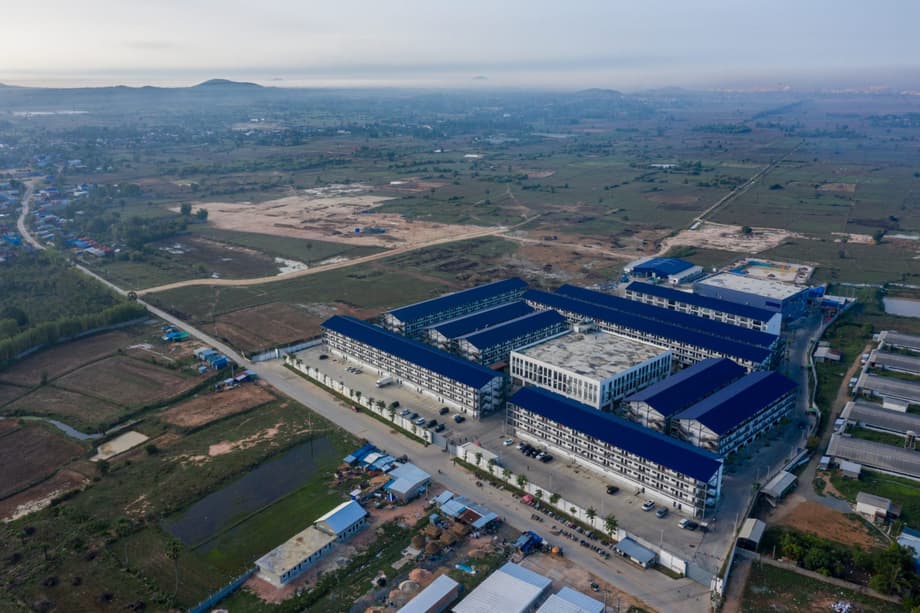
Amnesty International’s comprehensive 18-month investigation into Cambodia’s scamming compounds reveals a horrifying picture of modern slavery, human trafficking, and systematic abuse. The organization’s report, “I Was Someone Else’s Property,” identified at least 53 scamming compounds across Cambodia and interviewed 58 survivors from eight different nationalities, including nine children.
The research documented how jobseekers from Asia and beyond are lured by deceptive job advertisements promising well-paid work, only to be trafficked into Cambodia where they are held in prison-like compounds and forced to conduct online scams. “Jobseekers from Asia and beyond are lured by the promise of well-paid work into hellish labour camps run by well-organized gangs, where they are forced to scam under the very real threat of violence,” stated Amnesty International’s Secretary General Agnes Callamard.
Survivors detailed the horrific conditions they endured. *Lisa, who was trafficked at age 18, described how recruiters showed her pictures of a hotel with a swimming pool and promised high salaries. Instead, she was taken across a river at night into Cambodia where she spent 11 months held against her will. “There were four men… three of them held me down while the boss hit me on the soles of my feet with a metal pole… They told me that if I don’t stop screaming, they’re going to keep hitting [me] until I stop,” she recounted.
The Cambodian authorities know what is going on inside scamming compounds, yet they allow it to continue. Our findings reveal a pattern of state failures that have allowed criminality to flourish and raises questions about the government’s motivations.
Montse Ferrer, Amnesty International’s Regional Research Director
Contradicting Perspectives: Who Are the Real Victims?
While Indonesian officials maintain that their citizens are victims of human trafficking, Cambodian authorities present a different narrative. Police officials involved in the cases have stated that the Indonesian citizens were not victims of trafficking or online scams, arguing they were not detained or beaten.
As the United Nations notes, use of force is just one means of trafficking – perpetrators can also use deception, coercion, abuse of power or threats of violence to exploit people for profit. The Cambodian government reportedly concluded that some Indonesians were not trafficking victims but were detained at immigration detention centers for overstaying their residence permits.
Indonesian officials from the Ministry for the Protection of Indonesian Migrant Workers (KP2MI) confirmed that among those affected, some 97 Indonesian citizens had fled companies suspected of running online fraud operations, while another 13 were successfully rescued from their workplaces in Chrey Thum. However, a preliminary assessment revealed that among 11 Indonesians who reported experiencing violence, four acted as ringleaders in the scam and are suspected of perpetrating violence against fellow workers.
A Regional Epidemic: Multiple Nationalities Affected
The Indonesian nationals are not the only victims affected by Cambodia’s scam industry. According to reports from early 2026, a joint Thai-Cambodian operation rescued 215 people from a scam compound in Poipet, including 109 Thais, 50 Pakistanis, 48 Indians, five Taiwanese, and three Indonesians. Thai authorities initiated the crackdown following a plea for help from a victim who emailed police.
In Myanmar, where the scam industry is even more extensive, authorities dismantled a major online fraud network near the Thai border, detaining more than 2,000 suspects and seizing dozens of Starlink satellite terminals. A total of 621 Chinese nationals trafficked into Myanmar to work for scam gangs were rescued and repatriated to China from Mae Sot airport in February 2026.
The United Nations estimates that more than 120,000 people have been trafficked into Myanmar, where at least 10 scam cities have been built, and a further 100,000 into Cambodia. These operations have created a shadow economy worth billions of dollars, targeting victims worldwide through sophisticated fraud schemes including romance scams, fake investment opportunities, and what is known as “pig-butchering” – building trust with victims before financially exploiting them.
Regional Cooperation and the Fight Against Trafficking
In response to the growing crisis, Indonesia has intensified collaboration with authorities in Thailand and Cambodia to combat human trafficking. In May 2025, Indonesia’s Immigration and Corrections Ministry and Cambodia’s General Department of Immigration signed a letter of intent committing to exchange information, provide technical assistance, and enhance human resource capacity to protect their citizens from traffickers.
Yuldi Yusman, the ministry’s acting immigration director general, announced that Jakarta would assign a special attaché to Phnom Penh to strengthen bilateral efforts to fight human trafficking and tackle other immigration issues. “As part of our commitment to combat human trafficking, we will designate focal points in both countries, enhance immigration information exchanges and share best practices for addressing the issues faced by Indonesian citizens in Cambodia,” Yuldi stated.
The Indonesian government has adopted a comprehensive strategy that involves active cooperation through bilateral, regional and international forums. It has also imposed stringent sanctions on human traffickers and implemented proactive measures against illegal migration, such as delaying the issuance of passports and halting the departure of citizens suspected of attempting to migrate through illegal channels.
Financial Impact and Recovery Efforts
The scale of online fraud operations extends beyond human trafficking to massive financial crimes. Indonesia’s Financial Services Authority (OJK) reported successfully blocking Rp400 billion in scam-related funds, of which Rp161 billion has been returned to victims through the Indonesia Anti Scam Centre (IASC). The OJK emphasized that the effectiveness of blocking funds depends heavily on the timing of victims’ reports, as funds often immediately divert from conventional banking systems to harder-to-trace payment channels.
Throughout 2024-2025, a total of 411,000 scam crime reports were entered into the IASC system. The reported financial losses by scam victims reached Rp9 trillion, with Rp402.5 billion in victim funds successfully blocked. These figures highlight both the massive financial impact of these operations and the challenges authorities face in recovering stolen funds.
The Road Ahead: Screening, Protection, and Prevention
For the Indonesian nationals returning from Cambodia, the immediate future involves intensive screening processes. Deputy Minister Dzulfikar Ahmad Tawalla emphasized that the screening would determine whether returnees face legal action or are classified as victims. The Indonesian government has coordinated closely with Cambodian authorities to ensure the safe and orderly repatriation of affected citizens through official immigration channels.
The Indonesian Embassy in Phnom Penh has been issuing Temporary Travel Documents for those without proper travel papers, providing medical assistance to vulnerable individuals, and conducting interviews to assess potential human trafficking risks. Throughout 2025 alone, the embassy handled a total of 5,008 similar cases, indicating this is part of an ongoing pattern rather than an isolated incident.
Indonesian officials have urged the public not to be easily tempted by overseas job offers that do not follow official procedures. The government plans to enhance cooperation across ministries and law enforcement agencies to dismantle illegal fraud networks involving Indonesian citizens, while strengthening prevention efforts through education, supervision, and law enforcement.
Key Points
- Over 1,700 Indonesian nationals escaped from online scam operations in Cambodia between January 16-21, 2026
- The Indonesian government classifies these workers as illegal due to no bilateral labor agreement with Cambodia
- Survivors describe horrific conditions including torture, forced labor, and imprisonment in scam compounds
- Amnesty International documented 53 scamming compounds across Cambodia with evidence of systematic human rights abuses
- Cambodian authorities dispute claims of trafficking, stating some Indonesians were detained for overstaying visas
- Multiple nationalities are affected, including Thais, Pakistanis, Indians, Chinese, and Taiwanese
- Indonesia is strengthening regional cooperation with Cambodia and Thailand to combat trafficking
- Financial authorities have recovered and returned Rp161 billion to scam victims
- Rescued Indonesians face complex screening processes that could result in criminal charges for some
- This represents part of an ongoing crisis with 5,008 similar cases handled by the embassy in 2025 alone