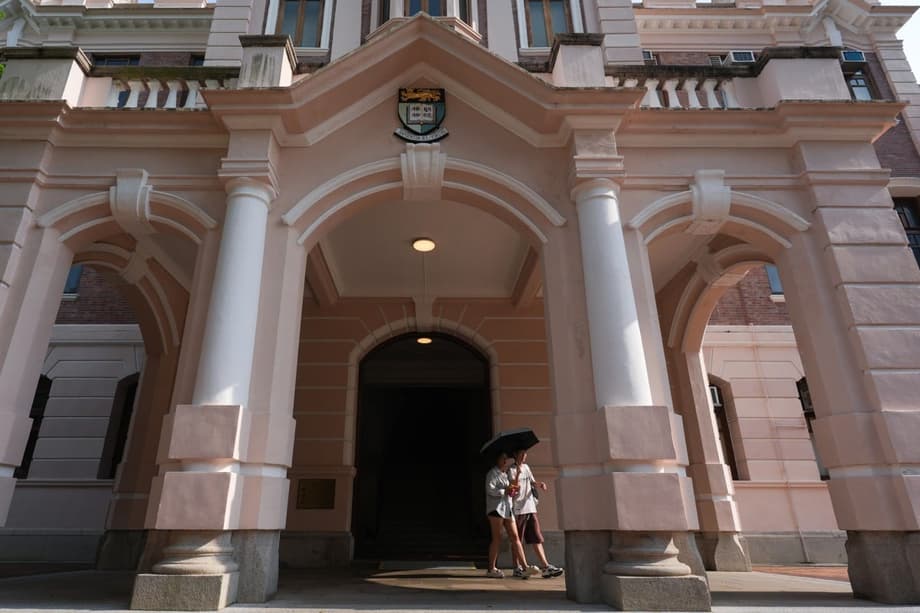
Hong Kong University Ascends to Elite Status in Global Subject Rankings
The University of Hong Kong (HKU) has solidified its reputation as a premier academic institution by securing the seventh position globally in Education Studies, according to the latest Times Higher Education (THE) World University Rankings by Subject. This achievement places the university among the elite in a field critical to societal development, marking it as the only higher education institution in Hong Kong to achieve a top 10 ranking in any subject this year. The results, released recently, highlight the sustained quality of teaching and research at the city’s oldest university, which has consistently performed well in international league tables.
- Hong Kong University Ascends to Elite Status in Global Subject Rankings
- Detailed Breakdown of HKU Academic Performance
- A Shift in the Global Academic Landscape
- Broad Success Across Hong Kong Higher Education
- Understanding the Methodology Behind the Rankings
- Future Collaborations and Regional Integration
- Key Points
In addition to its success in education, HKU demonstrated strong performance in medical and health disciplines, climbing three spots to rank 18th globally. This upward movement reflects the university’s comprehensive approach to medical training and its contributions to health research. The rankings cover 11 subject areas and utilize 18 performance metrics, including teaching environment, research quality, and international outlook. HKU’s ability to maintain high scores across these diverse indicators underscores its status as a comprehensive research-led university.
Professor Xiang Zhang, President and Vice-Chancellor of HKU, emphasized that the university’s standing is a testament to the collective effort of its community. He stated that the institution remains steadfast in upholding its tradition of excellence through cutting-edge teaching and research. The university aims to strengthen its contributions to the high-quality development of Hong Kong and the nation, aligning its academic goals with broader regional needs.
Detailed Breakdown of HKU Academic Performance
Beyond the headline-grabbing seventh place in Education, HKU has demonstrated dominance across the local higher education landscape. The university secured the top position in Hong Kong for nine out of the 11 subjects ranked by THE this year. This local sweep includes Education Studies, Medical and Health, Law, Social Sciences, Physical Sciences, Life Sciences, Arts and Humanities, and Psychology. Notably, Engineering achieved the number one spot in Hong Kong for the first time this year, displacing competitors and showcasing HKU’s growing strength in technical fields.
HKU’s overall global standing also saw improvement, climbing two places to rank 33rd in the THE World University Rankings 2026. This overall rise is driven by high scores in research influence and international outlook. The university boasts a diverse student body with representatives from 94 countries, and over 72% of its professoriate staff are non-local. This international demographic significantly boosts its performance in metrics related to global collaboration and perspective.
The Faculty of Education at HKU has been a particular point of pride. The seventh-place ranking in THE follows a previous accolade where the faculty was ranked number one globally in the “Education and Educational Research” category by U.S. News & World Report. Professor Yang Rui, Dean of Education, attributed this success to the relentless efforts of faculty members and their dedication to advancing pioneering research. The faculty serves as a research nexus connecting China, Asia, and the global academic community.
A Shift in the Global Academic Landscape
The release of these rankings has brought attention to a broader trend within global higher education, specifically the rising prominence of East Asian institutions. While American and British universities continue to dominate the upper echelons of the tables, institutions from mainland China are making rapid gains. This year, Peking University entered the top 10 for computer science for the first time, while Tsinghua University achieved a top 10 ranking in physical sciences.
Times Higher Education described this progress as representing an “emerging new world order” in academia. For years, computer science and physical sciences rankings were heavily dominated by universities in the United States and the United Kingdom. The breakthrough by mainland Chinese universities signals a shift in the balance of academic power. Phil Baty, the publication’s chief global affairs officer, noted that the rankings highlight a dramatic and accelerating trend. He observed that the balance of power in research and higher education excellence is shifting from dominant Western institutions to Asian nations.
“The US and much of western Europe have lost significant ground in the World University Rankings while Asian nations, led by China, continue to surge up the rankings. This clear trend is set to persist as research funding and international talent attraction continue to be stymied in the West.”
This shift is not merely about numbers but reflects substantial investment in research infrastructure and staffing. China secured seven top-10 subject places in this year’s rankings, up from four the previous year. The rise is attributed to increased state funding for research, aggressive recruitment of international talent, and a focus on STEM (Science, Technology, Engineering, and Mathematics) fields.
Broad Success Across Hong Kong Higher Education
While HKU leads the pack, the performance of other Hong Kong universities in the 2026 rankings indicates a robust and healthy higher education sector. A record six Hong Kong institutions have been listed among the world’s top 200 universities. The Chinese University of Hong Kong (CUHK) rose three places to 41st globally, while the Hong Kong University of Science and Technology (HKUST) climbed eight places to 58th. City University of Hong Kong and The Hong Kong Polytechnic University also maintained strong positions within the top 100.
Subject-specific successes were widespread across the city. The Hong Kong University of Science and Technology maintained its position as Hong Kong’s leader in Computer Science for ten consecutive years, with both Computer Science and Business and Economics ranking within the global top 30. The Hong Kong Polytechnic University achieved top-100 global rankings in six subjects, with its Business and Economics program ranking 25th globally and first in Hong Kong.
Lawmaker Ken Wong Kam-leung, who is also the president of the Hong Kong Federation of Education Workers, commented on the results. He believes the rankings reflect the profound academic foundation of the city’s higher education system. Wong noted that the government’s efforts to develop Hong Kong into an international education hub have achieved notable results. He highlighted that universities in Hong Kong and the mainland can collaborate more in the future, particularly with the development of the Northern Metropolis University Town.
Understanding the Methodology Behind the Rankings
To fully appreciate the significance of these rankings, it is necessary to understand the methodology employed by Times Higher Education. The World University Rankings by Subject use the same rigorous framework as the overall World University Rankings but recalibrate the weightings to suit the specificities of each discipline. The assessment relies on 18 performance indicators grouped into five pillars: Teaching, Research Environment, Research Quality, International Outlook, and Industry.
The Teaching pillar evaluates the learning environment using metrics such as staff-to-student ratios and doctorate-to-bachelor’s ratios. The Research Environment looks at the volume of research income and reputation. Research Quality is a critical metric that analyzes citation impact, research strength, and excellence. International Outlook measures the diversity of staff and students, as well as international collaboration on research. Finally, the Industry pillar assesses a university’s ability to help industry with innovations, consulting, and patents.
HKU’s high scores in International Outlook and Research Quality have been instrumental in its rise. The university’s strong performance in citations indicates that its research is widely used and influential in the global academic community. Furthermore, the emphasis on international staff and student exchange programs ensures a vibrant, cosmopolitan campus culture that appeals to top talent from around the world.
Future Collaborations and Regional Integration
The strong performance of Hong Kong universities comes at a time when the region is looking toward greater integration of its educational resources. Lawmaker Ken Wong suggested that future collaborations could take the form of joint laboratories and dual-degree programs between Hong Kong and mainland institutions. He proposed specific models for cooperation, such as computer science students studying foundational theories and algorithms at mainland universities before participating in research projects on specialized applications like artificial intelligence and fintech in Hong Kong.
This approach would allow students to combine theoretical depth with an international perspective, fostering academic exchange between faculty and students from both regions. The development of the Northern Metropolis University Town is seen as a key infrastructure project that will facilitate this kind of cross-border partnership. It aims to create a cluster of higher education institutions that can leverage the strengths of both Hong Kong’s international connections and the mainland’s vast resources and market.
As HKU moves toward its 115th anniversary, it remains aligned with its Vision for 2026 to 2035. The university strives to be a world-leading institution that transforms humanity’s future. By continuing to attract, nurture, and inspire future leaders, HKU aims to address global challenges and promote sustainability. The recent rankings serve as a validation of this strategy, confirming that the university is on the right track to achieving its ambitious goals.
Key Points
- The University of Hong Kong (HKU) ranked 7th globally for Education Studies in the THE World University Rankings by Subject 2026.
- HKU placed 18th globally for Medical and Health studies, climbing three spots from the previous year.
- HKU secured the top position in Hong Kong for nine out of the 11 ranked subjects, including a new number one ranking for Engineering.
- Overall, HKU climbed two places to rank 33rd globally in the THE World University Rankings 2026.
- Mainland Chinese universities achieved record success, with Peking University and Tsinghua University entering the top 10 for computer science and physical sciences respectively.
- A record six Hong Kong universities were listed among the world’s top 200 institutions.
- The rankings are based on 18 performance metrics across five pillars: Teaching, Research Environment, Research Quality, International Outlook, and Industry.