Indonesia Poised for Major Ride-Hailing Reform
Millions of Indonesian ride-hailing drivers may soon experience substantial improvements in their financial and social benefits under a draft presidential decree being considered by President Prabowo Subianto. The proposed regulations represent the most significant government intervention in the country’s digital transportation sector to date, potentially reshaping the business models of major platforms like GoTo and Grab while providing enhanced protections for gig workers across the archipelago nation.
- Indonesia Poised for Major Ride-Hailing Reform
- Key Provisions of the Draft Decree
- Political Drivers Behind the Reform
- Industry Reaction and Economic Concerns
- Driver Perspectives and Working Conditions
- Regional and Global Context
- Legislative Developments and Future Directions
- Challenges and Considerations
- The Road Ahead
- Key Points
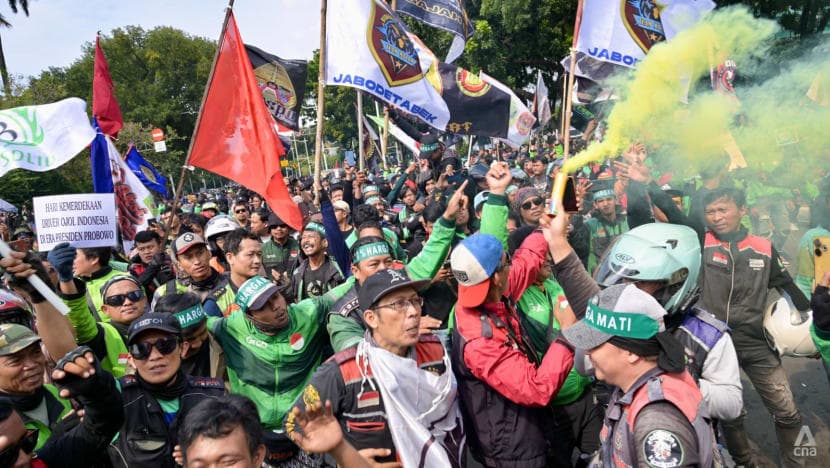
The draft decree emerges amid growing tensions between ride-hailing platforms and their drivers, who have staged nationwide protests demanding better pay, working conditions, and recognition of their contributions to Indonesia’s economy. With Indonesia accounting for 37% of the ASEAN taxi market in 2024, according to research firm Mordor Intelligence, these regulatory changes could have far-reaching implications for Southeast Asia’s largest ride-hailing market.
The proposed reforms come at a critical moment as the industry faces potential consolidation. Concerns about driver welfare have intensified following reports of merger discussions between Indonesia’s GoTo and Singapore-based Grab, which critics warn could create a market dominance that might disadvantage workers. These proposed regulations would address many of the core grievances that have fueled driver activism across the country.
Key Provisions of the Draft Decree
The most significant component of the proposed decree would slash commission caps—the percentage of each fare that ride-hailing platforms retain—from the current 20% to 10%. Indonesia is currently the only country in Southeast Asia that imposes commission caps on two-wheel ride-hailing services, and this reduction would further constrain the profit margins of major platforms operating in the market.
Currently, under Ministerial Decree KP 1001/2022, platforms may take up to 20% of each fare in commission. This fee is meant to cover app usage, payment processing, and other services provided by the platform. In practice, however, drivers report that platforms sometimes deduct more than the advertised rate through additional fees and promotional pricing structures that reduce their take-home pay.
The draft decree would also require platforms to fully cover accident and death insurance for drivers. With approximately seven million delivery and transport riders in Indonesia’s ride-hailing industry, this obligation could cost companies around $1 per month per driver, amounting to significant annual expenditures. Additionally, platforms would be required to split health, old-age, and pension premiums with workers, further increasing operating costs.
Additional Regulatory Powers
Beyond financial provisions, the decree would authorize the government to review agreements between ride-hailing companies and online transportation workers. This oversight mechanism would give regulators unprecedented insight into the terms and conditions imposed on drivers, potentially addressing concerns about unfair contract practices and opaque fee structures.
The draft also explicitly protects workers’ right to unionize, addressing a longstanding challenge for gig workers who have struggled to organize effectively in the digital economy. This provision could facilitate collective bargaining and give drivers greater leverage in negotiating with platforms, potentially shifting power dynamics in the industry.
The proposed regulations would extend beyond traditional ride-hailing services to cover on-demand logistics firms such as Hong Kong-based Lalamove and J&T Express, which is listed on the Hong Kong stock exchange. This broader scope reflects the growing importance of delivery services in Indonesia’s digital economy and the common challenges faced by workers across different segments of the gig sector.
Political Drivers Behind the Reform
The timing of these proposed regulations is not coincidental. President Prabowo faces significant pressure to respond to drivers’ demands, particularly after their involvement in widespread student-led protests in August demonstrated the political clout of the sector’s workforce. These protests brought attention to the precarious working conditions faced by millions of Indonesians who rely on gig work for their livelihood.
The administration has been particularly sensitive to appeasing drivers, with Presidential spokesperson Prasetyo Hadi labeling them “heroes of the economy.” This rhetoric reflects a recognition of both the economic importance of ride-hailing services and the growing political influence of the workers who power them.
Siwage Dharma Negara, a senior fellow at the ISEAS-Yusof Ishak Institute in Singapore, noted that motorcycle taxi drivers have become an increasingly visible political force, staging multiple protests over commission rates and rights while drawing significant public attention to their grievances. The death of a motorcycle taxi rider during the August protests sharply intensified public scrutiny of gig workers’ vulnerability and likely increased political urgency around worker protection.
Recent Driver Mobilization
The proposed decree follows a series of coordinated actions by ride-hailing drivers across Indonesia. In May 2025, thousands of drivers staged a 24-hour “off-bid” strike nationwide, turning off their applications and gathering in major cities including Jakarta, Surabaya, Bandung, and Yogyakarta. Union leaders reported that over 25,000 drivers from both car and motorcycle services were expected to participate in these demonstrations.
During these protests, drivers carried placards reading “Don’t be greedy, 10% is enough for the applicator” and chanted slogans declaring “United ride-hailing drivers cannot be defeated.” The demonstrations highlighted five key demands: passage of an Online Transportation Law, reduction of commission rates to 10%, regulation of food and goods delivery tariffs, auditing of app providers, and abolition of membership programs that require drivers to pay extra for priority in the algorithm.
Raden Igun Wicaksono, General Chairperson of Garda Indonesia, one of the country’s largest driver associations, emphasized that these demands were directed at both the Transportation Ministry and President Prabowo. He asserted that current regulations are insufficient because they lack enforcement mechanisms, stating that existing ministerial decrees “cannot legally bind app providers if they violate, either civilly or criminally.”
Industry Reaction and Economic Concerns
Industry representatives have expressed serious concerns about the sustainability of the proposed changes. An industry source who has seen the draft told Reuters, “Most of the players in the industry cannot sustain these changes,” specifically highlighting concerns that insurance requirements would lead to skyrocketing annual spending for platforms.
A second source familiar with the proposals warned that costs of premiums borne by platforms could lower margins and reduce the number of drivers they are able to accommodate on their platforms. This could potentially reduce income opportunities for workers, creating a paradox where regulations intended to protect drivers might inadvertently limit their access to work.
For years, ride-hailing companies have resisted extending traditional employment benefits to drivers, arguing that gig workers are independent contractors rather than full-time employees. This classification has allowed platforms to avoid costs associated with employee benefits while maintaining flexibility in their workforce. The proposed decree would challenge this model by mandating benefits that are typically associated with formal employment.
Platforms have defended their current commission structures as necessary for sustainability. Gojek’s public policy head, Ade Mulya, told AFP that lowering the regulated 20% commission was “not a viable solution” because those fees fund initiatives to support drivers. Similarly, Grab Indonesia’s head of public affairs, Tirza Munusamy, stated that Grab’s commission structure was “necessary” to maintain service quality, warning that significant reductions could threaten the sustainability of an ecosystem that supports millions of people.
Platform Perspectives on Operational Costs
Ride-hailing companies argue that commissions cover more than just platform profits. They contend these fees fund technology development, third-party insurance for drivers and passengers, and various support programs such as free engine oil changes and tires for drivers. Gojek Indonesia president Catherine Hindra Sutjahyo warned that cutting commissions to 10% might backfire if the company can no longer subsidize promotional discounts, potentially reducing overall transaction volume and actually decreasing drivers’ total income.
These perspectives highlight a fundamental disagreement about the relationship between platforms and drivers. While companies view their business model as an ecosystem that balances the interests of all participants, drivers often see themselves as bearing disproportionate risks while receiving inadequate compensation and protections. This tension has fueled the push for stronger regulatory oversight.
Driver Perspectives and Working Conditions
For millions of Indonesians, ride-hailing work provides crucial income in a country with significant unemployment and underemployment. However, drivers report that their earnings have declined in recent years due to increased competition, algorithmic management practices, and rising operational costs. Fairwork researchers confirm that Indonesian ride-hail drivers often struggle to secure even 4-5 trips a day compared to 5-10 trips per day before 2020, forcing many to work extended hours to maintain their income.
According to driver surveys, typical daily earnings average just 100,000-150,000 rupiah ($6-10) for a 10-12 hour workday. After accounting for fuel, maintenance, taxes, and the platform’s commission, many drivers report barely scraping by. Nearly 70% of drivers work over 8 hours a day, and almost 80% work six or seven days weekly, according to industry surveys.
Drivers have expressed particular frustration with opaque algorithmic systems that they say suppress earnings. These include flat-fare schemes, double-ordering systems, and ride prioritization features that drivers claim are poorly explained and consistently disadvantage workers. One striker noted that many peers “got into accidents because they have to chase their income,” implying that meager pay forces drivers to take risks or work unsafe hours.
The current regulatory framework has proven inadequate to address these concerns. Indonesia’s existing regulations for online transportation services are based on ministerial decrees rather than comprehensive legislation. The 2017 decree from the Transportation Ministry established basic parameters but left significant gaps in worker protection. Under Law No. 22/2009, motorcycles cannot be classified as public transportation, creating a legal gray zone that has allowed platforms to operate without traditional transportation regulations while also denying drivers the protections typically afforded to transportation workers.
Regional and Global Context
Indonesia is not alone in grappling with how to regulate the gig economy and protect workers in digital platform work. Countries around the world are developing various approaches to balance flexibility with worker protections, and Indonesia can draw lessons from these experiments as it refines its regulatory framework.
In Singapore, regulations for online taxi drivers are highly structured. The government requires drivers to obtain a Vocational License after completing safety training and passing a medical examination. The Land Transport Authority implements a quota system to limit the number of ride-hailing vehicles and prevent market saturation. Work accident insurance is mandatory, and Grab has partnered with Futuready Insurance to provide this coverage. However, pressure from high living costs remains a significant burden for drivers, as minimum income protection has not been a major focus of policy.
Malaysia has established a legal framework through the Land Public Transport Act 2010, administered by the Land Public Transport Agency (APAD). Drivers must hold a public service vehicle (PSV) license, and vehicles must be registered with a legal entity or cooperative. The government provides incentives such as tax breaks for companies that employ elderly drivers. However, weak field supervision means many drivers operate outside the official system without adequate protections.
Vietnam has taken a different approach through Decree 10/2020/ND-CP, which emphasizes the importance of integrating drivers into legal entities such as cooperatives. Xanh SM, a local electric taxi service provider, has emerged as an example of a company that provides training and insurance for its driver partners. Despite these measures, intense platform competition and market saturation have forced many drivers to work more than 15 hours daily to earn a decent income, creating what critics describe as a new form of economic exploitation.
Among these regional approaches, common themes include requirements for driver licensing, vehicle standards, and some form of insurance coverage. However, economic welfare dimensions such as minimum income guarantees, limits on working hours, and protection against unilateral account deactivation have not yet become primary priorities in most regulatory frameworks. This gap represents a crucial area where Indonesia’s proposed decree could potentially lead rather than follow regional trends.
Legislative Developments and Future Directions
The draft presidential decree is not the only regulatory development affecting Indonesia’s ride-hailing sector. The House of Representatives (DPR) is preparing to draft a dedicated law on online transportation services, aiming to provide a comprehensive legal framework distinct from current traffic and road transportation regulations.
Lasarus, chairman of the House’s infrastructure and transportation Commission V, has indicated that the upcoming legislation would give online transport platforms their own legal basis, separate from general transport laws. The discussion involves multiple commissions, reflecting the broad scope and multi-agency oversight required for comprehensive online transport regulation. Lasarus emphasized that “every article and clause will be discussed and consulted with all online transport drivers, not just for the benefit of one group.”
While this legislative process unfolds, the draft presidential decree offers a mechanism for more immediate action. Presidential decrees in Indonesia can be implemented relatively quickly compared to the lengthy process of passing comprehensive legislation, allowing the government to address urgent concerns while longer-term regulatory frameworks are developed.
Commission V member Adian Napitupulu has revealed that some ride-hailing companies are currently deducting between 30% and 50% from drivers’ earnings through additional charges that he argues lack a clear legal foundation. He calculated that if delivery service charges alone are multiplied by the 4.2 million sellers using platforms, companies could be earning up to Rp92 billion ($6 million) per day. These figures highlight the economic scale at stake and the potential impact of regulatory changes on both workers and companies.
Challenges and Considerations
As Indonesia moves forward with these regulatory initiatives, several challenges and considerations will shape their ultimate effectiveness. Finding the right balance between protecting workers and maintaining a sustainable business environment for platforms will require careful calibration and ongoing adjustment.
One key challenge is ensuring compliance with new regulations. While ministerial decrees have established commission caps of 20%, drivers report that platforms often circumvent these limits through additional fees and complex pricing structures. The proposed government review of company-driver agreements and audit powers could help address this issue, but effective enforcement will require adequate resources and regulatory capacity.
Algorithmic transparency presents another significant challenge. Drivers have consistently complained about opaque systems that determine everything from fare pricing to ride allocation without clear explanation. The draft decree’s provisions for government review of agreements could potentially address some of these concerns, but meaningful transparency may require more specific technical regulations that go beyond what a presidential decree can typically encompass.
The classification of drivers remains a fundamental legal question. While the proposed decree would extend many benefits typically associated with employment, it does not appear to reclassify drivers as employees. This hybrid approach—extending protections without formally changing employment status—could create a new category of workers with rights that fall somewhere between traditional employees and independent contractors. This innovative approach may offer a path forward for other countries grappling with similar questions in the digital economy.
Implementation challenges also loom large. Indonesia’s vast geography and decentralized government structure mean that regulations adopted at the national level must be implemented across thousands of islands by local authorities with varying capacity and priorities. Ensuring consistent enforcement of new regulations will require coordination between national ministries, regional governments, and potentially new regulatory bodies specifically created for this purpose.
The Road Ahead
The proposed presidential decree represents a significant step toward recognizing and protecting the rights of Indonesia’s ride-hailing drivers, who have become essential to urban transportation and the broader economy. However, its ultimate impact will depend on several factors, including the final form of the regulations, the effectiveness of implementation, and the response of ride-hailing platforms.
If implemented effectively, these regulations could establish Indonesia as a leader in gig worker protection among emerging economies. The country’s approach may offer valuable lessons for other nations facing similar challenges in regulating digital platform work while maintaining the flexibility that has made the gig economy attractive to both workers and consumers.
For drivers, the regulations could provide long-overdue security and stability, potentially transforming precarious gig work into a more sustainable livelihood. Reduced commission rates would immediately increase take-home pay, while mandatory insurance and social security contributions would create safety nets currently absent for most workers.
For platforms, the regulations will require significant adjustments to business models and operational practices. Companies may need to reconsider pricing strategies, improve efficiency in other areas to maintain profitability, or develop new revenue streams to offset higher costs associated with driver benefits. The potential consolidation of the market through a GoTo-Grab merger adds further complexity to how these companies will adapt to the new regulatory environment.
For consumers, the short-term impact may include higher prices as platforms pass increased costs to riders. However, long-term benefits could include a more stable and sustainable transportation ecosystem with professional drivers who can afford to maintain their vehicles and provide quality service.
The success of these regulatory initiatives will ultimately depend on the government’s ability to implement them effectively while fostering continued innovation in the digital economy. Indonesia’s approach to balancing worker protection with business sustainability will be closely watched by other countries facing similar challenges in regulating the rapidly evolving gig economy.
Key Points
- President Prabowo Subianto is considering a draft decree that would cut ride-hailing commission caps from 20% to 10%
- Platforms would be required to fully cover accident and death insurance for approximately seven million drivers
- The decree would mandate splitting health, old-age, and pension premiums between companies and workers
- Government would gain authority to review agreements between platforms and drivers
- The regulations would protect workers’ right to unionize and collectively bargain
- The rules would extend beyond ride-hailing to include logistics firms like Lalamove and J&T Express
- Industry sources warn that most platforms cannot sustain these increased costs
- The reforms follow widespread driver protests and growing political pressure from the sector
- Indonesia leads the ASEAN taxi market with a 37% share as of 2024
- The decree comes amid concerns about a potential merger between GoTo and Grab