A Festival That Starts Before Students Expect It
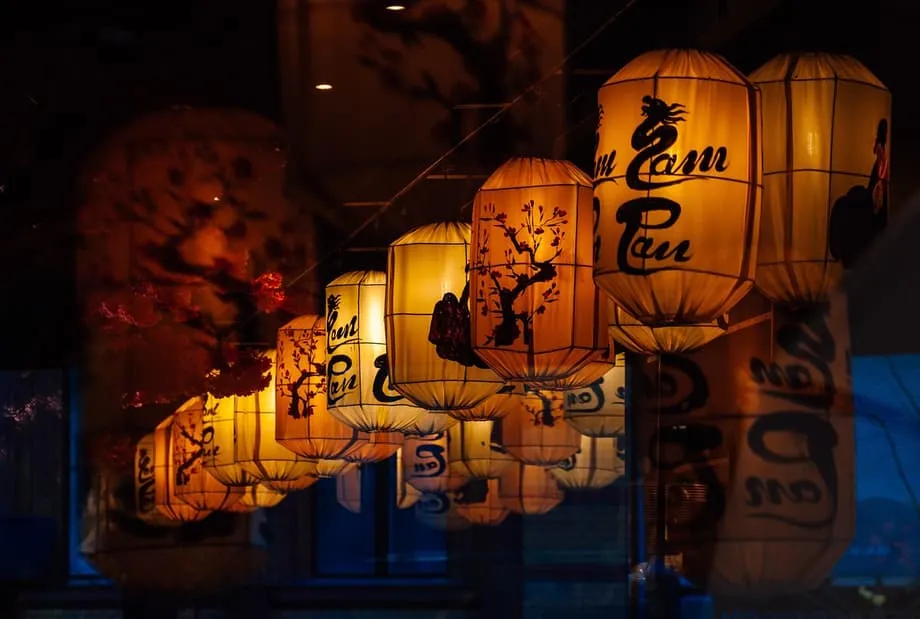
Chinese New Year fell on February 17 in 2026, with Ramadan beginning just two days later. In Malaysia, however, the festive atmosphere had been building for weeks. From Kuala Lumpur to Penang, shopping malls displayed red lanterns, artificial plum blossoms and giant zodiac sculptures almost as soon as their Christmas decorations came down.
Contents
- A Festival That Starts Before Students Expect It
- Fireworks, Drums and Traditions at Home
- Open Houses Make the Holiday a Shared Occasion
- Prosperity Tosses and the Fifteenth Night
- The Ninth Day Has Special Meaning for Hokkien Families
- Chinese New Year and Ramadan Meet on the Calendar
- Hotels and Malls Prepare for Two Festive Seasons
- Road Restrictions Reflect the Scale of Holiday Travel
- A Cultural Celebration Within Visit Malaysia 2026
- Family Customs Continue Beyond the Public Spectacle
- What to Know
For some students arriving from mainland China, that early transformation overturned expectations of a quiet holiday abroad, spent making video calls to family and arranging modest celebrations. Instead, they found a country where the festival reaches far beyond reunion dinners, filling shopping centres, neighbourhoods and public spaces.
Loong Yang, a business administration student at Universiti Malaya from Henan province, said shopping malls in China typically begin decorating about two weeks before Chinese New Year. Malaysia's preparations, beginning immediately after Christmas, made a strong impression on him.
In my hometown, we place immense importance on CNY and begin our prep well in advance, but Malaysia takes it to a whole new level by starting even sooner. The decor here is indeed better, and projects a stronger festive atmosphere.
Feng Jiayang, an undergraduate at UCSI, saw a difference in style. She described celebrations in China as subtly elegant and integrated into daily life, while Malaysia gives the holiday something of a carnival atmosphere. Her assessment allowed room for both approaches.
Each has its own merits.
The students' experiences show how a familiar festival can take on a different character abroad. Malaysian Chinese communities preserve customs inherited from China while giving them a highly visible place in a diverse society. For visitors, the result can feel both recognisable and unexpectedly expansive.
Fireworks, Drums and Traditions at Home
Fireworks and firecrackers add another layer to that experience. Many Chinese cities heavily restrict them for environmental and safety reasons. In Malaysia, their colour and sound remain prominent parts of the celebrations, alongside the drums that accompany dragon and lion dances through neighbourhoods.
Lin Yanyang, a Universiti Malaya student from Beijing, described the sights and sounds as a particularly moving expression of Chinese culture.
The dazzling fireworks and festive crackle here really bring out the spirit of Chinese culture, making it a more traditional and exciting experience.
Some students find these celebrations more traditionally Chinese than those they encounter at home today. They offer a chance to experience folk customs that younger people in China may know through historical recordings or municipal displays subject to close controls.
Guo Kaixin, another Universiti Malaya student, found an equally striking example inside family homes. During a video conversation with friends in Penang, she watched entire families wearing auspicious vermilion Tang suits, traditional Chinese clothing in a bright red colour, from the first day of the new year through the fifth.
Guo compared that sustained observance with what she sees in modern Chinese urban life.
Such strict adherence to traditional attire is rare in today's China.
The clothing, fireworks and performances illustrate different ways traditions survive beyond their place of origin. Families can retain customs that have changed or become less common in the homeland, while public celebrations make those customs visible to a wider audience. In Malaysia, private observance and public spectacle sit alongside one another throughout the holiday.
Open Houses Make the Holiday a Shared Occasion
Malaysia's mix of communities also changes who takes part. Chinese New Year becomes a national occasion in which Malay, Indian and other neighbours can join Chinese families, rather than remaining within the Han Chinese cultural setting described by the students in China.
Wu Hailong, a student at Universiti Putra Malaysia, described the experience as a shared tapestry. He recalled Indian neighbours offering warm greetings in Mandarin and enthusiastically engaging with Chinese families during their most important holiday.
The Malaysian open house tradition gives that participation a practical form. Chinese families welcome friends from different ethnic backgrounds, including Malay and Indian communities, to share reunion meals and festive treats. A gathering rooted in family tradition becomes an opportunity for people across racial and religious lines to spend time together.
Prime Minister Datuk Seri Anwar Ibrahim connected that everyday interaction with national priorities during recent celebrations in Ipoh. He spoke about preserving peace among Malaysia's population of more than 34 million people, including Malays, Chinese, Indians, Ibans, Kadazans and other groups.
We want to show our society and our children that if Malaysia is to progress, enjoy economic growth, improve education and have better hospitals, we must preserve peace in this country.
Anwar's remarks placed cultural harmony alongside economic growth, schools and hospitals. The open house offers a small, familiar setting for that larger goal: people meet over food, exchange greetings and take part in a celebration associated with another community.
Prosperity Tosses and the Fifteenth Night
Yee Sang, also called Yu Sheng, is among the most recognisable local features of Chinese New Year in Malaysia and Singapore. The colourful salad containing raw fish has become a centrepiece of reunion dinners, with a ritual that turns the meal into a shared performance.
Family members stand around the dish and use chopsticks to toss its ingredients high into the air while calling out auspicious phrases. Known as lo hei, the toss symbolises an invitation to prosperity and good fortune for the coming year.
These Southeast Asian forms of celebration give students from mainland China customs unfamiliar to them at home. The festival continues across 15 days, ending with Chap Goh Mei, whose local traditions include a playful form of matchmaking.
Single women traditionally throw oranges into the sea or rivers to wish for a good husband. In modern versions, they may write contact details on the fruit. Men in boats traditionally collect the oranges, bringing a social element to a ritual associated with hopes for marriage.
The oranges and prosperity toss show how communities adapt inherited celebrations to local life. Food, wishes for the coming year and opportunities to meet others remain central, while the way people express them takes a distinctly Malaysian and Singaporean form.
The Ninth Day Has Special Meaning for Hokkien Families
Hokkien families observe another important point in the festival on the ninth day: the Ti Kong Festival, dedicated to prayers for the Jade Emperor. Their preparations give the celebration a different focus from mall displays or large public gatherings.
Families arrange elaborate offerings at midnight, including sugarcane stalks, roasted meats and traditional sweets. Sugarcane symbolises protection and peace. Firecrackers and incense smoke accompany the ceremony, filling the night with the sounds and scents of the observance.
The Ti Kong Festival shows that Malaysian Chinese New Year contains distinct regional Chinese traditions as well as customs shared more widely. Hokkien families have preserved this particular observance within Malaysia's multicultural setting, giving the festival several important moments across its 15 days.
Chinese New Year and Ramadan Meet on the Calendar
February 2026 brings two major festive seasons into close succession. Chinese New Year arrived on February 17, followed by the beginning of Ramadan on February 19. The sequence will lead into Hari Raya Aidilfitri next month, extending the period of celebration and communal gathering.
Malaysia also has a name for periods when Chinese New Year and Hari Raya Aidilfitri fall close together: Gong Xi Raya. That convergence follows a cycle of about 33 years. Previous periods occurred from 1963 to 1965 and from 1996 to 1998, with the next expected from 2029 to 2031.
The immediate feature of 2026 is Chinese New Year followed closely by the start of Ramadan. The later Gong Xi Raya dates concern the proximity of Chinese New Year to Hari Raya Aidilfitri itself. Together, these changing calendar relationships help explain why Malaysian businesses and communities plan for celebrations that sometimes sit close together.
The main dates surrounding this year's festivities are:
- January 15 to 25: The CNY Spring Carnival 2026 took place at Pavilion Bukit Jalil.
- February 14 and 15: The first two dates of the holiday restrictions on heavy goods vehicles.
- February 17: Chinese New Year began.
- February 19: Ramadan began, two days after Chinese New Year.
- February 21 and 22: Further restrictions on heavy goods vehicles are scheduled.
- March: Hari Raya Aidilfitri follows the Ramadan period.
- 2029 to 2031: The next Gong Xi Raya convergence is expected.
Hotels and Malls Prepare for Two Festive Seasons
Hotels and restaurants have responded to the calendar with menus that combine Chinese and Malay culinary traditions. The close succession of Chinese New Year and Ramadan has brought a windfall for retail and hospitality businesses, which can serve different festive gatherings within a short period.
At Sunway Resort Hotel, executive chefs developed dishes featuring lamb and flavours inspired by Sichuan cuisine for both Chinese New Year buffets and Ramadan iftar spreads. Iftar is the meal that breaks the daily Ramadan fast. Different accompaniments allow the dishes to suit each occasion.
The hotel's Sichuan roasted whole lamb is marinated with chili powder, garlic, sesame oil and cumin. Its appearance across the two festive menus shows how Malaysian hospitality adapts influences from elsewhere to local tastes while serving several communities.
Shopping malls have also invested in elaborate displays that attract visitors and circulate on social media. Berjaya Times Square features installations inspired by Chinese imperial dynasties this year. Intermark Mall has chosen Peranakan designs, including intricate floral patterns and traditional kebayas.
Mall managers describe decorations on this scale as uncommon in other major cities, including those in China. In Malaysia, they have become attractions for tourists and residents alike, turning a shopping visit into part of the festive experience.
Road Restrictions Reflect the Scale of Holiday Travel
Malaysia's preparations extend beyond food and decorations to the roads. The Road Transport Department has banned heavy goods vehicles on February 14, 15, 21 and 22 during the Chinese New Year holiday period.
The restrictions aim to reduce accident risks and keep traffic moving when holiday travel is at its busiest. As of February 20, the first two restricted dates have passed, with the next two scheduled for the following weekend.
The four dates show how a cultural celebration also becomes a national transport planning task. Reunion gatherings and festive visits bring movement across the country, requiring coordination intended to make the peak travel period safer and smoother.
A Cultural Celebration Within Visit Malaysia 2026
Chinese New Year is also part of Visit Malaysia 2026, the national tourism campaign that uses the country's multicultural festivals as major attractions. The CNY Spring Carnival 2026 at Pavilion Bukit Jalil, held from January 15 to 25, brought that approach into a large public event.
The carnival was conceived as a celebration reaching across the city, with activity both online and at the venue. Partnerships with digital platforms and the involvement of more than 100 artistes and content creators helped extend its reach to audiences beyond Malaysia.
Zheng Xuefang, Minister of the Embassy of the People's Republic of China in Malaysia, attended the carnival launch. He linked the Spring Festival's international reach with cultural friendship and cooperation between China and Malaysia.
The Spring Festival is increasingly celebrated around the world, reflecting shared values and friendship. We look forward to leveraging Visit Malaysia 2026 to strengthen cultural ties and deepen practical cooperation.
Deputy Minister of Communications Teo Nie Ching said Malaysia recorded 38.3 million international arrivals in the first 11 months of 2025, surpassing regional competitors. That figure provided a strong foundation for the tourism campaign year.
The carnival brought several parts of the Malaysian celebration together: public entertainment, digital participation, cultural diplomacy and tourism promotion. For visitors, the festival offers an encounter with traditions preserved by local families and presented in a setting shared by several communities.
Family Customs Continue Beyond the Public Spectacle
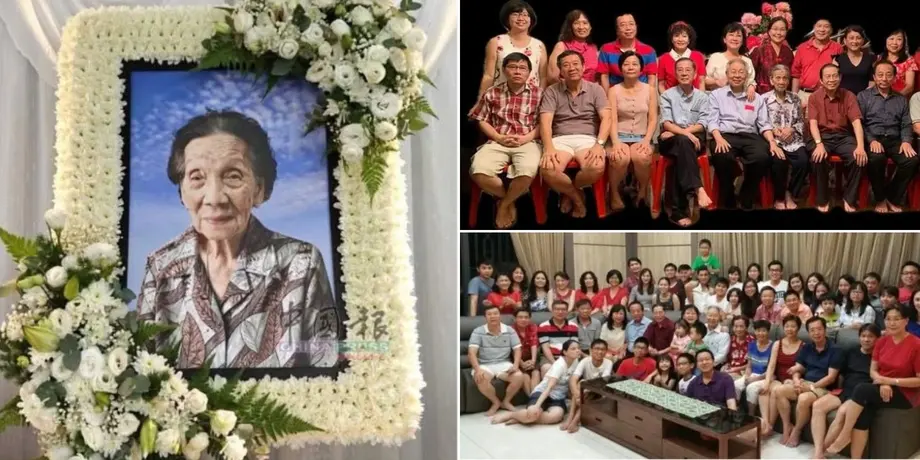
Jess Lee, a Malaysian Chinese woman whose family has been in the country for four generations, sees the Spring Festival as an essential bond between relatives and a way to carry culture forward. She has observed that many customs originating in China remain fully preserved in Malaysia, making everyday family observance a living record of tradition.
Language is part of that continuity. Many Malaysian Chinese retain fluency in Mandarin and various Chinese dialects alongside Malay and English. Those languages keep access to cultural texts and oral traditions open across generations, as well as supporting communication in Malaysia's wider society.
Food can make that continuity especially tangible. DAP secretary-general Anthony Loke recently assured the Chinese Malaysian community that pork supplies remained stable for reunion dinners despite controversies surrounding pig farming in Selangor.
Speaking at a banquet, Loke explained the place of roast pig in the celebration.
Chinese New Year would not feel like Chinese New Year without roast pig, so we must have it.
Zurich Malaysia's recent festive film presented a quieter side of the season. It showed couples celebrating through calm personal moments, shared meals and connections with their neighbourhoods, rather than concentrating on large displays or public performances.
Malaysia's Chinese New Year therefore has several scales at once. A family may preserve clothing, language and food customs at home; neighbours may meet at an open house; visitors may gather beneath a giant zodiac display. The students' surprise comes from finding all these forms of celebration together, with inherited traditions remaining visible while local customs and participation across communities give the holiday its Malaysian character.
What to Know
- Chinese New Year fell on February 17, 2026, and Ramadan began on February 19, with Hari Raya Aidilfitri following next month.
- Students from mainland China described Malaysia's early decorations, fireworks and family customs as especially vivid expressions of the festival.
- Open houses welcome people from different ethnic communities to share meals and festive treats.
- Yee Sang tossing, Chap Goh Mei orange throwing and Hokkien prayers on the ninth day give the season distinct local and community traditions.
- Heavy goods vehicle restrictions cover February 14, 15, 21 and 22 to support safer holiday travel.
- The Pavilion Bukit Jalil carnival ran from January 15 to 25 as part of celebrations connected with Visit Malaysia 2026.
- Malaysia recorded 38.3 million international arrivals in the first 11 months of 2025, according to Deputy Minister of Communications Teo Nie Ching.
- Families continue to preserve language, clothing and food customs alongside the festival's larger public celebrations.
- The next Gong Xi Raya period, when Chinese New Year and Hari Raya Aidilfitri fall close together, is expected from 2029 to 2031.