Daily Crowding Brings a Direct Order From the Prime Minister
Prime Minister Anwar Ibrahim has ordered Transport Minister Anthony Loke, the Transport Ministry and Rapid KL to find an immediate solution to overcrowded trains after a commuter shared photographs of packed platforms at Gombak and Taipan LRT stations. The intervention, reported on October 30, 2026, puts pressure on transport authorities to address a daily problem while new trains for the busy Kelana Jaya line remain scheduled to begin arriving in March 2029.
Contents
- Daily Crowding Brings a Direct Order From the Prime Minister
- A Commuter Describes the Choice Between Traffic and Packed Trains
- What More Carriages Would Mean for Passengers
- New Trains Are Ordered, but Deliveries Begin in 2029
- October Disruptions Added Pressure Across the Network
- How the Events Unfolded
- What Commuters Need From the Response
- Key Points
The Kelana Jaya LRT line serves 290,000 passengers daily, making it the busiest LRT line in the Klang Valley. Prasarana has ordered 26 new train sets for the route, but that purchase leaves an immediate question for passengers: what relief can be provided before the deliveries begin?
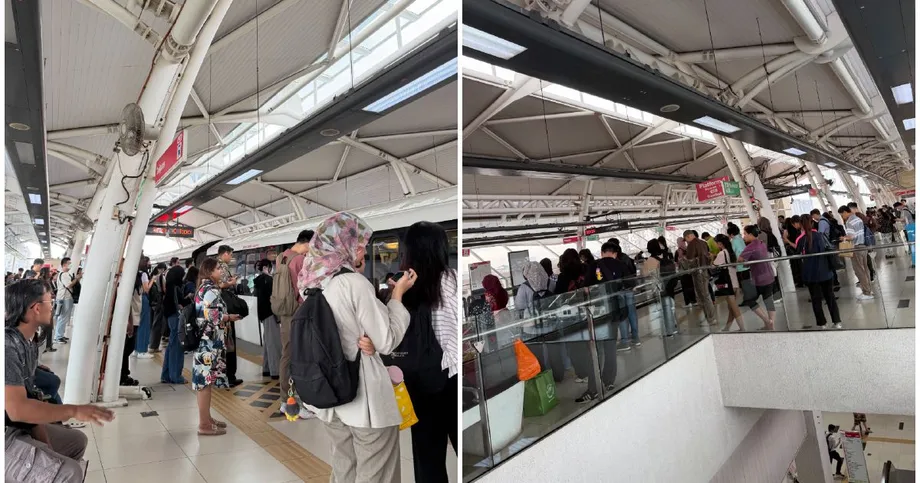
The complaint came from Threads user @siti.anisahj, who described a frustrating choice between congested roads and crowded trains. Her photographs brought the experience at two stations into a wider discussion about whether the rail network can reliably accommodate people travelling to work and other daily commitments.
Anwar, who is also finance minister, called for action in his response on Threads. Addressing Rapid KL, the ministry and Loke directly, he said:
Wassalam. I urge @myrapidkl, @ministryoftransportmy and @lokesiewfook to take note of this problem and find an immediate solution.
He also described the crowding as a recurring disruption to ordinary routines:
This happens frequently and certainly disrupts the daily routines of the people.
No specific operational change or implementation date was announced alongside the directive. For commuters, the next practical development will be whether the authorities change the service they experience each day, including how long they wait and whether they can board an arriving train.
A Commuter Describes the Choice Between Traffic and Packed Trains
@siti.anisahj asked for more train coaches after posting several photographs of crowded platforms. Her appeal connected two parts of the same journey to work: driving can mean sitting in traffic, while taking public transport can mean waiting in a crowd and struggling to board.
The commuter put her request directly to the prime minister:
Assalamualaikum @anwaribrahim_my. Can we ask for a few more train coaches? It is like this every day. Driving means getting stuck in traffic, while taking the train means facing overcrowding,
Gombak and Taipan, the stations identified in the photographs, are both on the Kelana Jaya LRT line. The complaint therefore gives the authorities specific locations to examine, alongside the broader request for more space on trains.
Public attention grew quickly. By 12.10pm on Friday, October 30, Anwar's response had received about 50,000 likes, more than 494 comments and about 2,900 reposts. The scale of the response brought a commuter's daily frustration directly into the government's transport agenda.
What More Carriages Would Mean for Passengers
The commuter's request focuses on capacity, the number of people a rail service can carry. Passengers experience a shortage of capacity when the platform fills faster than arriving trains can clear it, leaving some people waiting for another service.
More space on each train and more frequent departures address that pressure in different ways. A larger train can carry more people in one trip. A shorter interval between trains gives passengers more opportunities to board. The practical options depend on the trains, stations and operating arrangements of the line concerned.
Anwar's instruction asks the transport authorities to investigate and act, leaving them to determine which measures can be introduced immediately. The commuter's request for extra coaches is the starting point of that examination; the announced purchase concerns complete train sets.
A train set is a group of connected carriages that operates together as one train. Buying 26 sets is therefore a different undertaking from attaching 26 individual coaches to existing services. Passengers will ultimately feel the benefit through the amount of usable space and the frequency of trains reaching their station.
New Trains Are Ordered, but Deliveries Begin in 2029
Loke said in February that Prasarana had ordered 26 new train sets for the Kelana Jaya LRT line. Deliveries are scheduled to start in March 2029, followed by a rate of two sets per month.
That starting date falls about two years and four months after the October 2026 intervention. It creates two distinct tasks for the transport authorities: responding to current crowding with the service resources available now, and preparing for additional trains later.
The line's daily passenger figure explains why both tasks matter. With 290,000 passengers using the route each day, even a recurring delay or difficulty boarding can affect a large number of journeys. The figure describes daily use across the line, rather than the number of people travelling at any one moment.
The delivery schedule also means the new fleet will arrive in stages. Passengers cannot expect all 26 sets to appear when deliveries begin in March 2029. The planned monthly rate makes the purchase a gradual addition to the operator's resources, while the prime minister's order concerns conditions commuters are facing now.
October Disruptions Added Pressure Across the Network
October's complaints extend beyond the photographs from Gombak and Taipan. On October 8, a surge in passenger numbers caused congestion at Bukit Bintang station on the MRT Kajang Line, with the situation lasting about three hours. Passengers were also affected at other stations, including Bangsar LRT.
A crowded station can affect journeys beyond its platforms because passengers move between services and depend on connections. For a person changing trains, a delay on one part of the journey can mean arriving late for the next part, even when the destination is on another line.
On October 12, KLIA Ekspres and KLIA Transit services suffered major delays after signalling cables were stolen along the airport rail corridor. The theft involved about 180 metres of cable in two sections of 90 metres each, near the kilometre 44 marker between Putrajaya/Cyberjaya and Salak Tinggi stations.
The two theft cases happened within hours and forced changes to train schedules as passengers faced longer journeys. Signalling equipment helps control train movements. When the cables supporting that equipment are damaged or removed, operators must manage services around the disruption while repairs are carried out.
How the Events Unfolded
The events during October show why commuters are seeking both more carrying capacity and dependable service. Crowding at a busy station, damage to railway equipment and a shortage of space on daily services each affect passengers through waiting, uncertainty and longer journeys.
- October 8: A passenger surge caused congestion at Bukit Bintang MRT station for about three hours, with disruption also affecting travellers at other stations, including Bangsar LRT.
- October 12: Two cable theft cases disrupted KLIA Ekspres and KLIA Transit. About 180 metres of signalling cable were stolen between Putrajaya/Cyberjaya and Salak Tinggi.
- October 29: @siti.anisahj posted photographs of crowded LRT platforms and asked Anwar for additional train coaches. Anwar responded with a call for immediate action.
- October 30: The directive drew widespread attention, with Anwar's response reaching about 50,000 likes by 12.10pm.
- March 2029: Deliveries of 26 new Kelana Jaya LRT train sets are scheduled to begin, followed by two sets per month.
The incidents involve different rail services and different operational problems. Rapid KL's response to crowded LRT platforms will centre on passenger demand and service capacity, while the airport rail thefts also place attention on protecting equipment needed to keep trains running.
What Commuters Need From the Response
Anwar's directive places responsibility with Loke, the Transport Ministry and Rapid KL to turn the complaint into action. The immediate task is to examine the recurring crowding identified by passengers and decide how the service can accommodate them more effectively.
For someone waiting at Gombak or Taipan, improvement would be concrete: being able to board a train sooner, spending less time on a crowded platform and reaching work or home with fewer unexpected delays. Those daily outcomes are the practical measure of a response to the commuter's appeal.
The October incidents also show why capacity and reliability need attention together. Additional trains can provide more room, while dependable operations and protection of rail equipment help keep scheduled journeys available. The 2029 purchase addresses future resources; the current directive asks authorities to address today's experience.
Key Points
- Anwar directed Anthony Loke, the Transport Ministry and Rapid KL to investigate recurring train crowding and find an immediate solution.
- The intervention followed @siti.anisahj's photographs of crowded platforms at Gombak and Taipan LRT stations.
- The Kelana Jaya LRT line serves 290,000 passengers daily, the highest daily use among Klang Valley LRT lines.
- Prasarana has ordered 26 new train sets, with deliveries due to begin in March 2029 at a subsequent rate of two sets per month.
- October also brought congestion at Bukit Bintang MRT station and airport rail delays after the theft of 180 metres of signalling cable.
- The directive did not include a specific immediate service change or an implementation date.