Crisis erupts again along a fraught frontier
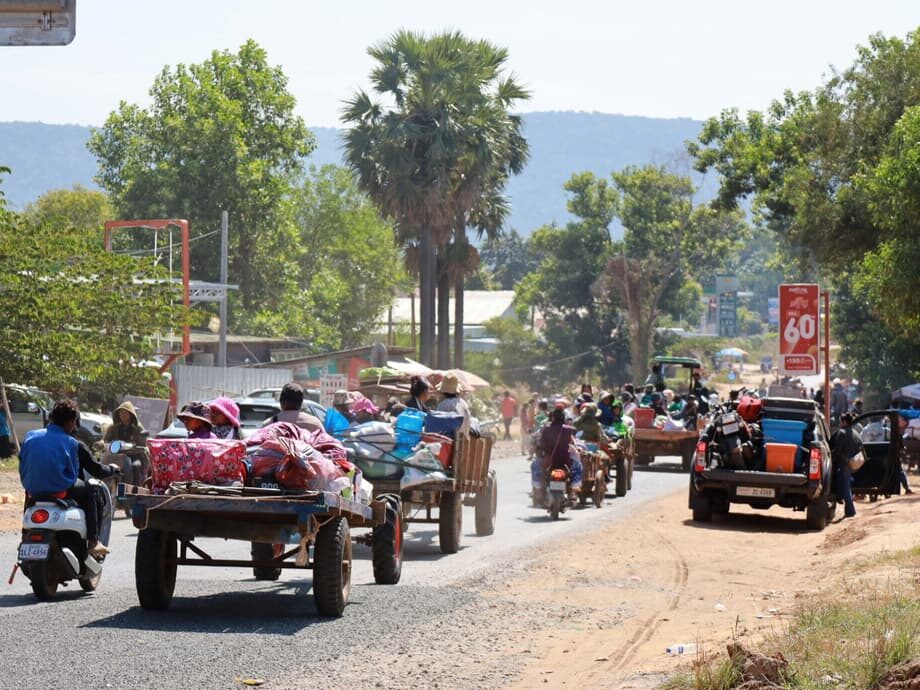
Thai warplanes struck positions along the Cambodia frontier on Monday after a deadly burst of fighting shattered a fragile truce that had reduced hostilities only weeks ago. Thailand said one of its soldiers was killed and others were wounded in pre dawn clashes, prompting air support against what it described as Cambodian military targets. Cambodian officials said their forces did not retaliate, but reported civilian deaths and injuries in border provinces. The flare up rapidly pushed families on both sides to leave their homes.
- Crisis erupts again along a fraught frontier
- What triggered the latest airstrikes?
- Claims and counterclaims from Bangkok and Phnom Penh
- Civilians on the move and a growing humanitarian strain
- A fragile ceasefire, high stakes diplomacy
- Why the border has been contested for a century
- Military capabilities and the risk of escalation
- Economic, cross border and regional ripple effects
- Options for lowering tensions
- What to Know
The strikes followed violence in and around Thailand’s Ubon Ratchathani and Sisaket provinces and Cambodia’s Preah Vihear and Oddar Meanchey. Thai commanders accused Cambodia of mobilizing heavy weapons and repositioning units close to the frontier, while Cambodia’s defense ministry said Thai forces launched attacks at dawn after days of provocative actions. Videos shared from the border showed smoke rising near tree lined ridges and roads jammed with pickup trucks carrying evacuees.
A ceasefire backed by Malaysia and witnessed in Kuala Lumpur in late October had aimed to lock in a halt to the five day war that erupted in July. That conflict killed at least dozens and displaced hundreds of thousands. The deal never addressed the root dispute over the border line, and in November Thailand suspended implementation after soldiers were injured by a landmine it said had been newly laid, a claim Cambodia denied.
The two countries share an 817 kilometer land frontier, about 508 miles, including undemarcated stretches that have produced periodic clashes for more than a century. Nationalist rhetoric, old minefields, and forward military positions have kept the area tense. The latest escalation risks pulling regional diplomacy back to the fore as neighbors try to prevent a wider breakdown in relations.
What triggered the latest airstrikes?
Both governments presented starkly different timelines for what happened in the early hours. Thai officials said Cambodian forces opened fire on Thai positions before dawn and that one Thai soldier was killed and several others wounded. The Royal Thai Air Force then conducted strikes it called limited and focused, saying the targets were military infrastructure close to the frontier. Cambodia countered that Thai troops launched the first attacks at around 5 a.m. local time and that Cambodian forces held fire even after coming under pressure.
Conflicting accounts and flashpoints
Thai commanders pointed to a pattern of incidents in recent days. They cited clashes near the Phu Pha Lek and Phlan Hin Paet Kon area in Sisaket province, along with reports that Cambodian units were moving heavy weapons near the line. Cambodian officials said Thai forces had attacked in Preah Vihear and Oddar Meanchey provinces and accused Thai units of damaging homes as villagers fled. The fog of war and the remoteness of many frontline areas make independent verification difficult, and the two sides have a long history of trading blame across this terrain.
The geography of the border contributes to the volatility. Rocky escarpments, thick forest, and a patchwork of village roads create blind spots for surveillance and complicate communication between local commanders. Small firefights can spread along ridge lines and valleys, pulling in additional units and escalating quickly, particularly when mortars or rockets are used near populated areas.
Claims and counterclaims from Bangkok and Phnom Penh
Thailand’s prime minister, Anutin Charnvirakul, framed the use of force as a response to violations of Thai sovereignty. He said the military would act as necessary to defend the country while insisting Bangkok did not seek a wider conflict.
“Thailand does not seek violence, but we will not tolerate violations of our sovereignty,” Anutin said, adding that further action would depend on conditions on the ground.
The army’s public messaging emphasized that air power was used to hit what it called discrete military positions across the frontier. A senior Thai army spokesman, Maj. Gen. Winthai Suvaree, pointed to strikes in high ground near a border pass.
“The target was at Cambodia’s arms supporting positions in the area of the Chong An Ma Pass,” Maj. Gen. Winthai said, accusing Cambodian forces of using artillery and mortars to attack Thai troops earlier in the morning.
Phnom Penh issued a different narrative. Cambodia’s defense ministry said its troops did not return fire during two separate incidents and described the Thai strikes as unprovoked. Senior officials highlighted the toll on ordinary people. Cambodia’s information minister, Neth Pheaktra, reported civilian deaths in two northern provinces.
“At least four Cambodian civilians have been killed and more were injured in Oddar Meanchey and Preah Vihear,” Neth said, condemning the strikes and calling for an end to Thai military operations.
Cambodia’s former prime minister Hun Sen, still a powerful figure in Cambodian politics, urged discipline among frontline units while accusing the Thai side of baiting retaliation.
“Be patient. Do not be drawn into a fight that would destroy the ceasefire and the peace declaration,” Hun Sen told Cambodian forces, while warning that provocation would continue.
Public statements from both capitals reflect a narrative battle that mirrors the armed one. Each side accuses the other of violating a ceasefire they both endorsed, and each says it is acting with restraint while the other is escalating. The gulf between those positions has complicated attempts to restore direct talks between military commanders.
Civilians on the move and a growing humanitarian strain
Authorities in Thailand ordered evacuations across four border provinces, moving people from exposed villages to temporary shelters. Officials said more than 385,000 civilians were under some form of evacuation order, with over 35,000 registered in shelters and many more staying with relatives. On the Cambodian side, provincial officials said over 1,100 families had been moved away from the frontier to safer areas.
Hospitals in Thailand’s Ubon Ratchathani province were reported to have curtailed operations in several facilities near the border, with residents redirected to alternate clinics. Schools in parts of northern Cambodia closed for the day as families left villages in Preah Vihear and Oddar Meanchey. Local markets and cross border checkpoints that ordinarily handle trade and daily commuting slowed or shut as the situation deteriorated.
These evacuations have immediate and longer term costs. Household incomes depend heavily on informal trade and seasonal work that ties border communities together. Families who fled in July have only recently returned, and with shelling and small arms fire audible again, many are choosing to leave before fighting shifts closer to populated areas. Emergency agencies are bracing for needs that include shelter, clean water, medical care, and services for children separated from schools. The presence of old minefields adds another layer of risk for people moving along little used paths.
A fragile ceasefire, high stakes diplomacy
The recent truce took shape after five days of fighting in July that left at least 40 to 48 people dead and displaced roughly 200,000 to 300,000. Malaysia’s prime minister, Anwar Ibrahim, worked with U.S. President Donald Trump to broker an initial halt to the fighting, and later a formal declaration in Kuala Lumpur. Thailand then suspended progress on the agreement in November after a landmine blast injured its soldiers. Bangkok accused Cambodia of planting new devices, while Phnom Penh said any explosions stemmed from legacy mines from past wars.
There were signs of progress in October, including steps toward allowing regional observers to monitor the truce. Those efforts are now in jeopardy. Thailand said it pulled back from talks after what it described as repeated violations, and Cambodian officials have indicated they want regional mechanisms to examine the latest incidents. The two sides have also clashed over the status of captured personnel from the July fighting. Thai media and officials have suggested delays in releasing Cambodian soldiers, aggravating tensions between commanders.
Anwar has urged restraint and offered support to prevent further clashes.
“Our region cannot afford to see longstanding disputes slip into cycles of confrontation,” the Malaysian leader said, calling on both sides to keep channels open and avoid escalation.
ASEAN traditionally avoids direct intervention in member disputes, preferring quiet diplomacy and consensual steps like observation missions. Even modest monitoring efforts can have an outsize influence if they enable faster communication, encourage local ceasefires, and create space for humanitarian access while political talks continue.
Why the border has been contested for a century
The roots of the dispute lie in colonial era mapping. In 1907, when France controlled Cambodia, cartographers produced a map that placed several temple complexes and surrounding ground on the Cambodian side. Thailand has long argued that parts of that map are inaccurate and that the true watershed line puts key terrain inside Thailand. The most famous example is the 1,000 year old Preah Vihear temple, perched on a cliff in the Dangrek Mountains.
In 1962, the International Court of Justice ruled that the temple itself was in Cambodian territory. Arguments continued over nearby land and access routes. Periodic crises have erupted, including a week of artillery exchanges in 2011 and a series of skirmishes over the past two decades. The broader border runs through thick forest and broken high ground, which complicates demarcation and gives tactical advantages to units that hold high ridges. That terrain, coupled with minefields laid during internal wars in the late twentieth century, keeps the area dangerous even in quiet periods.
National pride amplifies each incident. When soldiers are killed or civilians caught in cross fire, pressure rises on leaders to appear resolute. Even when political leaders agree on steps to cool tensions, it can take time for orders to filter down to small units operating in remote positions.
Military capabilities and the risk of escalation
The deployment of fighter aircraft is rare in Southeast Asia, and Thailand’s use of F 16 jets in July and again this week marked a sharp uptick in the scale of cross frontier engagements. Thai forces also operate Swedish made Gripen jets and a range of surveillance assets. Cambodia, which has a smaller air arm, relies more on ground artillery, rockets, and air defense guns, along with maneuver units positioned near key passes and roads.
Airpower introduces new risks. Precision strikes can still go awry when targets sit near villages or when intelligence is incomplete. Air attacks also invite counter moves, like redeployment of mobile air defenses or efforts to open new fronts that stretch an opponent’s forces. With multiple provinces now reporting sporadic clashes, there is a risk of a wider arc of confrontation that could draw in additional units and complicate evacuation and relief efforts.
Both countries have experience coordinating deconfliction during quiet periods. Direct hotlines between local commanders and mechanisms to verify incidents can reduce the chance that a skirmish triggers larger operations. Those tools have frayed amid recent recriminations, but they remain the fastest way to halt fire in specific sectors while diplomats work on broader arrangements.
Economic, cross border and regional ripple effects
Border economies are tightly interwoven. Villagers in Sisaket and Ubon Ratchathani sell goods in Cambodian markets, and Cambodians travel daily to Thai towns for work and health care. Fighting has disrupted that flow. Market stalls have shuttered, and cargo trucks are being rerouted away from exposed checkpoints. Even a brief closure can hurt small retailers and day laborers, whose incomes depend on steady cross border movement.
Major sporting and cultural events are sensitive to security shocks. The Southeast Asia Games in Bangkok faced disruptions as tension rose, and some Cambodian athletes withdrew from events in response to safety concerns. Public services have also been affected in frontline areas, with several hospitals curtailing operations and schools closing temporarily. Those moves reflect caution by authorities, but they also strain families that depend on daily wages and functioning clinics.
Regional partners have a stake in tamping down the crisis. ASEAN unity is built on the idea that disputes can be managed without open conflict. Renewed fighting risks diverting attention from economic cooperation and undermining confidence among investors and tourists. That is why Malaysia and other neighbors are urging quiet dialogue, and why discussions about observation missions or technical border talks could gain traction if the guns fall silent.
Options for lowering tensions
Several practical steps could reduce the risk of further fighting. First, both sides could reestablish direct commander level hotlines and require officers to seek authorization before firing in contested areas. Second, Thailand and Cambodia could agree to pull back heavy weapons a set distance from sensitive points and freeze new fortifications until joint demarcation teams complete surveys. Third, they could accept a small regional observer group to verify incidents, even on a time limited basis, to rebuild trust around a new ceasefire.
Humanitarian measures can also build confidence. Designated corridors for evacuations, commitments to avoid firing near hospitals and schools, and cooperation on clearing suspected minefields would benefit civilians and lower the temperature. Both countries are parties to the Mine Ban Treaty, which outlaws the use of antipersonnel landmines, and jointly planned clearance has worked during calmer periods.
Finally, resolving the status of captured personnel from the July fighting would remove a persistent irritant. A structured exchange or third party verification of detainees could help military commanders demonstrate progress to their rank and file while political leaders negotiate the tougher questions about maps, markers, and access routes.
What to Know
- Thai warplanes struck targets near the Cambodia border after pre dawn clashes, with Thailand reporting one soldier killed and multiple wounded.
- Cambodia says it did not retaliate and reported at least four civilian deaths in Oddar Meanchey and Preah Vihear.
- Evacuations expanded rapidly, with more than 385,000 Thai civilians under orders and over 1,100 Cambodian families moved to safer areas.
- The latest fighting follows a ceasefire backed by Malaysia and the United States after a five day war in July that killed at least dozens.
- Thailand suspended implementation of the truce in November, citing a landmine blast it blamed on Cambodia, which Phnom Penh denies.
- Both sides accuse each other of firing first, and their timelines of events differ by several hours.
- Airpower use is rare in the region, and Thai F 16 strikes raise the risk of escalation and collateral damage near villages.
- Hospitals near the frontier curtailed services and schools closed in parts of northern Cambodia as families fled.
- Malaysia’s prime minister urged restraint, saying the region cannot afford cycles of confrontation, while ASEAN may revive observer discussions.
- The century old dispute centers on colonial era maps and unresolved demarcation near historic temples, including Preah Vihear.