A sidewalk encounter ends with medical care
A woman in her seventies was taken to hospital after being startled by a humanoid robot on Rua do Campo Sul in Macau's densely populated Patane neighborhood at about 9:00 p.m. on March 5. Police said there was no physical contact between the woman and the machine, but her distress led to emergency medical attention.
Contents
- A sidewalk encounter ends with medical care
- What happened on Rua do Campo Sul?
- Videos turn a local disturbance into a public debate
- Why crowded neighborhoods are drawing concern
- Cameras and microphones bring privacy concerns
- What rules are community leaders seeking?
- Who would be responsible if someone were hurt?
- China's robot industry is expanding rapidly
- Preparing people for unfamiliar machines
- The Essentials
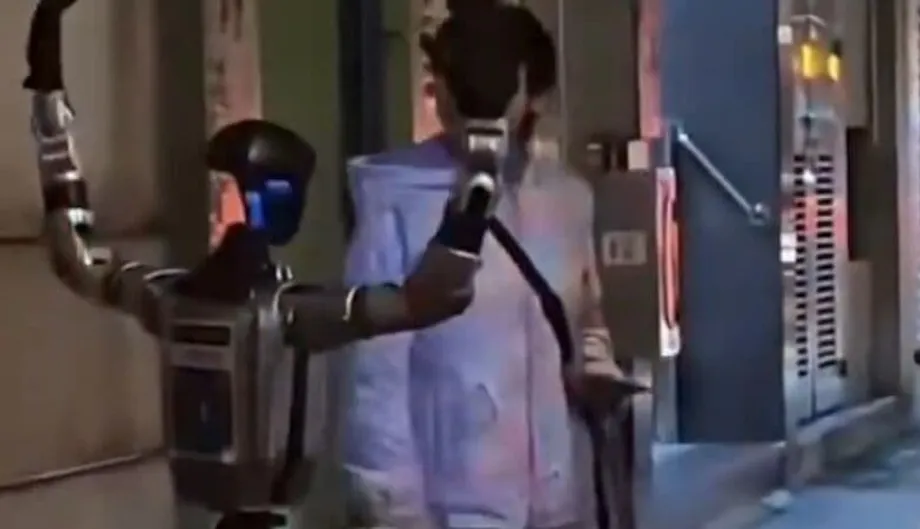
The Public Security Police Corps (PSP) said the resident was using her mobile telephone when she noticed an unusual presence behind her. She turned and found the robot standing close by. A confrontation followed, drawing passersby and eventually police to the street in northern Macau.
The robot belonged to a local tutoring center. An employee was testing it for future promotional activities when it encountered the woman. The machine resembled models made by the Chinese startup Unitree Robotics, although its manufacturer was not confirmed.
Officers took the robot away as a preventive measure and warned its operator to pay closer attention to the surroundings when using such equipment in public. The woman received treatment and was discharged shortly afterward without physical injuries.
Authorities confirmed the incident during the week leading up to March 10, 2026. It was described as the first registered confrontation between a person and an autonomous machine in Macau, a Chinese special administrative region. Its immediate outcome was limited to medical evaluation, a police warning and the removal of the robot, but the episode brought wider concerns about crowded sidewalks, privacy and responsibility into public discussion.
What happened on Rua do Campo Sul?
The woman was walking near a building on Rua do Campo Sul when the robot approached closely enough to alarm her. After turning away from her phone and seeing the machine, she became distressed and entered into a heated verbal exchange with its operator.
Police arrived within minutes of receiving an emergency call. They found the resident visibly upset and the operator trying to explain the situation. Medical personnel took her to a local hospital for evaluation and treatment.
The March 5 encounter involved a machine moving through an ordinary public thoroughfare, rather than performing in a controlled demonstration area. The tutoring center employee described the activity as routine testing ahead of promotional use.
The sequence of events was brief, but it involved several stages:
- At about 9:00 p.m. on March 5, the woman encountered the humanoid robot while walking along Rua do Campo Sul.
- The resident became distressed and argued with the operator, attracting attention from people nearby.
- Police responded within minutes of an emergency call, and medical personnel took the woman to hospital.
- The woman was discharged shortly afterward without physical injuries. Officers confiscated the robot as a preventive measure and warned its operator.
- During the week leading up to March 10, authorities confirmed the incident, while community discussion focused on safety and regulation.
Videos turn a local disturbance into a public debate
Witnesses began recording the confrontation before police arrived. Videos circulating on social media showed the woman shouting at the operator and questioning why such technology needed to be used in public spaces. The humanoid robot stood motionless nearby during the exchange.
Other footage showed emergency medical personnel attending to the resident, who felt unwell after the encounter. Images of officers escorting the machine away prompted internet commentators to call the episode the "first robot arrest in history."
Police action centered on taking the device away as a preventive measure. The phrase circulating online gave the footage a humorous framing, while the woman's distress and need for medical care gave the incident a more serious dimension.
The recordings also captured an operator who appeared confused by the intensity of the reaction. A test intended to prepare a machine for promotional work had become an unexpected confrontation with a pedestrian.
Macau's experience brought public fascination with humanoid robots together with apprehension about meeting them unexpectedly. The footage spread as entertainment, but it also encouraged discussion about how machines should behave around people who have neither chosen nor prepared to interact with them.
Why crowded neighborhoods are drawing concern
Zeng Zengwei, a member of the Northern District Community Services Advisory Council, raised concerns about humanoid robots during a formal meeting on Saturday. He said sightings of the machines were becoming more common in crowded districts, particularly near educational institutions and transportation hubs.
Zeng said he had seen robots occasionally collide with pedestrians while moving autonomously through congested areas. Autonomous movement means that a machine can carry out some navigation tasks without a person directing every individual step.
Children and elderly residents were among the groups identified as vulnerable when robots share busy sidewalks. A machine navigating a dense flow of people must respond to movement around it, while pedestrians may be unfamiliar with its size, behavior or ability to stop.
Zeng stressed that robots remain machines and can experience system failures or encounter unexpected circumstances. A collision could lead to injury, medical costs and disagreement over who must take responsibility.
The Patane encounter ended without physical trauma. Zeng's observations broadened the debate beyond that single event, bringing attention to the possibility of direct collisions as robotic devices become more visible in everyday public spaces.
Cameras and microphones bring privacy concerns
Zeng also raised questions about the recording equipment built into modern humanoid robots. Cameras, microphones and other sensors help these machines navigate and interact with their surroundings.
A camera can supply visual information about nearby objects and people. A microphone can collect sound used for interaction. These functions help a robot operate, but they also create the possibility of capturing people's faces, conversations or other personal information.
Zeng warned that recording images or conversations without consent could conflict with Macau's personal data protection laws. He called for legislative oversight of robotic surveillance functions to ensure that their use complies with the region's privacy rules.
The privacy concern sits alongside physical safety. A robot can occupy a sidewalk without touching anyone while still collecting information from the people around it. The discussion therefore covers both how machines move and what their equipment records.
What rules are community leaders seeking?
The advisory council urged authorities to develop specific legislation governing humanoid robots before further incidents occur. The proposals included clear safety standards, designated areas for operation and rules assigning responsibility when autonomous machines operate near people.
Macau currently has no specific legislation addressing humanoid robot operation in public spaces. Operators consequently lack clear guidance on matters such as how far a device should remain from pedestrians, how quickly it may move and what to do when an encounter becomes confrontational.
The tutoring center employee involved in the Patane incident lacked specific training on safely approaching vulnerable people, including elderly pedestrians and young children. The police warning focused on greater awareness of the surroundings during public deployment.
Designated operational zones would identify where machines may be used. Safety standards would set expectations for their behavior. Liability rules would address who bears responsibility when their operation causes harm or expense.
Community leaders fear that, without a framework covering these issues, similar encounters could lead to more serious injuries or legal disputes. Their call is for rules that address public use before the number of machines and interactions grows further.
Who would be responsible if someone were hurt?
The owner, operator, manufacturer and software developer could all become part of a dispute when a robot causes harm. Each has a different connection to the machine: ownership, immediate supervision, physical construction or the instructions that guide its behavior.
The Macau incident brought that question into focus because the woman required medical attention despite having no physical contact with the robot. Public safety discussions must therefore consider distress as well as collisions.
Insurance and compensation arrangements also need clarification. Liability is the legal responsibility for harm, including the question of who should pay medical bills or cover damage to property.
Traditional arrangements often assume that a person directly controls a vehicle or device. Autonomous robots can operate with varying degrees of independence, making it more complicated to determine whether an incident arose from operator error, a software malfunction or a limitation in the machine's design.
Macau's debate now includes how those different causes would be assessed and how costs would be assigned. No specific timetable for adopting humanoid robot legislation was given.
China's robot industry is expanding rapidly
Industry estimates put worldwide humanoid robot installations during 2025 at approximately 15,000. More than 85 percent occurred in China, compared with about 13 percent in the United States.
Applied to that estimated total, the shares represent more than 12,750 installations in China and roughly 1,950 in the United States. China's share was more than six times the American share, illustrating the scale of the difference in deployment.
That growth reflects substantial investment in artificial intelligence and mechanical engineering across China's technology sector. Four emerging Chinese startups, Unitree Robotics, Galbot, Noetix and MagicLab, have become prominent participants in humanoid robot development.
The companies demonstrated their latest machines during the Lunar New Year Gala on February 16, China's most watched televised event. Robots performed acrobatic movements and martial arts routines, displaying abilities beyond basic walking.
The televised demonstrations served both to familiarize audiences with humanoid machines and to advertise technical capabilities to potential buyers. They placed robots in a planned performance setting, while the Macau incident involved an unexpected meeting during an ordinary walk.
Current uses include security patrols, logistics support, retail promotion and entertainment. Logistics support involves helping with the movement or handling of goods. The Macau tutoring center's plan added education marketing to the range of activities in which businesses are considering these machines.
As prices fall and capabilities expand, industry projections anticipate exponential growth in public deployments across Chinese urban centers. That means growth expected to accelerate, rather than continue by the same fixed number of machines each year.
Preparing people for unfamiliar machines
Many residents remain unfamiliar with the appearance and behavior of humanoid robots. The speed of deployment has outpaced public education about what the machines can do and where their limits lie.
The Macau woman encountered a robot suddenly and at close range while her attention was on her telephone. Her reaction shows why an ordinary street setting can present challenges different from a televised performance or a planned promotional event.
The psychological dimension includes what is often called the uncanny valley: discomfort that people may feel when something looks or behaves almost, but not quite, like a human. That concept is part of the wider discussion about reactions to humanoid machines. The immediate event in Macau was a resident becoming distressed after an unexpected encounter.
Future rules may need to address emotional and psychological safety alongside collision avoidance, particularly for people unused to sharing sidewalks with mechanical figures. Public education and gradual introductions have been suggested as ways to reduce the shock of unfamiliar technology.
The tutoring center's intended promotional use points toward a possible future in which educational institutions deploy robots to attract attention and engage students. The Patane episode illustrates the practical preparation such activities require, including attention to nearby pedestrians and responses when someone becomes frightened.
Macau's discussion now connects three issues that are often considered separately: the rapid development of robot technology, the safety of public deployment and the experience of people who unexpectedly encounter it. The woman was discharged, but the calls for clearer safety, privacy and responsibility rules continued.
The Essentials
- A woman in her seventies was taken to hospital after encountering a humanoid robot on Rua do Campo Sul in Patane at about 9:00 p.m. on March 5.
- Police said no physical contact occurred. She received medical care and was discharged shortly afterward without physical injuries.
- The robot belonged to a tutoring center and was being tested by an employee for future promotional activities.
- Officers confiscated the machine as a preventive measure and warned the operator to pay greater attention to the surroundings.
- Authorities described the incident as Macau's first registered confrontation between a person and an autonomous machine.
- Council member Zeng Zengwei raised concerns about pedestrian collisions, cameras, microphones, privacy and responsibility for harm.
- Community leaders called for specific legislation covering safety standards, operational areas and liability.
- Industry estimates placed more than 85 percent of approximately 15,000 humanoid robot installations worldwide in 2025 in China, compared with about 13 percent in the United States.