The Perfect Storm in Global Shipping Fuel Markets
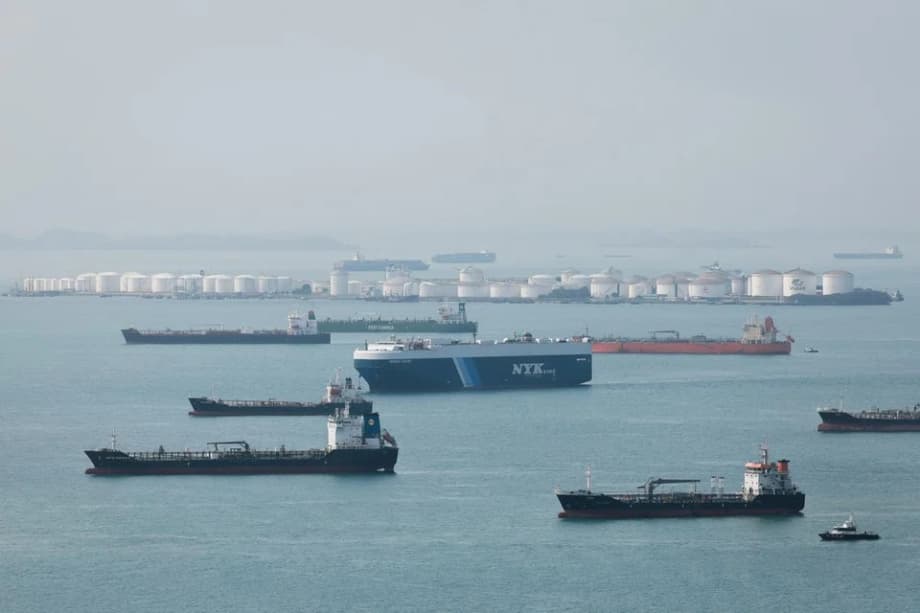
Singapore’s marine fuel distributors are rationing supplies and canceling orders as the escalating war in the Middle East triggers unprecedented volatility in bunker markets. The cost of very-low sulphur fuel oil in the city-state has more than doubled since late February, while marine gasoil prices have skyrocketed by 160 percent during the same period, far outpacing the 40 percent rise in crude oil benchmarks.
Several distributors directly involved in the trade, speaking on condition of anonymity due to lack of media authorization, confirmed they have halted large volume purchases since last week. Their reluctance to commit to volatile prices, driven by disruptions in the Persian Gulf, has created an impression of tightness in Singapore’s local market despite wholesale supplies remaining relatively comfortable by historical standards.
The distributors are now prioritizing preferred customers while trimming or canceling other sales to ration existing stock. Some are exploiting rising spot market premiums, which have hit record highs ranging well above $200 per metric ton over fuel oil cargo quotes, according to market data.
The Hormuz Chokepoint and Insurance Crisis
The crisis centers on the Strait of Hormuz, the narrow waterway connecting the Persian Gulf to the Arabian Sea through which roughly 20 percent of global crude oil and fuel shipments typically flow. Since Israel and the United States launched strikes against Iran on February 28, ship traffic through the strait has collapsed by 97 percent, according to the United Nations Conference on Trade and Development.
Arne Lohmann Rasmussen, chief analyst at Global Risk Management, described the situation in stark terms.
It is de facto closed in that no one dares to go through. You can be attacked, and you can’t get insurance or it is extremely expensive, so you have to wait until the security situation is better.
The insurance crisis has intensified dramatically. Major marine insurers including Gard, Skuld, NorthStandard, the London P&I Club and the American Club canceled war risk coverage for vessels operating in Iranian waters, the Gulf and adjacent waters effective March 5. This withdrawal has left more than 150 vessels, including oil and liquefied natural gas tankers, stranded around the Strait of Hormuz.
Shipping rates have responded accordingly. The cost of hiring a supertanker to transport oil from the Middle East to China has nearly doubled to a record high exceeding $400,000 per voyage, according to London Stock Exchange Group data.
Singapore’s Strategic Position Under Pressure
As the world’s largest bunkering hub, Singapore typically handles vast volumes of fuel oil and marine gasoil resold to vessels requiring refueling. The city-state’s industry relies on ample onshore and floating storage together with diverse supplier networks, making it more resilient than smaller hubs. However, the effective closure of the Strait of Hormuz has disrupted flows from key Middle Eastern producers including the UAE, Iran, Iraq, Kuwait and Saudi Arabia.
The Maritime and Port Authority of Singapore (MPA) acknowledged monitoring developments closely, stating in an email response that “Singapore’s bunker supply comes from several sources. At present, there is adequate supply to meet demand.” Government data shows residual fuel stockpiles rose in the week to March 11, hovering above the seasonal five-year average.
Yet beneath these headline figures, pressure is building. Inventories of middle distillate fuels, which include jet fuel and gasoil, have fallen to their lowest levels since November 2022. Singapore jet fuel prices have doubled since the war began, creating immediate pressure on aviation costs.
The conflict has also disrupted Fujairah, the UAE port located outside the Strait of Hormuz that serves as a key alternative hub. Recent drone attacks on Fujairah’s petroleum facilities have triggered fires and temporary suspension of oil-loading operations, making shipowners hesitant to call at the port despite its strategic location as the terminus for the Abu Dhabi Crude Oil Pipeline.
Market Mechanics and Trading Behavior
The extreme uncertainty has fundamentally altered trading patterns. Most sellers have abandoned term contracts in favor of spot offers to capture surging premiums. Traders report that suppliers are now demanding decisions within five minutes of presenting cargo options, compared to typical windows lasting up to an hour previously.
A China-based trader, speaking anonymously to Reuters, confirmed the operational strains.
Some ships are unable to be refuelled at the Singapore port due to soaring oil prices supported by the Iran war.
The price divergence between fuel grades has become pronounced. While very-low sulphur fuel oil prices climbed 9.07 percent according to General Index data, intermediate fuel oil (IFO380) rose 9.17 percent. However, at Fujairah itself, high-sulphur fuel oil prices actually weakened by 3.09 percent while VLSFO climbed 8.44 percent, reflecting the specific supply disruptions affecting different grades.
Regional variations are stark. While Singapore VLSFO prices exceeded $1,000 per metric ton with premiums over $200, Rotterdam prices remained at $755 per metric ton, illustrating how European supply through the Amsterdam-Rotterdam-Antwerp hub has remained largely shielded from Middle East disruptions.
In Zhoushan, China’s largest bunker port, suppliers have slowed offers after Beijing requested companies suspend new contracts for refined fuel exports. Vietnam has reportedly stopped selling bunkers entirely to conserve fuel for domestic consumption.
Global Ripple Effects Beyond Shipping
The bunker fuel crisis extends far beyond maritime logistics into broader economic impacts. For Singapore specifically, the trade-dependent city-state faces direct inflationary pressure across multiple channels. Household electricity tariffs, tied closely to international gas prices, are expected to reverse recent declines. Pump prices for gasoline have already responded to the volatility.
Aviation markets are experiencing severe pressure. Qantas has announced international airfare increases of approximately 5 percent, citing jet fuel costs that rose “up to 150 percent over the past fortnight.” More than 43,000 flights have been cancelled globally since the crisis began, according to aviation analyst Cirium. Dean Long of the Australian Travel Industry Association warned that the full impact on flight prices would materialize over three to six months as airlines exhaust their fuel hedging strategies.
The humanitarian sector faces acute challenges. The World Food Programme reports that shipping lines are diverting services and adding surcharges, creating congestion far from the Middle East. Jean-Martin Bauer, director of the WFP’s food and nutrition analysis service, described the situation as “nothing less than another seminal moment in global supply chain history.”
We’re needing to go the long way around the Cape of Good Hope to reach some of our key geographies. We’re seeing congestion in Asia. It’s quite a severe disruption that’s taking place right now.
WFP operations to Sudan, the agency’s largest mission, now face approximately 25 days of additional shipping time, representing a 50 percent extension of supply chains. The UN warns that higher energy, fertilizer and transport costs may intensify food insecurity for vulnerable populations already struggling with debt distress and limited fiscal capacity.
Operational Challenges and Congestion Risks
Physical suppliers across Asia are urging vessel operators to secure bunker stems well ahead of delivery dates, with recommended lead times extending to 10-15 days for standard grades and 12-22 days for low-sulphur marine gasoil. Singapore suppliers report that roughly half of normal LSMGO providers are currently unable to offer the grade.
Port congestion indicators are rising. The queue-to-berth ratio at China’s Shanghai and Ningbo ports climbed to 1.4 by March 7 from 1.0 before the conflict began, according to maritime analytics firm Linerlytica. While Singapore’s ratio remains steady at approximately 0.6, industry experts warn that diverted traffic from Fujairah and delayed Middle East cargoes could rapidly strain capacity.
Gene Seroka, executive director of the Port of Los Angeles, noted that bunker fuel prices have effectively doubled since hostilities began, increases that shipping lines pass to cargo owners within 30 days. Shipping veteran Ron Widdows, who previously led major ocean carriers, warned that the interconnected nature of global shipping networks means disruptions spread quickly.
As vessels originally bound for Middle Eastern ports unload at alternative transshipment centers including Singapore, Colombo and Salalah, terminal utilization rates are climbing and cargo handling productivity is slowing. The coming weeks will prove critical in determining whether these disruptions remain localized or cascade through global supply chains.
The Essentials
- Marine fuel prices in Singapore have more than doubled since February 27, with marine gasoil soaring 160 percent and very-low sulphur fuel oil exceeding $1,000 per metric ton
- Ship traffic through the Strait of Hormuz has collapsed by 97 percent, disrupting flows of crude and fuel oil from key Middle Eastern suppliers
- Major marine insurers cancelled war risk coverage for Gulf waters effective March 5, leaving over 150 vessels stranded and driving record-high shipping rates
- Bunker distributors in Singapore are rationing supplies, canceling non-preferred customer orders, and requiring spot market purchases rather than term contracts
- The crisis extends beyond shipping to impact airfares, electricity tariffs, food aid deliveries, and global inflationary pressures