Betrayed by Brokers: How the Scams Work
Mary believed she had secured a position at a beauty salon in Singapore. The Myanmar national paid more than S$5,800 in agency fees for this promise, a staggering sum that represented years of savings or debt. Upon arrival, her agent informed her that the salon was temporarily closed. Instead, she was sent to a massage shop where she was forced to provide illicit services. When she refused to perform sexual acts for a male client, her employer terminated her immediately.
This pattern of deception is becoming increasingly familiar to aid organizations in Singapore. The Humanitarian Organisation for Migration Economics (HOME) and Transient Workers Count Too (TWC2) have documented a sharp rise in Myanmar nationals seeking assistance. TWC2 records show cases involving Myanmar workers surging from just 1 in 2022 to 131 in 2025. These numbers likely represent only a fraction of the actual exploitation, as many workers remain silent out of fear.
The scams follow a recognizable script. Diana, a 28 year old who paid approximately S$4,700 in fees, received paperwork listing her as a food processing worker with promises of beautician training. She was instead dispatched to a massage parlour where she alleges she was molested before fleeing to an NGO for protection. In another case, Zaw and Kyaw, two men who escaped Myanmar to avoid military conscription, paid over S$4,000 each for promised two year contracts as kitchen assistants. Upon arrival, they discovered their work permits classified them as performing artistes, valid for only six months rather than the promised twenty four.
Stephanie Chok, executive director of HOME, explains the coercion mechanisms at play. Some women feel pressured into sexual services they never agreed to because they have already invested heavily in agency fees. They fear termination and deportation if they refuse, leaving them trapped between exploitation and financial ruin. This creates a cycle where agencies profit repeatedly from recruitment fees, dismiss workers for dubious reasons, and replace them with new victims.
Trapped Between War and Economic Desperation
The surge in exploitation cases arrives against the backdrop of Myanmar’s deepening crisis. Since the military coup in 2021, civil war has displaced more than one million people and shattered the economy. In 2024, strict military conscription laws took effect, sending young people fleeing across borders to avoid compulsory service. Singapore, with its reputation for stability and proximity, has become a primary destination. Estimates suggest approximately 200,000 Myanmar nationals currently work in the city state.
The desperation to escape conflict creates unique vulnerabilities. Ethan Guo, executive director of TWC2, notes that Myanmar workers differ from other migrant groups because they simply cannot afford to return home. Many have families dependent on remittances for survival. Others, like Kyaw, have parents detained by the military, making contact dangerous. Zaw expressed acute stress over his 14 day special pass issued by the Ministry of Manpower (MOM), which allows him to remain while his case is investigated. Everything depends on resolution within this narrow window, yet he worries equally about his sick father back home.
This inability to return gives employers and agents extraordinary leverage. Workers endure salary cuts, wrongful deductions, and poor conditions because they know termination means repatriation to a war zone. Some face salary reductions of more than 60 percent, or conversion to commission based structures that eliminate basic wages and housing allowances entirely. The fear of being sent back to a country where they may face conscription or persecution silences complaints and perpetuates abuse.
Historical Roots of Vulnerability
The current crisis has roots extending back more than a decade. In September 2014, Myanmar’s government imposed a five month ban on women migrating as domestic workers to Singapore following high profile abuse cases. A second ban followed in June 2015. Rather than stopping migration, these prohibitions simply drove the process underground. Workers began entering on tourist visas or using forged documents, rendering them invisible to labor protections and more susceptible to trafficking.
Research from the Migration Policy Institute shows that between 2013 and 2015, the population of Myanmar domestic workers in Singapore grew by 50 percent to around 30,000 despite the official bans. The restrictions actually increased costs and risks, as workers paid higher fees to facilitate bribes for circumventing regulations. Many arrived undocumented, stripping them of legal coverage and placing them at the mercy of unregulated agents.
The infrastructure of exploitation spans both sides of the border. In Yangon and Singapore, unscrupulous agents have recruited underage workers using forged travel documents. Many agencies are run by foreign nationals operating from offices without proper signage, located in commercial buildings different from their officially listed addresses. When CNA approached allegedly involved agencies, one did not respond while another had a disconnected phone number. This opacity makes accountability nearly impossible.
The Myanmar government has lacked explicit migration governance. Unlike the Philippines, which maintains the Philippine Overseas Employment Administration, or Indonesia with its National Authority for the Placement and Protection of Indonesian Overseas Workers, Myanmar has not developed comparable regulatory instruments. Policy remains reactive rather than proactive, leaving workers unprotected as outflows increase.
Structural Gaps in Protection
Singapore’s legal framework contains significant loopholes that leave workers exposed. Migrant domestic workers are notably excluded from the Employment Act, which provides basic protections for other workers regarding hours, rest days, and salary. Instead, they fall under the Employment of Foreign Manpower Act, where terms like salary and working hours are determined by employers with only non binding guidelines rather than enforceable standards. This legal distinction creates conditions where employers may act with impunity.
The labor brokerage model itself generates debt bondage. Domestic workers typically migrate with minimal upfront costs, but agencies recover expenses through salary deductions lasting six to eight months. During this period, incomes shrink to allowance levels of just tens of dollars monthly. This debt structure makes workers unwilling to report abuse, as resistance risks termination before debts are cleared. For male workers in construction or shipping, migration costs are often borrowed from family or moneylenders, creating similar pressure to endure mistreatment.
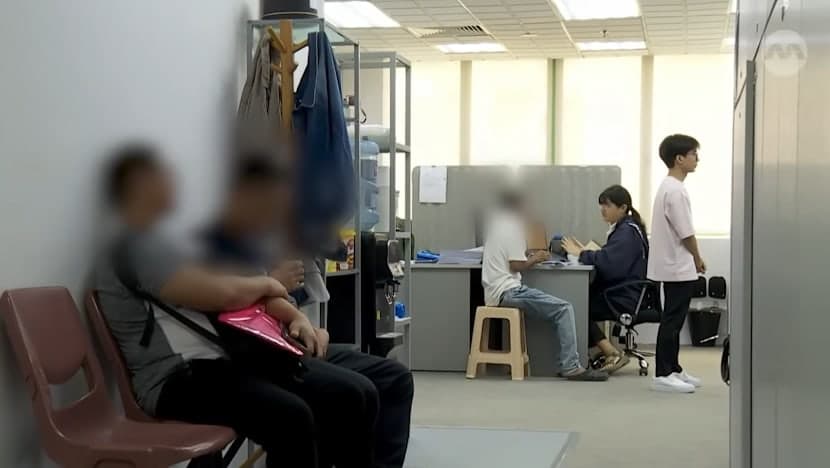
Formal channels for redress present their own obstacles. When HOME assists workers in filing complaints to recover agency fees, the burden of proof rests entirely on the worker to demonstrate payment. Many transactions occur informally or across borders without receipts, making documentation impossible. Investigations stretch over months or years, often failing to produce restitution. Meanwhile, workers on special passes live in limbo, unable to work legally while awaiting resolution.
The consequences of these gaps can be fatal. In 2016, Piang Ngaih Don, a 24 year old domestic worker from Myanmar, died from starvation and torture weighing just 24 kilograms. Her employer, former police officer Kevin Chelvam, received a 10 year sentence for abetting grievous hurt and tampering with evidence. His ex wife and mother in law received 30 and 17 year sentences respectively. The case illustrated extreme outcomes when oversight fails, yet most abuse never reaches courts. A 2017 study by Research Across Borders found six out of ten domestic workers in Singapore experienced abuse ranging from verbal threats to physical violence and food deprivation.
Official Responses and Persistent Fears
The Ministry of Manpower maintains that Singapore provides comprehensive protection for foreign domestic workers. Citing a 2015 survey, the ministry states that more than 97 percent of such workers express high satisfaction levels and close to 80 percent wish to continue working in the country. An MOM spokesperson told CNA that no notable increase in errant employment practices affecting Myanmar workers has appeared over the past three years, suggesting these workers face issues similar to other migrant groups.
Under current regulations, employment agencies may collect no more than one month of a worker’s salary per contract year, capped at two months total. Employers collecting kickbacks face fines up to S$30,000 and imprisonment up to two years, while unauthorized salary deductions carry fines up to S$20,000. Workers with valid claims may receive special passes until cases conclude, though without resolution they must return home or find new employment only if current employers agree.
NGOs argue these measures fail to address structural realities. The fear of repatriation to an active war zone discourages reporting, meaning official statistics understate the problem significantly. Many workers avoid complaints to preserve future employment chances in Singapore or avoid blacklisting. Others endure short payment and poor conditions simply to maintain work permits. Advocacy groups are urging stronger preventative action and cross border collaboration to stop abuse before workers arrive in Singapore.
Networks of Survival and Solidarity
Amid institutional failures, Myanmar workers have built their own support systems. At Peninsula Plaza in the City Hall area, known as Singapore’s Little Burma, community networks provide informal assistance. While many declined to speak with journalists fearing repercussions from Myanmar’s military government, the location serves as a gathering point for sharing information and resources.
More formal support has emerged through groups like HEARTS@SG. On Sundays, women who previously worked as engineers, mathematicians, and nurses in Myanmar gather for caregiving training programs. Led by former nurse Yee Leh Winn, these sessions offer practical skills while providing psychological support. Participants share meals and discuss anxieties about family members in conflict zones. The program addresses nutrition and sleep deprivation, recognizing that mental health deteriorates when workers worry about loved ones while caring for dementia patients in Singapore.
Aye Aye, a domestic worker who approached HOME after her employer confiscated her phone and withheld salary for months, found safety through these networks. She now encourages fellow workers to seek help when exploited. Liyana, an Indonesian worker who faced similar restrictions and excessive hours, shares this message of persistence. These peer connections provide essential lifelines when formal protections fail.
For Mary, Diana, Zaw, and thousands like them, the future remains uncertain. They cannot return to a country consumed by war, yet staying in Singapore requires navigating a system where documentation may be fraudulent, employers hold disproportionate power, and legal recourse moves slowly. The fear of what awaits at home, and the reality of what faces them here, defines their daily existence.
Key Points
- Reports of exploitation among Myanmar workers in Singapore have surged, with TWC2 handling 131 cases in 2025 compared to 1 case in 2022
- Common scams involve misrepresented job offers where workers pay S$4,000 to S$5,800 in fees for positions that do not exist or differ radically from promises, including forced work in massage parlors and entertainment venues
- Myanmar’s civil war and 2024 conscription laws have created a population that cannot afford repatriation, giving employers leverage to enforce abusive conditions
- Historical bans on domestic worker migration from 2014 to 2016 drove movement underground, establishing irregular channels that remain active today
- Domestic workers in Singapore lack coverage under the Employment Act, leaving them without legally binding standards for rest days, hours, or wages
- Community organizations like HOME and HEARTS@SG provide shelter, legal assistance, and training programs to support workers navigating these challenges