The Order That Changed Everything
At 12:40 PM on September 8, 2025, a terse command crackled across police radios in Kathmandu. Someone using the call sign “Peter 1” told officers to “deploy necessary force” against thousands of young protesters gathered outside Nepal’s parliament. Ten minutes earlier, authorities had imposed a curfew. Now, the command authorized live ammunition.
That order, issued by former Inspector General of Police Chandra Kuber Khapung according to BBC Eye Investigations, transformed a youth-led demonstration against corruption into one of the deadliest days in Nepal’s modern democratic history. By dusk, 19 unarmed civilians lay dead in the capital. Over the following 24 hours, the death toll would climb to 77, marking the worst unrest in the Himalayan nation since the end of its decade-long civil war in 2006.
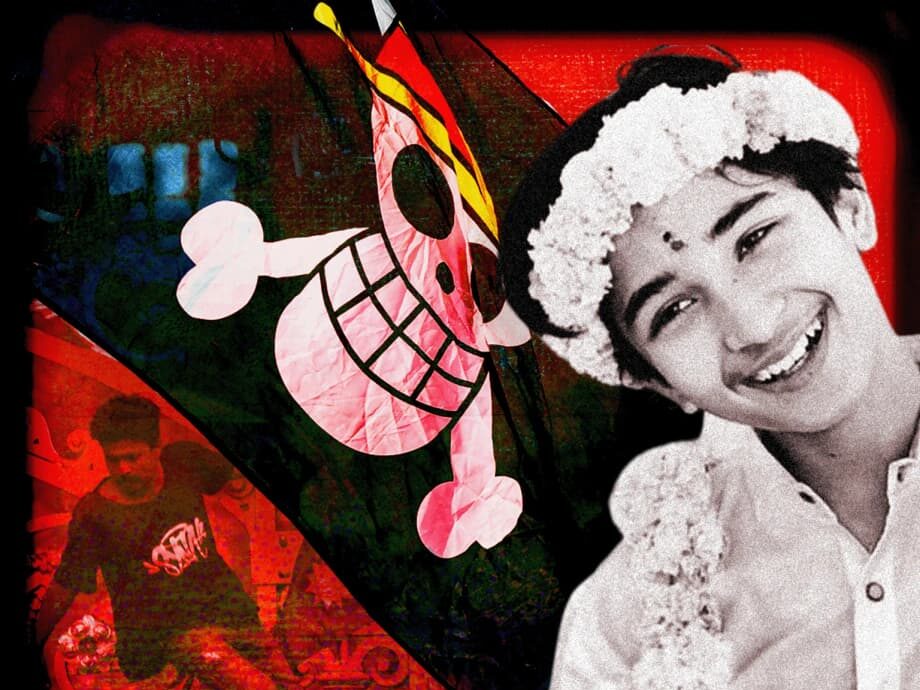
Among the first day victims was 17-year-old Shreeyam Chaulagain, a secondary school student who had assured his mother that police would never target children in uniform. Video evidence analyzed by the BBC shows Chaulagain walking away from the crowd, carrying his backpack and wearing a green school jumper, when a bullet struck the back of his head. He was not throwing stones or threatening officers. He was simply trying to leave.
The BBC World Service investigation, based on an internal police log and analysis of more than 4,000 videos and photographs, represents the most comprehensive account yet of the violence that toppled the government of Prime Minister KP Sharma Oli. The findings reveal a chain of command failures, intelligence breakdowns, and the authorization of lethal force against demonstrators who, by multiple independent assessments, posed no imminent threat to life.
Khapung, who retired in November 2025, has not denied issuing the order but claims he acted only after receiving authorization from a government security committee and exhausting all other crowd control measures. However, the committee’s chair, Chief District Officer Chhabi Lal Rijal, has denied authorizing live rounds in court testimony. The contradiction leaves a central question unanswered six months later: who bears responsibility for the bloodshed?
A Movement Born of Frustration
The protests that erupted on September 8 did not materialize overnight. For months, Nepal’s Generation Z, those aged roughly 14 to 29, had been mobilizing online against what they perceived as entrenched corruption and nepotism among the country’s political elite. The movement coalesced around the viral “nepo baby” hashtag, which contrasted the lavish lifestyles of politicians’ children with the daily struggles of ordinary Nepalis in a country where youth unemployment exceeds 20% and per capita income remains below $1,400 annually.
Social media accounts belonging to the children of ministers and former prime ministers displayed designer gifts piled like Christmas trees, exotic holidays at five-star resorts, and extravagant weddings that closed public roads. For a generation facing a choice between unemployment at home and precarious labor in Gulf states, the disparity proved unbearable. Approximately three million young Nepalis currently work overseas, driven by lack of opportunity at home.
The immediate catalyst came on September 4, when the government banned 26 social media platforms including Facebook, Instagram, X, YouTube, and WhatsApp, alleging they had failed to register under new regulations designed to combat misinformation and cybercrime. Critics denounced the move as censorship intended to silence dissent. The ban severed primary communication channels for millions of young Nepalis, many of whom relied on these platforms for livelihoods, education, and expression.
Organizers quickly migrated to Discord, the gaming chat platform, where they planned a peaceful demonstration outside parliament for September 8. In one forum, “Youth Against Corruption,” members coordinated logistics and urged participants to wear school uniforms to emphasize their nonviolent intentions. “He said corruption had hollowed out [Nepal],” Shreeyam Chaulagain’s father recalled of his son, who reassured his mother that police would not target students in uniform.
By 9:00 AM on the day of the protest, approximately 30,000 young people had gathered at Maitighar Mandala, a busy intersection in central Kathmandu, carrying banners reading “Youth Against Corruption.” The crowd swelled to ten times the size anticipated by security forces, who lacked adequate intelligence about the digital mobilization methods driving the assembly. Police later admitted they did not understand how Generation Z organized on social media or how those online conversations translated into physical presence on the streets.
Inside the Command Center
While protesters chanted outside, senior security officials gathered in a situation room nearly 3 kilometers away, near Nepal’s central administrative complex. Representatives from the civilian police, army, armed police, and intelligence agencies monitored events under the leadership of Chief District Officer Rijal. The facility had a television but no stable internet connection, preventing officials from accessing live CCTV feeds around the parliament building.
The disconnect proved fatal. No single individual or unit possessed a comprehensive understanding of the situation unfolding on the streets, according to police officers present that day. As protesters breached barricades at 11:47 AM and surged toward parliament, commanders struggled to assess whether the crowd posed a genuine threat to national security or simply represented an outpouring of civic frustration.
At 12:15 PM, some demonstrators climbed the walls of the parliamentary compound. Police responded with tear gas and batons. Inside the compound, panicked officers radioed the command center requesting permission to use live ammunition after water cannons and rubber bullets failed to disperse the crowd. “Some of us were badly hurt,” one anonymous officer told the BBC. “One of us asked to be rescued.”
The curfew declaration at 12:30 PM technically made the protests illegal, but many participants could not hear the announcement. When stones began striking police lines, field commanders repeatedly requested authorization for lethal force. The log shows “Peter 1” responded ten minutes later with instructions that curfew was already in place and no further permission was needed to deploy necessary force.
International standards for crowd control require that firearms never be used simply to disperse an assembly. The United Nations Basic Principles on the Use of Force and Firearms mandate that live ammunition be reserved for situations involving imminent threat of death or serious injury, and even then require appropriate warnings and proportionality. Human rights monitors would later determine that these standards were ignored.
Meenakshi Ganguly, deputy Asia director at Human Rights Watch, condemned the operation.
“The police shooting of demonstrators shows the administration’s appalling disregard for the lives of its own citizens. The authorities need to hold those responsible for these killings to account instead of upholding the culture of impunity that has allowed the security forces to get away with murder.”
The Shootings on the Ground
The first death from live fire occurred at 1:15 PM, when 34-year-old Binod Maharjan was carried from the scene with a fatal head wound. He died later at the hospital. Over the next three hours, security forces fired 2,642 live bullets, 1,884 rubber rounds, and 6,279 tear gas shells, according to police logs examined by Harvard’s Atrocity Prevention Lab.
The BBC’s analysis of six specific shootings found no evidence that the victims were engaging in violence at the time they were struck. Forensic reports from Tribhuvan University Teaching Hospital confirmed that nearly all gunshot victims were hit above the waist, primarily in the head, neck, and chest, directly violating Nepal’s own crowd control regulations requiring that any live rounds be aimed below the knee.
At 2:09 PM, video footage captured the moment Shreeyam Chaulagain was killed. The teenager, wearing a green school jumper and carrying his backpack, is seen walking away from the front line where other protesters were throwing stones. He claps his hands in a gesture that appears calm. A bullet strikes the back of his head, and he collapses. He was not throwing objects or threatening officers.
Twenty-four-year-old Yogendra Nyaupane died at 2:21 PM, when video shows police firing seven shots from inside the parliamentary compound at protesters scattering outside. “The firing began wildly,” a journalist documenting the event told Amnesty International. “From inside the parliament compound, from outside, and from armed units near the main gate.”
Medical personnel at Civil Service Hospital, where many wounded were taken, described the emergency ward as resembling “a butcher’s house” by 2:00 PM. Doctors removed rubber bullets from patients’ skulls. Tear gas was fired into hospital premises, disrupting emergency services and causing breathing difficulties among admitted patients, children, and elderly people uninvolved in the protests. A doctor who treated the wounded confirmed that around 50 to 60 percent of patients suffered severe injuries, a reversal of normal mass casualty patterns where most cases are typically moderate.
A Nation Erupts
News of the killings spread rapidly through the evening of September 8, despite the social media blackout. By the following morning, anger had crystallized into something far more volatile. What began as a Gen Z protest expanded into a general uprising. Tens of thousands of Nepalis of all ages took to the streets, transforming the demonstrations into a nationwide convulsion of rage against the state.
The violence of September 9 dwarfed the previous day. Protesters set fire to police stations, assaulted officers, and targeted government buildings. Three police officers were killed. The parliamentary compound, Supreme Court, and Singha Durbar administrative complex all came under arson attacks. Former Prime Minister Sher Bahadur Deuba’s residence burned, as did the home of former Prime Minister Oli in Balkot.
Over 1,200 police firearms and approximately 100,000 rounds of ammunition were looted from barracks. Prison breaks across 28 facilities released over 14,000 inmates, more than 5,000 of whom remained at large months later. Over 3,000 inmates escaped from Central Jail Sundhara alone between 8:00 PM and 10:00 PM on September 9.
By 2:30 PM on September 9, Prime Minister Oli resigned, and the government collapsed. Former Chief Justice Sushila Karki was appointed interim Prime Minister on September 12, becoming Nepal’s first female head of government. She dissolved parliament and scheduled general elections for March 5, 2026, two years ahead of schedule.
The constitutional crisis surrounding Karki’s appointment highlighted the chaos consuming the state. Legal experts debated whether her selection violated Article 132(2) of the Constitution, which bars former Supreme Court judges from holding government office. Proponents argued the doctrine of necessity justified the technical violation to prevent total constitutional collapse.
Among the political casualties were the “nepo kids” themselves. Many social media accounts belonging to children of the elite went silent or private. Shrinkhala Khatiwada, daughter of a former health minister, shut down her Instagram entirely. Smita Dahal, granddaughter of a three-time prime minister, made her account private. The visible symbols of privilege that had fueled the movement disappeared from public view, even as the underlying grievances remained unresolved.
Accountability Denied
Six months after the killings, no one has been held responsible. Khapung, Rijal, former Home Minister Ramesh Lekhak, and former Prime Minister Oli have all denied giving orders to fire on protesters. Nepal Police maintains that officers faced “an overwhelming situation where we had to respond to multiple incidents simultaneously.” A public inquiry established by the government has yet to release its findings, and its credibility has been questioned by activists who suspect political interference.
Amnesty International documented widespread failings in law enforcement agencies, including the failure to exhaust non-violent means before resorting to force, dangerous use of less-lethal weapons, and unnecessary use of lethal force in situations with no imminent threat. Nirajan Thapaliya, Director of Amnesty International Nepal, demanded transparency.
“The young people killed and injured during the Gen-Z uprising deserve truth and justice. By failing to ensure accountability for past protest-related human rights violations, successive governments have allowed impunity to take root and undermine the rule of law.”
The controversy has intensified as Nepal approaches the March 5 elections. Khapung has publicly challenged the BBC investigation, questioning how sensitive police communications were obtained and calling the documentary a “media trial” intended to influence the electoral process. Some domestic media outlets have accused the BBC of selective storytelling, arguing that the investigation omits context about infiltrators and the violent actions of protesters on September 9.
Meanwhile, the families of the 77 dead wait for answers. Shreeyam Chaulagain’s mother, Karki, says she still cannot accept her son is gone.
“I don’t feel he’s gone yet. I still feel he’ll be back soon. In my mind, he’s in his school uniform. He’ll return, swinging his bag.”
The weapons looted during the unrest remain a security threat. Joint patrols by the army, police, and armed police now operate nationwide, attempting to restore public confidence ahead of the polls. Over 400 police stations were destroyed or damaged, forcing units to operate from temporary structures. The physical scars on the capital mirror the unresolved trauma of a generation that discovered the limits of its democracy.
What to Know
- Former Nepal Police Chief Chandra Kuber Khapung, using call sign “Peter 1,” allegedly ordered officers to “deploy necessary force” against protesters on September 8, 2025
- Seventeen-year-old student Shreeyam Chaulagain was among 19 killed in Kathmandu on the first day, shot in the back of the head while walking away unarmed
- Total death toll reached 77 over two days of protests, with over 2,000 injured and 14,000 inmates escaping during prison breaks
- Protests were triggered by a government ban on 26 social media platforms and long-standing anger over corruption and nepotism among political elites
- Prime Minister KP Sharma Oli resigned on September 9, 2025, leading to interim government under former Chief Justice Sushila Karki
- General elections are scheduled for March 5, 2026, but no officials have been held accountable for the killings six months later
- Human rights organizations have documented violations of international standards prohibiting lethal force against peaceful assemblies