A Unique Distinction in Southeast Asia
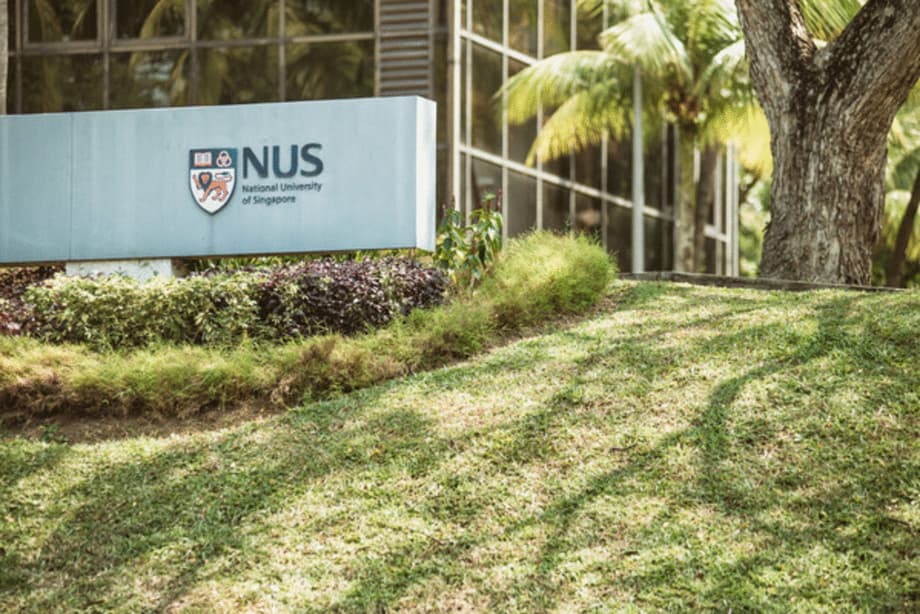
Singapore has cemented its position as the undisputed leader in technology education across Southeast Asia, achieving a distinction no other nation in the region can claim. According to the Times Higher Education (THE) World University Rankings by Subject 2026, the city state is the only Southeast Asian country with universities placed among the world’s top 20 for computer science. The National University of Singapore (NUS) secured the 13th position globally, while Nanyang Technological University (NTU) climbed to 16th place, rising three spots from its 2025 ranking.
This achievement highlights Singapore’s remarkable success in developing world class research institutions capable of competing with elite universities in the United States, United Kingdom, and China. While 56 universities from across Southeast Asia appeared in the computer science rankings, with Malaysia contributing the largest representation at 20 institutions, only Singapore’s two premier universities broke into the upper echelons of global excellence.
The 2026 Rankings Landscape
The Times Higher Education subject rankings, released in January 2026, evaluated 1,165 universities from 84 countries and territories using 18 performance indicators across four core pillars: teaching, research environment, research quality, industry engagement, and international outlook. To qualify for inclusion, institutions needed to demonstrate substantial research output, meeting a threshold of at least 500 research publications between 2020 and 2024.
At the summit of the computer science table, the University of Oxford maintained its position as the world’s best institution for the subject. The United States and United Kingdom continued their traditional dominance, collectively holding 97 of the top 100 positions across all 11 subject areas assessed by THE. However, the most significant shift in the 2026 rankings came from Asia, where Chinese universities made historic advances.
Peking University emerged as Asia’s top performer in computer science, becoming the first Chinese institution in a decade to crack the global top 10, securing exactly 10th place. Tsinghua University followed closely at 12th. This breakthrough reflects China’s massive state investment in strategic technology disciplines and its growing research productivity in artificial intelligence, machine learning, and cybersecurity.
Divergent Paths for Singapore’s Top Institutions
Within Singapore’s pair of elite technical education institutions, the two universities experienced contrasting fortunes in this year’s assessment. NTU’s ascent to 16th place represents a notable improvement from its 19th position in 2025, while NUS slipped two places from 11th to 13th. Despite the minor adjustment for NUS, both institutions remain firmly entrenched in the global elite, separated by just three ranking positions.
The gap between these headline rankings and other major assessment systems illustrates the complexity of global university comparisons. In the QS World University Rankings by Subject 2025, NTU’s computer science program ranked 6th globally, ahead of NUS. Meanwhile, the U.S. News Best Global Universities Rankings placed NTU 2nd worldwide for computer science, with NUS at 5th. These variations stem from different methodologies, with some rankings emphasizing research citations and publication volume while others weigh employer reputation or academic surveys more heavily.
NTU’s strength extends beyond computer science into related technological fields. The institution ranks 5th globally for Data Science and Artificial Intelligence in QS subject rankings, and 14th for Engineering in the THE subject tables. These interdisciplinary capabilities reflect Singapore’s broader strategy of integrating computer science with practical applications in smart city infrastructure, sustainable technology, and industry collaboration.
Regional Context and Global Competition
While Singapore celebrates its top 20 achievement, the broader Southeast Asian picture reveals significant challenges in breaking into the highest tiers of computer science education. Malaysia’s 20 ranked institutions represent the region’s largest footprint, yet none penetrated the top 50. Indonesia, Thailand, Vietnam, and the Philippines were largely absent from the upper rankings, highlighting a substantial divide in research capacity and international academic visibility.
The contrast with South Asia proves equally stark. India, despite its massive technology sector and reputation as a global IT services hub, placed only one institution in the computer science top 100. The Indian Institute of Science (IISc) Bangalore ranked 96th, with the next Indian entrant, Amity University, appearing in the 251 to 300 bracket. This gap between commercial tech success and academic research excellence has prompted ongoing debates about research funding and international collaboration in Indian higher education.
East Asian nations demonstrated stronger competitive positions. Hong Kong placed three universities in the computer science top 50, led by the Hong Kong University of Science and Technology at 25th. South Korea’s KAIST secured 32nd place, while Japan’s University of Tokyo ranked 37th. Yet even these established technological powerhouses failed to match Singapore’s concentration of elite talent within the top 20.
Artificial Intelligence: The New Battleground
The competition for computer science supremacy has increasingly concentrated on artificial intelligence capabilities, where Singapore maintains a similarly dominant regional position. According to the 2026 CSRankings, which focuses specifically on research output at leading AI publication venues, Singapore is again the only Southeast Asian nation with two universities in the global top 20 for artificial intelligence.
NTU ranked 8th worldwide in AI research impact, while NUS placed 11th. These standings become more impressive when considering that CSRankings uses purely metrics based assessments rather than reputation surveys, measuring actual research productivity at the most selective computer science conferences. The methodology examines publications in areas including machine learning, natural language processing, computer vision, and robotics.
However, the AI landscape reveals a different global order than the broader THE rankings suggest. Chinese institutions dominated the CSRankings top 10, occupying seven positions. Tsinghua University and Shanghai Jiao Tong University tied for first place globally, while Peking University claimed the top spot specifically for AI research. Carnegie Mellon University represented the United States at third place, while the Korea Advanced Institute of Science and Technology rounded out the top tier.
Strategic National Investment
Singapore’s consistent performance across multiple ranking systems reflects decades of deliberate policy choices and substantial public investment in higher education and research infrastructure. The government has positioned advanced computing and artificial intelligence as cornerstones of its economic transformation strategy, funding initiatives that directly benefit university research programs.
The Singapore AI 2.0 project, a significant government investment program, has specifically strengthened NTU’s capabilities in data science and machine learning. This funding supports the university’s Living Lab initiatives, where the campus functions as an active experimental platform for Internet of Things technologies, edge computing, and smart city applications. These practical research environments allow students and faculty to test theoretical computer science concepts against real world infrastructure challenges.
NUS has similarly drawn upon public support to develop specialized research centers focusing on cybersecurity, quantum computing, and computational biology. The university’s interdisciplinary approach combines computer science with fields ranging from medicine to public policy, addressing complex societal challenges through technological innovation. This alignment between academic research and national development priorities has proven crucial for maintaining international competitiveness.
Impact for Students and Industry
For prospective students, Singapore’s dual presence in the global top 20 offers compelling options for world class computer science education within Southeast Asia. Graduates from these programs command significant attention from global technology firms, with starting salaries and recruitment rates reflecting the institutions’ reputations. The average weighted annual salary three years after graduation for NTU’s business and technology programs exceeds $186,000 according to recent Financial Times data.
Industry partnerships further enhance the educational experience. Both universities maintain close relationships with major technology companies, facilitating research collaborations, internships, and direct recruitment pipelines. This integration with the global tech ecosystem ensures that curricula remain current with rapidly evolving industry needs in areas such as generative AI, cybersecurity, and quantum computing.
The concentration of elite computer science talent in Singapore also benefits the broader regional technology sector. As neighboring countries develop their digital economies, Singapore’s universities serve as regional hubs for advanced training, research collaboration, and technology transfer. This intellectual leadership position supports Singapore’s ambition to function as Southeast Asia’s primary innovation and digital services center.
The Evolving Global Order
The 2026 rankings reveal a higher education landscape undergoing significant transformation. While Western institutions, particularly in the US and UK, retain dominance at the very top of most tables, Asian universities are rapidly closing the gap in specific high impact fields like computer science and engineering.
Phil Baty, chief global affairs officer at Times Higher Education, offered analysis on the shifting balance of academic power.
The data offers further evidence of an emerging new world order where Western dominance of higher education and research is steadily being challenged by the rapidly rising powers of East Asia.
This shift proves particularly visible in strategic technological domains, where China’s seven top 10 placements across subject areas, up from four the previous year, signal accelerated investment returns. For Singapore, maintaining its regional leadership requires continuous adaptation. As Chinese universities surge forward and Indian institutions expand their research capacity, Singapore’s relatively small size necessitates focusing on specialized excellence rather than breadth. The city state’s success in concentrating resources to achieve top 20 status in computer science, despite having a population of under six million, demonstrates the effectiveness of this targeted approach.
Key Points
- Singapore is the only Southeast Asian nation with universities in the global top 20 for computer science, with NUS at 13th and NTU at 16th in THE 2026 rankings.
- The University of Oxford ranks first globally for computer science, while Peking University became the first Chinese institution in a decade to enter the top 10, placing 10th.
- NTU climbed three positions to 16th place, while NUS slipped two spots to 13th compared to the previous year’s rankings.
- In alternative rankings, Chinese universities dominate AI research specifically, with Tsinghua and Shanghai Jiao Tong tying for first in CSRankings 2026.
- Singapore is also the only Southeast Asian country with two universities in the top 20 for artificial intelligence research according to CSRankings metrics.
- While 56 Southeast Asian universities appeared in the computer science rankings, Malaysia’s 20 institutions represented the region’s largest contingent without reaching the top 50.
- India placed only one university, IISc Bangalore at 96th, in the computer science top 100, despite its large technology services sector.
- The THE rankings evaluated 1,165 universities across 84 countries using 18 performance indicators covering teaching, research, and international outlook.