The return of global K-pop sensation BTS to Gwanghwamun Square in March is already reshaping Seoul’s accommodation landscape, with hotel prices near the iconic landmark surging up to five times their normal rates, prompting widespread complaints about price gouging from fans and authorities alike.
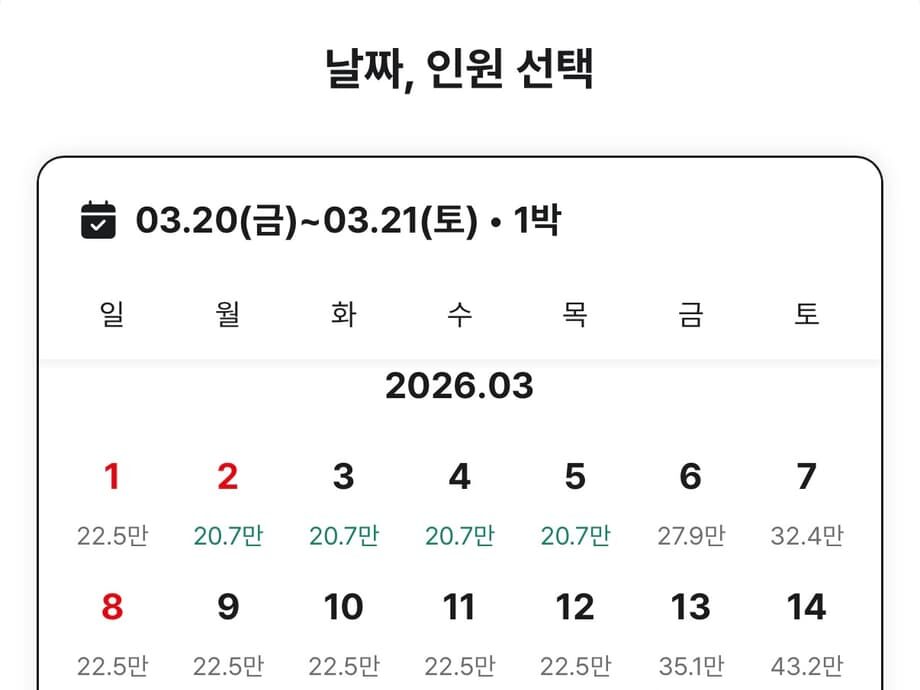
As the highly anticipated concert approaches, accommodation providers in the Jongno and Jung districts have dramatically increased rates for the nights surrounding the March 21 performance. The Four-star Koreana Hotel near Gwanghwamun Station, which typically charges 225,000 won ($156) for a Saturday-night room in February, has listed the same rooms at an astonishing 1.35 million won for March 21 – a nearly 500% increase. Similarly, the President Hotel has doubled its room rates from 205,000 won to 443,000 won for the same date.
The price hikes extend beyond major hotels to smaller establishments. Motels in the area have seen similar surges, with one establishment raising its standard Saturday rate from around 130,000 won to 480,000 won, while another increased its usual 210,000 won room to 630,000 won. Some five-star hotels, including the luxurious Four Seasons, have already sold out completely despite listing prices more than double their regular weekend rates.
BTS Comeback Ignites Economic Ripple
These dramatic price increases come as no surprise given the unprecedented scale of BTS’s return. The Gwanghwamun performance marks the group’s first appearance as a complete seven-member unit in three years and nine months, following the completion of all members’ mandatory military service. The free event will also serve as the launch platform for the group’s fifth full-length album, “Arirang,” scheduled for release on March 20.
“We are gradually seeing more reservations after the news broke out that BTS will perform at Gwanghwamun Square,” said an official from Nine Tree By Parnas Seoul Insadong, reflecting the flood of booking inquiries.
The economic impact extends far beyond accommodation. Local restaurants and businesses are anticipating a significant boost. “In the past, when World Cup street cheering or concerts were held, many foreigners visited and sales jumped about 20 percent,” said Park Eun-ho, 55, who runs a restaurant near Gwanghwamun. “We expect a big influx of foreigners for this BTS concert as well.”
The scale of this event is massive. An estimated 200,000 fans from around the world are expected to descend upon central Seoul for BTS’s long-awaited return, transforming the city’s tourism landscape for at least the week surrounding the performance.
Price Gouging Spreads Beyond Seoul
The pricing surge is not isolated to Seoul’s Gwanghwamun area. In Busan, where BTS World Tour concerts are scheduled for June 12 and 13, accommodation providers have raised prices by as much as tenfold. At one property in Dongnae District, a room priced at 68,000 won on June 10 jumped to 769,000 won for the concert dates. Another accommodation in Gijang County raised its rate from 99,000 won on June 10 to 790,000 won on June 12 and 13.
The pattern is consistent across cities hosting BTS concerts. In Goyang, Gyeonggi Province, which will host the tour’s opening shows in April, major hotels near the stadium are already fully booked. Properties like Sono Calm and the Gloucester Hotel, with 826 and 422 rooms respectively, are completely reserved for the concert dates of April 9, 11 and 12.
Industry sources report that even smaller lodgings are experiencing unprecedented demand as inquiries flood in. “Mid-June is usually the offseason, but we’ve had a sudden flood of reservations,” said a hotel official in Busan’s Dongnae District. “Our remaining 100 rooms were fully booked immediately after the BTS concert news broke.”
Government Responses and Challenges
In response to the growing crisis, governments have begun implementing measures to combat price gouging, though with limited effectiveness.
The Seoul Metropolitan Government has been particularly active. “Starting today, we are conducting inspections of accommodation facilities in Jongno and Jung districts, jointly with our tourism division and district offices,” a Seoul city official announced. These inspections cover approximately 280 accommodation facilities in Jongno and 411 in Jung, focusing on whether businesses have properly listed room rates within their posted price categories.
Under the Public Health Control Act, accommodation providers are required to publicly post their official prices, with penalties for charging more than posted rates ranging from corrective orders to eventual closure for repeated violations. However, these measures have limited impact because providers are legally allowed to revise their posted prices.
The purpose of these inspections is to encourage voluntary restraint. It is also meant to signal that authorities are monitoring the situation and that accommodation providers should refrain from charging excessively high rates.
Despite these efforts, government officials acknowledge the legal limitations. “With no legal cap on room rates, as long as businesses charge within their self-posted price categories, even if prices surge by three or five times their usual level, it remains difficult to impose penalties,” admitted a Seoul official.
In Busan, the situation has prompted stronger responses. Busan Mayor Park Hyungjoon has announced that his city is seeking to expand incentives for “Good Price” establishments – a program run by the Ministry of the Interior and Safety that rewards accommodation providers offering reasonable prices with benefits like tax reductions and promotional support. Currently, only five accommodation providers in Busan are registered under this program.
President Lee Jae Myung has also weighed in on the Busan situation, defining the price hikes as “malicious exploitation” and ordering strict action. “This is malicious exploitation that disrupts the order of the entire market and causes significant harm to everyone. It must be eradicated,” President Lee wrote on social media. He further instructed authorities to “take measures to ensure that the losses incurred far exceed any unjust gains.”
Overbookings and Forced Cancellations
Adding to fans’ frustrations, complaints are mounting regarding overbookings and forced cancellations. In Busan alone, authorities have confirmed more than 90 complaints through the Korea Tourism Organization’s QR code reporting system for price gouging.
One fan from Daegu reported on social media that a hotel had asked her to cancel an already confirmed reservation. “This should be an exciting time,” the fan wrote. “Instead, I’m overwhelmed by stress over where I’ll be staying.” The suspect scenario – hotels canceling confirmed bookings to resell rooms at higher prices – has become widespread enough to warrant government intervention.
Similar issues are affecting BTS fans globally. A BTS fan from the Philippines wrote that two of her confirmed reservations were canceled after the tour schedule announcement. “I booked a room for 456,000 won for four nights, but the hotel is urging me to cancel my confirmed reservation,” she wrote. “I checked again today, and the exact same room is still available but now listed at more than 3 million won.”
Market Dynamics and Regulatory Challenges
The surge in prices reflects the fundamental economic principle of supply and demand meeting a massive temporary spike. With BTS concerts drawing unprecedented international attention, and with limited accommodation capacity near major venues, prices naturally rise to reflect the scarcity.
However, the scale and speed of these increases have prompted questions about fairness and market manipulation. Critics argue that some providers may be engaging in strategic overbooking, deliberately canceling confirmed reservations to resell rooms at inflated prices, or blocking off dates early to reopen them later at higher rates.
“It’s legally very difficult to prove a specific price is unfair,” admitted a Busan official. “Even if we catch them, the penalties are often limited to fines, which lack real deterrent power.”
Busan authorities have activated a “price gouging QR reporting system” and are planning to take strong administrative actions, such as reflecting violations in hotel rating evaluations, if unfair pricing is confirmed. The Busan Metropolitan Government has also held joint meetings with district governments, consumer groups and hospitality businesses to discuss potential solutions, including expanding access to public lodging facilities and temporarily opening university dormitories during large-scale events.
The Korea Fair Trade Commission provides only non-binding guidelines on compensation for cancellations made within 10 days of the reservation date, leaving a regulatory gap that many critics say needs addressing.
Cultural Significance and Global Impact
The pricing controversy underscores the unique cultural and economic significance of BTS’s return. The group, whose name stands for Beyond the Scene, has become a global phenomenon since their debut in 2010. Their ability to mobilize millions of fans worldwide – collectively known as ARMY – has created an unprecedented economic force that extends far beyond music sales into tourism, fashion, and consumer products.
This comeback holds particular cultural significance. The album title, “Arirang,” references a traditional Korean folk song inscribed on UNESCO’s Representative List of the Intangible Cultural Heritage of Humanity in 2012. Foreign media outlets have noted that this choice represents a return to their Korean roots after their hiatus and an extension of their mission to promote Korean culture globally.
Forbes stated, “BTS has always placed Korean identity at the heart of their music,” while the BBC predicted, “This album, which contains a narrative of reunion, will serve as a medium to convey the uniquely Korean sentiments of ‘Han’ and ‘hope’ to music fans around the world.”
The economic impact is expected to be substantial. It is estimated that each BTS concert generates an economic impact of approximately 1 trillion won, with the BBC projecting that the total revenue from this world tour will exceed 1 billion dollars (about 1.47 trillion won).
The combination of cultural significance, global fanbase, and economic impact creates a perfect storm that accommodation providers are capitalizing on, raising difficult questions about market ethics and consumer protection in the era of mega-celebrities.
Looking Ahead and Potential Solutions
As the countdown to the March 21 Gwanghwamun concert intensifies, authorities continue to explore potential solutions to balance market forces with consumer protection.
Seoul, which has thus far taken a more cautious stance than Busan, has indicated that discussions on expanding support for Good Price accommodation providers are “currently underway,” though nothing has been confirmed. At present, only two such establishments operate in Jongno District.
One potential solution gaining traction is the expansion of alternative accommodation options. In Busan, authorities are considering temporarily opening university dormitories and public training centers during large-scale events to increase supply and alleviate pressure on the hotel market.
Industry experts suggest that long-term solutions might involve developing comprehensive event tourism policies that address pricing, supply, and consumer protection simultaneously. These could include:
- Pre-event planning that identifies and markets accommodation alternatives
- Strategic development of additional hotel capacity in areas with BTS venues
- Improved consumer protection mechanisms specifically tied to major events
- Enhanced transparency in pricing and booking systems
- Stronger penalties for bad-faith booking cancellations
The controversy serves as a case study for the challenges that come with the superstar economy and its disproportionate impact on local markets. For fans like the overwhelmed Daegu visitor who joked about sleeping in her car, the experience highlights how the excitement of attending a once-in-a-lifetime event can be overshadowed by practical challenges and market exploitation.
As the world prepares for BTS’s return, both the practical challenges of hosting such events and the ethical questions they raise will continue to be debated. For now, fans seeking accommodations face the difficult choice between paying exorbitant prices or finding alternative arrangements – all in the name of being part of music history.
Guests who believe they have been overcharged may file complaints through a QR-based price-gouging reporting system operated by the Korea Tourism Organization, providing a small measure of recourse against what many consider an unavoidable aspect of the modern concert experience.
Key Points
- Hotel prices near Seoul’s Gwanghwamun Square have surged up to five times normal rates for BTS’s March 21 concert
- Koreana Hotel raised rates from 225,000 won to 1.35 million won, President Hotel from 205,000 won to 443,000 won
- Similar price gouging is occurring in Busan for June concerts, with prices increasing up to tenfold
- Busan has received 90+ complaints, Seoul has received 3 complaints regarding price hikes and forced cancellations
- Governments are conducting inspections but have limited legal tools to penalize excessive pricing
- The concert marks BTS’s first full-group appearance in nearly four years after completing military service
- An estimated 200,000+ fans are expected to travel to Seoul for the event
- Authorities are exploring solutions including expanded “Good Price” programs and alternative accommodations