A Sweet Solution to a Serious Problem
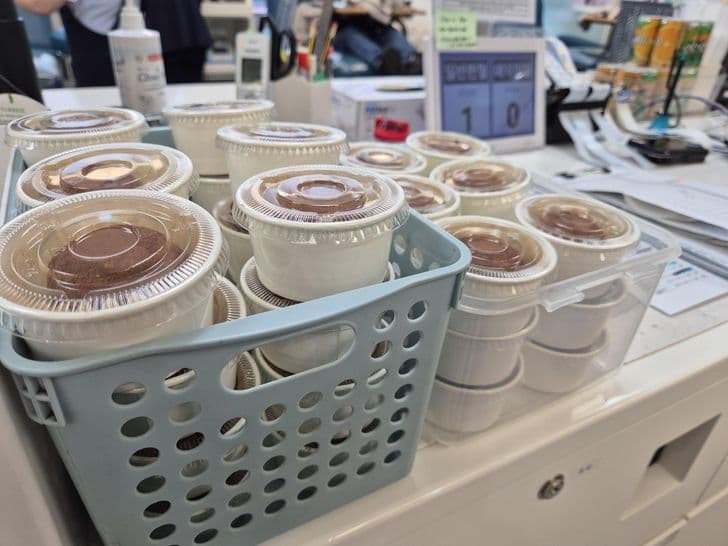
In a bustling district of central Seoul, a 21-year-old office worker named Choi Sang-hun recently achieved something that has become increasingly difficult for many South Koreans. He secured one of the country’s most sought-after treats, a Dubai-style chewy cookie known locally as “dujjonku,” without waiting in the long lines that typically form outside bakeries. His reward for obtaining this elusive delicacy was not a purchase, but a donation of his own blood at the Gwanghwamun Blood Donation Center.
This exchange of a viral dessert for a vital medical contribution highlights an unconventional strategy adopted by the Korean Red Cross. Faced with a critical and chronic shortage of blood, the organization has turned to pop culture trends and viral sensations to lure donors into clinics. The approach represents a shift from traditional public service appeals to a more transactional model that leverages the current consumer frenzy for specific food items and celebrity merchandise.
The tactic appears to be yielding immediate results. On days when these limited-edition treats are offered, donation centers have reported early morning rushes and numbers that double or even triple their usual intake. While the long-term viability of such incentives remains a subject of debate, the immediate impact offers a temporary reprieve for a healthcare system straining under the weight of demographic shifts and dwindling donor pools.
Demographic Headwinds Fuel the Crisis
The drive to offer cookies and photo cards is not merely a creative marketing exercise. It is a response to a severe and worsening statistical reality. South Korea currently faces a dual demographic challenge that threatens the stability of its blood supply. The nation has transitioned into a “super-aged society,” defined by the United Nations as a country where more than 21 percent of the population is aged 65 or older. This older population requires more medical care, including surgeries and treatments that necessitate blood transfusions.
Simultaneously, the pool of young, healthy eligible donors is shrinking. South Korea holds the world’s lowest fertility rate, which stood at a stark 0.75 in 2024. This demographic collapse means fewer young people are entering the donor demographic to replace the aging population that ages out of eligibility. The numbers tell a grim story of decline. According to the Korean Red Cross and the Ministry of Data and Statistics, the number of people who donated blood at least once a year fell by 25.4 percent over the last decade.
In 2014, nearly 1.7 million people donated blood. By 2024, that number had plummeted to approximately 1.26 million, the lowest level since data collection began in 2005. Consequently, the national blood reserves have struggled to maintain safety standards. In the previous year, blood supplies met the adequate level for only 248 days, leaving stocks below the necessary target for roughly one-third of the year. The agency has failed to meet its benchmark of maintaining at least five days’ worth of daily blood supplies, keeping the nation in a persistent “alert monitoring” stage.
The Mechanics of the Shortage
Blood cannot be manufactured synthetically in a lab. It relies entirely on the goodwill of volunteers. The shelf life of blood components is limited. Red blood cells can be stored for up to 42 days, while platelets last only five to seven days. This constant turnover requires a steady stream of daily donations to prevent shortages. When the donor base shrinks, as seen in South Korea, the buffer between supply and demand evaporates quickly, leading to situations where hospitals must delay elective surgeries or scramble to find resources for emergency traumas.
Nurse Shin Geum-ok, who has worked at the Gwanghwamun Blood Donation Center for three decades, witnesses the strain firsthand. She noted that blood supplies often remain tight, sometimes leading to delayed transfusions. This precarious balance is what drove the Red Cross to seek innovative ways to boost foot traffic in their centers, moving beyond standard vouchers and snacks to items that hold high social currency among the younger generation.
The Power of Viral Trends
The decision to utilize Dubai-style cookies was born out of acute market observation. In recent months, South Korea has been swept up in a dessert craze for these cookies, springboarding from a global obsession with “Dubai chocolate.” These confections, made by melting marshmallows to create a chewy texture mixed with chocolate and filled with pistachio cream and shredded pastry known as kadaif, have become a phenomenon.
The demand has been extraordinary. Online searches for the dessert surged more than twenty-fold in the three months prior to the promotion, according to data from Naver, the country’s largest search engine. Searches on food delivery apps jumped by 1,500 times in a single month. The scarcity of the treat has led to long queues outside bakeries, with customers lining up in the early hours of the morning despite freezing winter temperatures.
By acquiring these difficult-to-find cookies, the Korean Red Cross tapped into a powerful psychological driver. The perceived value of the donation reward skyrocketed. For a donor like Choi Sang-hun, the opportunity to obtain a treat he could not easily buy elsewhere provided an immediate, tangible gratification that a simple juice box or a thank you card could not match. The strategy proved effective almost immediately. On January 16, when eight centers in Seoul handed out the cookies, 668 people donated blood, a 116 percent increase compared to the previous Friday.
“As of 10:30 a.m., we usually see about four or five donors, but today we’ve had 14—more than double,” said Shin Geum-ok, observing the immediate impact of the cookie giveaway on the first day it was implemented.
Celebrity Culture as Currency
Beyond food, the Red Cross has also recognized the immense value of the country’s pop culture exports. Photo cards of K-pop groups are highly collectible items, often traded or sold by fans. By offering photo cards of the popular group ENHYPEN at select donation centers, the agency targeted a specific demographic that aligns perfectly with their need for young donors.
This is not the first time celebrity influence has driven the cookie craze. The trend was significantly fueled by endorsements from K-pop stars. For instance, Jang Won-young of the girl-group IVE posted a photo on Instagram with her lips dusted in chocolate powder, sparking a secondary trend for the “Dujjonku lip.” The Red Cross effectively piggybacked on this existing ecosystem of influence, where products gain value through association with idols.
Effectiveness and Skepticism
While the surge in numbers is undeniable, the strategy has drawn mixed reactions from those on the front lines of donation. For first-time donors or those who were previously on the fence, the incentives provide a decisive nudge. Kim Jo-eun, a 21-year-old college student, admitted that the cookie was her primary motivation.
“I never really cared about donating blood before, so it was kind of embarrassing to come just for the dujjonku,” Kim Jo-eun said. However, she added, “I should probably donate blood more often, even when it is not about dujjonku.”
This sentiment suggests that while the incentive brings people in, the act of donating might foster a sense of altruism that encourages future returns. The Red Cross hopes that initial exposure to the donation process will convert one-time cookie seekers into regular, lifelong donors. Hwang Dae-young, a 34-year-old office worker, echoed this potential, suggesting that such events draw more donors and could be particularly effective if targeted toward areas needing platelets and plasma, which take longer to donate.
Conversely, long-time regular donors remain largely unmoved by the promotions. Yang Chung-mo, a 59-year-old who has donated blood regularly for years, learned about the cookie giveaway only after he had already registered. He expressed skepticism about the long-term efficacy of such tactics.
“I don’t think promotions like this have much influence on blood donation,” Yang Chung-mo said, adding that most repeat donors give blood regardless of external rewards.
This divide highlights a fundamental challenge in blood donation management: the reliance on a small base of committed super-donors versus the need to constantly expand the base to counteract attrition. The incentives clearly succeed at the latter, expanding the base, but they do little to motivate the former who are already driven by habit or a sense of civic duty.
The Cost of Incentives
Implementing a strategy based on high-value consumer goods comes with logistical and financial considerations. Dubai-style cookies are not inexpensive. Weighing in at just 50 grams, the average price for these desserts stands at around 6,500 won, or roughly $4.40. With donations often limited to a few hundred cookies per center per day, the cost per unit of blood collected rises significantly compared to standard snack provisions.
Furthermore, the frenzy for these cookies has economic ripple effects. The craze has sent prices of raw materials soaring. The cost of unshelled pistachios surged fourfold in a month, and the price of kadaif doubled, according to price-tracking data. This inflation means that the Red Cross must either secure a bulk supply at a premium or compete in the open market, potentially driving up costs further or making it difficult to secure the necessary quantities for future campaigns.
There is also the question of scalability and sustainability. Viral trends are, by definition, ephemeral. The Dubai cookie craze will eventually fade as the next food trend emerges. If the Red Cross relies solely on the “cool” factor of current products, they face a constant treadmill of sourcing new and desirable items. This requires an agile procurement team and a budget flexible enough to pivot quickly between different types of incentives, from food to merchandise.
Health Considerations
The choice of a high-calorie, sugary treat as a health incentive also draws a note of irony. Experts have issued health warnings regarding the Dubai cookies, noting that a single cookie can pack up to 500 calories. Korea University Guro Hospital warned that the dessert can “immediately disrupt the body’s metabolic balance” and “threaten the overall health… beyond simple weight gain.” While donating blood is a healthy act for the community, pairing it with a metabolically taxing reward presents a conflicting message, though one that the Red Cross likely views as a necessary trade-off in a crisis.
Future Strategies for Blood Security
The Korean Red Cross has indicated that it plans to continue rolling out a variety of giveaway promotions to encourage donations. The organization views these events as a specific tool to target teenagers and people in their twenties, demographics that are crucial for the long-term stability of the blood supply but are historically the hardest to reach through traditional appeals.
However, experts suggest that a multi-pronged approach is necessary for true sustainability. While viral incentives can solve immediate shortfalls, they do not address the structural issues of low birth rates and an aging society. Public health officials argue for a simultaneous focus on education, removing barriers to donation, and fostering a culture of regular donation among the youth.
The success of the cookie and K-pop card campaigns offers a valuable lesson in modern communication. It proves that to engage a younger demographic, health organizations must speak the language of that demographic, utilizing their channels, trends, and desire for shared experiences. Whether this model can be replicated in other countries facing similar donor shortages remains to be seen, but South Korea’s experiment provides a fascinating case study in the intersection of public health, consumer culture, and demographic necessity.
As the country moves forward, the hope is that the young people lining up for cookies today will return years from now, not for a photo card, but because they understand the vital role they play in the nation’s healthcare ecosystem. Until then, the Red Cross will likely keep innovating, finding the next viral sensation to keep the blood flowing.
Key Points
- South Korea is using viral Dubai-style cookies and K-pop photo cards to incentivize blood donations amid a chronic shortage.
- The country has become a super-aged society with a shrinking pool of young donors, leading to a 25.4% drop in annual donors since 2014.
- Blood reserves were below the target level for roughly one-third of last year, frequently placing the nation in an “alert monitoring” stage.
- The strategy has shown immediate success, with some centers reporting donor numbers doubling or tripling on giveaway days.
- While effective for attracting first-time donors, the incentives do little to motivate long-term regular donors who are driven by habit or altruism.
- The Korean Red Cross plans to continue using diverse promotional strategies to target teenagers and people in their twenties.