Prehistoric Giants in a Modern Metropolis
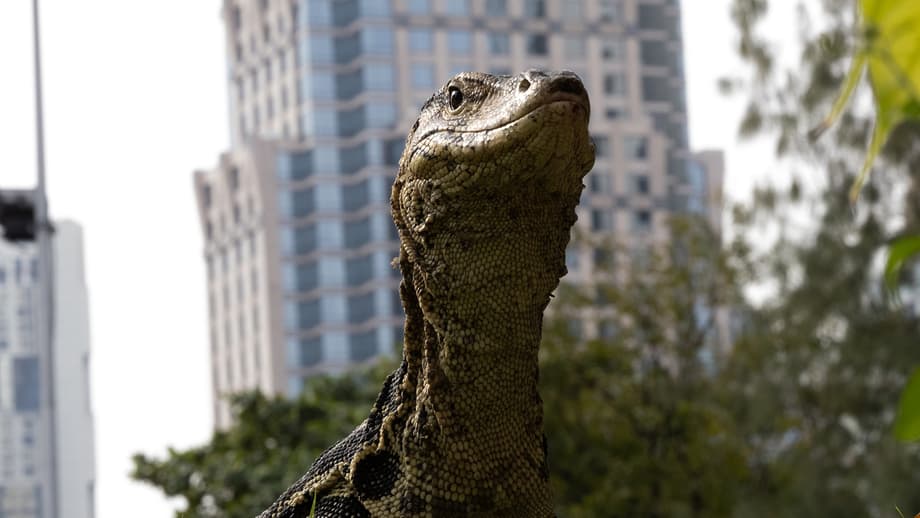
Shortly before dawn in one of Bangkok’s largest inner-city green spaces, a heavy stillness hangs over the canals surrounding Lumphini Park. Barely a ripple disturbs the surface of the large ponds. However, as the sun rises over the Thai capital, the silence breaks. Scaly snouts begin to emerge from the water, followed by long, muscular bodies that drag themselves onto the muddy banks. These are Asian water monitors, the second-largest lizard species in the world after the Komodo dragon. For travellers, Bangkok’s monitor lizards are not a traditional attraction, but they serve as a striking reminder of how nature persists in the world’s most-visited city.
Encountering these ancient reptiles, a species that dates back millions of years, offers a glimpse into the city’s ecological past. Before Bangkok became a sprawling metropolis of expressways and skyscrapers, this area was a network of wetlands and waterways. Today, watching the lizards bask beside joggers and picnickers creates a unique travel experience. It requires no ticket, no guide, and no curated enclosure, only an early morning walk through the city’s green heart. While Lumphini Park is the most accessible place to spot them, the water monitors are far from confined to a single green space.
Once pushed to the city’s edges, the reptiles have quietly adapted to life in the megacity. They patrol many of the almost 1,700 canals, known locally as khlongs, that thread through neighbourhoods. These waterways range from residential backstreets to busy commercial zones, providing a highway system for the aquatic reptiles. Several hundred water monitors are thought to live in and around Lumphini Park alone, drawing locals, tourists, and photographers into an uneasy proximity with an animal that has long divided public opinion.
An Unlikely Urban Success Story
The ability of these giant reptiles to thrive in a concrete jungle is a testament to their biological resilience. Michael Cota, a retired associate at Thailand’s National Science Museum, has studied the species extensively. From his study in northern Thailand, he explained the reasons behind their urban success.
“Their population in Bangkok is much, much greater than you’d ever see in the wild. When it comes to food, they’ll eat anything they can get a hold of, dead or alive. They’re extreme generalists.”
This dietary flexibility is a key factor in their survival. Urban environments provide a steady stream of resources, from discarded food waste to carrion and smaller animals. In the wild, food sources can be scarce and unpredictable. In Bangkok, the lizards find a constant buffet. They are also highly adaptive in their movement, using the city’s extensive canal system to navigate between different habitats without needing to cross busy roads.
Another critical factor is the absence of natural predators. In their natural habitats, young monitors are preyed upon by larger predators, including crocodiles and large birds of prey. In the heart of Bangkok, these apex predators are nonexistent. This lack of natural threats gives the lizards a high survival rate, allowing the population to boom. The city, with its tropical climate and abundant water, effectively creates a paradise where the lizards can grow to impressive sizes, often reaching lengths of nearly two meters.
Decoding the Urban Invasion
Scientific research into the urban colonization of the Asian water monitor reveals interesting patterns about how they utilize city spaces. A recent study utilizing citizen science data from the Global Biodiversity Information Facility analyzed occurrences of the species across major cities in Southeast Asia. The researchers found that while the lizards predominantly colonize green patches like parks and gardens, Bangkok presents a unique case.
In cities like Singapore and Jakarta, monitor sightings are heavily concentrated in designated park areas. However, in Bangkok, a significant percentage of observations occur outside of these green zones. The study suggests that Bangkok’s distinct urban design, specifically its vast network of canals and even sewage systems, allows the lizards to disperse more freely throughout the urban matrix. They use these water channels to connect isolated pockets of habitat, moving from the outskirts into the dense city center.
This dispersal strategy highlights the lizard’s ability to exploit anthropogenic structures. While urbanization often leads to the decline of many reptile species due to habitat loss and pollution, the Asian water monitor has proven to be an exception. The study notes that despite being the largest lizard with established populations in urban areas, the species has drawn relatively little attention from ecologists. The data suggests that the colonization of these cities is likely not a single expansion event, but rather independent instances of urban adaptation occurring across different geographic locations.
From Bad Luck to Social Media Stars
For generations, Bangkok’s water monitors have struggled with a severe reputation problem. In Thai culture, the animals were historically viewed with disdain and fear. The common name for the lizard, hia, evolved into one of the language’s most offensive insults. This stigma likely originated from an era when families lived in open shelters along waterways. Lizards would scavenge for food, sometimes sniffing out deceased individuals before their families found them.
This historical view created a deep-seated cultural aversion to the reptiles. However, the rise of social media has sparked a dramatic shift in public perception. Younger generations are re-evaluating the status of the monitor lizard. Ice Russameesritrakul, a restaurant owner in Bangkok’s Chinatown, notes the change in symbolism.
“In old times, people said they were unlucky. But right now, their symbolism is changing. Some younger people think they’re cute and lucky. I know lots of people who will drop everything to buy a lottery ticket if a big water monitor accidentally finds its way inside their home.”
TikTok and Instagram are now awash with clips of the reptiles clattering through shopping centres, tripping up runners, or simply swimming in park canals. A viral video from 2021, capturing a lizard climbing a shelf in a convenience store, became a cultural touchstone. Instead of fear, the response was largely amusement and endearment. Tourists now flock to Lumphini Park hoping to snap a selfie with the “Godzillas” of Bangkok.
Navigating Human-Wildlife Conflict
Despite their newfound popularity, the coexistence is not always calm. As the population grows, so does the potential for conflict. At the Golden Mount Fire Station, just a few kilometers from Lumphini Park, the emergency dispatch line rings frequently. It is often not for fires, but for stray monitor lizards that have wandered into homes or businesses.
“On average, we get more calls about rescuing water monitor lizards and removing snakes than fires here. They like the rain, so they venture out more in public during wetter weather,” said S Ruengdach, a firefighter of 30 years.
While the lizards are generally harmless to humans, their presence can be startling. They have been known to raid livestock, encroach upon popular fishing spots, and occasionally enter residences. For runners in the park, they can be a tripping hazard. Residents describe the large adults as slow and easy to avoid, but note that the smaller, faster juveniles can be more aggressive and harder to dodge. Authorities advise the public to keep a healthy distance, never feed the animals, and avoid approaching them on land where they may feel threatened.
Managing the Monitor Population
The Thai government has made attempts to manage the burgeoning lizard population. In 2016, a large-scale operation was launched to remove lizards from Lumphini Park amid concerns about overcrowding. However, the results were temporary. A female water monitor can lay a clutch of about 20 eggs at a time, and numbers quickly rebounded. Today, the reptiles are more visible than ever, leading to a shift in strategy from removal to accommodation.
Recognizing the lizards’ status as a tourist draw, park authorities have even installed a giant water monitor statue in the centre of Lumphini Park. This gesture symbolizes an official acceptance of the lizards as part of the city’s ecosystem. Furthermore, the government has begun to explore commercial opportunities. Recently, permits were issued to allow restricted breeding of the lizards for commercial purposes, such as leather goods. Officials believe this could benefit communities facing conflicts with the animals while reducing illegal hunting.
This pragmatic approach reflects a broader understanding that the monitors are here to stay. They provide ecological services by controlling rat populations and disposing of organic waste. As Bangkok continues to evolve as a modern city, its giant reptilian residents remain a living link to the wild past, adapted perfectly to the concrete present.
The Essentials
- Asian water monitors are the world’s second-largest lizard species, reaching up to two meters in length.
- Several hundred monitors live in Lumphini Park, but thousands exist across Bangkok’s canal network.
- They are extreme generalist feeders, eating anything from fish and birds to discarded food waste.
- The lizards have no natural predators in the city, allowing for high survival rates and population growth.
- Public perception has shifted from viewing them as unlucky to seeing them as lucky and cute social media stars.
- Authorities receive frequent calls to remove lizards from homes, but they now emphasize tourism and coexistence.
- Visitors are advised to keep a safe distance and never feed the wild lizards.