A Renewed Offensive Against Unregistered Faith
Chinese authorities have launched a sweeping and coordinated campaign against unregistered Christian communities, resulting in the arrest of prominent leaders and the physical destruction of places of worship. In recent weeks, police have targeted the influential Early Rain Covenant Church in Sichuan province, detaining several leaders, including senior pastor Li Yingqiang and his wife. Simultaneously, over a thousand miles away in the coastal city of Wenzhou, heavy machinery was brought in to demolish the Yayang Church building. These events mark a significant escalation in the government’s long-term effort to control religious practice within its borders.
This latest wave of repression follows a major nationwide operation in October 2025 against the Zion Church network, which saw nearly 30 pastors and members detained across seven cities. Taken together, these actions signal a hardening stance toward groups that operate outside the strict oversight of the state. Activists and human rights organizations describe this as one of the most severe crackdowns on religious freedom in China in decades.
The Detention of Early Rain Leaders
The Early Rain Covenant Church (ERCC), a well-known unregistered Protestant congregation based in Chengdu, reported that police raided the homes of its leaders and their church office. According to a statement released by the church, nine people were initially detained on a Tuesday. While five were released by the following day, four remained in custody, including Li Yingqiang and his wife, Zhang Xinyue. The church described the operation as a concerted effort by authorities to disrupt their activities.
Li Yingqiang had previously anticipated a renewed government offensive. In a letter to church members in November, he warned of a “storm gathering” and urged his congregation to prepare spiritually.
I dearly hope that none of our families shall ever again endure such a storm. Yet as an elder appointed by the Lord to stand among you… it is my duty to remind you all to prepare yourselves before the storm returns.
His words proved prophetic. The church stated that the specific grounds for the arrests remained unclear, though they expressed concern for the safety and perseverance of those detained. This is not the first time the ERCC has faced such pressure. In 2018, founding pastor Wang Yi was arrested and later sentenced to nine years in prison for “inciting subversion of state power.” He remains incarcerated and is not due for release until 2027.
Destruction in the Jerusalem of China
While police were rounding up leaders in Sichuan, local authorities in Wenzhou, Zhejiang province, began dismantling the Yayang Church building. Video footage obtained by ChinaAid, a non-profit organization that monitors religious persecution, shows bulldozers and cranes tearing down the structure. The operation involved a significant security presence, with hundreds of armed and special police officers deployed to guard the perimeter.
Wenzhou holds a unique place in Chinese Christianity due to its high concentration of believers, earning it the nickname “the Jerusalem of China.” The demolition there serves as a stark warning to other communities. Residents living near the church were reportedly driven away, and workers in the area were instructed not to take photographs or record video of the destruction.
Bob Fu, the founder of ChinaAid, condemned the dual operations in Sichuan and Zhejiang. He argued that the scale of the mobilization indicates a top-level directive to eliminate independent religious expression.
The massive mobilisation against the two major independent church networks shows the central government is determined to stamp out Christian churches entirely, unless the church is totally indoctrinated into the party’s ideology.
The Targeting of Zion Church
The crackdown on the Early Rain Covenant Church follows a similar, albeit larger, operation against the Zion Church network in October 2025. Zion, founded by pastor Jin Mingri (also known as Ezra Jin), was once one of the largest unregistered churches in China, with thousands of followers across dozens of cities. Authorities rounded up nearly 30 pastors and church members in a coordinated sweep that spanned at least seven provinces.
Among those detained was Jin Mingri himself, who was taken into custody in the southern city of Beihai. As of November 2025, 18 leaders of the group had been formally arrested and charged with “illegal use of information networks.” This charge relates to the church’s use of the internet to stream sermons and communicate with members, a practice that has become increasingly common as physical gatherings become harder to hold. The crime carries a potential prison sentence of up to three years.
The crackdown on Zion was unprecedented in its scale and coordination. Grace Jin Drexel, the daughter of Jin Mingri, described the confusion and fear that gripped her family as they realized the scope of the arrests. She noted that her father, a former student at Peking University who converted to Christianity after the 1989 Tiananmen Square protests, had long prepared for the possibility of imprisonment.
A Shift Toward Immediate Enforcement
Christian groups and legal experts have noted a distinct shift in how Chinese authorities are enforcing religious regulations. In the past, unregistered churches might receive a warning, followed by fines, and eventually detention if they refused to comply. However, recent reports suggest that authorities are now skipping the preliminary steps and moving straight to arrest.
This immediate escalation coincides with new regulations introduced by the Chinese government. In September 2025, authorities issued an Online Code of Conduct for Religious Professionals, which effectively banned unlicensed groups from holding online sermons, organizing activities for children, or raising funds online. These rules have closed off the digital “grey space” that many churches had relied on to survive previous crackdowns.
The government’s legal system is often used to justify these actions. Charges such as “picking quarrels and provoking trouble” or “illegal business operations” are frequently levied against church leaders. In the case of Zion and Early Rain, the focus has shifted toward “illegal dissemination of religious information,” targeting the very methods churches use to maintain their communities.
The Policy of Sinicisation
The driving force behind these intensified measures is the political doctrine of “Sinicisation of religion.” Championed by President Xi Jinping since 2015, this policy requires all religious faiths to conform to Chinese culture and, more importantly, to the ideology of the Communist Party. The goal is to ensure that religious loyalty never supersedes loyalty to the state.
Under this framework, the only legally permissible Christian groups are the Three-Self Patriotic Movement for Protestants and the Chinese Patriotic Catholic Association. These state-sanctioned organizations are required to display patriotic symbols and often incorporate government texts into their services. However, millions of Chinese Christians choose to worship in unregistered “house churches” like Early Rain and Zion, viewing state interference as a violation of their faith.
Yalkun Uluyol, a China researcher at Human Rights Watch, explained that the current government views independent loyalties as a threat.
President Xi Jinping’s government appears intent on reshaping religious practice to serve the Chinese Communist Party’s interests, and congregations that fail to do so face harsh persecution.
Resilience and International Reaction
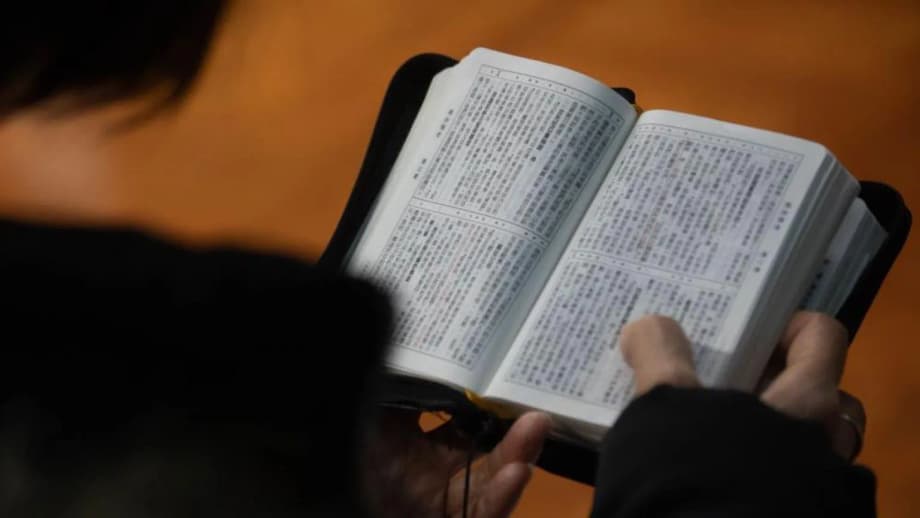
Despite the severe pressure, many believers remain defiant. Church members have reported that while large gatherings have become dangerous, smaller, more discreet meetings continue. Some leaders believe that persecution ultimately strengthens the faith, a sentiment echoed by pastor Jin Mingri before his detention. Core members of these congregations often view their struggle as a test of their resolve rather than a reason to disband.
The international community has begun to take notice. The United States Secretary of State Marco Rubio issued a strong condemnation of the arrests, calling for the immediate release of detained church leaders. Germany’s commissioner for freedom of religion also spoke out against the violations. In response, the Chinese Ministry of Foreign Affairs has reiterated its standard position that all religious activities must comply with national laws and rejected foreign interference in its internal affairs.
As the crackdown continues, the future of unregistered churches in China remains uncertain. While the government possesses the machinery to dismantle buildings and detain leaders, it faces a more difficult challenge in suppressing the beliefs of millions of citizens who continue to practice their faith in secret.
Key Points
- Chinese authorities have arrested prominent leaders of the Early Rain Covenant Church in Chengdu, including pastor Li Yingqiang.
- The Yayang Church building in Wenzhou was demolished by authorities using heavy machinery and guarded by hundreds of police officers.
- In October 2025, nearly 30 leaders of the Zion Church network were detained nationwide, with 18 formally charged with illegal use of information networks.
- New regulations banning unlicensed online religious activities have closed off digital avenues for worship.
- The crackdown is part of a broader policy to “Sinicise” religion, requiring all faiths to align with Communist Party ideology.