356 Days of Patrols Put the East China Sea Dispute in Focus
China Coast Guard vessels patrolled waters around the disputed Diaoyu Dao islands on 356 days by the end of 2025, exceeding the previous record of 355 days in 2024. The increase of one day brought Chinese maritime activity around the islands to a new annual high as Beijing and Tokyo confronted a widening diplomatic dispute over Taiwan.
Contents
- 356 Days of Patrols Put the East China Sea Dispute in Focus
- Small Islands With Competing Claims
- How China Builds Its Historical Case
- Why Japan Gives a Different Account
- How Taiwan Became Part of the Confrontation
- The Dates Behind the Escalation
- Coastguard Encounters Extend Into the Air
- Where the United States Fits In
- Why the Dispute Reaches Beyond the Islands
- Options for Reducing the Risk
- Key Points
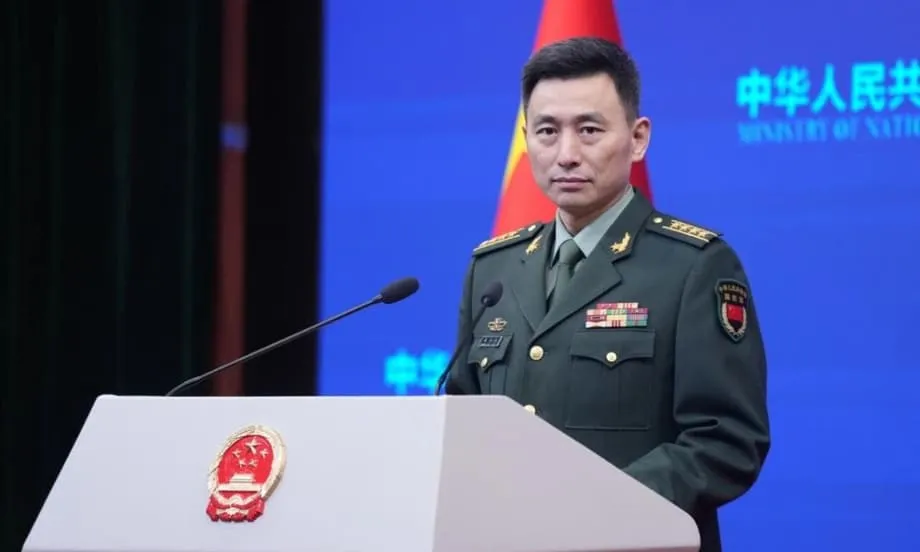
The islands, which Japan calls the Senkaku Islands, are administered by Japan and claimed by both countries. Chinese Ministry of National Defense spokesperson Zhang Xiaogang defended the patrols as legitimate and lawful operations to protect China's maritime rights and territorial integrity. He described Diaoyu Dao and its affiliated islets as China's inherent territory.
Zhang also warned Japan against escalating the confrontation, calling for restraint in its statements and actions:
We urge the Japanese side to exercise restraint in both words and actions and refrain from taking any steps that could escalate the situation. Otherwise, it will only end up lifting a rock to drop it on its own foot.
The maritime activity coincided with tensions following Japanese Prime Minister Sanae Takaichi's November 7, 2025, remarks about a possible Chinese attack on Taiwan. Her suggestion that such an attack could threaten Japan's survival brought the island dispute into a larger argument over when Japan might use military force alongside the United States.
As of January 22, 2026, the confrontation involved more than competing statements about ownership. Coastguard encounters, a helicopter incident, military activity and Chinese travel and study advisories had extended the dispute across security, diplomacy and civilian exchanges.
Small Islands With Competing Claims
Diaoyu Dao, or the Senkaku Islands, consists of five small islands and three rocks in the East China Sea. The uninhabited features lie roughly 120 miles northeast of Taiwan and 200 miles from China's coast. Their combined land area is approximately 5.69 square kilometers.
China and Japan both assert historical and legal claims to sovereignty, meaning the right to exercise authority over the territory. Japan's administration of the islands is central to its security relationship with the United States, while China uses patrols and diplomatic statements to press its own claim.
The islands offer limited confirmed economic resources, yet their importance extends well beyond their size. Historical grievances, national pride, concerns about territorial integrity and competition between China and Japan have made them a recurring flashpoint.
How China Builds Its Historical Case
China's position is set out in a 2012 white paper asserting that Diaoyu Dao has been Chinese territory since ancient times. A white paper is an official document explaining a government's position on an issue. Beijing's argument draws on historical records, maps and accounts of travel between China and Ryukyu, now Okinawa.
The Chinese account cites records from the Ming Dynasty, which lasted from 1368 to 1644. It identifies the 1403 publication "Voyage with a Tail Wind" as containing the earliest known records of the islands' names. Chinese officials also point to documents and maps from later centuries that they say placed the islands under Chinese jurisdiction.
During the Qing Dynasty, according to China's documentation, the islands formed part of Taiwan's administrative territory. Beijing uses this claimed connection with Taiwan as part of its case that the islands were already under Chinese authority before Japan incorporated them.
Chinese imperial envoys traveling to Ryukyu routinely used Diaoyu Dao as a navigational marker. China's historical argument identifies Hei Shui Gou, today's Okinawa Trough, as the boundary between Chinese territory and Ryukyu. This boundary lay between Chiwei Yu and Kume Island.
Beijing argues that those records marked a separation between Chinese sovereign territory and foreign lands. Its current defense of coastguard patrols follows that position: China presents the operations as protection of territory it already owns.
Why Japan Gives a Different Account
Japan's Ministry of Foreign Affairs maintains that the Senkaku Islands were terra nullius when Japan incorporated them in January 1895. The Latin term means territory belonging to no state. Tokyo says a careful survey found no trace of another state's control before incorporation, making its action lawful under the international legal framework of that period.
Japan also bases its position on arrangements following World War II. The San Francisco Peace Treaty placed the islands under United States administration as part of Okinawa. Tokyo views that arrangement as reaffirming their status as Japanese territory.
The 1972 Okinawa Reversion Agreement between the United States and Japan returned administrative rights over the islands to Japan. Tokyo cites this transfer as further evidence of consistent Japanese sovereignty within the international order after the war.
Japanese officials argue that China did not contest Japanese sovereignty for approximately 75 years after the islands' incorporation in 1895. They say Chinese interest emerged only in the 1970s, after surveys suggested that the surrounding seabed might contain oil and natural gas reserves.
Tokyo therefore presents China's claim as economically motivated rather than rooted in historical rights. Beijing's position rests on the opposite account: it says historical Chinese ownership preceded Japan's incorporation. These competing explanations give the same islands very different places in each country's understanding of its territory.
How Taiwan Became Part of the Confrontation
Prime Minister Sanae Takaichi told a Japanese parliamentary committee on November 7, 2025, that a Chinese military attack against Taiwan could constitute a "survival-threatening situation" for Japan. Such a determination could potentially trigger Japan's right to exercise collective self-defense alongside its ally, the United States.
Collective self-defense means using force to help defend an ally under the applicable legal conditions. Takaichi's remarks connected a possible conflict over Taiwan with circumstances in which Japan might take military action, departing from Japan's traditional strategic ambiguity on the issue. Strategic ambiguity means leaving some possible responses unstated.
Beijing interpreted the remarks as interference in China's internal affairs and a violation of the one-China principle. China's Foreign Ministry expressed "firm opposition" and lodged stern representations with Japan, formal diplomatic protests demanding that Tokyo address Beijing's objections.
Chinese Vice Foreign Minister Sun Weidong summoned Japanese Ambassador to China Kenji Kanasugi to deliver serious demarches, another term for formal diplomatic representations. Sun described Taiwan as China's sacred territory and said that deciding how to resolve the Taiwan question belonged to the Chinese people alone, without interference by any external force.
Sun set out the importance Beijing attached to the issue during his protest to the ambassador:
The Taiwan question lies at the core of China's core interests and is an untouchable red line and bottom line.
Japan's proximity to Taiwan makes the argument especially sensitive. Japan is just 110 kilometers from Taiwan at its nearest point, placing it close to any potential conflict. Beijing's regular military exercises near Taiwan and Takaichi's remarks have increased the stakes surrounding the separate Diaoyu Dao and Senkaku dispute.
The Dates Behind the Escalation
The dispute combines historical claims stretching back centuries with recent patrol records and diplomatic events. The main dates show how questions of ownership, administration and military commitments became connected:
- 1403: "Voyage with a Tail Wind," cited in China's historical case, recorded the islands' names.
- January 1895: Japan incorporated the islands, saying surveys had found no evidence of another state's control.
- 1972: The Okinawa Reversion Agreement returned administrative rights over the islands from the United States to Japan.
- 2008: China and Japan reached an agreement in principle on joint exploration for gas and oil in disputed fields, but implementation later stalled.
- 2012: China published its white paper asserting historical sovereignty over Diaoyu Dao.
- 2014: Barack Obama became the first United States president to publicly state that Article 5 of the security treaty with Japan covers the Senkaku Islands.
- 2024: Chinese maritime presence reached 355 days, while Japanese sources recorded a stretch of 158 consecutive days around the islands.
- November 7, 2025: Takaichi told a parliamentary committee that a Chinese attack on Taiwan could constitute a situation threatening Japan's survival.
- By the end of 2025: Chinese coastguard patrols reached 356 days, setting a new annual record.
The successive patrol records show how persistent the Chinese presence has become. The annual count increased by just one day between 2024 and 2025, but both figures describe activity during almost the entire year.
Coastguard Encounters Extend Into the Air
Japanese sources recorded Chinese Coast Guard ships around the Senkaku Islands for a record 158 consecutive days in 2024, with the streak continuing into 2025. Alongside that sustained presence, encounters involving coastguard vessels and military assets have increased concern about an accidental confrontation.
In one standoff, China's coastguard said it drove a Japanese fishing boat away from the disputed area and took "necessary control measures." Japan said it intercepted and expelled two Chinese vessels that had approached a Japanese fishing boat. The two governments described the encounter through their respective claims to authority over the waters.
A confrontation involving a Chinese helicopter and a Japanese civilian aircraft extended the dispute into the air. China accused the Japanese aircraft of having "illegally intruded" into Chinese airspace and said a helicopter launched from a China Coast Guard vessel chased it out.
Japan said the Chinese coastguard helicopter violated Japanese airspace, describing the incident as China's fourth such intrusion. The competing accounts placed responsibility on different aircraft, reflecting the countries' conflicting claims to the territory below.
Coastguard ships, fishing boats, civilian aircraft and helicopters operating near the same disputed features create several points at which an encounter can become a crisis. A vessel's effort to enforce one country's claim may be treated by the other as an intrusion requiring a response.
Where the United States Fits In
The United States maintains neutrality on sovereignty over the islands, a policy dating from the Nixon administration. Washington takes no position on which country has the stronger legal claim, while maintaining a security commitment to Japan.
United States policy since 1972 has held that the 1960 U.S.-Japan Security Treaty covers the islands. Article 5 commits the United States to "meet the common danger" of an armed attack on "the territories under the Administration of Japan."
The treaty's wording makes administration central to the American commitment. Sovereignty concerns who legally owns the territory; administration concerns who governs it in practice. Washington's position allows it to maintain neutrality on ownership while reassuring Japan about the defense of territory under Japanese administration.
President Barack Obama publicly confirmed in 2014 that Article 5 covers the Senkaku Islands. The Trump and Biden administrations repeated that position. President Joe Biden also affirmed the American defense commitment:
unwavering commitment to the defense of Japan under Article 5 of our security treaty, which includes the Senkaku Islands.
China's patrols appear designed to press against the separation between sovereignty and administrative control by demonstrating Beijing's own administrative presence in the waters. An incident involving the islands could therefore acquire a wider dimension through the United States' treaty commitment to Japan.
Why the Dispute Reaches Beyond the Islands
Analysts identify three connected reasons the islands matter beyond their limited land area and confirmed resources: symbolism, domestic politics and competition between China and Japan. Each helps explain why patrols and protests can carry weight beyond the immediate encounter.
For China, the dispute represents resistance to Japanese expansionism dating to the late nineteenth century and a test of its ability to assert its interests against a historical rival. For Japan, retaining control is tied to territorial integrity and resistance to what Tokyo regards as Chinese coercion.
Firm sovereignty positions also appeal to nationalist constituencies. China's Communist Party uses the issue to strengthen its nationalist credentials and divert attention from domestic challenges. In Japan, tough responses to Chinese incursions appeal to voters concerned about regional security.
Military deployments, diplomatic protests and legal arguments form another arena of competition. Each patrol or official statement becomes part of a contest for advantage. Analysts describe this pattern as a security dilemma: measures one side regards as defensive are perceived by the other as threatening, creating pressure for another response.
The East China Sea dispute sits alongside other territorial disagreements in the region. Japan and South Korea contest Takeshima, known in South Korea as Dokdo. Japan and Russia dispute the Northern Territories, while China and several Southeast Asian nations have competing claims in the South China Sea. Together, these disputes create a security environment in which a local confrontation can draw in wider regional interests.
China's warnings to its citizens about travel to Japan, including advisories against studying there, have also extended the current confrontation into economic and social relations. Japanese businesses and universities could be affected, showing how diplomatic pressure can reach people and institutions far from the disputed waters.
Options for Reducing the Risk
Analysts warn that persistent maritime activity, stronger rhetoric and expanded military operations create dangerous conditions for collisions or miscalculation. Increasingly sophisticated vessels and aircraft give both sides greater capabilities, while the limited success of crisis management arrangements leaves them vulnerable to rapid escalation.
Experts have suggested hotlines between maritime forces, agreed rules for encounters in disputed waters and joint disaster response exercises. Such measures could give crews and officials practical ways to communicate, manage an incident and reduce the risk of an accidental clash while the sovereignty dispute continues.
China and Japan also have a precedent for attempted economic cooperation. Their 2008 agreement in principle on joint exploration for gas and oil in disputed fields offered a way to pursue shared benefits while setting aside ownership questions. Implementation stalled after domestic criticism in China.
Reviving arrangements of that kind could create economic incentives for cooperation. The difficult political task would be allowing practical work to proceed while both governments continued to hold their respective sovereignty positions.
International arbitration or adjudication offers another theoretical route. These processes ask an independent tribunal or court to decide a legal dispute, but they face political resistance. Japan has generally resisted third party adjudication, likely because an unfavorable ruling could weaken its position. China's rejection of the 2016 arbitral award concerning the South China Sea suggests limited enthusiasm for international legal mechanisms in territorial disputes.
Progress would require political leaders in Beijing and Tokyo to balance nationalist positions with regional stability and economic cooperation. Current domestic pressures make that difficult in the near term. No timetable for resolving the dispute or implementing new arrangements has been given, leaving the islands a persistent source of tension as the Taiwan argument adds further pressure.
Key Points
- Chinese coastguard patrols around Diaoyu Dao reached 356 days in 2025, exceeding the 2024 record of 355 days.
- China's defense ministry defended the operations as lawful and warned Japan against escalating the situation.
- Japan administers the islands, which it calls the Senkaku Islands; both China and Japan claim sovereignty.
- Takaichi's November 7, 2025, Taiwan remarks prompted Chinese diplomatic protests and the summoning of Japan's ambassador.
- Coastguard and aircraft encounters have produced conflicting Chinese and Japanese accounts of intrusions and enforcement actions.
- The United States takes no position on sovereignty but says its security treaty with Japan covers the islands.
- Chinese travel and study advisories have extended the confrontation into civilian and economic exchanges.
- Communication arrangements, joint resource development and legal proceedings remain possible approaches, with substantial political obstacles.