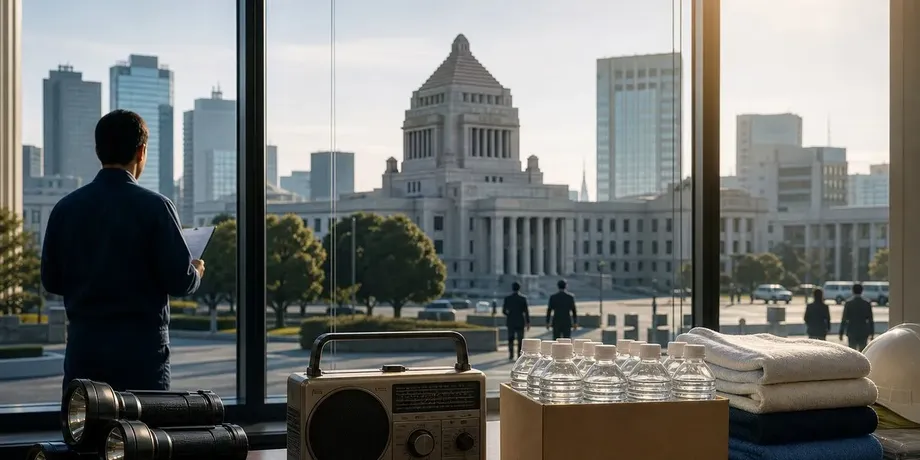
A new command center for major disasters
Japan launched its National Disaster Management Agency on November 2, 2026, putting 352 staff under a new organization intended to coordinate preparations, emergency assistance and reconstruction. The agency will sit directly under the Cabinet, with the prime minister at its head and Goshi Hosono expected to become its first disaster management minister.
Contents
- A new command center for major disasters
- What responsibilities move into the agency?
- How will its 352 staff be organized?
- Can recommendations make ministries act?
- Where will regional offices be located?
- What is Hosono asking households to prepare?
- Why businesses are part of the response plan
- How will Japan train more disaster specialists?
- Key Points
The reorganization targets some of the country's most demanding disaster scenarios: a major earthquake beneath the Tokyo metropolitan area, a Nankai Trough earthquake off the Pacific coast of central to southwestern Japan, and an eruption of Mount Fuji. Its task stretches from reducing damage before an emergency to helping affected communities rebuild afterward.
The agency replaces the Cabinet Office's disaster management department, with increased staffing, budget resources and authority to coordinate other government bodies. The disaster management minister can issue recommendations that ministries and agencies are required to respect. There are, however, no legal penalties for failing to follow them.
For residents, the practical stakes are whether national ministries, local governments and businesses can prepare together and deliver help effectively when a disaster affects a wide area. Creating the agency gives that work a central home. Its performance will depend on how quickly other organizations act on its recommendations.
What responsibilities move into the agency?
The National Disaster Management Agency will set basic disaster policy and coordinate plans for major emergencies. Its responsibilities cover advance preparedness, support for people affected by disasters, restoration of damaged areas and longer reconstruction efforts.
Those stages involve different needs. Preparation includes assessing risks and identifying weaknesses before an emergency. Immediate assistance concerns people whose homes and daily lives have been disrupted. Recovery and reconstruction involve restoring services and rebuilding communities over a longer period.
The government says the agency is intended to fundamentally strengthen Japan's disaster preparedness system by placing responsibility for that full sequence within one organization. National coordination will sit alongside the work of local governments and other ministries, whose cooperation remains central to carrying out the plans.
How will its 352 staff be organized?
The agency will have four divisions, covering emergency operations, planning, local preparedness and internal policy. Their responsibilities divide the work as follows:
- Disaster response and training, including preparations for carrying out emergency operations.
- Disaster planning and mitigation, covering plans and measures intended to reduce damage.
- Local disaster management, including support for affected people and disaster education.
- General policy, including budgets and public relations.
Staffing will rise from about 220 in the previous Cabinet Office division to 352. That means roughly 130 additional positions, an increase of about 60 percent. The expansion gives the agency more people to handle planning, coordination and support across the disaster cycle.
The reorganization also brings expanded budget resources, although no budget amount was specified in the launch details. Its core work includes assessing regional risks, developing response plans through simulations, finding gaps in existing measures and encouraging businesses to participate in local preparedness.
Can recommendations make ministries act?
The disaster management minister's authority to issue recommendations is a central part of the new structure. Ministries and agencies must respect those recommendations, giving the agency a formal means to press for coordinated action across government.
Political journalist Tetsuo Suzuki, who served on a government advisory board for establishing the agency, warned that existing divisions of responsibility could make implementation difficult. He described the challenge of asking ministries to change familiar practices:
Disaster prevention and response responsibilities are spread across multiple ministries and other agencies and they have their established way of doing things," Suzuki said. "A new agency like the NMDA issuing a directive for them to do something differently from what they've been doing could cause problems.
Suzuki also warned that the absence of legal penalties could weaken the agency's ability to secure results. In his assessment, a ministry could respond that it had tried to carry out a recommendation without achieving the intended outcome.
The practical test will be whether recommendations lead to agreed responsibilities and prompt action. A central organization can identify gaps and request changes, while the ministries responsible for particular services still have to carry out much of the work.
Where will regional offices be located?
The government plans to decide by summer 2027 where to place regional offices intended to support responses to Nankai Trough and Japan Trench–Kuril Trench earthquakes. Establishment of local bureaus is planned by summer 2028, providing a later milestone for the regional network.
The Nankai Trough runs along the Pacific coast from the area of Shizuoka toward Miyazaki. The regional offices are expected to promote preparation in advance and build systems for supporting affected areas when a major disaster occurs.
More than 40 local government organizations have expressed interest in hosting a bureau. Final locations have not been announced. The choice will determine where the agency places a continuing regional presence for planning and coordination.
The timetable separates the agency's national launch from the development of its regional structure:
- November 2, 2026: The National Disaster Management Agency launches.
- By summer 2027: The government plans to decide locations for regional offices.
- By summer 2028: Local bureaus are planned to be established.
What is Hosono asking households to prepare?
Hosono has paired the institutional changes with an appeal for people to prepare at home. He urged households to keep at least three days of food, water and toilet supplies, and said a week's supply would be preferable.
The request focuses on essentials people may need before public assistance reaches them. Toilet supplies belong alongside drinking water and food because a household's ability to remain at home also depends on meeting basic sanitation needs.
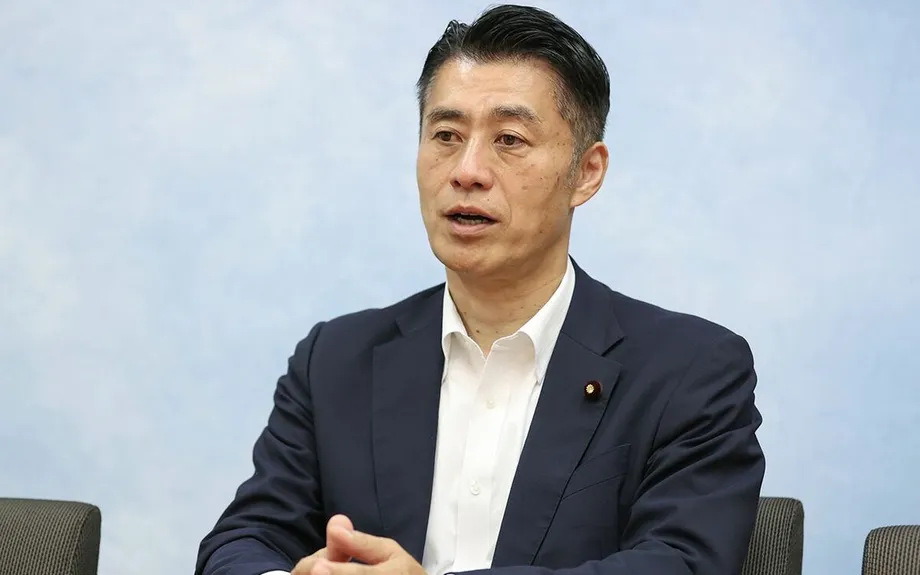
Hosono, the minister responsible for disaster management, explained at a news conference why he considers personal preparation necessary even as the government expands its organization:
"No matter how much effort the government puts in, the reality is that lives cannot be saved unless people make preparations on their own," Hosono said.
He also said he intended to issue an emergency request to the public and other groups on the agency's launch date. His message places household stockpiles alongside national and local government preparations, with each contributing to the ability to cope during an emergency.
Why businesses are part of the response plan
The agency intends to expand cooperation between government and businesses, making it easier for companies to support disaster response. Encouraging private participation in local preparedness is also among its core responsibilities.
Hosono has linked the need for broader participation to limits on relying on the Self-Defense Forces during a disaster affecting a large area. Earlier in the week before the launch, he contrasted assistance during smaller emergencies with the demands of larger ones:
It's fine for the nearest SDF to go and help for relatively small-scale disasters," he said. "But for larger-scale disasters, we basically have to manage those things without relying on the SDF.
His remarks point to the need for preparations that involve more than military assistance. The agency's planned partnerships would bring businesses into work that is often handled by the Self-Defense Forces, while local governments and households also prepare to meet immediate needs.
The launch plans describe expanding those partnerships as an objective. The tasks individual businesses will take on, and how those arrangements will operate during an emergency, will depend on the agreements developed through that work.
How will Japan train more disaster specialists?
The government is considering a Disaster Management University, a provisional name for an institution intended to train professionals and conduct research. The proposal would add a dedicated route for developing people with specialist knowledge of disaster management.
The university remains under consideration. Meanwhile, the agency's planned work already includes training and exercises using simulated emergencies. Such exercises allow organizations to rehearse a response and identify weaknesses before they face an actual disaster.
Training, regional offices and coordination powers address different parts of the same operational problem: people must know their roles, organizations must be able to work together, and plans must reflect the risks facing each area. The agency's launch establishes the national structure, while the regional network and proposed university remain further steps in its development.
Key Points
- Japan launched the National Disaster Management Agency on November 2, 2026, with 352 staff.
- The prime minister heads the agency, and Goshi Hosono is expected to become its first disaster management minister.
- Its responsibilities extend from advance preparedness to emergency assistance, recovery and reconstruction.
- Ministries must respect its recommendations, but there are no legal penalties for failing to follow them.
- Regional office locations are to be decided by summer 2027, with local bureaus planned by summer 2028.
- Hosono urged households to stock at least three days of essential supplies, preferably enough for a week.
- A proposed Disaster Management University remains under consideration.