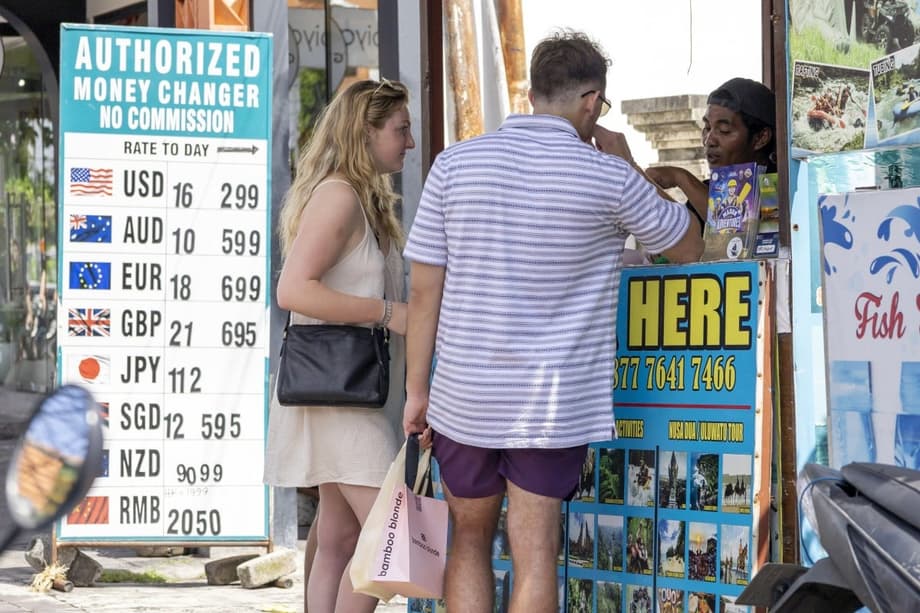
Bali Proposes Groundbreaking Financial Screening for International Visitors
Bali’s provincial government is advancing a controversial regulation that would require foreign tourists to disclose their bank account balances from the past three months before gaining entry to the Indonesian island. The proposal represents one of the most significant steps taken by a Southeast Asian tourist destination to control visitor quality through financial screening. Governor Wayan Koster announced that the measure forms part of Bali’s Draft Regional Regulation on Quality Tourism Management, which is nearing finalization in the island’s legislature.
The initiative aims to deter low-spending visitors and attract what officials term “quality tourism.” According to Koster, financial reserves demonstrated over a three-month period would serve as a key metric for determining whether a visitor meets the island’s quality standards. If enacted, the regulation would also mandate that foreign visitors submit their travel itinerary, including the length of their stay and planned activities on the island.
“One aspect that is taken into account for quality tourism is how much money there is in [tourists’] savings for the last three months,” Governor Wayan Koster said, as cited by state news agency Antara.
The proposal has drawn comparisons to requirements that Indonesian citizens face when traveling abroad. Koster emphasized that Bali is simply implementing controls similar to those imposed on Indonesian travelers seeking visas for countries in Europe, the United States, and Australia, where proof of funds and detailed itineraries are standard prerequisites.
The draft regulation comes as Bali experiences unprecedented visitor numbers that have strained the island’s infrastructure and resources. In 2024 alone, Bali welcomed approximately 29 million tourists, far exceeding its resident population. Despite this influx, economic benefits have not met expectations, with the island experiencing a slowdown in economic growth and a decline in average spending by international visitors.
The Challenge of Overtourism
Bali’s aggressive tourism push over the past decade has created a complex situation where high visitor volumes no longer translate to proportional economic benefits. The island recorded 6.333 million foreign arrivals in 2024, representing a 20.10% increase from the previous year. While Chinese tourists returned in significant numbers with 448,000 visits marking a 60.10% increase, their spending levels have not yet reached pre-pandemic highs.
Local officials have expressed growing concern about the changing profile of visitors to the island. There has been a noticeable increase in budget-conscious travelers and long-term visitors such as digital nomads, who place greater strain on public resources while contributing less economically. This demographic shift has prompted policymakers to seek new approaches to tourism management that prioritize visitor value over sheer volume.
The proposed financial screening measures represent an attempt to attract and manage what officials describe as “high-quality tourism” characterized by shorter, financially secure, and predictable stays. The philosophy aligns with broader trends across Southeast Asia, where popular destinations are reevaluating their relationship with mass tourism. Thailand and the Philippines have implemented similar financial-proof schemes, though Bali’s proposal appears to be the strictest in the region if implemented as drafted.
Industry experts note that the economic model of maximizing tourist numbers has reached its limits in many parts of the world. Destinations that once welcomed any visitor with open arms now carefully calculate the net economic impact of different tourist segments. This shift reflects a growing recognition that not all tourists contribute equally to local economies, and some may even create costs that exceed their financial contribution.
Bali’s situation is further complicated by its unique cultural heritage. The island is predominantly Hindu in a predominantly Muslim nation, and officials have increasingly expressed concern about maintaining cultural integrity in the face of mass tourism. Governor Koster has previously emphasized the need for tourism that remains “respectful, sustainable, and in harmony with our local values.” The bank balance proposal is viewed as one tool among many to achieve this broader vision of culturally appropriate tourism.
What Tourists Would Need to Provide
The specific details of the proposed regulation are still being finalized, but several requirements have emerged from official statements and draft documents. Under the current proposal, travelers arriving in Bali would need to present three months of bank statements demonstrating “financial adequacy.” While exact minimum balance figures have not been confirmed, some reports suggest the threshold could be set at approximately $1,500.
In addition to bank statements, visitors would be required to submit a detailed travel itinerary including the duration of their stay and planned activities. This information would allow authorities to monitor visitor movements and ensure compliance with local regulations. The requirements would apply to all foreign arrivals, including those using the visa-on-arrival facility and those with longer stay permits.
Failure to comply with these requirements could result in serious consequences for travelers. According to details emerging from the provincial government, non-compliance could lead to denied entry or summary deportation. This strict stance reflects the government’s determination to implement the policy effectively once enacted.
The logistical implementation of these checks would likely occur at immigration counters at Ngurah Rai International Airport, Bali’s main point of entry. Travel management companies have already begun advising clients to prepare acceptable proof of funds, which may include original bank PDFs, authenticated app screenshots, or credit card statements. Some experts suggest that airlines operating flights to Bali may begin checking documentation at departure gates to avoid liability for passengers refused entry.
For business travelers and those planning incentive trips, the requirements could create significant complications. Many corporate travelers rely on company-issued virtual cards rather than personal accounts, which may not meet the standards for proof of personal funds. This discrepancy could force changes in corporate travel policies and procedures for companies with employees traveling to Bali.
The timing of the proposal adds another layer of complexity. With the regulation potentially taking effect in 2026, travelers and tourism operators have limited time to adapt to the new requirements. The short notice between finalization and implementation could disrupt travel plans and create confusion during the initial rollout period.
Legal and Constitutional Questions
The proposal has sparked significant debate within Indonesia about the balance between regional autonomy and national authority. Several prominent politicians have raised constitutional questions about whether a provincial government can impose requirements that traditionally fall under immigration jurisdiction, which is reserved for the central government.
Bali Senator Agung Bagus Prastiksa Linggih has been particularly vocal about these concerns. He questioned whether regional regulations could supersede higher-level immigration procedures, noting that bank statement processing is fundamentally an immigration matter rather than a local government function. Linggih highlighted the practical challenges of implementation, pointing out that regional officials do not have access to banking systems and questioning how such checks would be conducted in practice.
“If immigration has already permitted entry or issued visas, then the region wants to propose further restrictions, which raises questions,” Bali Senator Agung Bagus Prastiksa Linggih said. “We must ensure that the regional regulations we create do not create conflict with higher-level laws.”
Other regional leaders have echoed these concerns. Bali Senator Ida Bagus Rai Dharmawijaya Mantra emphasized that verifying foreign nationals’ account balances falls under the central government’s authority and requires clear coordination between different levels of government. Without such coordination, the implementation could face legal challenges that could undermine its effectiveness.
These legal uncertainties have led some politicians to suggest alternative approaches. Senator Linggih proposed focusing on increasing compliance with the Bali Tourism Tax Levy as a more achievable goal that would still generate revenue from visitors. He also stressed that improving tourism facilities is crucial to attracting quality tourists naturally, rather than using financial barriers to exclude certain visitors.
The legal questions extend beyond jurisdictional issues to include data privacy and financial security concerns. Requiring tourists to share three months of bank statements involves handling sensitive financial information, raising questions about how this data would be stored, protected, and eventually disposed of. The lack of clarity on these data protection aspects has added to the apprehension surrounding the proposal.
Despite these concerns, Indonesian Tourism Minister Widiyanti Wardhana has expressed support for the initiative. The minister emphasized its aim to promote quality tourism and create uniform immigration policies, drawing a parallel to how Indonesian nationals must present bank statements when traveling abroad. This endorsement from the national level suggests that efforts may be underway to resolve the jurisdictional issues and create a framework for legal implementation.
Impact on International Visitors
The proposed regulation would have significant implications for travelers from all countries, but Australian visitors would feel the effects most acutely. Australians represent the largest cohort of tourists to Bali, accounting for approximately 1.3 million arrivals in 2025. The new requirements would therefore affect hundreds of thousands of Australian travelers annually.
Australia’s Department of Foreign Affairs and Trade moved quickly to update its Smartraveller advisory following the announcement. The updated notice reminded citizens that Indonesian authorities can and do deport tourists for infractions ranging from indecent dress to abusing cultural sites. The addition of financial compliance to the list of potential deportable offenses represents a significant expansion of the risks for travelers.
For the average holidaymaker, the requirement to produce three months of bank statements represents a significant intrusion into personal privacy. Many travelers are accustomed to sharing financial information only when strictly necessary for visa applications, not as a routine part of entry procedures. This change could make Bali seem less welcoming to visitors who value their privacy and autonomy.
The proposal might also affect how travelers plan and book their trips. The requirement to submit a detailed itinerary in advance could reduce the flexibility that many travelers value. Spontaneous decisions about activities, excursions, and even extensions of stay would become more complicated if travelers had already committed to specific plans during entry.
There are also practical concerns about how different countries’ banking systems would interact with Bali’s requirements. Bank statement formats vary significantly between countries, and some travelers may not have easy access to official statements on short notice. Digital-only banks and fintech services present additional complications, as their statements may not match traditional formats that immigration officials expect.
Visa services and travel companies have already begun preparing for the potential implementation of these rules. Some companies offer services to review bank statements and visa documentation before departure, providing personalized guidance to reduce the risk of being turned away at the border. These services highlight the anxiety the proposal has created among regular travelers to Bali.
Part of a Broader Tourism Strategy
The bank balance proposal does not exist in isolation but represents one component of a comprehensive strategy to transform Bali’s tourism model. In recent years, officials have introduced several measures aimed at managing visitor behavior and enhancing the quality of tourism on the island.
In 2025, Bali implemented a tourist levy and behavior code reforms designed to set clearer expectations for visitors. These initiatives included the release of a list of “Dos and Don’ts” to guide appropriate behavior. The same year, officials announced crackdowns on “inexperienced” tourists renting mopeds or motorbikes to traverse the island, citing safety concerns and the disruption caused by accidents involving foreign riders.
Governor Koster has consistently framed these changes as necessary to preserve Bali’s cultural integrity and ensure sustainable tourism development. His administration has emphasized that Bali is a “beautiful, sacred island” and that the government expects guests to show the same respect that locals extend to them. This framing positions the financial screening requirements as part of a broader cultural preservation effort rather than a purely economic measure.
The strategy also includes investments in tourism infrastructure and facilities. Senator Linggih’s comments about the importance of improved tourism facilities reflect a recognition that attracting high-quality visitors requires more than just financial barriers. The government appears to be pursuing a dual approach of raising standards while simultaneously improving the tourism product to justify those higher standards.
The timing of these initiatives is significant. After the pandemic dramatically reduced international travel, Bali has experienced a rapid recovery in tourist numbers. This rebound has given officials the confidence to implement more selective policies, knowing that the destination remains highly attractive to international visitors. The strong recovery may also have revealed the limitations of the previous mass-tourism model, prompting the current reevaluation.
Other popular tourist destinations in Southeast Asia are watching Bali’s experiment closely. As more destinations grapple with overtourism and its associated problems, Bali’s approach to managing visitor quality through financial screening could become a template for others. The success or failure of this initiative could therefore have implications beyond Indonesia’s borders.
The Bottom Line
Bali’s proposal to check tourists’ bank balances represents a significant shift in how the popular Indonesian island manages its tourism industry. While still in the draft stage and facing legal questions, the regulation signals a new direction for Bali tourism policy that prioritizes quality over quantity.
- The proposed regulation would require tourists to show three months of bank statements and submit a detailed travel itinerary before entering Bali.
- Governor Wayan Koster says the measure aims to promote “quality tourism” and deter low-spending visitors.
- Bali received approximately 29 million tourists in 2024, straining infrastructure despite declining economic returns.
- Indonesian politicians have raised concerns about jurisdictional conflicts, noting that immigration is typically a central government function.
- Australians make up the largest group of visitors to Bali, with 1.3 million arrivals in 2025.
- Failure to comply with the requirements could result in denied entry or deportation.
- The proposal is part of broader tourism reforms that include a 2025 tourist levy and behavior codes.
- Similar financial-proof schemes exist in Thailand and the Philippines, but Bali’s proposal would be the strictest in the region.