Singapore’s Strong Foundation in a Turbulent World
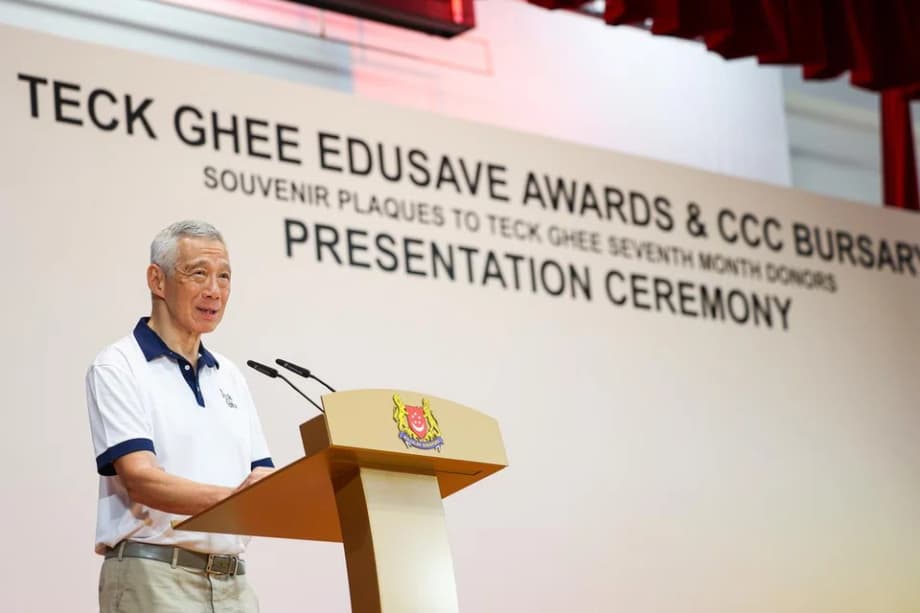
Senior Minister Lee Hsien Loong recently emphasized the need for continuous self-improvement and skills upgrading, painting a picture of a nation that is currently performing well economically but faces significant challenges on the global horizon. Speaking at the Teck Ghee Edusave Awards and Teck Ghee Citizens Consultative Committee Bursary presentation ceremony, SM Lee acknowledged Singapore’s robust economic performance in 2025. The nation achieved nearly 5 percent economic growth, alongside increased incomes and lower inflation. Key infrastructure assets like PSA Singapore and Changi Airport broke records, handling over 44 million containers and 70 million passengers respectively. These achievements have positioned Singapore as a stable, predictable, and reliable partner in the eyes of many multinational corporations and investors.
Despite these domestic successes, SM Lee warned that the world remains in a state of flux. He pointed to geopolitical tensions, such as the United States trade war with China and plans to take over Greenland, as indicators of a shifting global order. The imbalances in world trade are likely to result in increased tariffs and import barriers as nations rush to protect their own interests. SM Lee noted that while Singapore stands out as a desirable place to do business due to its stability, the external environment remains unpredictable.
We cannot rest on our laurels. Instead, they should upgrade by learning new skills such as those related to artificial intelligence to stay useful and valued, and to be able to make a contribution and look after themselves in life.
This sentiment reflects a broader national strategy that recognizes Singapore’s vulnerability as a small, open economy with no natural resources except its people. To maintain its competitive edge, the country is focusing heavily on human capital development and economic resilience.
The Global Economic Context and Trade Fragmentation
The concerns raised by SM Lee are mirrored in international economic analyses. The Organisation for Economic Co-operation and Development (OECD) reports that the global economy has shifted from a period of resilient growth to a more uncertain path. Global growth is projected to slow, with trade policy uncertainty acting as a significant drag on economic prospects. The OECD highlights that substantial barriers to trade, tighter financial conditions, and diminished confidence are projected to have adverse impacts on growth worldwide.
Geoeconomic fragmentation is a particular concern for Southeast Asia. According to the World Economic Forum’s Future of Jobs Report 2025, 41 percent of businesses in the region believe restrictions on global trade and investment will have major impacts on their operations in the next five years. This figure is nearly double the global average. For Singapore, where services trade accounts for around 70 percent of GDP, these shifts in the global landscape pose direct risks to economic stability.
Minister for Trade and Industry Gan Kim Yong has elaborated on these challenges, noting that the effects of tariffs and trade policy changes will take time to flow through supply chains. Companies are re-evaluating their longer-term plans, restructuring production, and diversifying markets. In response, the Singapore government established the Singapore Economic Resilience Taskforce (SERT) to navigate these near-term uncertainties and chart a path forward in the new economic landscape.
The Imperative for Individual Upskilling
At the heart of the response to this uncertainty is the individual worker. SM Lee stressed that Singaporeans must take personal responsibility for their employability by upgrading their skills. The rapid advancement of technology, particularly artificial intelligence (AI), is transforming the nature of work. Jobs and skills are evolving faster than before, making the knowledge gained in formal schooling obsolete much sooner than in previous generations.
This aligns with the national SkillsFuture initiative, which encourages and supports people in continuing to grow their skillsets. The government has enhanced this initiative with the Level-Up Programme, designed to encourage mid-career professionals to undertake a significant skills reboot. The goal is to enable workers to pivot into new roles, benefit from economic development, and achieve real wage growth.
SM Lee specifically highlighted the importance of learning skills related to AI. However, the call for upgrading extends beyond technical capabilities. The Senior Minister emphasized that the government aims to develop students as whole persons, imbuing them with values, resilience, and a Singapore identity alongside academic skills.
The Shift in Corporate Strategy and Employer Demand
While individuals are urged to upgrade, companies are also being called upon to transform and reinvent themselves to stay competitive. The World Economic Forum reports that 96 percent of employers in Southeast Asia see a need to invest in improving or adapting the capabilities of their existing workforce. This is higher than the global average, indicating a strong regional consensus on the necessity of workforce adaptation.
Employers in the region expect significant changes in the skills they will need over the next five years. There is a growing demand for network and cybersecurity skills, as well as human-centered skills such as resilience, flexibility, and leadership. Interestingly, soft skills like resilience and flexibility are seen rising faster than purely technological skills by 2030. This suggests that while technical proficiency is vital, the ability to adapt to changing circumstances is becoming equally valuable.
The Singaporean government is supporting this corporate transformation through grants and schemes. The Business Adaptation Grant, for instance, helps businesses assess tariff impacts and obtain advisory on supply chain optimization. Additionally, the government has temporarily enhanced funding support for basic HR certification, recognizing that strong human resources leadership is critical for managing workforces amid volatility.
Education Reform and Lifelong Learning
To support this culture of continuous upgrading, Singapore’s education system is undergoing significant philosophical and structural changes. Educational experts suggest that the system is moving towards a paradigm of inspiration rather than just competence. The idea is to create an environment where students are inspired to learn, own their learning, and become self-directed, rather than being driven solely by examinations or external expectations.
This involves increasing the diversity of educational pathways to cater to different learners. Initiatives like Full Subject-Based Banding allow students to take subjects at different levels based on their strengths. The scope of education has also broadened to include applied learning, social-emotional learning, and discussions on global issues and climate change. This holistic approach aims to build the meta-competence of adaptability, which is viewed as a necessity in uncertain circumstances.
Furthermore, the concept of lifelong learning is being integrated into the national fabric. It is no longer viewed as just a way to stay economically productive, but as a means to build the human and knowledge capital necessary for the country to adapt positively to external shocks. Institutes of higher learning are transforming into sites of continual learning, ensuring they remain relevant to industry needs.
Political and Social Cohesion Amidst Change
The push for economic transformation and skills upgrading is also a matter of social cohesion. President Tharman Shanmugaratnam, in his address at the opening of the 15th Parliament, described the current era as a critical juncture marked by fundamental shifts in the global order. He emphasized that Singapore’s resilience depends on empowering every worker to adapt and thrive.
We cannot hold back this tide of change. But we can prepare ourselves individually and collectively to navigate it with confidence. As the economy transforms, we will empower workers with the skills they need to adapt and seize new opportunities.
The government has introduced enhanced safety nets, such as the Jobseeker Support Scheme for displaced workers, to ensure that Singaporeans do not face uncertainty alone. There is a concerted effort to uplift lower-wage workers through upskilling and productivity improvements, ensuring that economic progress is inclusive.
The political discourse also reflects this urgency. The Workers’ Party has urged the government to engage widely and explore all solutions to build a resilient nation. They have proposed measures such as tracking underemployment, establishing a statutory minimum wage, and improving social safety nets with redundancy insurance. This broad political consensus highlights the universal recognition that adaptation is necessary for survival.
Strategic International Partnerships
Amidst these internal efforts to upgrade and adapt, Singapore is also actively strengthening its international partnerships to buffer against global uncertainty. Prime Minister Lawrence Wong’s recent visit to India resulted in five agreements to deepen cooperation in fintech, green shipping, and semiconductors. These partnerships are rooted in shared values and a deep reservoir of trust, serving as a stabilizing force in a turbulent world.
By expanding cooperation in manufacturing, sustainable industrial parks, and supply chains, Singapore aims to secure its economic future. These alliances provide alternative markets and opportunities for Singaporean businesses and workers, further reinforcing the nation’s position as a global hub.
The Essentials
- Singapore achieved nearly 5 percent economic growth in 2025, with record-breaking performance at PSA Singapore and Changi Airport.
- Senior Minister Lee Hsien Loong warns that global uncertainty, including trade wars and tariffs, requires Singaporeans to continuously upgrade their skills.
- The government is supporting individuals through initiatives like SkillsFuture and the Level-Up Programme to encourage mid-career reskilling.
- Companies are urged to transform, with 96 percent of Southeast Asian employers planning to invest in workforce capabilities.
The education system is shifting towards “inspiration by design” and lifelong learning to build adaptability in students.
New safety nets like the Jobseeker Support Scheme have been introduced to support workers during transitions.